Ocellaris clownfish need 20–30 gallons for a pair, 50–60 if you’re adding an anemone – though honestly, they’ll host a powerhead if that’s what’s handy.
Water stays steady at 72–78°F, pH 8.0–8.4, with alkalinity around 7–12 dKH; stability beats perfection every time.
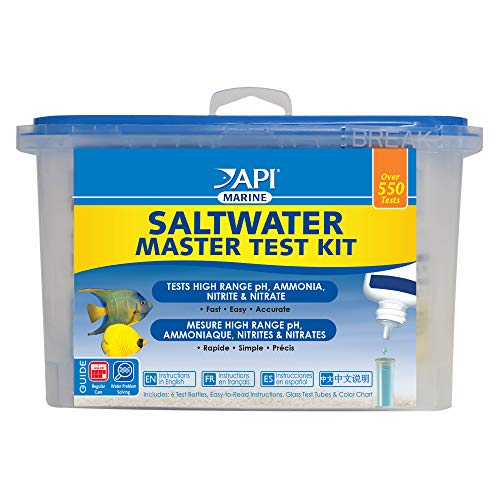
Track pH and nitrogen cycle to keep your clownfish's water stable.

Measures dKH precisely so you can maintain 7–12 dKH without guesswork.

Check salinity instantly to keep specific gravity in the 1.020–1.026 range.
Check discounted items inAquarium Test Kits
Feed twice daily, two or three quality pellets plus frozen mysis, brine shrimp, maybe a touch of nori – surface feeding, mind you, not bottom-scrounging.
Size runs three to four inches, females being the bigger bruisers, and lifespan hits six to ten years when things go right.
Now, they spawn on flat rocks near their anemone, eggs hatch in about a week, and failed clutches?
They’ll retry in a few weeks, no hard feelings.
Quarantine newcomers, watch for ich – that white salt sprinkle on fins – and keep a lid on your tank; these fish jump like they’ve got something to prove.
There’s more to keeping them thriving than this, naturally.
At A Glance
- Feed quality pellets, brine shrimp, and mysis twice daily in small portions.
- Females reach four inches, males three inches, with females dominant in pairs.
- Lifespan spans six to ten years with stable water and proper nutrition.
- Optimal temperature ranges 72–78 °F; gradual increase to 83 °F encourages spawning.
- Quarantine new fish four to six weeks to prevent disease introduction.
Tank Size First: Space Requirements for Ocellaris Clownfish
A pair of *Amphiprion ocellaris* – those orange hobby darlings with color genetics enthusiasts obsessing over their black‑edged stripes – wants 20 to 30 gallons. Tight, yeah, but workable.
Now, add an anemone and you’re looking at 50, 60 gallons easy. The fish doesn’t care about square footage math, it cares about territory, flow, hiding spots.
Reef compatibility sits solid here: they won’t munch coral, though they’ll nest against anything soft and living, which the coral, predictably, resents.
Line the tank with live rock, crevices mandatory. Jumpers, every one – lids required.
For a 20‑30 gallon setup, a steel aquarium stand with adjustable feet and integrated storage can provide the stability and equipment space these active fish demand.
Water Parameters That Prevent Stress and Disease
Stability trumps perfection every time.
These fish want water that stays put: 72–78°F, pH locked at 8.0–8.4, and specific gravity drifting somewhere between 1.020–1.026.
Now, mineral balance matters more than chasing exact numbers – you want alkalinity around 7–12 dKH, certainly, but swings kill faster than slightly “wrong” parameters ever could.
A temperature controller with Wi‑Fi alerts can help maintain that critical thermal stability and catch heater failures before they trigger dangerous swings.
Disease susceptibility spikes when chemistry yo-yos. Stress hormones flood, immunity crashes, and suddenly that harmless parasite becomes a massacre.
Tank Setup: Rockwork, Lighting, and Jump Protection
Three things separate a clownfish’s house from a fish bowl, and the first is shelter, plain and simple. Live rock, stacked with caves and crevices, gives these fish somewhere to disappear, somewhere to claim. Rockwork aesthetics matter less to the fish than to the keeper, but hey, a nice pile beats a bare tank.
Lighting? Almost anything works. They’re not picky.
Now, jump safety – this matters. Ocellaris clownfish launch themselves at dawn, at weird noises, at basically nothing. A lid, a mesh screen, something solid overhead. Since finding your fish behind the couch ruins the whole vibe. For reliable protection, consider magnetic mesh covers that allow high light transmission while creating a firm seal against jumpers.
What Do Ocellaris Clownfish Eat? Diet and Nutrition
These fish are opportunistic omnivores, happy enough with flakes but at their brightest and healthiest when their diet mimics the messy buffet of a wild reef – zooplankton, algae bits, whatever the anemone’s current dragged by.
A wild aquarium stocked with quality pellets, brine shrimp, and mysis shrimp keeps them thriving, and reef conservation starts at home; informed hobbyists who resist overharvesting, who quarantine, who source sustainably – now there’s membership worth having.
Skip the bottom-feeder routine, mostly.
Surface feeding suits their style, though they’ll break character for a particularly tempting morsel drifting down.
For automated nutrient delivery in reef systems, peristaltic dosing pumps provide precise, scheduled feeding of liquid supplements like coral foods and amino acids without disturbing surface-feeding fish.
Feeding Schedule: How Often and How Much?
The rhythm of a clownfish’s day, like any creature with standards, settles into patterns that keep metabolism steady and stress low.
Feeding frequency for adults means twice daily, morning and evening, like a reliable friend who shows up on time.
Now, portion control – this matters. Offer what they consume in two to three minutes, no more. Uneaten food fouls water, and clownfish, I mean, they’re enthusiastic but not bright about stopping.
Sprinkle pellets, maybe three to five per fish, adjust for body size.
Small, frequent meals beat one feast daily.
For sick or stressed clownfish requiring medication, a coral feeding tube with extended reach can deliver targeted nutrition during isolation treatment.
Captive Lifespan: 6 Years or a Decade?
Once those pellets hit the water and the clownfish get their fill, another question settles in, inevitable as algae on glass: how long will they actually stick around?
Most honest keepers land somewhere between six years and a decade, maybe longer if they’re lucky, or if the fish is particularly stubborn.
Genetic variation plays its quiet hand – some bloodlines simply endure, while others flame out early. Color morphs, those designer oranges and snow-capped whites, carry no warranty; pretty patterns don’t promise longevity.
So what actually matters?
- Water stability beats fancy equipment every time
- Low-synchrony tanks prevent immune collapse
- Quality calories, not quantity, fuel the long haul
Six years is respectable. Ten is bragging rights. A well-chosen nano protein skimmer ensures stable water chemistry by removing dissolved organic waste before it degrades.
Can You Tell Male From Female? Size and Sex Change
How exactly do you sex a clownfish when both parents look like orange-striped twins?
You don’t, really – not without guessing. Sexual dimorphism here is quiet, almost whispered. The female runs larger, sometimes pushing four inches while her mate lingers at three, but that’s a soft rule, easily bent.
Here’s where it gets weird, and kind of wonderful.
These fish undergo hormone driven transformation like underwater shapeshifters. All ocellaris hatch male. The dominant individual in a pair – usually the biggest – flips female for breeding. No surgery, no drama, just biology keeping options open.
Color pattern variance won’t help you; stripes stay identical. Size tells the story, if reluctantly.
Unlike betta fish, which can be visually separated by gender and safely housed in divided tanks with clear territorial boundaries, clownfish require careful observation of behavioral dominance and size gradients to determine sex.
Safe Tank Mates and Dangerous Aggressors
Where exactly does an ocellaris clownfish sit on the aquarium social ladder – friend, foe, or that one neighbor who borrows tools and never returns them?
Peaceful, mostly. They want community, calm water, a place to belong.
Now, the safe choices: angelfish, tangs, mandarin gobies, wrasses, dottybacks, cardinalfish. These share space without drama. But mixing clownfish species? Bad idea. Aggression spikes, territory wars begin.
Three aggressors to avoid entirely:
- Maroon and Picasso clownfish – territorial, and they bite
- Damselfish – similar niches, constant conflict
- Green chromis – surprisingly mean in crowded tanks
Find your fish their crew, not their rivals.
When selecting soft PVC plants such as those in the CousDUoBe set with warm-water restoration properties, you’ll create gentle hiding spots that help reduce stress from any territorial disputes.
Sea Anemone Symbiosis: Required or Optional?
| With Anemone | Without Anemone |
|---|---|
| Heightened security, natural behavior | Adaptable, accepts live rock caves |
| Requires 50–60 gallon minimum | 20–30 gallons suits perfectly well |
| Bubble Tip or Magnifica preferred | Crevices, coral rubble substitute fine |
| Optional partner, not lifeline | Community feeling, still found |
I mean, belonging happens wherever they stake their claim. For aquarists seeking gentle water spread to reduce stress on reef inhabitants, consider integrated flow solutions that distribute return water like rainfall across the surface.
Triggering Spawning: Temperature and Nest Preparation
Spawning an Ocellaris pair – really, how does one nudge biology along without making a mess of it? Warmth helps, mostly. Crank that thermostat to around 83 °F, give or take a degree, and the fish start getting ideas. It’s classic symp cues climate manipulation, nothing fancy.
Crank the heat to 83 °F and let the fish figure out the rest – nature does the heavy lifting.
Now, the nest. They’ll scrape a rock clean themselves, obsessively, like teenagers preparing a bedroom for someone important. Filamentous algae growth nearby seems to help them decide the neighborhood’s safe, though nobody’s quite sure why.
What you do:
- Raise temperature gradually, 2 °F per day max
- Provide flat rock near the anemone, if present
- Let them clean, watch from a distance, resist the urge to help
Maintaining gentle water flow during this period reduces stress on the breeding pair and protects any developing eggs from excessive currents, much like the fine bubble circulation sponge filters provide for sensitive fry setups.
Egg Care: Hatching Timelines and Failed Attempts
Egg Hatching and Retries
Once the nest is ready and eggs are laid, the waiting begins – and there’s a fair bit of it. Egg incubation stretches roughly eight days, though anywhere from seven to ten feels normal, I mean, nature’s not punching a clock.
Water quality matters, stress kills momentum, and hatch success hinges on the pair’s experience. First-timers often flub it.
| Timeline | What Happens |
|---|---|
| Day 1-2 | Eggs cling, parents fan obsessively |
| Day 4-5 | Eyes appear silver, patience thins |
| Day 7-8 | Hatch frenzy, larvae drift upward |
| Failed clutch | Pair retries in 2-3 weeks |
Now, failures sting, but retry rates run high.
Disease Prevention: Ich, Fin Rot, and Quarantine Protocols
Disease Prevention and Quarantine
Several common ailments threaten the captive ocellaris, and knowing them – really knowing them, not just nodding along – saves fish and sanity alike. Marine ich, that telltale sprinkle of white salt, and fin rot, those sad, fringed edges, stalk tanks where water slides out of balance. Now, genetic variation among color morphs – your fancy snowflakes, your black storms – offers no magic shield against infection. None. Quarantine remains non-negotiable.
- Isolate new arrivals for 4–6 weeks, watching like a paranoid guardian.
- Test water weekly; stability beats heroics.
- Feed varied, quality meals – nutrition builds invisible armor.
And yes, even perfect care fails sometimes. That’s the hobby.
Substrate Behavior and Other Stress Signals
Substrate Behavior and Stress Signals
Three telltales, maybe four, reveal when an ocellaris clownfish is having a rough go of it, and substrate behavior sits squarely at the top of that list.
Healthy ocellaris cruise midwater, fins pumping that distinctive up‑and‑down rhythm.
When one sulks on the sand, something’s off. Could be water chemistry gone sideways, could be bullying from tankmates.
Now, watch for mawning behavior – that odd, gaping yawn without prey – often signaling low oxygen or internal parasites.
Aggression cues matter too. Twitching fins, rapid color darkening, sudden charges at reflections or neighbors mean stress hormones are flowing.
Catching these signs early keeps your community intact, your fish thriving.
Why Clownfish Still Matter: Ecology Beyond the Movie
Peel back the Pixar sheen, and the ocellaris clownfish stands revealed as something far more interesting than a cartoon sidekick: a keystone node in reef ecology, a study in evolutionary bargaining, and frankly, a fish that does not need your nostalgia to justify its existence.
Now, the cultural symbolism runs deep – generations now expect orange-striped fish in waving anemones, and that expectation shapes demand, trade, even reef health. Tourism impact follows similarly: divers chase the cinematic fantasy, well-meaning enthusiasts sometimes removing wild specimens.
Ecology and Conservation Challenges
- Wild populations face collection pressure from hobby demand.
- Anemone degradation threatens their obligate symbiosis.
- Captive breeding offers sustainable alternatives without ecosystem cost.
The fish persists regardless, indifferent to fame.
Frequently Asked Questions
Do Clownfish Sleep in Their Host Anemone?
Yes, they do, though “hostemone vs” other options matters – some settle into anemones, others crash in rockwork or sand.
Nighttime behavior sees them go limp, drifting sideways, sometimes wedged in tentacles for protection.
Not every clown finds a host, and not every anemone hosts, so they adapt.
Sleep looks like floating death, but they’re fine. Really. Just don’t poke them. They hate that.
Can Clownfish Recognize Their Owners?
Yes, clownfish demonstrate owner recognition through visual cues and memory recognition, distinguishing familiar human faces from strangers. Research indicates fish possess stronger cognitive abilities than historically assumed.
- Visual cues: facial patterns, body shape, movement
- Memory recognition: repeated positive associations (feeding)
- Learning capacity: associates owner presence with food delivery
Though not emotional bonding as mammals experience, the fish responds predictably to specific owners, ignoring unfamiliar humans – practical pattern recognition, really, but effective.
Why Do Clownfish Swim in Jerky Up‑And‑Down Motions?
Jerky swimming, that bouncy up-and-down motion, helps clownfish maintain position near their host anemone without exhausting themselves – energy efficiency, really.
The erratic pattern also confuses predators, making them harder targets.
And host interaction? Those quick, darting movements stir water flow around anemone tentacles, improving oxygen exchange for both partners.
It’s not clumsiness; it’s calculated survival, honed through millions of years of partnership.
Nature’s weird little dance.
Do Clownfish Need a Gravel Vacuum for Tank Cleaning?
Not strictly, no – these fish avoid the bottom, mostly, so gravel cleaning becomes optional maintenance rather than urgent care.
Still, substrate maintenance matters for overall tank health, and uneaten food drifts down, so somebody’s gotta deal with it.
Key points:
- Vacuum weekly if sand or gravel present – detritus accumulates, chemistry shifts, nobody wins
- Bare-bottom tanks skip this chore entirely, though they look, well, institutional
- Live rock crevices matter more to clownfish than floor space anyway
And that up-and-down swimming? Keeps them clear of the muck naturally, evolution’s little joke on aquarists who overthink these things.
Can Clownfish Survive Without Any Tank Mates?
But here’s the thing: these fish bond. I mean, they really bond, usually to anemones, sometimes to coral, occasionally to powerheads (it’s weird). Without any companion, living or otherwise, they get sluggish, skittish, maybe depressed – though who can measure fish sadness?
Provide structure. Rocks, caves, perhaps a hardy Bubble Tip anemone if the tank runs 50+ gallons.
They’ll live. Thriving, though? That takes more than survival. It takes something to host them, something to claim, something to belong to.

Floating pellets encourage natural surface feeding and provide complete nutrition.

Protein-rich mysis mimics wild reef diet and boosts color and vitality.

Offer a touch of nori for herbivorous grazing and digestive health.
Browse discountedSaltwater Fish Foodon Amazon