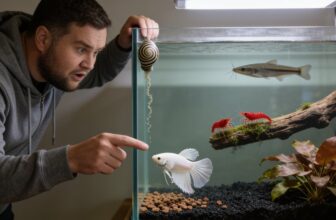
Constipation in betta fish is more common than most aquarists realize, and catching it early keeps your fish thriving. That tiny stomach—barely the size of its eye—clogs up fast when dry pellets swell like sponges in water. Watch for stringy poop, a bloated belly, or food left untouched. Fast your betta for two to three days, then offer daphnia as a natural fiber boost. Weekly fasting days prevent this backup entirely. If scales start pineconing, you are looking at dropsy, not constipation, which is a whole different emergency. The full breakdown covers treatment steps, prevention, and when to worry.
At A Glance
- Overfeeding and dry foods like flakes are the primary causes of constipation in bettas.
- Symptoms include stringy feces, loss of appetite, lethargy, and a bloated belly.
- Fast the fish for two to three days to allow the digestive system to clear.
- Offer daphnia, a natural roughage, or a small, blanched pea as a laxative.
- Use an Epsom salt bath (1 tsp per 5 gallons) to relax muscles in stubborn cases.
What Is Betta Fish Constipation and Why It Matters
Betta fish constipation—a surprisingly common, yet often overlooked, gut-wrenching issue—matters since it can quietly spiral from a minor inconvenience into a full-blown health crisis, including swim bladder disease and a weakened immune system.
It’s a backup in their digestive anatomy, plain and simple.
Their natural diet, full of chitin from live prey, keeps things moving.
But flake food? That expands like a sponge in their tiny stomachs.
You’re part of a crew that knows better.
A varied menu—daphnia, not just bloodworms—prevents this mess.
Ignore it, and your betta’s immune system tanks.
Treat it fast.
For example, feeding a clear-water formula designed for bottom-feeders can help maintain digestive health and water clarity.
Ongoing plant supplementation with a balanced macro- and micro-nutrient fertilizer can indirectly support tank stability and waste processing.
Betta Constipation Symptoms: 5 Warning Signs to Watch For
A failing digestive system rarely announces itself with a fanfare, but your betta will try to tell you—if you know where to look.
Watch for stringy feces that won’t sink, or even a poop trail hanging from your fish like a tiny, unflattering scarf.
He might ignore food, which is extremely abnormal fish behavior, or become lethargic, parking himself at the bottom.
A bloated belly (check for pineconing scales—that’s dropsy, not constipation) demands immediate dietary adjustments.
These warning signs are your invitation to act, before things get worse.
How to Treat Your Betta’s Constipation Right Now
Patience is the first tool in your betta constipation kit, and it costs nothing. Start by fasting your fish for two to three days, letting his gut clear like a reset button.
Next, offer a blanched pea, peeled and mashed small—fiber helps move things along. Or try daphnia, a live food packed with roughage from its chitin exoskeleton.
If that fails for your buddy, give an Epsom salt bath: one teaspoon per five gallons, in a separate container, for up to a week. Three‑stage filtration systems help maintain clean water during recovery, reducing stress on your constipated betta.
Don’t forget, a proper tank size—five gallons or more—reduces future risks, such as the Fluval SPEC 5‑Gallon Kit offering premium performance and gentle filtration suitable for betta fins.
Simple steps, big payoff.
When to Fast Your Betta (and How Long Is Safe)
Why fast a betta? Since overfeeding is the #1 constipation cause, and fasting mimics their wild lifestyle; they often go days without food.
A 2-3 day fast is the maximum safe fasting duration for a sick betta, and for healthy ones, safe intervals of once every week or two help prevent future blockages. If you need to cut costs while maintaining a healthy environment, YISZM Black Aquarium Sand offers a budget-friendly dark substrate for compact tanks.
A 2–3 day fast is the maximum safe duration for a sick betta; healthy ones fast weekly or biweekly.
You skip feeding; that’s it. No peas, no daphnia yet—just an empty stomach. Their gut needs a break.
Stick to 2 days max for treatment, or 24 hours for routine maintenance. It’s simple, free, and effective. Fasting first, always.
For small tanks like the 2‑gallon Pronetcus or even a 1.2‑gallon setup, daily attention is needed, so a short fast also helps prevent overfeeding in these compact homes.
Pea vs. Daphnia: Which Works Best for Relieving Constipation?
The pea and the daphnia are the two go-to remedies after fasting fails, but they work very differently.
A pea acts like a gentle scrub, helping to move waste through one’s bloated anatomy.
Daphnia, alternatively, are tiny crustaceans whose chitin-rich shells provide roughage that additionally supports healthy intestinal flora.
Both relieve constipation, but daphnia more closely mimic a betta’s natural diet—peas lack chitin and can cause digestive upset if overused.
For most cases, daphnia wins for effectiveness and safety.
Stick with daphnia; it’s the smarter, less risky choice for fixing that stubborn belly bump.
Storing dried live copepod jars requires refrigeration if not used immediately to preserve their viability.
Alternatively, a 40 PPI sponge filter roll can be cut to fit an intake as a mechanical pre-filter to prevent small debris from clouding the water during constipation treatment.
How to Safely Feed Peas or Daphnia to Your Betta
For feeding either peas or daphnia to your constipated betta, the method matters as much as the ingredient itself.
First, prepare a boiled pea portion by blanching a frozen pea until soft, then removing the skin and mashing it into a tiny, betta‑sized piece. Offer just a speck; their stomach is the size of an eyeball.
For live daphnia, Daphnia source quality is critical—buy from a reputable supplier to avoid parasites. Rinse them before feeding. Offer a few at a time.
Both foods provide roughage, but overfeeding defeats the purpose. Using a device with precision portion control can help avoid overfeeding and ensure consistent meal sizes. Watch your betta closely; improvement usually appears within a day.
For a more comprehensive mineral approach, consider using Crystalpro Betta Minerals to enhance overall health beyond just constipation relief.
Treat Severe Constipation With Epsom Salt Baths
| Step | Detail |
|---|---|
| Prepare tank | 1 gallon min, no decorations |
| Add salt | 1 tsp per 5 gal, dissolve well |
| Acclimate fish | Float bag 10 min |
| Bath duration | 15–20 minutes max |
| Return home | Back to main tank gently |
For a gentler alternative suitable for bettas, you can use Fritz A+ Freshwater Salt formulated specifically for stress reduction during treatment. Always use a conditioner like Seachem Prime to detoxify ammonia during the recovery period.
How to Set Up a Quarantine Tank for Treatment
Before setting up a quarantine tank, know that it does not need to be fancy or expensive—just functional. This is where your betta spends treatment time, so proper quarantine setup matters.
Tank preparation is simple:
- Use a small, bare 2.5‑ to 5‑gallon tank—no gravel, no plants, just water.
- Add a simple sponge filter and a small heater set to 78°F (26°C).
- Place a single hide, like a PVC pipe or plastic plant, for comfort.
- Use a plastic lid; bettas jump when stressed.
You’re giving your fish a calm, clean recovery space. That’s it—no fancy gadgets, just smart basics. Many products offer magnetic grip mounting for easy attachment to the main tank. For added peace of mind, choose a quiet pump that filters and oxygenates without disturbing your recovering betta.
Why Overfeeding and Dry Food Cause Constipation
Overfeeding and dry food are a one‑two punch for a betta’s digestive system. Their tiny stomach, about the size of their own eyeball, gets overwhelmed easily. Dry food expands inside, swelling like a cheap sponge.
A proper betta diet mimics carnivore feeding: protein packed, with live or frozen options. Too much flake or freeze‑dried food clogs them up, fast. Feed only what they can eat in two minutes, twice daily. That’s it.
Skip the extra pinch; they’ll beg, certainly, but you’re the one in charge. Keep it lean, keep it varied, and skip the constipation drama. Using a 50‑watt heater helps maintain stable water temperature, which supports proper digestion and reduces constipation risk. A digital LED controller on some heater models allows precise temperature regulation to keep the water ideal for betta health.
The Connection Between Constipation and Swim Bladder Disease
Constipation and swim bladder disease share a nasty two‑way street. One can trigger the other, creating a vicious cycle. Here’s how it works:
- A constipated betta’s swollen gut presses on its swim bladder, messing up buoyancy.
- Swim bladder disease from infection or injury can slow digestion, causing constipation.
- Poor fish anatomy means a tiny stomach—overfeeding expands it, compressing organs.
- Lack of fiber sources like daphnia leaves waste stuck, worsening both issues.
You’re part of a community that knows: treat constipation fast to avoid this mess. A simple fast or daphnia meal can break the cycle before it spirals. Adding live aquatic plants like Water Spangles can provide natural shade and reduce algae, supporting a healthier tank environment. For a clean start without introducing pests, a sterile guarantee ensures your new plants remain algae-free.
Prevent Constipation With Weekly Fasting and a Varied Diet
Fasting a betta once a week might sound cruel, but it’s actually one of the kindest things you can do for its digestion. It lets the gut fully empty, preventing waste buildup that leads to bloating. A varied diet is similarly key.
| Food | Benefit | Risk if Overused |
|---|---|---|
| Daphnia | Natural fiber from chitin; acts like a gentle scrub for intestines | None, it’s safe as a staple |
| Bloodworm | High protein treat | Can cause constipation |
| Pellets | Balanced nutrition | Expands in stomach |
The benefits of daphnia include providing roughage that moves feces along. For stubborn cases, an Epsom salt dosage of 1 teaspoon per 5 gallons relaxes muscles. You belong to a community that prevents problems before they start. A filter with quiet operation around 30 dB can help reduce stress during recovery, as lower noise levels keep your betta calm. This approach aligns with the concept of preventing waste buildup that is central to pond maintenance using beneficial bacteria.
Why a 5-Gallon Tank Prevents More Than Just Constipation
A 5‑gallon tank is the minimum for a reason.
A 5‑gallon tank is the minimum for a reason—real swimming space prevents constipation and stress.
This tank size isn’t just about water volume—it’s about giving your betta real swimming space to exercise. That exercise keeps his digestive system moving, preventing constipation before it starts.
- Your betta can patrol all four corners, working those fins.
- He’ll burn off extra calories, not just float like a lump.
- More water means stable temps and less stress, a constipation trigger.
- He can investigate plants and decor, keeping boredom at bay.
A cramped tank is a slow tank, and a slow fish gets clogged. Give him room; he’ll thank you with healthy poops. For example, a 2.5‑gallon nano tank provides a compact but effective swimming area that encourages gentle exercise and stable water conditions. Pairing it with a low‑iron glass tank maximizes light transmission for plant health and reduces stress from visual distortion.
What Happens If You Leave Constipation Untreated
Leaving a constipated betta to “work it out on his own” is like ignoring a check engine light—sure, he might keep swimming for a bit, but the real trouble is just getting started.
Without treatment, long term damage creeps in. Swim bladder issues can lock up his movement, and stress weakens his immune system fast, making him vulnerable to deadly infections. Untreated stress can leave a fish vulnerable to parasitic infections requiring API General Cure for proper treatment. Regular monitoring of water chemistry with 8‑in‑1 Water Test Kits helps detect early signs of stress from poor water quality before complications arise.
Diet therapy becomes less effective the longer you wait; the gut gets more stubborn, not less. Don’t gamble on “maybe tomorrow.” Your betta belongs to a community that acts, not one that waits. Treat early, keep him swimming strong.
Is It Constipation or Dropsy? How to Tell When to See a Vet
How do you tell if a betta is just backed up or battling something far worse like dropsy? Both cause bloating, but Dropsy signs are distinct. Look for:
- Pineconing scales – raised, spiky, like a pinecone.
- Bulging eyes – popeye accompanies dropsy.
- Pale, stringy poop – constipation; dropsy shows no poop.
- Lethargy with clamped fins – dropsy’s hallmark.
If scales pinecone, skip home remedies. A Vet consultation is critical—dropsy is often fatal without antibiotics.
Constipation responds to fasting or daphnia. When in doubt, quarantine and call a pro. Your betta’s life depends on knowing the difference. For containment during treatment, you can use a breeding box mounted with suction cups to isolate your fish while monitoring water flow and fry development. A magnetic aquarium lid can prevent jump-prone bettas from escaping during observation.
Frequently Asked Questions
Can Constipation Cause Permanent Damage?
Yes, constipation can cause permanent damage. If left untreated, a severely impacted digestive tract can rupture, which is fatal.
Even without rupture, chronic constipation often leads to swim bladder prognosis issues—this organ can become permanently damaged, affecting buoyancy control forever.
So although a few days of fasting won’t hurt, ignoring stringy poop or a bloated belly is a gamble with your fish’s long-term health.
Bottom line: treat early to avoid irreversible harm.
How Can I Tell if My Betta Is Overfed?
A betta’s stomach is roughly the size of its own eyeball, so overfeeding is like trying to pack a suitcase into a thimble.
Look for a bloated stomach, which bulges slightly, and stringy feces that trails behind like a loose thread.
If the fish ignores food—extremely abnormal—it’s likely overstuffed.
Feed two minutes twice daily, max.
Skip treats like bloodworms.
For prevention, fast once weekly.
This keeps your betta lean, active, and part of your well-cared-for community.
Is It Safe to Feed My Betta Peas Daily?
No. Feeding a betta peas daily is unsafe. Betta dietary needs are primarily carnivorous, and pea nutrition lacks the protein and fats they require. Daily peas can cause malnutrition.
Use peas only as a rare laxative (once a week max), not a staple. Stick to live or high-quality pellets.
For fiber, offer daphnia instead—it’s chitin-rich and matches their diet better. Your betta will thank you, probably with less dramatic floating. Keep it occasional, not a daily thing.
Do Fasting Periods Stress My Betta?
Short answer: No, fasting periods don’t stress your betta—they actually mirror natural hunger signals from the wild. A 2-3 day fast mimics times when food is scarce, and bettas evolved to handle that without fasting stress.
Think of it like a reset button. Your fish won’t panic; they’ll just get a bit more eager at feeding time—that’s healthy. Skipping a meal or two? Totally fine. In fact, it prevents worse problems like bloating.
Bottom line: Fasting is safe and beneficial, not stressful.
When Should I Consult a Vet for Constipation?
A vet visit is needed when clear symptoms of constipation persist past three days of fasting and treatments. If swelling looks extreme, the betta stops swimming entirely, or pineconing scales appear, professional help is best.
Constipation can mimic dropsy, and guessing wrong hurts the fish.
A vet diagnosis prevents making things worse.
Better safe than sorry, and many find relief in expert confirmation.
Bottom line: act fast when symptoms stay stubborn; a vet resolves what home care cannot.
Rounding Up
So, constipation isn’t just a lumpy fish; it’s a preventable crisis. Skip the pea—daphnia, at about $5 a bag, actually works. A weekly fast, a 5-gallon tank (not the bowl you inherited), and varied meals keep your betta from becoming a bloated, stringy mess. Ignore it, and you’re buying a vet visit. Coincidentally, most owners fix this, then wonder why they ever panicked. Bottom line: feed less, swim more, watch your fish thrive.