Cerith snails grow to about one inch, live roughly two years, and eat algae films, cyanobacteria, and detritus.
They need established live rock, stable calcium, and tankmates like clownfish or gobies – avoid triggerfish and puffers, which crush shells.

Establishes biological filtration and buffering, giving snails a natural burrowing bed.

Provides grazing surface, shelter, and biofilm to keep cerith snails fed and secure.

Maintains stable calcium for strong spiral shells and healthy growth.
Check discounted items inReef Substrate
Stock one per gallon, two if detritus is heavy.
They breed by hiding transparent eggs in rock crevices; juveniles need powdered spirulina and patience.
Now, there’s more to their care than these basics suggest.
At A Glance
- Cerith snails (*Cerithium caeruleum*) reach ~1 inch, suit nano tanks with 1–2 gallons per snail.
- They consume detritus, biofilm, algae, and need calcium-rich water for healthy spiral shells.
- Compatible with clownfish, gobies, soft corals; avoid triggers, puffers, arrow crabs, and hermits.
- Females hide transparent eggs in crevices; isolate eggs and feed juveniles powdered spirulina or infusoria.
- Acclimate via 15-minute float and 45–60-minute drip to prevent osmotic shock and shell stress.
What Is a Cerith Snail and Why Add One?
What exactly is a Cerith snail, anyway, and why should anyone bother cramming another invertebrate into an already crowded glass box?
*Cerithium caeruleum* – creeper snail, horn snail, call it what suits – hauls itself through Indo-Pacific waters and into hobby tanks worldwide. Quiet detritivore, peaceful roomba, it scrapes what others ignore.
Snail behavior shapes the sell: evening burrowing, substrate sifting, methodical grazing that polishes sand beds without drama. No coral nipping, no territorial sulking, just steady labor.
Tank aesthetics gain subtle texture – movement where static mineral sat, living punctuation marks between rock and glass. For nano reefers especially, that low bioload, that purposeful drift, signals insider competence.
Membership has privileges.
While these inverts thrive in small volumes, the principles of gentle water filtration and controlled bioload echo the design priorities seen in compact betta systems, where peaceful inhabitants demand the same quiet efficiency.
How Big Do Cerith Snails Grow?
Cerith snails typically reach a maximum size of about 1 inch (2.5 cm) in shell length, though some individuals may grow slightly larger under optimal conditions. Their compact size makes them suitable for nano reef tanks and small saltwater aquariums. For comparison, a 1-inch fish isolation would easily accommodate a single cerith snail temporarily, as many quarantine boxes designed for small fish exceed this dimension.
Cerith Snail Lifespan and Growth Rate
Most cerith snails clock out somewhere around two years in captivity, though let’s be honest – that’s a rough estimate based on hobbyist tallies and what dealers report, not exactly peer-reviewed longitudinal studies.
Collector lifespan hinges on growth genetics, diet variation, and stress response – factors that shift shell morphology and growth trajectories. Larval development, reproductive timing, and habitat preference further complicate population dynamics. Stable parameters, deep sand, and live rock extend longevity; neglect shortens it.
A well-designed aquarium sump system with adjustable baffles and noise-reducing components can help maintain the stable water parameters that contribute to longer cerith snail lifespan.
What Do Cerith Snails Eat in Your Tank?
Whilst cerith snails cruise your substrate like tiny vacuum cleaners with agendas, they’re actually running a pretty sophisticated cleanup operation – detritivores, technically, which means they eat dead stuff, but let’s not make that sound gross. These humble cleaners keep your crew healthy, and here’s what they’re really after:
- Brown algae, that stubborn film nobody invited
- Blue-green “algae,” which isn’t algae at all, but they eat it anyway – algae control without the attitude
- Detritus, fish waste, coral sheddings, the usual tank debris
- Biofilm on rock and sand, their perpetual grazing buffet
Supplement with dried seaweed if your tank runs lean.
Healthy plant growth encouraged by aquarium fertilizers helps reduce excess nutrients that fuel the very algae cerith snails are tasked with cleaning.
Ideal Tank Size for Cerith Snails
Where exactly does a snail that tops out at an inch need to call home?
Now, you might picture a mansion. I mean, it’s not exactly a hermit crab’s architectural fantasy, but ceriths are modest creatures. One gallon per snail, maybe two if you’re feeling generous, keeps them from the hunger games. Small tanks work – pico, nano, whatever your reef club friends humble-brag about.
Cerith snails are modest creatures – one gallon each keeps them from the hunger games, even in your reef club friends’ humble-brag nano tanks.
Tank breeding happens in these tight quarters, provided you don’t cram them like a rush-hour subway. Algae control thrives with space to roam, and they’ll patrol every sandy inch.
But overcrowd? They starve. Simple math.
For aquarists seeking similar compact setups, a 2 gallon betta tank offers proven filtration and lighting systems that can scale down effectively for small invertebrate communities.
Water Parameters That Keep Cerith Snails Alive
How picky is a snail that eats literal garbage? Not very, but cerith snails still crave stability, salinity fluctuations being their quiet kryptonite. Here’s what keeps them burrowing, breeding, belonging:
- Temperature: 74–80°F, that Goldilocks zone where metabolism hums
- pH 8.1–8.4 and 8–12 dKH – alkalinity buffers coral growth, which these snails service without damaging
- Specific gravity 1.023–1.025; drift beyond, and osmotic stress follows fast
- Ammonia and nitrite near zero, since “toxic” means dead, not dramatic
Acclimate slowly. Drip method. Their bodies remember every shift.
A Wi‑Fi temperature controller can automate heating and cooling to hold that 74–80°F window tight, sending alerts before drift becomes danger.
Choose the Right Substrate and Live Rock
All the careful chemistry in the world won’t matter if your snails have nothing to grip, nowhere to hide, no buffet to graze.
Live sand forms the foundation. Two, maybe three inches deep – enough for burrowing, not so much that hydrogen sulfide pockets menace. Grain size matters: sugar-fine, not gravel, since Ceriths are diggers, not bulldozers.
Sugar-fine sand, two to three inches – depth enough for Ceriths to tunnel, shallow enough to keep the dark hydrogen at bay.
Now, the rock. Live rock does the heavy lifting: algae film, bacterial crust, endless grazing. But add coral rubble too – jagged, porous, feminine in its irregularity. It shelters eggs, breaks sightlines from predators, creates territory without borders. For a ready-made solution, marble-size aragonitic rubble provides excellent jawfish nesting habitat and doubles as a stable platform for coral frags while blending naturally into most aquascapes.
One to two snails per gallon, remember. Overcrowd and the buffet runs dry, the community fragments, newcomers flee.
Acclimate Your Cerith Snails Properly
Now, the water in that bag – it’s a foreign country, literally.
Proper acclimation builds the trust these creatures need to belong, to burrow, to thrive in foreign waters.
- Float the sealed bag for fifteen minutes – temperature’s the first handshake
- Snip the corner, drip tank water slowly, maybe two drops per second, for forty-five minutes to an hour
- Watch for shell slime feeding behavior – it means they’re adjusting, sensing the new buffet
- Gently place them on established substrate cycling zones where biofilm awaits, don’t just dump
Unlike magnetic algae cleaners that snap together instantly across glass, these snails need patience to bridge their old water to yours. And breathe. They will bury themselves by evening. That’s the welcome.
Spot Stress and Shell Problems Early
Once they’re settled into the substrate and shoveling through your tank’s buffet, the real work begins – watching.
Healthy ceriths, you see, wear their calcium like armor – smooth, unbroken spirals that catch the light. But stress? It writes itself in hairline cracks, chalky patches, that dull sandpaper texture we call shell erosion. Early detection means catching these signs before the spiral crumbles; check your snails weekly, preferably after lights dim when they surface to graze.
Water chemistry matters here – low calcium or wonky pH softens shells fast. Test regularly, or don’t be shocked when your cleanup crew becomes a cautionary tale. For tanks with sensitive invertebrates, iron detection sensitivity of 0.1 ppm helps monitor trace elements that influence overall water stability and shell health.
Safe Tank Mates for Cerith Snails
Where exactly does a cerith snail fit in the grand pecking order of a reef tank? Nowhere special, frankly, which is precisely the appeal.
These snails thrive in compatible tank communities built on mutual indifference and shared appetites for reef algae. Peace prevails when tank mates ignore rather than intimidate.
Four creatures that welcome ceriths into the fold:
- Clownfish – territorial yet oblivious, they guard anemones while snails clean the periphery.
- Fire shrimp – nocturnal neighbors, scavenging different shifts without conflict.
- Soft corals – stationary, harmless, offering shelter not aggression.
- Gobies – burrowing buddies, occupying sand zones snails merely visit.
I mean, it’s hardly paradise, but it works.
A coral reef background can enhance this peaceful coexistence by mimicking the natural habitat where cerith snails and their tank mates commonly interact.
Fish and Inverts That Kill Cerith Snails
But mutual indifference has its limits, and the reef tank, for all its glass-box security, remains a place of appetites.
| Predator | Method of Attack |
|---|---|
| Triggerfish | Crushes shell, extracts flesh |
| Pufferfish | Beaks through spiral, causes shell disease |
| Snowflake moray | Nocturnal hunting, swallows whole |
| Arrow crab | Pries snail from substrate, tears foot |
| Hermit crab | Eviction, shell theft, starvation |
Now, these pred predators aren’t evil – they’re just doing what millions of years taught them. I mean, your cerith snail, that half-inch “roomba” of algae and detritus, is basically a protein smoothie with a calcium wrapper.
Compatibility requires honest inventory. That cute puffer? Shell disease waiting to happen. The arrow crab, all spindly charm? Death in long legs.
How Many Cerith Snails Per Gallon?
The Honest Breakdown
- One gallon: one snail, maybe two if you’re feeling generous and the detritus runs thick.
- Five gallons: three to five, depending on your bioload and patience.
- Ten gallons: six to ten, enough to form a proper crew without famine.
- Twenty-plus: scale gradually, watching for starvation signs like frantic daytime wandering.
They’re small, peaceful, low-impact – but still hungry. Overcrowd, and you’ll watch them wither. Understock, and algae wins. Find your balance.
How Cerith Snails Reproduce in Your Tank
Cerith Snail Reproduction
Watch a cerith snail pair for long enough, and you’ll notice the courtship is not exactly Wagnerian drama – more like a slow commute with benefits. The male leaves his slime trail, mounts the female, deposits his spermatophore, and that’s the bedroom breeding sorted.
Shell coloration offers no hint of sex – both sexes wear the same drab uniform. Females later tuck transparent eggs into substrate crevices or rock folds, hiding them like spare keys nobody asked for. No fanfare, no vows exchanged. The tank becomes nursery, café, and breakup recovery center all at once.
Protect Eggs and Raise Juveniles
Where exactly do you think those transparent eggs are safest when half the tank considers caviar a menu option? Deep sand, probably – buried treasure, each one a fragile egg of survival waiting for hungry jaws to pass.
Buried treasure in deep sand, fragile eggs hoping hungry jaws pass them by.
- Transfer eggs to a breeder box, no fancy equipment, just isolation from opportunists
- Feed powdered spirulina, infusoria, whatever microscopic stuff you can culture – juvenile feeding strategies matter here
- Keep parameters rock-steady, since sudden swings kill the hopeful
- Watch them burrow, finally, into your community, belonging established
The survivors, tiny and determined, prove you did something right. Or lucky. Same result.
Frequently Asked Questions
Do Cerith Snails Clean Diatoms Effectively?
Yes, though diatom grazing efficiency remains modest, not exceptional.
Their algae removal rate targets brown diatoms, blue‑green mats – stuff picky eaters skip. One snail per gallon, maybe two, keeps pace in nano tanks. They’ll scrape, they’ll burrow, they’ll hit the glass at 2 AM like tiny Roombas with bedtime energy.
But heavy outbreaks? You’ll need reinforcements – chemical or mechanical – because Ceriths pace themselves, .
Can Cerith Snails Right Themselves if Flipped?
Cerith snails can right themselves when flipped, though it’s not elegant.
They perform a shell-reorientation maneuver, rocking side to side, then use flapping behavior – rapid foot movements against the substrate – to generate momentum.
The spiral shell helps, acting like a weighted top.
It takes time, minutes sometimes, and they occasionally fail, requiring assistance.
Their foot grips, pushes, twists.
Patience matters.
And so does sand depth, maybe half an inch minimum for utilize.
How Fast Do Cerith Snails Move?
Cerith snails move slowly, covering perhaps an inch or two per hour, though speed variation depends on hunger, temperature, and surface texture.
Their locomotion patterns involve deliberate, continuous gliding – no sudden bursts, just plodding persistence.
Now, substrate matters: sand slows them, rock invites quicker cruising.
I mean, they’re not winning races.
Speed peaks around 78°F, drops in cooler water.
Hunger? They hustle faster when chasing algae.
Fragile urgency, really.
Are Cerith Snails Sensitive to Copper?
Cerith snails, like most invertebrates, exhibit pronounced copper toxicity. Even trace amounts – sometimes below 0.03 ppm – prove lethal, disrupting hemocyanin, their copper-based blood protein.
Water hardness offers minimal buffering here; high mineral content doesn’t neutralize copper’s damage.
Now, the real culprit? Medications, algae treatments, corroded pipes. Hobbyists must test rigorously. I mean, skip copper-based ich cures entirely. Diligence here separates thriving reefs from expensive graveyards.
Do Cerith Snails Make Ticking Noises?
Cerith snails do not produce ticking sounds. Any perceived shell vibrations likely originate from external sources – the filter hum, heater cycling, or a snail scraping rock.
These small gastropods move silently, lacking organs for acoustic production. And frankly, if one *did* tick, it would need a tiny watch, which seems impractical. Check equipment vibrations before blaming the snail.

Powdered food for tiny juvenile snails, promotes fast growth and survival.
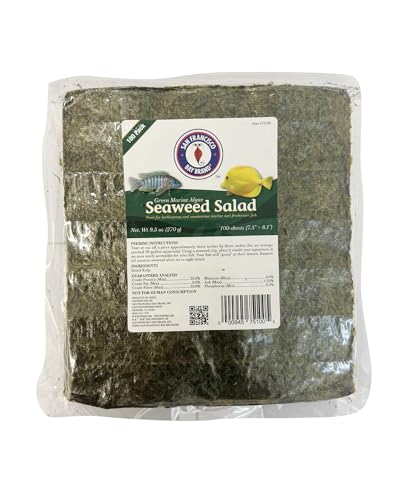
Supplements algae diet when tank runs lean, keeps snails active and full.

Drip acclimates new snails slowly, reduces stress and shell shock.
Browse discountedReef Snail Supplieson Amazon