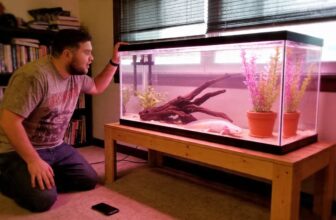
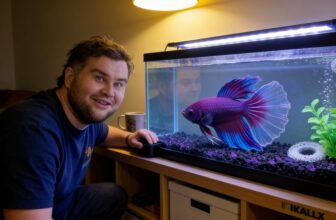
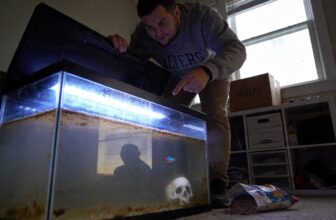
Ditch the bowl—it’s a death sentence. Your betta needs at least a 30‑liter tank ($40‑$60), a gentle sponge filter ($10), and a heater to stay at 78°F.
Use soft sand, driftwood, and live plants like Anubias; skip plastic ones since they shred fins. Overfeeding is easy to do wrong: two pellets twice daily.
Female bettas cost half as much and cause less drama, making them easier to keep with tank mates. If you want specifics without losing your mind, there’s a full breakdown ahead.
At A Glance
- Minimum tank size for adult male betta is 15-20 gallons with gentle sponge filter.
- Maintain water temperature 76-82°F using an adjustable heater and daily checks.
- Provide dense live plants, driftwood, and caves for hiding and stress reduction.
- Females are calmer and more suitable for community tanks with peaceful tank mates.
- Avoid overfeeding; two pellets twice daily prevents obesity and water quality issues.
Why a Bowl Kills Your Betta
Let’s cut the bowl fantasy right now. You wouldn’t live in a closet, so don’t trap your betta in one. Bowls lack filtration, so ammonia builds up fast, burning their gills and fins. Water temperature swings wildly—too cold one hour, too hot the next—stressing them to death. No room for a heater or gentle filter means you’re gambling with their life. A controller like an Inkbird ITC-308 can provide precise temperature regulation and safety alarms to prevent fatal swings.
You wouldn’t live in a closet, so don’t trap your betta in one. Bowls are death sentences.
- Ammonia spikes: toxic, burns tissue
- Temperature swings: weakens immune system
- No space: stifles natural behavior
Your betta deserves stable warmth and clean water. Give them a real tank, not a death sentence in glass.
Choosing the Right Tank Size
If you think an 8‑liter bowl is fine for your betta, you’re basically putting a couch in a walk‑in closet and calling it a living room.
For a solo male, start at 30‑40 liters (8‑10 gallons)—anything smaller crowds his territory and strains your water chemistry.
For adults or community setups, bump up to 60‑75 liters (15‑20 gallons). That’s not luxury; it’s stability.
- Minimum for a young male: 30‑40 L (8‑10 gal) – around $40‑60 for a glass tank.
- Minimum for an adult male: 60‑75 L (15‑20 gal) – about $80‑120.
- Maximum in a shared tank: 90 L+ (25 gal) with dividers or careful tank mates.
- Cheaper in the long run: bigger tanks cycle better, reducing your water‑change guilt.
Go big or go home—your betta’s tail won’t fit in a teacup.
A 2‑gallon Pronetcus kit is too small for an adult male and would only suit a shrimp tank or temporary quarantine setup.
What to Put in a Betta Tank: Substrate, Hardscape & Plants
Before you even think about picking out a fish, you’ve got to build the stage—and a bare tank isn’t a stage, it’s a padded cell.
Start with Hugo Kamishi Natural Sand (about $15 for 5 lbs); it softens water naturally, mimics their wild home.
Then add driftwood—Mopani works great, releases tannins that calm your betta (think earthy tea).
Now plants: dense is the goal.
Stick Anubias or Java fern on the wood (no burying rhizomes).
Add floating plants like Frogbit for shade.
Lay down some Catappa leaves too.
You’re crafting a sanctuary, not a display—it’s your betta’s jungle, and you’re the architect.
Use an aquarium-safe silicone sealant to securely attach driftwood and rocks underwater without harming your fish.
Set Up Gentle Filtration That Won’t Stress Your Fish
Since your betta’s already got a jungle gym of sand, wood, and plants, now you need water movement that won’t blast it into next week. Bettas hate strong currents; they’re not swimmers, they’re hoverers. Your filtration choice matters more than you think.
- Sponge filter – cheap ($10–15), dead-simple, and barely moves water; perfect for tiny tanks.
- HOB (hang-on-back) with baffle – use a water bottle or prefilter sponge to kill the waterfall flow.
- Internal filter turned low – many have adjustable flow; crank it down so your fish isn’t doing push-ups.
- No filter at all – risky – you’re doing daily water changes.
Stick with sponge or baffled HOB. Many tank covers use cut‑to‑size mesh with strong magnets to prevent jumpers while still allowing gentle water flow and air exchange. Your betta will thank you by not sulking in a corner.
Betta Water Temperature and Parameters
Your betta didn’t sign up for a temperature rollercoaster, so let’s dial in the numbers first.
Keep the water between 76–82°F—any lower and his metabolism slows, higher and he’s stressed.
Use an adjustable heater, say $15–$25, with a thermometer to check daily.
For parameters:
- pH: 6.5–7.5—stable’s better than perfect.
- Ammonia & nitrite: 0 ppm—non‑negotiable.
- Nitrate: under 20 ppm.
Test weekly with a liquid kit, not strips. Pair the heater with regular water parameter testing to minimize stress triggers.
That’s the insider code, and you’re in the club now.
Get it right here, and your betta thrives like the royalty he thinks he is.
Why Tannins and Catappa Leaves Benefit Your Betta
Unlike clear water setups, a tannin‑stained tank actually mimics a betta’s natural home—think shallow, leaf‑littered puddles in Southeast Asia where the water looks like weak tea. You’re not making swamp juice; you’re giving your fish what evolution designed.
- Fights infections – Tannins are mild antibacterials, keeping fin rot at bay without chemicals.
- Reduces stress – Darker water makes bettas feel hidden, so they flare less and rest more.
- Soothes torn fins – Catappa leaves release healing compounds that speed up tissue repair.
- Lowers pH – Softens hard tap water naturally, mimicking their acidic home waters.
Drop a leaf or two in. Your betta will thank you—no translation needed.
Providing gentle lighting also benefits your betta by reducing stress and mimicking shaded, natural environments.
Feeding Your Betta: A Carnivore’s Diet and Schedule
Bettas are carnivores, which means you’re running a tiny, underwater butcher shop, not a salad bar.
Skip flakes; they’re mostly filler. You want high-protein pellets or frozen foods like bloodworms, brine shrimp, or daphnia.
Skip flakes; they’re mostly filler. Choose high-protein pellets or frozen foods instead.
Feed two small meals daily—one pellet or two worms per meal. Overfeeding fouls water faster than your filter can clean, so err on the side of less.
Every third day, skip a meal to mimic their natural feast-or-famine cycle.
A quality pellet costs about $10 for a decent jar. You’ll spend $5 more monthly on frozen treats, but it’s worth it.
For a carnivorous betta, high protein content from insect-based options like black soldier fly larvae supports growth and immune health.
Read Your Betta’s Body Language
If your betta is suddenly ignoring you, it’s not being snooty—it’s likely communicating something important. These fish speak through fins and body posture, and reading them makes you part of their inner circle.
- Flared gills and stretched fins: He’s showing off, either to you or his reflection—standard tough-guy behavior, not anger.
- Tucked fins near body: He feels nervous or threatened; check for sudden movements or bright lights near his tank.
- Sitting on the bottom, breathing heavy: He’s exhausted, often from poor water quality or a too-strong filter current.
- Zigzag swimming like he’s drunk: He’s excited, usually at feeding time—lean in, he’s greeting you.
Pay attention, and you’ll speak fluent fin. Constant monitoring of water parameters and maintenance prevents many of these stress-related behaviors.
Is Your Betta Stressed or Sick?
One of the hardest parts of owning a betta is figuring out whether he’s just being a dramatic diva or actually in trouble. You’ve got to watch for clues. Check this quick guide:
| Sign | What It Means |
|---|---|
| Clamped fins | Stress, often from cold water or flow |
| Laying on bottom | Fatigue or disease; check temp |
| Frantic swimming | Ammonia spike or parasite |
| Pale color | Illness or poor water quality |
Don’t panic yet. Test your water first, since it fixes 90% of issues. If he’s clamping fins but eating fine, you’ve just got a dramatic betta—welcome to the club. We’ve all been there. To keep things stable, aim to maintain nitrates below 20 ppm during routine water changes.
Common Betta Diseases and How to Treat Them
Ever had that sinking feeling when your betta just doesn’t look right? You’re not alone—we’ve all been there.
Act fast, and you’ll save your buddy from a world of trouble.
Here’s the cheat sheet:
- Ich (white spots): Raise temp to 86°F, add aquarium salt. Quarantine if you can.
- Fin rot (ragged edges): Clean water is your friend. Treat with antibacterial meds like Maracyn.
- Velvet (rusty dust): Lights off; use copper-based treatment. It’s a parasite, not glitter.
- Swim bladder (floating sideways): Fast for 2 days, then feed a blanched pea. Layer in daphnia later.
Consider using lab-accurate test kits to monitor water quality and prevent disease. Spot these early, treat quick, and you’ll feel like a fish-whisperer. You’ve got this.
Male vs. Female: Which Betta Is Right for You?
Whereas male bettas get all the flashy colors and dramatic fins, female bettas offer a calmer, less complicated experience that’s easier on your wallet and your stress levels.
You’re not missing out—females still shine with subtle iridescence, and they’re half the price (around $5–$10 vs. $15–$30 for a showy male).
Females still flash subtle iridescence, and they’re half the price of a showy male.
Plus, they’re less aggressive, so you’ve got more tank‑mate options.
But if you crave that flowing, halfmoon tail or a fish that’ll flare on command, go male.
Just know you’re signing up for a diva with strict solitude needs.
Bottom line: pick female for chill vibes, male for maximum drama.
For any betta, low‑flow filtration is key to avoid stressing delicate fins, as recommended in general betta tank maintenance tips.
Tank Mates for Bettas: What Works and What Doesn’t
Why trust a fish that flares at its own reflection to play nice with strangers? You don’t force it, but you can pick smart tank mates.
- Bottom dwellers: Corydoras catfish, peaceful and armored, stay out of his way.
- Snails: Nerite snails clean glass without drama, cheap at $3 each.
- Shrimp: Amano shrimp are tough, but cherry shrimp become expensive snacks.
- Avoid: Male guppies, gouramis—they look like rivals. No fin‑nippers.
Start with a 20‑gallon tank, not smaller. Add your betta last, after everyone settles in. You’re building a community, not a battlefield. Stick with calm, non‑flashy species, and you’ll all belong together. For clean water changes during setup, consider using a kit with a 49‑ft vinyl hose for easy drainage and refill.
Top Mistakes New Betta Owners Make (And How to Avoid Them)
If you’re reading this, you’ve probably already bought a tiny bowl, a plastic plant, and a betta that looked sad in a cup.
Welcome to the club—we’ve all been there.
First mistake: that bowl. Bettas need at least 8 gallons, not a vase.
First mistake: that bowl. Bettas need at least 8 gallons, not a vase.
Second: no filter. Stagnant water breeds ammonia, which burns their gills.
Third: skipping a heater. They thrive at 78–80°F, not your room temp.
Fourth: those plastic plants tear fins—use silk or live ones instead.
Fifth: overfeeding. Two pellets twice a day is plenty, not a feast.
Fix these, and you’re already one of us.
For precise dosing of water conditioners or supplements, consider using precision flow control pumps to ensure stable water parameters.
How to Breed Bettas Without Losing Your Mind
So you want to breed bettas, huh? Don’t worry—you won’t lose your mind if you follow one golden rule: separate the male after spawning. He’ll eat the eggs if you don’t.
Here’s your no-drama guide:
- Condition the pair for two weeks with live foods like brine shrimp—costs about $5.
- Set up a 5‑gallon spawning tank with a floating plant or spawning mop; keep water at 80°F.
- Remove the female once eggs appear (typically 24 hours). She’ll get beaten if you don’t.
- Feed the fry infusoria for two weeks; it’s free if you culture it from lettuce.
Bottom line: timing is everything. Miss a step, and you’re back to square one. For successful breeding, maintain soft, acidic water with dim lighting to mimic the species’ ideal spawning conditions.
Frequently Asked Questions
How Can I Tell if My Betta Is Actually Happy?
You’ll know your betta’s happy when he’s actively exploring, flaring his gills occasionally, and building bubble nests.
He’ll swim with straight, confident movements, not clamped fins.
A happy betta eats eagerly and rests on leaves, not the bottom.
He’s curious, not skittish.
If he greets you and shows vivid colors—that’s your win.
No hiding, no stress stripes.
Give him 78°–80°F water, gentle flow, and some tannins, and you’ll both belong to the “happy owner” club.
Do Bettas Get Lonely or Need Tank Mates?
Nope, bettas don’t get lonely—they’re solitary by nature. That territorial aggression isn’t just a quirk; it’s hardwired.
You’ll see a happy solo betta patrolling his 15–20-gallon kingdom, not pining for a friend.
Tank mates? Risky.
Fin-nippers like tetras stress him out, and another betta? That’s a fight waiting to happen.
Stick with him alone, or maybe a peaceful snail—your betta’s better off as the ruler of his own tank.
Can I Keep a Male and Female Betta Together?
You really can’t keep a male and female betta together long-term; they’ll fight, often to the death.
For short breeding attempts—like a few hours—you’d need a heavily planted 10‑gallon tank with hiding spots and a gentle filter under $30.
Even then, it’s risky. Males get territorial fast, and females can get battered.
Your best bet? Keep them separate except you’re breeding purposefully, with a divider ready. Trust me, it saves heartache and your wallet.
Why Does My Betta Flare at Its Own Reflection?
Your betta flares at its reflection since it mistakes that fish for a rival.
In the wild, males guard about 3 square feet of territory, so seeing its own image triggers an instinct to fight—it’s not vanity, just ancient wiring.
You can reduce this by dimming the light, adding more plants (big broad leaves work well), or moving a decoration to break the reflection.
If stress persists, try a low‑flow filter or a tannin‑rich conditioner like Atison’s Betta Spa to calm things down.
How Often Should I Change the Tank Water?
You should change 25–50% of the water every week—don’t skip it. Your betta’s a messy eater, and ammonia builds up fast, stressing him out.
Use a gravel vacuum to suck out gunk, then add dechlorinated water at the same temp.
For a smaller tank (under 10 gallons), bump it to twice weekly.
Skip the full cleanouts; they crash the cycle. Think of it like doing dishes—annoying but vital.
Your fish thanks you with brighter colors and sassier flares.
Rounding Up
So, skip the bowl. Seriously, it’s a death sentence, not a home. A proper 60-liter tank, with soft sand and gentle flow, lets your betta live five to seven years, building bubble nests instead of getting depressed. It costs about 150 bucks upfront—but that’s cheaper than a vet visit. Set it up right, feed him bugs, and don’t overthink it. You’ll get a sassy, colorful roommate who’ll flare at his own reflection. Bottom line? Give him space, and he’ll thrive.