You’ll need at least 100 gallons for a school of five to six archerfish—anything smaller invites stress, fin nipping, and disease.
This isn’t a freshwater fish; they require brackish water with a specific gravity of 1.005–1.010, measured weekly with a refractometer.
Use marine salt, a powerful canister filter like an Eheim Classic 600, and a guarded heater set to 77–82°F.
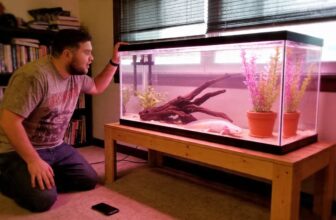
Add bogwood breaking the surface for basking, plus Java fern or Anubias.
Skip sharp décor.
Skip flakes-only feeding.
A clear mesh lid is non-negotiable—they jump.
Stick with this, and you’ll see their signature jet-shooting behavior.
Stick around, and we’ll cover the rest.
At A Glance
- Minimum 100‑gallon tank with sandy substrate and bogwood for basking.
- Maintain brackish water at specific gravity 1.005–1.010 using marine salt.
- Perform weekly 20‑25% water changes while matching temperature and salinity.
- Feed live crickets, floating pellets, and frozen foods to encourage shooting.
- Use a clear mesh lid and guarded heater to prevent jumping and stress.
How Big a Tank Does a School of Archerfish Really Need?
Since you’re dealing with a fish that hits ten inches and likes to hang out in a crew of five or six, the minimum tank size isn’t a suggestion—it’s a hard rule.
A ten-inch fish in a crew of five needs 100 gallons—minimum, no shortcuts.
You need 100 gallons, no shortcuts.
Crowd them, and you’ll see nipped fins and sulking fish.
Bigger gives you room for that paludarium you’re planning.
The payoff? A calm school that shoots water like pros.
Don’t be the person who squeezes them into 75 gallons; you’ll regret it, and so will they.
Trust the size, skimp elsewhere, and you’re part of the smart crew already.
A lack of adequate tank space reduces iridescence and increases stress in schooling fish.
Why Archerfish Need Brackish Water, Not Freshwater
If you think archerfish are just fancy freshwater pets, think again—they’re brackish-water fish through and through.
Keep them in pure freshwater, and you’ll watch them slowly decline, their colors fade, their immune system tank.
Their bodies evolved for that specific gravity mix—around 1.005 to 1.010—where salt and minerals meet.
No shortcuts here. Without brackish conditions, you’re setting them up for disease and early death.
You want a thriving school, not a constant deathwatch.
So grab a hydrometer, mix that salt right, and give them the water they actually need.
Belonging starts with getting the basics right.
Consider pairing your archerfish system with a ceramic bio filter media to host nitrifying bacteria in high-flow sump areas.
Setting Up the Perfect Paludarium for Archerfish
Forget that boring rectangle of glass—archerfish deserve a paludarium, a hybrid tank that’s half water, half land, built to mimic their wild hunting grounds.
You’ll need a 400‑liter (100‑gallon) minimum for a group of five or six. Go bigger if you can; you won’t regret it.
Install a powerful external filter, like an Eheim or Fluval, to handle their messy appetites. Add a guarded heater—those territorial fish might bump it otherwise. A wavemaker keeps water moving, but plants like Java fern will help. For stable water chemistry, maintain a consistent buffer capacity to support healthy gill function and pH stability.
You’re not just keeping fish; you’re engineering a hunting gallery. Welcome to the club.
Substrate, Bogwood, and Plants for Your Brackish Set-Up
So what kind of foundation does a master archer deserve? Start with 80% sand mixed with 20% pea gravel, then top it off with rounded river rocks—no sharp edges.
Add one piece of bogwood that breaks the surface, giving your archers a basking spot.
For plants, pick low-maintenance brackish survivors: Java fern, Anubias, and Water sprite. They’ll handle the salt, no sweat.
Skip the fancy terra firma; your archers just need a solid hunting ground.
Keep it simple, keep it brackish, and you’re part of the smart-tank club now.
For reliable feeding during your setup, consider an automatic feeder with precision portion control and dual power options to maintain consistency.
Filtration and Heating Gear for Archerfish Tanks
Look at filtration the same way you’d buy a car—get something reliable, not just what’s on sale. Archerfish produce serious waste, so don’t cheap out here.
- Eheim Classic 600 ($70–$90) – bulletproof canister, silent, easy media access.
- Fluval 407 ($150–$180) – built-in heater option, high flow, great for big tanks.
- Powerhead+sponge combo ($30–$50) – budget choice if you run plants, but check weekly.
For a quiet, low‑power option in nano tanks, consider the NICREW Submersible Filter which uses only 3.5 W and provides 40 GPH flow.
For heating, grab a Fluval E300 ($80) with an LCD guard; archerfish knock heaters loose. Keep temps steady at 77–82°F or watch them fade. Pair a reliable filter with a guarded heater, and you’re part of the smart setup crew.
How to Mix and Maintain Salinity in Your Archerfish Tank
A hydrometer is the cheapest insurance you’ll ever buy for your archerfish tank.
You’re aiming for a specific gravity of 1.005‑1.010—that’s just brackish, not full marine.
Mix marine salt mix in a bucket of dechlorinated water, stirring until dissolved.
Always add saltwater during water changes, never freshwater; it’s a gradual, stable climb, not a shock.
Check salinity weekly, more if you’re adding new fish.
A refractometer costs more but gives you precision; you’re part of the club that cares about the details, right?
Get it right once, and your archers won’t give you grief.
For great results, consider using Seachem PhosGuard to remove phosphate spikes from your tank water.
The Exact Live Prey and Floating Pellets Archerfish Need
You’ve dialed in the salinity, but your archerfish won’t shoot a water jet at a perfectly mixed salt bucket—they want something that moves.
Feed them these three necessities:
Feed them these three necessities: live crickets, floating cichlid pellets, and thawed frozen bloodworms.
- Live crickets (drop one on the surface, watch them shoot it off a branch). They’re cheap, about $5 for 50, and trigger that instinct.
- Floating cichlid pellets (Hikari brand, $12 a jar) sink slowly, mimicking drowning bugs.
- Frozen bloodworms (thaw first) for variety, $8 for a pack.
Stick to surface‑floating foods—your archerfish won’t touch anything that sinks. Rotate daily, and you’re part of the crew that gets that perfect jet.
To keep your brackish water clear, add FritzZyme 7 to safely break down waste from leftover food and fish.
Safe Tank Mates: Mudskippers, Fiddler Crabs, and Scats
Why risk your archerfish’s serenity on a rampaging tank mate? You’re building a community, not a brawl.
Mudskippers, fiddler crabs, and young scats fit right into your brackish paludarium, sharing that sloped, sandy shoreline without causing chaos.
Mudskippers keep to the mudflats, crabs scuttle sideways (classic), and scats school peacefully—no fin‑nipping, no territory wars.
They’re low‑maintenance buddies that respect your archer’s space.
Stick with these three; they’re proven safe, non‑aggressive, and add that “coastal crew” vibe your tank needs.
Don’t overthink it—this combo works.
Proper lighting fixtures like adjustable light risers can enhance plant growth and reduce algae while maintaining stable water conditions.
Which Fish to Avoid Keeping With Archerfish?
So you’ve got your peaceful community lined up—mudskippers trundling along the shore, fiddler crabs doing their sideways hustle, and scats schooling like they’re waiting for a bus.
But adding the wrong fish turns your calm paludarium into a wrestling match.
But adding the wrong fish turns your calm paludarium into a wrestling match.
Avoid these finned troublemakers:
- Cichlids – Especially green terrors or Jack Dempseys. They’re aggressive, hit 10 inches, and see archerfish as lunch.
- Puffers – Green spotted puffers nip fins and bully shy archerfish. Plus they need separate setup.
- Large catfish – Like redtail or shovelnose. They’re bottom-dwelling tanks that stress your surface hunters.
Bottom line: keep it brackish-community only. Your archerfish will thank you by not hiding in bogwood.
To support healthy group dynamics in any tank, maintain a balanced male‑to‑female ratio to limit aggression and encourage peaceful schooling.
Can You Breed Archerfish at Home?
If you’re ready to try breeding archerfish at home, brace yourself—it’s possible but far from a set‑and‑forget project.
You’ll need a mature, 100‑gallon-plus paludarium with stable brackish water (specific gravity 1.005‑1.010).
They’re surface spawners, releasing up to 3,000 eggs that hatch in about 12 hours.
Without careful monitoring, you’ll lose them fast.
Provide live insect prey to trigger spawning, and keep a gentle current.
No special hormones needed, just patience.
It’s a rewarding challenge for dedicated keepers who want to join the breeding club. Maintain stable water parameters to prevent stress and disease, as steady conditions are critical for fry survival.
How to Tell If Your Archerfish Is Stressed or Sick
Catch these early, and you’ll keep your squad healthy. You’ve got this. In addition to testing ammonia, ensure your filter provides adequate biological filtration to stabilize the nitrogen cycle and support fish health.
How to Change Brackish Water Without Killing Your Fish
Changing brackish water is a lot like mixing a cocktail—get the ratios wrong, and you’ll end up with something nobody wants to drink.
You’re part of the club now, so here’s the real trick: match salinity precisely using a hydrometer (that’s the floaty glass stick).
Mix your new water in a bucket first, then siphon it in slowly over 30 minutes. No sudden swings, no shocked fish.
Do a 20% change weekly, keep temp stable, and you’ll nail it every time.
Your archerfish will thank you, and you’ll feel like a pro.
To ensure no hidden toxins build up, monitor with weekly pond monitoring strips for a quick health check of your water parameters.
5 Beginner Archerfish Mistakes: and How to Avoid Them
Starting an archerfish tank feels like leveling up in the fishkeeping game, but a few classic blunders will send your brackish buddies belly-up fast. You’re part of a crew that wants these spot-shooting pros to thrive, so dial it in.
- Skipping salinity checks. Use a refractometer, not a hydrometer—those glass swing‑arms lie like a cheap watch. Keep specific gravity at 1.005‑1.010, or your archers get stressed, then sick.
- Under‑sizing the tank. A 40‑gallon breeder won’t cut it. They need 100 gallons minimum; cramped quarters trigger territorial brawls. Go big or watch them sulk.
- Feeding only flakes. Toss in frozen brine shrimp or live crickets. Without variety, they’re listless, not hunting—bor‑ring. Instead, encourage grazing on biofilm and slime from driftwood as part of their natural foraging routine.
Step-by-Step Water Change Routine for Brackish Aquariums
A solid water change routine is the single best way to keep your archerfish from turning into sad, floating spitballs.
Start by mixing your new brackish water in a bucket, matching the specific gravity to your tank using a hydrometer—it’s cheap, under $15, but essential.
Start by mixing new brackish water in a bucket, matching specific gravity with a cheap but essential hydrometer.
Siphon out 25% of the old water, vacuuming the gravel as you go.
Pour in your pre‑mixed water slowly, testing salinity afterward.
Do this weekly without fail.
Skip one, and ammonia spikes.
You’re part of the crew that keeps stable water, so your fish thrive, not just survive.
That’s non‑negotiable.
Use a clear mesh lid to prevent your archerfish from jumping out during maintenance.
Frequently Asked Questions
Can Archerfish Shoot Water Out of the Tank?
Yes, they absolutely can—and you’ll want to prevent it.
Your archerfish’s aiming is precise, and a lidless tank means stray shots landing on your floor.
Those streams hit over a meter, so a tight-fitting hood or glass canopy is mandatory.
Skip it, and you’re mopping daily.
I’ve learned this the hard way: they’ll target you, too, for fun.
Bottom line? Secure the top; your floors and your fish stay happy.
How Long Does It Take for Fry to Reach Adult Size?
You’re looking at about 6 to 12 months for archerfish fry to hit adult size, but it’s not a race you’ll win with a stopwatch.
Growth speed depends heavily on water quality, tank size, and—most crucially—diet.
Feed them multiple small daily portions of live insects and quality pellets, keep that brackish salinity steady, and swap water regularly.
Miss those steps, and you’ll have stunted, scrawny fish.
Bottom line: stay consistent, control conditions, and they’ll reach 10 inches within a year.
Do Archerfish Recognize Their Owners?
Do your archerfish know you from the filter intake? Honestly? Probably not.
They’re wired for movement and shadows, not facial recognition.
Your archerfish bonds with your hand delivering crickets, not you as a person.
They’ll learn your feeding routine—expecting you at 7 PM sharp—but that’s association, not affection.
Think of it like Pavlov’s dog, minus the drool.
They don’t “miss” you; they miss dinner.
For a species with a 5‑10 year lifespan, that’s fine.
Bottom line: your fish will never name a cricket after you.
Don’t take it personally.
What Is the Ideal Lighting Schedule for a Paludarium?
You’ll run lights 8-10 hours daily, timed to mimic tropical daylight.
Your archerfish need that surface contrast for hunting insects; broad-leaf terrestrial plants demand consistent brightness.
Use a programmable LED fixture—like a $60 Nicrew—on a dawn-to-dusk cycle.
Avoid blasting them for 12+ hours; algae parties aren’t invited.
A simple timer does the trick, keeping everyone’s internal clock steady.
Trust me, you’ll get photoperiodically smarter.
Can You Use Crushed Coral to Maintain Brackish pH?
Yes, you can use crushed coral to maintain brackish pH, but you shouldn’t rely on it alone.
It’ll buffer your water toward 8.0–8.5, which works for archerfish—but it’s a blunt tool.
You’ll need a hydrometer (around $10) to check salinity anyway, so use crushed coral as a backup, not a crutch.
Monitor pH weekly; if it drifts, adjust with water changes.
Bottom line: crushed coral helps, but don’t skip regular testing.
Rounding Up
So, you’re building a brackish paludarium for a school of archerfish. That’s a big, weird project—and you’ll probably mess up the salinity once or twice. Don’t sweat it.
- This isn’t a standard tank. You need the 400-liter minimum, a solid 25°C heater, and heavy filtration.
- Skip the freshwater shortcuts. Brackish water (salinity around 1.005–1.010 specific gravity) isn’t optional; it keeps your fish alive.
- Add bogwood and broad-leaf plants to support hunting—they’ll repay you by nailing crickets from a foot away.
Bottom line: commit to the setup, test your water weekly, and keep a group of five. Your archerfish will thrive, and you’ll feel like a brilliant mad scientist.