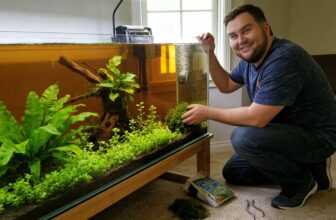
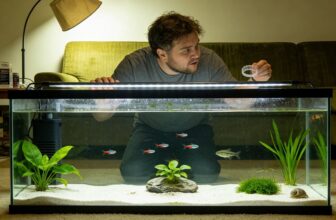
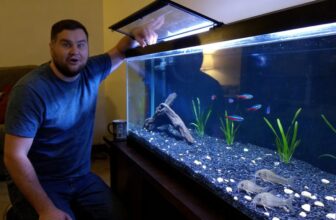
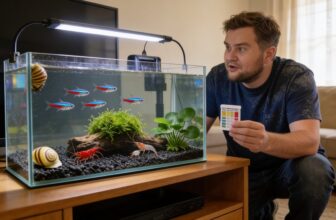
You don’t need CO₂ tanks or fancy lights to grow aquarium plants—honestly, it’s almost insulting how simple this can be.
The Walstad Method uses organic potting soil (no fertilizer additives) capped with gravel, feeding roots slowly as plant chemicals naturally suppress algae.
Use a cheap LED like NICREW SkyLED (about $30).
Do minimal water changes, skip activated carbon, and add fast floaters like frogbit.
Avoid bottom-feeders that dig.
It works if you’re patient.
Stick around—there’s more on fixing your inevitable beginner mistakes.
At A Glance
- Layer organic potting soil under a gravel cap for slow-release nutrients.
- Use low-light plants like Java fern, Anubias, and Vallisneria.
- Maintain 6-8 hours of light daily to prevent algae growth.
- Add floating plants to absorb excess nutrients and shade algae.
- Perform minimal water changes; monthly 10-20% is sufficient.
Why the Walstad Method Works Without CO₂ or Expensive Light
Why mess with expensive, fussy gear when you can just let the dirt do the work?
Why mess with expensive, fussy gear when you can just let the dirt do the work?
You ditch the CO₂ tank, the metal‑halide fixture, and the endless tweaking.
Instead, you bury nutrient‑rich soil under a gravel cap.
Plants feast on slow‑release goodness, not injected gas.
Your light? A sunny windowsill or a basic full‑spectrum lamp.
No timer, no dimmer, no drama.
Algae stays in check since your plants release natural chemicals—allelochemicals—that suppress it.
Minimal water changes keep those helpers around.
You save money, time, and sanity.
You’re not fighting nature, you’re joining it.
Welcome to the tribe.
For maximum light transmission, you can pair this method with a clear mesh lid that allows full illumination for your plants while preventing fish from jumping out.
Pairing this method with a low‑maintenance filter, like a gentle sponge filter, ensures water movement without disturbing your substrate or uprooting plants.
What Soil Type Works Best for a Walstad Natural Aquarium
You aren’t grabbing just any bag of potting mix. For a Walstad tank, you need organic potting soil—zero added fertilizers, no perlite, no chemical wetting agents.
Brands like Miracle-Gro Organic Choice (around $8 a bag) work perfectly. Why? Synthetic additives burn plant roots and fuel algae blooms.
You want nutrient-rich but sterile dirt; it’s pond-mud in a bag. Check the label: “organic” means slow-release goodness. Avoid anything labeled “moisture control” or “lawn food.” Those contain ammonium, which spikes ammonia, killing fish.
Your tank thrives on simple, cheap soil—just like nature intended. For refugiums supporting macroalgae, supplementary lighting with violet wavelength light can further boost nutrient uptake in the planted zone. CrystalClear Bio Clarifier works above 50°F using beneficial microbes to digest organic debris that would otherwise cloud the water. Stick with plain organic; your plants will thank you.
How to Layer Soil and Gravel the Right Way
Layering soil and gravel in a Walstad tank is as simple as making a poor-man’s lasagna—no boiling noodles required. You don’t need fancy gear, just patience and a steady hand.
- Spread 0.5 to 1 inch of organic potting soil evenly across the bottom. No chemicals, no additives—just dirt, the way nature intended.
- Cap that soil with a 1 to 2 inch layer of fine gravel. Think of it as a blanket that keeps the soil from clouding your water. Choosing unpolished, dye-free natural river rock is safe for sensitive fish and invertebrates.
- Mist the gravel lightly with a spray bottle before flooding. This traps air pockets, so your soil stays put.
Maintain consistent water chemistry to support shrimp health, just like stable soil layers support plant growth.
That’s it. Simple layers, no fuss, you’re in the club now.
How to Pick the Right Light for a Low-Tech Walstad Tank
Now that you’ve got your soil and gravel layered into a proper lasagna—no cheese, sadly, but plenty of worm castings—it’s time to throw some light on the situation.
For a low‑tech Walstad tank, you don’t need a blinding rig. A simple full‑spectrum LED, like the NICREW SkyLED (around $30 for a 20‑inch), works wonders. Keep it on for 6–8 hours; any longer, and you’ll breed algae. Using a digital programmable timer ensures consistent 6-8 hour lighting cycles to prevent algae spikes by locking in minute-level scheduling. A model with memory function retains your timer settings after a power outage, maintaining stable routines for your plants.
Avoid high‑intensity fixtures—they’ll starve your plants of CO₂ and force you into high‑tech hassle. Stick with medium light, and your soil will do the rest.
When to Add Water and How Much to Change
Once the lights are on and your plants start settling in, the temptation to fiddle with the water is real—but resist it.
In a Walstad tank, you’re building a little ecosystem, not a chemistry lab.
Here’s your water-change rhythm:
- Top off evaporation only—use dechlorinated tap water, no more than once a week.
- Change 10-20% monthly, if at all; your soil provides the nutrients, not the water column.
- Wait until you see mulm—that fine brown detritus on the gravel—before even thinking about a change.
You’re part of the low-tech crew now, so relax.
Using a stand with a load capacity safety margin prevents wobble and structural failure under the tank’s total weight.
Use a fish-safe silicone sealant for any permanent repairs to the tank glass or seams before setup.
Less fiddling means happier plants and, honestly, a happier you.
Why Changing Less Water Keeps Algae Away Naturally
Since you’re barely touching the water, you’re actually keeping algae in check—and that’s the whole point of the Walstad method.
Those algae-inhibiting chemicals your plants release? They’re natural driftwood-strength repellants.
Each water change you skip leaves more of them in the tank, working quietly as you watch.
You’re part of a secret club: people who let nature do the scrubbing.
No white-knuckled dosing schedules, no splurging on fancy filters.
Just a low-tech cycle, a little patience, and a tank that stays clear since you didn’t mess with it.
You belong here.
For precise monitoring without chemicals, you can use an auto‑calibration pocket tester that is waterproof up to one meter.
Fan-based coolers offer an ultra‑quiet alternative for small tanks.
How Allelopathy Keeps a Walstad Tank Clean
You can’t see it, but your plants are waging a quiet chemical war on algae. This process, allelopathy, keeps your tank clean without you lifting a finger.
- Chemical release: Plants secrete natural algae suppressants into the water.
- Retention strategy: You rarely change water, keeping those chemicals concentrated.
- Algae starvation: Suppressed algae can’t outcompete your plants for nutrients.
It’s a self‑sustaining cycle—your plants protect themselves, and you just watch. No dosing, no scrubbing, no fuss. You’re part of a low‑effort club that works smarter, not harder. For those who prefer a more active approach, a DIY CO₂ generator provides an automated gas injection alternative. Bottom line: let your plants do the dirty work. For aquariums that need extra biological filtration support, products like Brightwell MicroBacter7 can enhance nitrification without disrupting the natural allelopathic balance.
Best Plants for Walstad Tanks (and Ones to Skip)
Think of a Walstad tank as a plant democracy—every species gets a vote.
Your best allies? Low-light, slow-growing plants. Java fern and Anubias win easily; they’re cheap ($5–$8) and melt-proof.
Vallisneria, Cryptocoryne, and floating frogbit join the party—they spoon-feed from your soil. Water spangles also excel here by multiplying automatically to create shade and reduce algae without any trimming.
Skip the high-maintenance divas:
- Dwarf baby tears? Needs CO₂ and a light show.
- Hairgrass? Starves without liquid ferts.
- Rotala rotundifolia? Grows leggy, whines for pruning.
Stick with Walstad’s squad. They’ll root, spread, and keep algae at bay.
For safety, ensure your setup uses strong steel frames and adjustable leveling feet to handle the weight of soil, water, and plants without wobbling.
Bottom line: choose tough plants, not troublemakers.
How Many Fish Belong in a Natural Planted Aquarium
What’s the magic number for fish in a Walstad tank? It’s simple: less is more. You’re not running a fish factory; you’re building a balanced slice of pond life. Overstocking turns your low-tech setup into a nutrient soup, fueling algae instead of plants. When treating sick fish, you can use API Aquarium Salt to provide electrolytes for gill function and recovery without upsetting the plant balance. Cardinals additionally require stable water parameters to avoid stress and faded stripes in a low-tech setup.
For a standard 10-gallon, aim for:
- One small fish per 2 gallons—think 5 neon tetras, not 10.
- A total inch-per-gallon rule—mature fish length, not baby size.
- Zero bottom-feeders—they dig up your soil cap, muddying the water.
You belong to the low-stock club, and your plants will thank you.
What to Feed Your Plants Without Liquid Fertilizers
Skip the liquid fertilizer bottles, they’re not invited to this party.
Your soil layer does the feeding, slowly releasing nutrients for months.
Mulm from fish waste and decaying leaves adds nitrogen and potassium—no bottles needed.
For missing traces, drop an Indian almond leaf or two; they leach tannins and minerals, about $5 for a pack of 10.
Feed sparingly, you’re building a closed loop.
Your plants thrive on waste, not chemistry kits.
It’s lazy, efficient, and oddly satisfying—like composting in a box.
Just don’t starve your fish; their poop is the secret sauce.
Use a multi‑parameter test kit to monitor ammonia spikes from waste buildup without relying on liquid fertilizers.
When using tap water for water changes, Seachem Prime can detoxify ammonia while preserving beneficial bacteria.
How to Handle Algae Outbreaks in a Walstad Tank
Since algae might crash your low-tech party, don’t panic—you’ve got plenty of ugly fixes that work without high-tech gear. Algae blooms are just your tank telling you it’s out of balance.
Algae blooms are just your tank telling you it’s out of balance.
- Blackout for 3–5 days—cover the tank completely, no light at all. Plants survive, algae starves.
- Add fast‑growing floaters like duckweed or frogbit; they suck up excess nutrients algae craves.
- Increase your plant mass by 20–30%; more leaves mean more allelopathy (natural algae‑suppressing chemicals) and less room for slime.
Your tank’s a living system—trust the process, and you’ll belong to that crowd who’s never seen green water. Ammonia levels > 0.25 ppm in freshwater can trigger persistent algae, so test water at least twice weekly to catch imbalances early.
For reliable hardware support, choose a filter with bio‑media like ceramic quartz balls to maintain stable water chemistry during recovery.
Skip Activated Carbon for Natural Algae Control
Keeping the lights off and floaters in place is a good start, but your filter might be sabotaging the whole thing.
That activated carbon cartridge you’re swapping every month? It’s stripping out the very allelochemicals—natural algae suppressors your plants release—that keep your tank clean.
You don’t need it. In a Walstad setup, soil provides nutrients, plants handle algae control.
Skip the carbon, keep those beneficial compounds circulating. Your tank becomes a self-regulating mini-ecosystem.
If you do use a pump, choosing a model with sine‑wave pump technology can further reduce energy consumption and extend motor life. For connecting tubing to your filter or pump, a food‑grade quick connector provides a secure, leak‑free seal without tape or threading.
Bottom line: ditch activated carbon. Let allelopathy do the dirty work.
You’ll save money, reduce maintenance, and join the club of low-tech winners who grow lush tanks without fighting greenwater.
3 Beginner Mistakes That Ruin Soil Aquariums
Don’t let a few common slip‑ups turn your soil tank into a murky mess. You’re part of the low‑tech tribe now, so avoid these blunders:
- Using thick soil layers — stick to 0.5–1 inch. Any more, and anaerobic pockets release hydrogen sulfide, killing roots and fish. It smells like rotten eggs.
- Capping with fine sand — that compacts, trapping gases. Use 1–2 inch pea gravel instead; it lets water circulate and roots breathe.
- Adding fish too fast — ammonia spikes before plants establish. Wait at least two weeks. Your plants need a head start.
Get these simple steps right, and you’ll dodge the murk, keep your community proud, and grow a lush, self‑sustaining tank.
How Long Until a Walstad Tank Fully Cycles
Right, you’ve dodged the rookie mistakes — no hydrogen sulfide bombs or fishy ammonia spikes. Now you’re wondering: how long until a Walstad tank fully cycles? Give it four to six weeks, tops. Your plants do heavy lifting, soaking up ammonia directly before bacteria fully colonize. Here’s what you’ll see:
| Week | What’s Happening |
|---|---|
| 1–2 | Fast plant growth, little to no ammonia spike. |
| 3 | Biofilm appears, snails might join the party. |
| 4 | Stable ammonia, nitrite readings vanish. |
| 5 | Nitrates appear, then drop under plant demand. |
| 6+ | Crystal-clear water, algae under control. |
Trust the timeline, skip test kits panic, and welcome your squad. For experienced aquarists, maintaining stable parameters with weekly water changes and consistent testing will mirror the low-tech balance you achieve here.
Frequently Asked Questions
Can I Use Sand Instead of Gravel for the Cap?
Yes, you can use sand instead of gravel for the cap—it works fine.
Sand packs tighter though, so go with a coarse grain like pool filter sand ($10 per 50 lbs) to avoid compaction.
It won’t trap debris as much as gravel, and your plants’ roots will appreciate the snug hold.
Just keep the soil layer at least 0.5 inches deep, cap with 1-2 inches of sand, and you’re golden.
Bottom line: sand’s a solid, low-cost swap.
How Do I Prevent the Soil From Turning the Water Cloudy?
You’re worried about cloudy water, and that’s a classic Walstad hiccup. Don’t panic.
Prevent it by adding a thick cap—at least 1 inch of fine gravel over your soil. This traps the dirt like a weighted blanket.
When filling, pour water slowly onto a plate or your hand to avoid stirring up the soil. No splashing.
Patience is key. The cloudiness clears within a few days as the soil settles. Your tank isn’t doomed; it’s just finding its balance.
Will My Fish Uproot Plants in the Soil Layer?
Yes, some fish will uproot your plants—especially bottom‑dwellers like corydoras or territorial cichlids. They dig through the soil layer searching for food or creating nests, pulling up stems and roots.
To avoid a mess, choose fish that stay near the surface or mid‑water, like tetras or rasboras. Or plant heavy root feeders, like Amazon swords, deep enough so fish can’t easily dislodge them. A thick gravel cap helps too.
Do I Need to Add Root Tabs to a Walstad Tank?
No, you don’t need root tabs in a Walstad tank. The soil layer already packs slow‑release nutrients, so you’re set. Root tabs are for gravel‑only setups, but your soil does the heavy lifting. Adding extra tabs can spike ammonia and upset your algae‑fighting balance.
Remember, low‑tech means just that—less fiddling, more relaxing. Your plants get what they need from the dirt, and you save cash.
Bottom line: skip the tabs and trust the soil’s natural buffet.
Can I Successfully Grow Carpeting Plants Without Co₂?
Yes, you can grow carpeting plants without CO₂, but your options narrow.
Choose hardy, low-light species like dwarf sagittaria or marsilea minuta—they’ll spread, just slowly.
Forget finicky Monte Carlo or hairgrass; they’ll disappoint without gas injection.
Stick with a Walstad setup’s soil-rich substrate and medium light, keep water changes minimal, and let allelopathy—those natural algae-fighting chemicals your plants release—help.
You won’t get a golf-green lawn, but you’ll get a lush, low‑maintenance carpet. No CO₂ tank needed.
Rounding Up
So, you’ve got the dirt—literally—on building a Walstad tank. This isn’t a magic bullet, just a smarter, lazier path. You’ll save sixty bucks a year on CO₂ refills and stop fighting algae wars every Sunday. Your plants will grow slower but healthier, and your fish will thank you for the stable chaos. Forget expensive gear. Grab some organic soil, a $10 lamp, and let nature do the heavy lifting. You’ve got this—no PhD required.