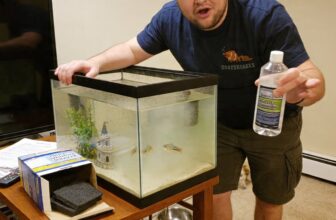
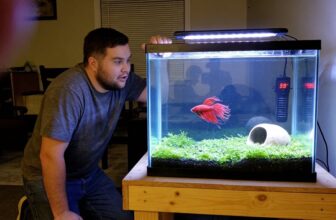
You’ll want a cool (68–72°F), dimly lit tank with a gentle filter—marimo rot in warm water and sulk under bright lights.
Use dechlorinated water and change 25% weekly.
Good tank mates? Betta fish, Amano shrimp, or Nerite snails; avoid aggressive nippers.
Pick a bright green, firm ball, no brown patches.
Remove hitchhikers with a 1:19 bleach dip for 1–2 minutes.
Bottom line: low stress, low light, clean water—keep it simple and you’ll keep them alive.
Stick around for the dirty details on splitting and fixing rotten cores.
At A Glance
- Purchase marimo from reputable sellers to avoid zebra mussel contamination.
- Use low LED lighting under 50 lumens per gallon and cool 68-72°F water.
- Perform weekly 25% water changes with dechlorinated water to prevent rot.
- Compatible tank mates include bettas, goldfish, and Amano shrimp; avoid aggressive nibblers.
- Gentle flow with a small sponge filter prevents stagnation without stressing marimo.
Why Does USFWS Warn About Marimo Bought After February 2021?
Since a tiny, unwanted hitchhiker hitched a ride on shipments of these fuzzy green balls. Zebra mussels—nasty invasive pests—hijacked marimo from Ukraine, triggering USFWS warnings after February 2021.
Since a tiny, unwanted hitchhiker hitched a ride on shipments of these fuzzy green balls.
They clog pipes, wreck ecosystems, and cost billions. You don’t want that in your tank.
If your moss ball’s from that batch, destroy it immediately—check the agency’s disposal site.
Buying from reputable sellers like AquaticArts or PlantsForPets now guarantees clean stock. For home brewers or distillers verifying water quality, a NIST‑traceable hydrometer ensures accurate measurements for safety and compliance.
Bottom line: protect your setup and your community. Verify compliance, skip sketchy listings, and you’re safe.
Belong to the informed crew that dodges this headache.
How to Set Up Your Tank for Marimo: Low Light, Cool Water, Gentle Flow
Good—you’ve dealt with the zebra-mussel scare and sourced clean stock.
Now, set up your tank like a chill lounge, not a spotlight stage.
Keep lighting low: an LED strip rated under 50 lumens per gallon works perfectly; direct sun will scorch your marimo.
Water stays cool—68–72°F is the sweet spot—so skip the heater unless your room’s a sauna.
Gentle flow matters; a small sponge filter turning over 10 gallons per hour prevents stagnation without tossing your balls around.
Slow‑release, low‑N high‑K formulations benefit root‑feeding plants in the substrate, but marimo don’t use roots and thrive in cool water without those.
You’re joining savvy keepers who give marimo the calm they deserve.
Choose a Healthy Marimo: Bright Green, Firm, and Not Hollow
Before you buy a marimo, give it the same critical eye you’d give a suspiciously cheap avocado.
You want bright, uniform green—no brown, yellow, or sad, splotchy patches.
Give it a gentle squeeze; it should feel firm, like a plush toy, not mushy or hollow inside.
Avoid ones that look lumpy or inconsistent.
A healthy ball costs around $8‑12 from reputable sellers like AquaticArts.
Picking a dud just wastes your money and tanks your vibe.
Trust your instincts, and don’t settle for less.
A strong start means a happy marimo and a proud owner.
A healthy ball also benefits from high light transmission for algae growth, similar to the clear mesh lids used on aquariums.
Remove Hitchhikers and Debris Before Adding Marimo to the Tank
So you’ve picked a firm, bright green marimo—now what? Don’t just toss it in. Rinse it under tap water, rubbing gently to dislodge sand or debris.
Hitchhikers like snails or eggs can invade your tank, so inspect carefully. Swish the ball in clean, dechlorinated water.
If you spot anything suspicious, a quick bleach dip—1 part bleach to 19 parts water for 1-2 minutes—kills pests. Rinse thoroughly, then soak in dechlorinated water again.
Your tank mates will thank you. No shortcuts here; you’re joining a club that does it right. Get that marimo clean first.
For extra protection, use a reef‑safe cyanoacrylate gel to secure the marimo to hardscape after the dip.
Why Marimo Needs Dechlorinated Water and Regular Changes
Dechlorinated water isn’t optional with marimo—it’s the difference between a thriving ball and a sad, brown mess. Tap water’s chlorine kills the algae, plain and simple. You’re part of a smart crew that knows better. Use a basic dechlorinator (under $10 at any pet store), and you’ll see the payoff.
Regular changes matter, too. Swap 25% of the water every week. This flushes out waste and keeps your ball’s home fresh. Skip it, and you’ll watch it rot slowly—no one wants that embarrassment.
Bottom line: dechlorinate every drop, change water weekly, and you’re set. Your marimo will stay lush, round, and happy. For a deeper check on water quality, use ammonia test kits to ensure levels stay safe and your marimo thrives.
Betta Fish and Marimo: A Low-Light Aquarium Pair That Works
Why do betta fish and marimo moss balls get along so well? Since your betta gets a cozy resting spot—they’ll lounge right on top without damage—and you get a plant that thrives in dim light. No special CO2, no fuss. Just weekly rolls during water changes to keep it round.
Your betta’s low‑flow tank suits marimo’s calm preference perfectly. You’ll both belong to a low‑maintenance community. The setup benefits from soft substrate like dark sand to match the natural habitat.
Bottom line: this pair works with minimal effort. Grab a marimo for $5–$8, and your betta will thank you by napping on it.
Best Tank Mates for Marimo: Goldfish, Axolotls, and Turtles
How about a tank where your marimo gets pushed around like a soccer ball, nibbled on, or even choked on—all in good fun? You’re looking for tank mates that bring motion without mayhem, and these three fit the bill.
- Goldfish – They’re clumsy bulldozers, nudging your moss balls around the tank. Cool water (65–75°F) suits both, and goldfish won’t actually eat the algae—just play with it.
- Axolotls – These goofy amphibians enjoy cooler temps and gentle rolling. Stick to marimo larger than an axolotl’s head to avoid choking risks—safety first, pal.
- Turtles – They’ll bat marimo like toys, but supervision’s key. ensure your turtle’s not hungry enough to mistake it for a snack.
Bottom line: These tank mates turn your marimo into a living plaything—just keep size in check. Maintain weekly water changes and water testing to prevent disease in this mixed setup.
Tank Mates That Might Damage or Choke on Your Marimo
Not all tank mates are gentle playmates—some treat your marimo like a chew toy or a choking hazard. You’ve got to watch out for these risky roommates.
| Tank Mate | Why It’s a Problem |
|---|---|
| Crayfish (large) | Tear balls to shreds; they’re marimo’s worst nightmare. |
| Axolotls | Small balls can lodge in their throat—choking risk. |
| Goldfish | Nibble and roll balls apart, leaving frayed clumps. |
Stay vigilant, since a chewed-up marimo loses its charm fast. Keep these culprits away, and your balls stay round. You belong to the “safe tank” crew—choose mates that play nice. For a safer alternative, try a sterile tissue culture cup from the list above to ensure pest-free plants without risk of damage.
How Shrimp and Snails Graze on Marimo Biofilm Without Harm
While shrimp and snails will happily graze on your marimo’s biofilm, they leave the algae itself completely untouched—think of them as tidy housemates who only eat the dust bunnies, not the carpet. You’re part of a crew that keeps things clean without stress.
Think of them as tidy housemates who eat the dust bunnies, not the carpet.
- Shrimp — Amano or cherry varieties, for example—sift gentle mouthparts over the ball, stripping biofilm without picking at the moss fibers themselves.
- Snails — Nerites or mysteries—glide across, rasping off surface gunk, never damaging the marimo’s velvety texture.
- Both — They recycle leftover food and detritus, turning your ball into a self-cleaning station. No harm, just free help. This grazing activity is safe as long as water flow is moderate and stable to match the shrimp’s natural filter-feeding needs.
Fix a Floating Marimo by Squeezing Out Trapped Oxygen Bubbles
If your marimo’s floating, it’s not broken—just gassy. Those bubbles are oxygen from photosynthesis, so your ball’s healthy, not haunted.
Gently grab it, submerge it in your tank, and squeeze it like a stress ball—release the trapped air, and it’ll sink.
You’re part of the club now; we all do this. Repeat every few weeks, especially after bright lighting.
No drama, just a quick fix that keeps your marimo round and grounded. If you want a sturdy stand for your tank, look for a unit with a weight capacity 1,100 lb.
Don’t overthink it—you’ve got this, and your moss ball’s proud of you.
Treat Brown or Yellow Spots on Marimo Before They Spread
Since brown or yellow spots mean your marimo’s actually dying, not just having a bad hair day, you’ll want to trim them off fast. This isn’t optional—you’re in the marimo-owner club now, and we don’t let rot slide.
- Snip the damage—use clean scissors to cut away every discolored patch; don’t be shy, just trim until you see only healthy green.
- Rinse thoroughly—swish the ball in dechlorinated water to remove loose, dying bits that could spread.
- Roll it back—reshape the ball gently with your hands; a tight roll keeps algae compact and happy.
Catch it early, and your marimo bounces back stronger. For maintenance, consider a high‑flow coarse filtration pad to keep surrounding water clear of debris.
Repair a Marimo That Falls Apart or Develops a Rotten Core
When your marimo basically falls apart in your hands or reveals a nasty, mushy center, you’ve got a rotten core on your hands—not a lost cause, just a project. You’re part of a club now, fixing these fuzzy green survivors.
| Symptom | Your Move |
|---|---|
| Falls apart | Gently rinse, roll into new ball |
| Rotten core | Cut open, remove mush, rinse |
| Weak structure | Wrap fishing line for 2 weeks |
| Still intact? | Good—skip to reshaping next time |
Start by peeling away the rotten bits, rinsing under cool tap water, then rerolling tightly. You’ll get a second chance, just like the rest of us. Consider storing the rerolled ball under an energy‑efficient LED hood to support healthy regrowth.
Propagate Your Marimo by Splitting the Ball and Reshaping It
You’ve basically turned your tattered, disintegrating marimo into a new colony—splitting the ball is the easiest propagation method. Just tear it apart at natural weak points, then reshape each piece. Here’s how:
- Find the seams – Look for cracks or thin spots; pull gently by hand or snip with scissors.
- Reshape each half – Roll damp pieces between your palms, like forming tiny snowballs. Tight is key.
- Secure with fishing line – Wrap loosely around irregular chunks for a few weeks; they’ll hold shape afterward.
Maintaining a calm environment helps prevent your new marimo colonies from being disturbed by sudden water shifts that can stress tank inhabitants.
You’re not just fixing one ball—you’re doubling your moss family.
Use a Bleach Dip to Kill Snail Eggs and Pests on Marimo
Just since you can’t see them doesn’t mean they’re not there.
Snail eggs hide in marimo’s fuzzy folds, and you don’t want surprise hitchhikers.
So, do a bleach dip. Mix one part bleach with nineteen parts water—that’s a 1:20 ratio, easy math.
Dunk your moss ball for just one to two minutes. That kills eggs, pests, even zebra mussel larvae if you’re unlucky.
Rinse thoroughly under cool running water, then soak in dechlorinated water for five minutes.
Your tank stays clean, your marimo stays healthy, and you stay part of the club that knows better.
No drama, just done.
Always use a 254 nm UV-C wavelength in a sterilizer to ensure any remaining microscopic pests are eliminated.
Frequently Asked Questions
Can I Keep Marimo in a Non-Cycled Tank?
Yes, you can. Marimo don’t need a cycled tank—they’re low-waste algae, not fish. They thrive on the tiny bits of ammonia your tap water might have, but they won’t produce enough waste to matter.
Just use dechlorinated water and change it weekly. No filter required, no nitrogen cycle drama. Think of them as the houseplants of the aquarium world: forgiving, lazy, and impossible to kill.
Bottom line: they’re perfect for a non-cycled setup, so don’t overthink it.
How Do I Clean Marimo Without Damaging It?
You’ll clean your marimo without damage by gently squeezing it underwater during water changes.
Start by rinsing it in dechlorinated water, not tap—that’s like using sandpaper on velvet.
Remove debris by rolling it between your palms, then do a squeeze test: firm means healthy, mushy means rot.
For hitchhikers like snail eggs, use a bleach dip (1:19 bleach to water for one minute), then rinse thoroughly.
This keeps it round and thriving.
Can Marimo Grow in Saltwater or Brackish Water?
No, you can’t grow marimo in saltwater or brackish water.
They’re strictly freshwater algae, thriving in low-light, dechlorinated tanks at 65-75°F.
Salt will slowly kill them, turning their velvety green into brown mush—a sad, preventable death.
Stick to their comfort zone: a dim community tank with bettas or shrimp.
Brackish setups belong to other plants, so don’t force it.
Bottom line: freshwater only, or you’ll waste your $5 ball.
Do Marimo Need Fertilizer or CO2 Supplementation?
No, you don’t need fertilizer or CO2 for marimo. They’re slow-growing algae, not demanding plants. Your tap water’s trace nutrients, from fish waste or water changes, are enough.
Dosing extra stuff? That’s like buying a sports car for a Sunday cruise—overkill.
Stick to good light (low, indirect) and cool temps (65-75°F).
Squeeze them weekly to release trapped debris.
Skip the chemicals; your marimo will thrive on neglect.
Save your money for better gear.
How Long Can Marimo Survive Out of Water?
You’re safe for a few days out of water, maybe up to a week if you keep it damp and cool.
Just place it in a sealed bag with a wet paper towel, then pop it in the fridge at 65–75°F.
No direct sun—that’s a death sentence.
It’ll shrivel a bit, but a quick soak in dechlorinated water revives it.
Think of it as a moss ball nap, not a funeral.
Rounding Up
So, you’ve got your marimo home, healthy, and settled. That’s the hard part done. Now, just roll with it—literally, every water change. Flip it gently to prevent flat spots, keep that light low, and watch for rot. It’s a plant that’s basically a pet rock, but smarter. Stick with cool, dechlorinated water, and it’ll outlive your goldfish. Bottom line: give it simple care, and it won’t let you down.