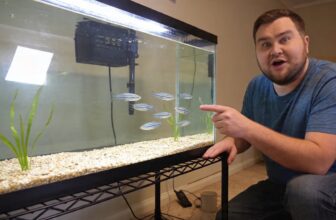
You can keep rosy red minnows in a simple 10-gallon tank, though 40 gallons lets a school of 15-20 fish swim like a living river.
Keep your water cool, between 50-78°F, with a pH of 7.0-8.0.
Feed them goldfish pellets, frozen bloodworms, and soft zucchini slices.
Males grow black, spongy bumps on their heads when ready to breed, and they’ll guard eggs in small caves.
Fry need infusoria on day three.
Stable water keeps them calm, and beginners find success with these forgiving fish.
The details ahead will help you raise healthy generations.
At A Glance
- Hardy species tolerating 50–78 °F, pH 7.0–8.0, and 5–35 dGH water hardness.
- Minimum 10 gallon tank for 5–6 fish; leave 60 % open swimming space.
- Feed goldfish pellets, frozen bloodworms, and blanched vegetables seasonally adjusted.
- Males grow larger with dark heads; fry need infusoria then baby brine shrimp.
- Adults reach 2–3 inches; live 2–4 years with stable temperatures and clean water.
Rosy Red Minnow: Species Profile and Identification
If you’re looking for a fish that can handle just about anything nature throws at it, the rosy red minnow might be your perfect match.
You might know this fish as the fathead minnow, a tough little swimmer found from Canada to Mexico.
Its cultural significance runs deep, you’ll find, since scientists and bait shops alike have relied on it for decades.
In the aquarium trade, it’s gained steady popularity among beginners who want color without complexity.
You’ll recognize adults by their solid orange-red bodies, lighter on top, with two to three inches of streamlined, torpedo-shaped speed.
Their translucent fins catch light beautifully.
Unlike the more delicate betta fish that require careful attention to water conditions and tank specifications, rosy red minnows thrive in a wide range of environments without complex filtration or specialized lighting needs.
Tank Size and Schooling Requirements for Aquariums
A small group of five or six rosy red minnows needs at least ten gallons of water to call home, though you’ll feel better giving them more room if you can spare it. Sponge filters provide both gentle mechanical filtration and biological filtration, keeping water clear without sucking up tiny bodies.
Low to moderate aquarium lighting suits them fine, since they hail from murky ponds.
Dim light mirrors their murky home waters, letting these pond dwellers shine without harsh glare.
Schooling comforts them like friends huddled at recess. Less than five fish causes loneliness; you’ll notice hiding and faded colors.
Forty gallons lets fifteen or twenty shimmer together, a living river you shaped yourself.
Water Temperature, pH, and Hardness Guidelines
When you dip your thermometer into the water, you’ll want it to read somewhere between fifty and seventy-eight degrees Fahrenheit, since rosy red minnows feel most at home in cooler temperatures that remind them of the ponds and streams their ancestors came from.
You’ll test the pH range weekly, keeping it between seven and eight, which means the water stays slightly basic, like baking soda dissolved in a glass.
Water hardness matters less than consistency, so you’ll aim for mildly soft to very hard, anywhere from five to thirty-five dGH.
Stable parameters keep your fish calm, and calm fish live longer, healthier lives.
For accurate weekly pH testing, consider a compact digital pen with 0.01 precision that can handle your aquarium’s temperature range without frequent recalibration.
Tank Setup: Substrate, Plants, and Open Swimming Space
Grab your bucket of gravel or sand, since you’re about to build the foundation your fish will feel under their fins every single day.
Choose a soft substrate texture, like smooth gravel or fine sand, so your rosy reds can nose through it without scraping their sensitive mouths. Avoid sharp edges that might cut them, the way you’d avoid walking barefoot on gravel that hurts. Fine-grained substrates around 2-4 mm provide excellent surface area for beneficial bacteria while remaining gentle on bottom-feeding fish.
Keep plant density moderate—floating plants, hornwort, or water wisteria give them places to rest, but don’t crowd the tank. Leave at least sixty percent open swimming space. These torpedo-shaped fish need room to dart, just like you need room to run.
Feeding Guide: Pellets, Live Foods, and Vegetables
Open your container of fish food, and you’ll notice your rosy reds already gathering at the glass with quick, hopeful darts.
You’ll want to establish consistent feeding timing, meaning you feed them at the same hours daily so their bodies learn when nourishment arrives. This rhythm comforts them, much like you feel steadier when meals come predictably.
Base their diet on quality goldfish pellets, small enough to swallow easily.
weekly, offer frozen bloodworms or brine shrimp for protein variety. Supplement with thin zucchini slices or cucumber rounds, blanched soft. They’ll rasp these with small mouths, gaining fiber and vitamins.
For additional protein variety, consider slow‑sinking micro‑granules rich in insect protein like black soldier fly larvae, which enhance color and immune support while reducing waste in your tank.
Remember seasonal feeding variations: their metabolism slows in cooler water below 60°F, so you’ll reduce portions by half through late autumn and winter months. In warmer months, they burn energy faster, accepting slightly more food. Watch their bellies—slightly rounded means satisfied, not swollen.
Drop only what disappears within three minutes. Remove uneaten vegetables after six hours. You’re building trust through these small, dependable rituals, and they’ll reward you with steady health and brighter color.
Schooling Behavior and Temperament Explained
A small group of rosy reds will press their bodies close, moving as one living thing, and you’ll feel something settle in your chest when you watch them. Schooling protects each fish from fear, like friends walking home together at dusk.
Through social behavior analysis, you’ll notice they synchronize turns within milliseconds. They’re not thinking; they’re feeling each other move.
In temperament comparison with bolder fish like tiger barbs, rosy reds stay gentle visitors in your tank. They won’t nip fins or claim corners. Their synchronized swimming creates water flow distribution similar to spray bar systems, minimizing disruptive currents in their environment.
Keep at least five, or you’ll see them hide, uncertain and alone.
Compatible Tank Mates and Species to Avoid
Your rosy reds need peaceful neighbors who share their gentle temperament. Think of your aquarium as a quiet community where everyone minds their own business.
Good tank mates include Dojo Loaches, Bristlenose Plecos, Cherry Shrimp, Hillstream Loaches, Ghost Shrimp, Amano Shrimp, and Mystery Snails. These cool-water creatures keep to themselves, cleaning algae while your minnows swim peacefully above.
Avoid large, aggressive fish like cichlids and big barbs entirely. Fin-nippers such as tiger barbs will harass your rosy reds relentlessly. Even similarly-sized bullies cause enough stress to make your fish hide and fall ill.
For bottom-dwelling companions with similar dietary needs, turtle food formulas designed for all life stages can also inform protein requirements when selecting compatible algae-eating species.
Natural Habitat and North American Range
If you’ve ever spotted a flash of orange in a slow-moving creek, you’ve likely glimpsed a rosy red minnow. You’ll find these hardy fish swimming through North American rivers from southern Canada down to Mexico.
Seasonal migration draws them between shallow streams and deeper waters as temperatures shift. You can picture them darting through murky, slow-moving creeks, gathering in ponds that grow warm in summer.
As temperatures shift, rosy red minnows migrate between shallow streams and deeper waters, darting through murky creeks and gathering in warm summer ponds.
They’ll tolerate surprisingly poor conditions where other fish struggle. This adaptability means you might uncover them thriving where oxygen runs low and clarity fails, quietly flourishing in places that seem almost forgotten.
Their tolerance for murky waters makes them ideal candidates for particle binding clarifiers if kept in home aquariums where cloudiness occasionally develops.
Adult Size and Growth Rate Expectations
When you’re choosing a tank for these little swimmers, you’ll want to know exactly how much space they’ll need as grown-ups. Most rosy reds reach two to three inches long, which means a ten-gallon tank truly fits a small school comfortably.
You’ll notice their growth curves aren’t straight lines. Young fish shoot up quickly, then slow as adults. Their coloration patterns deepen with age, turning that pale pink into rich, saturated rose.
Give them room, clean water, and good food, and you’ll watch steady progress. Patience pays here. Measured care brings small, bright rewards you can see.
A 5-gallon starter kit can work for a temporary quarantine setup or juvenile holding tank, though you’ll want to upgrade as your school grows.
Lifespan: 2–4 Years and Longevity Factors
A well-kept rosy red minnow carries its bright color for longer than you might expect from such a small fish.
You can help yours reach the full 2–4 years by understanding what shapes its life.
Genetics set the foundation, like seeds in a garden, determining potential from birth.
Environmental stressors wear that potential down: sudden temperature swings above 78°F or below 50°F, dirty water, cramped tanks under 10 gallons, and aggressive tankmates all shorten lifespan.
You control these factors.
A reliable temperature controller can prevent dangerous thermal fluctuations that stress these sensitive fish.
Keep water clean, stable, and spacious, and your minnow rewards you with steady, peaceful presence.
Sexing Adults: Male vs. Female Identification
Male vs. Female Identification
Breeding tubs and garden ponds call for knowing who’s who among your rosy reds, and you’ll spot the difference with a sharp eye and steady patience.
You’ll notice males grow about one inch longer than females, reaching roughly three inches. Look closer during breeding seasonality—males develop dark, spongy pads on their heads, called nuptial tubercles. These pads look like thick, velvety crowns.
Color variations sharpen too. Males darken dramatically, showing olive-gray bodies with almost black heads. Females stay pale, rosy, and slender, their silver sides catching light like quiet mirrors.
Watch their behavior shift. Males chase, flare, claim caves with stubborn pride. Females drift, heavy with eggs, seeking safe corners. You’ll feel a calm curiosity sorting them, like organizing buttons by shade and size—satisfying, simple, complete.
Wait until they’re one year old, when differences become honest and clear.
Breeding Setup and Spawning Behavior
How does a handful of gravel become a nursery? You layer soft substrate two inches deep, add flat stones or PVC caves, and watch males claim territory. They clean surfaces with their mouths, preparing for eggs. Spawning triggers include stable water at 68–75°F and lengthened daylight, mimicking spring. Males darken, develop nuptial tubercles on their heads, and dart about to attract ripe females. You’ll see her deposit adhesive eggs beneath the cave roof, hundreds in clusters. He fertilizes immediately, then guards fanning oxygen over them. You don’t worry about fry nutrition yet—that comes after hatching, which you’ll read about soon.
| Factor | Optimal Range | What You Do |
|---|---|---|
| Temperature | 68–75°F | Maintain stable, avoid sudden shifts |
| pH | 7.0–7.5 | Test weekly, adjust gradually |
| Substrate depth | 2 inches | Allows digging, bacteria colonization |
| Light cycle | 12–14 hours | Timer guarantees consistency |
Fry Care and First Feeding Protocol
Care and First Feeding
Once the eggs you’ve been guarding hatch, you’ll find yourself looking at something smaller than a grain of rice. These fry cling to glass like tiny swimmers learning their first strokes.
Newborn fry, tinier than rice grains, cling to glass like swimmers finding their first grip on life.
Fry acclimation demands still water, so you’ll keep the filter gentle, almost a whisper. They’ll live off their yolk sacs for two days, which brings a calm patience, watching them absorb what nature packed inside.
Initial feed timing starts on day three. You’ll offer infusoria first, then baby brine shrimp at five days. Feed tiny amounts, four times daily. Remove any food they don’t eat within ten minutes.
Fin Rot, Ich, and Common Disease Prevention
Fin Rot, Ich, and Disease Prevention
Even the hardiest swimmers sometimes meet tiny enemies they can’t see.
You watch your rosy reds dart through the water, their fins flowing like silk ribbons.
Then you notice edges turning white, fraying like old cloth—that’s fin rot, a bacterial infection riding in on poor water quality.
Or you spot grains of salt sprinkling their bodies, each one a parasite called Ich.
You feel worry, but you act fast.
You test your water weekly, keeping ammonia at zero.
You change thirty percent every seven days.
For disease treatment, you’ll raise the temperature slowly and add aquarium salt.
Clean water prevents most troubles before they start.
Frequently Asked Questions
Do Rosy Red Minnows Make Good Starter Fish for Beginners?
Yes, you’ll find rosy red minnows make excellent starter fish for beginners. Their peaceful starter fish behavior and outstanding tank compatibility with other non-aggressive species let you build confidence as maintaining an active, colorful community aquarium with minimal fuss.
Can Rosy Red Minnows Survive Outdoor Winter Temperatures?
Yes, you’ll find their winter survival exceptional; their temperature tolerance spans below freezing to 100°F. You don’t need heaters for outdoor ponds, as they’ve adapted to thrive through harsh Canadian winters naturally.
How Fast Do Rosy Red Minnow Fry Grow to Adult Size?
You’ll see your fry reach adult size within 4–6 months under optimal conditions. Their growth rate depends on water quality, diet, and tank space—feed them baby brine shrimp and maintain clean, stable parameters for best results.
Are Rosy Red Minnows Legal to Use as Feeder Fish Everywhere?
You can’t use rosy red minnows as feeder fish everywhere, as legal restrictions vary by state and country. You’ll need to check local regulations and may require import permits before purchasing or transporting them across borders.
Do Rosy Red Minnows Change Color Based on Stress or Mood?
You’ll notice color stress in your rosy reds when they’re frightened or unwell, causing them to pale or darken. Mood shifts from secure schooling or poor water quality likewise affect their vivid orange-red appearance noticeably.
Rounding Up
The small orange fish you passed over deserves another look. You’ll find the Rosy Red Minnow forgives your mistakes, teaches you patience, and rewards your care with swirling schools of copper light. Start with ten gallons, keep your water clean, and watch them thrive. Whether you’re new to fishkeeping or testing a pond, these hardy swimmers prove that worth hides in humble places. Give them a chance.