Guppy feeding mistakes kill more fish than disease ever will. Get your schedule right, and these hardy swimmers reward you with years of color and activity.
Feed adult guppies twice daily, fry every three hours—missing a day kills fry fast. Use the two-minute rule: if food vanishes in under a minute, add a pinch more; leftovers mean cut back.

Omega-rich flakes boost immunity and make colors pop.

Insect protein supports natural feeding instincts and strong growth.

Micro-powder for fry, ensures tiny mouths get vital nutrition.
Check discounted items inAquarium Fish Food
Overfeeding causes bloated bellies and swim bladder disease; skip one day weekly to prevent it. Omega One Super Color Flakes ($10 for 3.5 oz) boost immunity.
Rotate blanched peas, daphnia, and brine shrimp for longevity. There’s more to keeping them alive longer.
At A Glance
- Feed adults twice daily; fry need food every three hours.
- Use the 2-minute rule: perfect portion leaves no food after two minutes.
- Skip one feeding weekly to prevent bloating and digestive issues.
- Rotate flakes, blanched vegetables, and live treats for balanced nutrition.
- Avoid rice, bread, and human snacks; they cause deadly bloating or illness.
How Often to Feed Adult Guppies vs. Fry
While adult guppies can technically survive a few days without food in a pinch, their fry are a different story entirely—fry need food every few hours, and missing even one day can be fatal.
Adult guppies can go days without food, but missing even one day can kill fry.
This difference matters for lifespan extension and nutritional equilibrium. Adults thrive on twice-daily, tiny feedings, which prevents bloating and mimics natural grazing. For extended trips, an automatic feeder with USB charging eliminates the need for disposable batteries and ensures consistent portion control.
Fry, by contrast, demand constant, minuscule meals to fuel rapid growth.
Stick to this schedule: adults get 2–3 flakes per trio; fry get powdered food every three hours. Miss a day for adults? No panic. Miss one for fry? That’s a problem.
The bottom line? Prioritize fry frequency for survival, adults for moderation. For adult guppies, a high-protein option like Fluval Bug Bites offers sustainable insect protein to support color and immune health.
The 2-Minute Rule for Perfect Portions
Sprinkle a pinch of flakes and start the mental stopwatch. If nothing remains after two minutes, the portion is perfect—no bloating, no waste.
If food vanishes in under a minute, increase slightly next time. Unfinished food? Decrease, then check water quality.
A fasting schedule, one skipped day weekly, helps empty stomachs and prevents constipation.
“Don’t let greed guide the scoop,” a wise keeper might say.
Stick with small, consistent servings. Your guppies will stay lean, active, and grateful.
The 2-minute test is your simple, reliable gauge for long-term health.
Using a feeding ring can help keep food contained and reduce waste during the two-minute test.
5 Signs Your Guppies Are Overfed (And How to Fix It)
Bloated bellies, sluggish swimming, and stringy feces—these are the tell-tale signs your guppies have been overfed, and ignoring them can lead to swim bladder disease, where excess food presses on their air-filled swim bladder, causing buoyancy issues.
You’ve lost track of reliable hunger cues, mistaking begging for need.
Fry overfeeding is especially risky; they eat every few hours, but too much stunts growth.
Fix it by skipping one day’s feeding.
If bloating persists after two days, offer blanched peas or daphnia for fiber.
Smaller portions, twice daily, prevent relapse.
Your guppies will thank you with bright colors and lively swimming.
If appetite remains low, using a garlic guard can encourage feeding without harming water parameters.
Using a conditioner with slime‑coat support like API Stress Coat can also aid recovery from stress caused by overfeeding.
Why Skipping a Day Helps Guppy Digestion
| Before Fasting | After Fasting |
|---|---|
| Bloated, sluggish fish | Active, lean fish |
| Stringy feces, discomfort | Normal, healthy waste |
| Risk of constipation | Clean, empty digestive tract |
You’re not starving them—you’re letting them breathe. A skipped meal is a favor, not a punishment. This simple habit keeps your guppies feeling lighter, happier, and part of a well-cared-for community. A clean digestive tract can also benefit from adding beneficial bacteria supplements to your aquarium water for improved biological filtration. Using a live nitrifying bacteria product like Microbe‑Lift Nite‑Out II can quickly establish the nitrogen cycle and convert ammonia into safe nitrates.
Best Commercial Flakes for Color and Immunity
So you’ve given your guppies a day off from eating—they’re now lean, active, and ready for some real nutrition.
Verdict: Omega One Super Color Flakes. Flake quality matters here.
These aren’t just flakes; they’re packed with protein, Omega-3, and Omega-6 fatty acids for bright color.
These aren’t just flakes; they’re packed with protein, Omega-3 and Omega-6 for vibrant color.
They likewise offer immunity support, helping your guppies fight off disease.
Regular testing with a reliable test kit ensures your water quality supports their immune health.
- Price: about $10 for a 3.5-oz tub, lasting months.
- Why it works: High-quality ingredients mean less waste, better health.
- Usage: Crush slightly for smaller fish; feed 2–3 flakes per trio, twice daily.
You’re part of the savvy group who knows: good flakes equal thriving fish.
Skip cheap filler foods.
Your guppies deserve this upgrade.
For additional plant safety, consider a shrimp‑safe, copper‑free fertilizer to support live plants in the guppy tank.
Top Live Foods for Guppy Digestion vs. Treats
Since a skipped feeding day has cleared their system, it is time to talk live food—specifically which options help digestion and which are just tasty treats.
Your guppy squad craves variety, but not all wigglers are equal. Here’s the breakdown:
- Daphnia benefits digestion with high fiber and protein—think of it as a gut-friendly salad bar that additionally cleans the tank.
- Bloodworm treats are fatty indulgences, like pizza for fish—feed sparingly, or you’ll have bloated, grumpy guppies.
- Brine shrimp offer balanced nutrition, a solid everyday option that mimics wild prey.
- Mosquito larvae provide hunting fun but risk turning into pests if left uneaten.
Feed daphnia for health; reserve bloodworms for rare occasions—your fish will thank you.
How to Prep Vegetables for Guppies (Broccoli, Cucumber, Peas)
Vegetable prep for guppies is less about gourmet cooking and more about making certain your fish don’t choke on a chunk of carrot. Vegetable blanching—boiling broccoli, cucumber, or peas for two to three minutes—softens them safely.
Then, portion prep matters. Cut into tiny, bite‑sized pieces, no bigger than a guppy’s eye. Drop them in; uneaten bits foul water fast.
Peas, skin removed and mashed, aid digestion. Cucumber slices sink best when weighted. Broccoli florets, finely minced, add fiber.
This method, shared among keepers, guarantees your fish thrive without risk. Stick to these steps, and your guppies stay healthy, happy, and fed.
Many keepers also add small sinkable driftwood to support biofilm growth and provide natural hiding spots for fry.
For weighting vegetables like cucumber, natural river stone plant weights provide an inert, reusable anchoring option.
Feeding Fruit Safely: The One Sugar Rule
Fruit is sugar water with delusions of grandeur, at least from a guppy’s perspective. That fruit sugar spikes bacteria growth fast, so you must time it right. Feed fresh fruit only right before a tank cleaning, then remove leftovers within an hour.
- Fruit sugar rots water quality; bacteria feast on it, causing illness.
- Feed fruit before a tank cleaning so sugar never sits.
- Blanch or blend fruit first, never raw chunks.
- Stick to twice weekly max; apples and bananas are safe.
This isn’t a treat buffet; it’s a risky topping. Follow the one sugar rule: clean before the sugar does damage. Your guppies will thank you.
Testing iron weekly helps monitor water quality, especially in planted tanks that require trace iron levels near 0.1 ppm. For tanks with fast-growing stem plants, aim for 0.5 mg Fe/L to support healthy new leaf production.
DIY Guppy Food for Emergencies
Toss out the guilt—DIY guppy food for emergencies isn’t about mastering gourmet fish cuisine. It’s survival mode, plain and simple.
Toss out the guilt—DIY guppy food for emergencies is survival mode, plain and simple.
Emergency vegetable prep means blanching a broccoli floret or zucchini slice for two minutes, dropping it in. That’s it. Your fish won’t judge; they’ll nibble happily.
Want more structure? Try this homemade flake recipe: Blend one boiled pea, a pinch of spinach, and a tiny bit of cooked egg yolk. For an extra mineral boost, crushed Swanson Aquamin capsules provide red algae trace minerals that dissolve clearly without clouding the water.
Spread thin on a baking sheet, bake at 175°F for ten minutes, then crumble. Store in a baggie. Two batches last a week. You’ll feel like a genius, honestly. For extra nutrition, a crushed root tab can supplement trace minerals.
3 Foods You Should Never Feed Guppies
Now that you’ve mastered emergency pea flakes and blanched broccoli—congratulations, you’re a certified short‑term guppy chef—it’s time to talk about what absolutely should not go in the tank.
- Rice avoidance – rice offers zero nutrition and swells in water, causing deadly bloating.
- Bread dangers – bread expands in bellies, leading to constipation and swim bladder issues.
- Processed human snacks – chips or crackers contain salt and preservatives that poison fish.
- Raw meat scraps – fats and bacteria overload tiny digestive systems, inviting disease.
Your guppy community trusts you as their guardian.
Stick to proven favorites—flakes, blanched greens, live treats—and skip these tank‑toxins for a long, healthy life together. A reef tank would instead use high strontium aragonite to gradually release calcium and buffer pH without harming delicate fish.
For extra aquatic safety, clumping formulas chemically bind fine waste into filter-capturable masses without harming fish.
How a Varied Diet Mimics Nature and Boosts Longevity
Wild guppies don’t survive on one single food source—they graze on insect larvae, algae, and tiny crustaceans all day long. Mimicking nature with a mix of live daphnia, blanched spinach, and high-quality flakes gives your fish the variety they evolved for.
This isn’t just fancy; it’s boosting longevity by preventing constipation and nutrient gaps. You’ll see brighter colors, less lethargy, and fewer swim bladder issues.
Rotating foods—say, brine shrimp Monday, cucumber Wednesday—keeps them engaged and healthy. Think of it as their version of a balanced meal plan, minus the leftovers. Adding Water Spangles as a floating plant can provide natural grazing opportunities and help reduce algae in the tank. For a hassle-free alternative, anchor base plants offer stable placement without substrate.
How to Feed Fry Without Overfeeding Adults
A guppy keeper’s greatest balancing act is keeping fry fed without turning adults into bloated couch potatoes. Fry need constant grazing, but adults eat everything in sight. The solution is clever tank tactics.
A guppy keeper’s greatest balancing act: fry grazing without adults becoming bloated couch potatoes.
- Use fry feeding stations: place fine powder or crushed flake in a shallow dish, where adults can’t easily reach the tiny diners.
- Try adult distraction feeding: drop a larger treat, like a blanched cucumber slice, at one end of the tank to occupy the grown-ups.
- Time feedings for just after lights-out; fry see in dimmer light and adults are less active.
- Serve fry tiny portions every few hours, adults just twice daily. Keep it tight, keep it fair.
A breeding box can also be used to isolate fry while adults feed separately. For secure bonding of aquarium structures, use an NSF certified epoxy putty that is safe for potable water.
How a Weekly Fast Prevents Swim Bladder Disease
Since guppies are greedy little gluttons who’d eat until they pop, a weekly fast is one of the simplest ways to prevent swim bladder disease—that nasty condition where gas buildup presses on their swim bladder, making them float sideways or sink like a stone. Consistent testing ensures tank stability and early problem detection. Here’s the trick: skip feeding them one day each week. That gives their digestive system a full twenty-four hours to clear out. No backlog of gas means swim bladder prevention happens naturally, without meds or fuss. You’ll see them swim straighter, with less bloating. It’s like a reset button for their gut. Trust it. Your guppies will thank you by swimming normally. Ammonia levels above 0.25 ppm are unsafe for freshwater fish and can stress the tank.
What Makes This Guppy Feeding Guide More Actionable
Most feeding guides leave you guessing, but this one hands you a ruler for measuring success. You’ll get actionable tips, not vague advice. Here’s what makes it click:
- Exact portion cues – “Eaten in 2 minutes” means done right; 1 minute means add a pinch; unfinished means cut back.
- Overfeeding red flags – Bloating, stringy poop, or lethargy? Skip a day, then serve a pea for fiber.
- Fry vs. adult rules – Fry eat every few hours; adults can fast a day safely.
- Proven food picks – Omega One flakes ($8–12) pack protein and Omega‑3s for color and immunity.
A high-quality filter like Tetra Whisper maintains crystal-clear water by efficiently removing odors and discoloration, ensuring your guppies thrive in a healthy environment. For small tanks, a gentle flow sponge filter protects delicate guppy fry from being sucked in.
This is proven advice, not theory. You’ll feed with confidence.
Frequently Asked Questions
Can I Feed My Guppies Only Live Foods?
Yes, but it’s risky. Live foods like daphnia or mosquito larvae offer high protein and mimic natural hunting, but they rarely provide full nutritional balance alone. Guppies need variety. Feeding only live options means tracking down multiple, reliable sourcing options, which gets tricky.
Flakes or pellets fill gaps easily. It’s like eating only appetizers—fun, but not a complete meal.
Stick with a mix: live foods as treats, flakes as staples, for healthier fish.
How Long Do Guppies Live With Proper Feeding?
A well-fed guppy’s life is a sprint, not a marathon—its wild lifespan of about two years is the ceiling.
With twice-daily flakes, live daphnia, and blanched veggies, blooming colors and steady growth appear.
Overfeeding leads to bloat; skipping a day helps digestion.
Proper diet extends life near that wild mark, avoiding the stress that shortens it.
Bottom line: consistent, varied meals keep a guppy thriving, not just surviving.
Is It Safe to Feed Guppies Everyday?
Feeding guppies every day is safe, but it’s not a rigid rule—a consistent feeder schedule is key.
Twice-daily small meals work best, preventing waste.
Nonetheless, fasting benefits adults; skipping a day occasionally helps digestion and reduces constipation, like a tiny fish detox.
For fry, daily feeding is critical.
Guppies love routine but handle a missed meal without panic, so you’re not stuck being a 24/7 fish waiter—just aim for balance, not perfection.
What Do I Do if My Guppy Won’t Eat?
If a guppy refuses food, first check stress factors like tank mates or sudden changes.
Poor water quality is a common culprit, so test ammonia and nitrite levels; a 25% water change often helps.
Skip feeding for a day to let the fish reset digestion, then offer blanched pea—nature’s laxative.
If bloating persists, try daphnia for fiber.
Most picky guppies resume eating once water’s stable, so focus on that before worrying.
Can Guppies Eat Tropical Fish Flakes?
Yes, guppies can eat tropical fish flakes. Just check the flake size—tiny pieces prevent choking and waste.
For nutritional balance, choose flakes with protein and veggies; guppies are omnivores, not picky. Omega One Super Color Flakes are a solid bet, around $10. That brand boosts color and immune systems.
Overfeeding is the real crime here, not the flake type. Keep portions small: a pinch that vanishes in two minutes. Done right, these flakes work like a charm.
Bottom line: grab quality flakes, don’t overthink it.
Rounding Up
So, the theory holds: feed them like a parent, not a vending machine. A weekly fast, a pinch of flakes (about $8 for a jar), and varied live foods mimic their wild diet. Skip the human bread; stick to your plan. Overfed guppies get lazy and float funny. Your reward? Luminous colors, no swim bladder drama. Bottom line: less is more, but variety is king.

Removes chlorine and adds slime coat to reduce stress.

Detoxifies ammonia and nitrite, making tap water safe instantly.
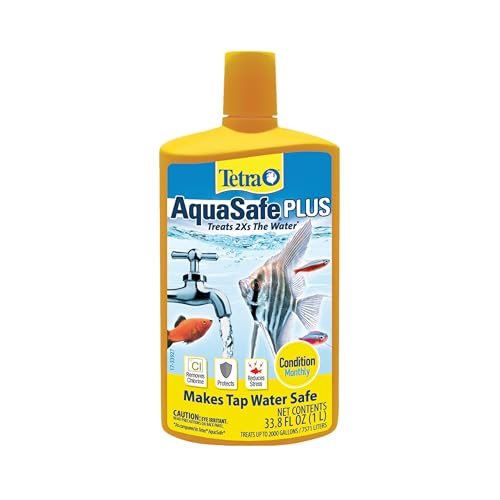
Instantly makes tap water safe with a protective vitamin formula.
See today's best deals onAquarium Water Conditioners