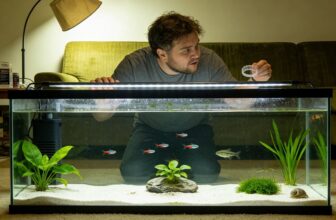
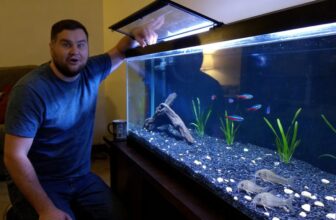
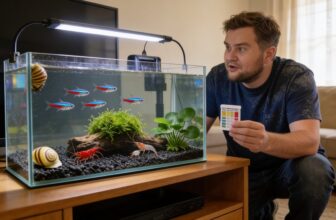
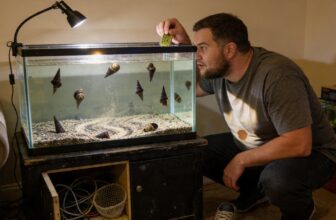
You need patience, 6500K‑7000K LED lighting on a timer, and a strategy.
Start with forgiving plants like Java Fern ($5‑$8) and Anacharis ($3‑$6), cap your nutrient‑rich substrate 2–3 inches deep, and cycle the tank 2–3 weeks before fish.
Dense planting—50% coverage day one—outcompetes algae, whereas trimming stem tips forces bushier side shoots.
Root tabs ($12/30) and liquid ferts ($8‑$15) aren’t optional luxuries, they’re your ticket past the sad yellow‑leaf phase most beginners hit.
The real tricks for speed?
You’ll find them below.
At A Glance
- Cycle tank 2–3 weeks before adding fish to establish beneficial bacteria colonies.
- Plant densely from day one, covering 50%+ of substrate to outcompete algae and uptake nutrients.
- Use 6500K–7000K LED lighting for 8–12 hours daily with timer for consistent growth.
- Add root tablets every 4–6 inches and liquid fertilizers weekly for complete nutrition.
- Prune stem plants regularly by trimming top 2 inches to promote bushier, faster growth.
Prepare Your Tank Before Planting Seeds
Why start with seeds when your tank isn’t ready? You’ll doom those hopeful sprouts before they sprout.
Tank design matters. You’re building a home, not throwing rocks in a box. Start with a 20‑gallon tank—big enough to forgive mistakes, small enough that your wallet forgives you.
Layer substrate 1‑3 inches deep, sand to gravel, slope it back so water flows right. Install your filter, heater, lights now. Let it run empty for two to three weeks. Bacteria colonize, water stabilizes, you’re creating life support before life arrives.
Seedling health depends on this patience. Soft roots need established homes, not chemical chaos.
Wait. Then plant.
Consider adding a cut‑to‑size mesh cover to prevent fish from jumping during the cycling period.
Choose the Right Aquarium Plants for Beginners
You’re staring at a wall of green at the pet store, and suddenly every plant looks like a science project waiting to drown you. Relax. You don’t need a botany degree to win at this.
Start with plant compatibility in mind—your tank’s lighting, fish, and your own patience level matter more than fancy names. Go budget friendly with these problem-solvers:
- Java Fern ($5-8): Tie it to wood, ignore it, watch it thrive
- Anacharis ($3-6): Grows like a weed, which, hey, that’s the point
- Java Moss ($4-10): Carpets anything, survives your mistakes
Skip the rare stuff. You want plants that forgive overwatering, under-fertilizing, and that time you forget the light timer.
Your bottom line: Pick trio above, spend under $20, build confidence before upgrading. The plants won’t judge your learning curve—they’re just happy you showed up.
If your confidence is low anyway, consider an artificial alternative like the soft PVC or silk leaf options that need no pruning and never rot.
Start Seeds and Establish Seedlings Properly
Three bucks and a paper towel—that’s your entry fee to the plant parent club, aquarium edition. You’ve got this.
Buy seeds cheap, stash ’em dry till you’re ready.
You’ll want a tray with holes, sitting in a water in a saucer—moisture constant, roots happy.
Sow on the surface, tiny seeds naked, bigger ones barely buried.
Seed germination hits in 7-15 days if your water hardness plays nice; too hard, you’ll wait longer. You can use pre‑treated driftwood to anchor seedlings later in hard-water tanks.
Hit 2-3 inches? Time to move.
Gently—roots hate drama.
Feed your fish before introducing them, the seedlings need calm waters.
Wait 2-3 weeks.
Patience, friend, patience.
Layer Substrate and Hardscape Your Aquascape
Substrate layering isn’t fancy talk—it’s dirt management. Start with nutrient-rich soil or plant-specific mix, cap it with gravel, and slope it back-to-front (1–3 inches, deeper in back). Your roots need groceries down there. Accounting for vertical lift ensures your pump can handle the extra height from rear-sloped substrate. Hardscape textures matter more than you’d think. Smooth river stones won’t hold moss; rough driftwood does. Position tall hardscape rear, short stuff front—like stadium seating, but wetter. Match Hardscape textures to plant types: porous lava rock for Anubias, slate for Crypts. Test-fit everything dry first. Move pieces around like furniture until it clicks—your back will thank you later. Bottom line: nail Substrate layering for roots, nail Hardscape textures for anchors, and you’ve built a neighborhood plants actually want to live in.
Cycle Your Tank for 2–3 Weeks Before Adding Fish
Before you dump fish into that tank, you’ve got to let the water sit and stew—because adding creatures to raw, unconditioned water is basically inviting them to a toxic house party they won’t survive. Algae cycling establishes beneficial bacteria that convert ammonia to nitrite, then nitrate, creating a livable habitat. Pop your plants in immediately—they’ll soak up excess nutrients and jumpstart the process. Wait two to three weeks, testing parameters weekly, before any fish acclimation. Patience here separates thriving aquascapers from fish-flushing regulars, and you’re aiming for the former. Stable parameters reduce stress-induced disease and Ich risk during this critical cycling period.
| Week | Action Item |
|---|---|
| 1 | Add plants, dose starter bacteria |
| 1 | Test ammonia daily ($15 kit) |
| 2 | Watch nitrite spike, then drop |
| 2 | Perform 25% water change |
| 3 | Confirm 0 ammonia/nitrite, add fish |
Simple as that.
Set Lighting Duration and Intensity for Plant Growth
Since your plants can’t exactly photosynthesize under a desk lamp from 1998, you’ll need to get serious about lighting—it’s the engine that drives everything else, and skimping here is like planting a garden in a closet and wondering why your tomatoes look suicidal.
- LED spectrum: Aim for 6500K–7000K, the “daylight” sweet spot plants crave, with reds and blues mixed in—think of it as a balanced diet, not just lettuce.
- Photoperiod timing: Start with 8 hours daily, nudge up to 10–12 once established. Too much light equals algae party, and nobody invited that guy.
Timers cost $12. Worth it.
From the knowledge base, many lights include automatic timer cycles like 6, 10, or 12 hours, which help prevent algae overgrowth while maintaining plant growth schedules.
Add CO₂ Injection or Grow Plants Without It
Look, you’ve got two lanes here.
Highway: CO₂ Injection
- Pressurized systems run $150-300, need CO₂ budgeting to avoid gassing your fish
- DIY injection? YouTube it—yeast, sugar, two-liter bottles, and prayers
- Not for the faint of heart, or the forgetful
Scenic Route: Skip It
- Pick low-CO₂ champs: Java fern, Anubias, mosses
- Rich soil substrate, moderate light, patience
Most beginners overestimate their commitment. Start CO₂-free, join the club of thriving low-tech tanks, then upgrade when you’re hooked.
Regulators with a dual‑stage design provide safer, more consistent CO₂ flow than single-stage alternatives, reducing the risk of sudden pressure spikes.
Fertilize Roots With Tablets and Liquid Nutrients
Your plants aren’t greedy—they just want food they can actually reach. Root tablets cost about $12 for 30, and you’ll push one tablet into the substrate every 4–6 inches, right beside hungry roots. Replace them every 3–4 months. This fuels root growth directly where it counts.
Liquid fertilizers run $8–$15 per bottle—add them weekly, or split daily if you’re feeling dedicated. They deliver micronutrients that tablets miss, especially when your substrate pH drifts (aim for 6.5–7.5, check it monthly).
- Cheap insurance against deficiencies
- No guesswork dosing on the bottle
Feed both ways. Your plants will thank you with actual leaves, not sad stumps.
For sensitive shrimp tanks, choose a copper-free gel formula to protect invertebrates.
Maintain Water Flow and Stable Water Parameters
Water doesn’t move itself, and your plants know it. You need gentle flow—think lazy river, not washing machine—to carry nutrients to every leaf.
- Aim for 4–6 times tank volume hourly through your filter
- Position outflows to create circular patterns, not hurricane zones
Water stability keeps roots from panicking. Sudden pH swings stress plants worse than your Monday mornings. pH buffering—using crushed coral or commercial buffers—locks parameters steady, typically 6.5–7.5 for most greenery.
Test weekly. Adjust gradually. Your tank rewards patience with lush growth, and honestly, isn’t that why we’re all here? Using an aquarium lighting timer ensures your plants get consistent photoperiods for faster growth.
Plant Densely Early to Outcompete Algae
Algae is the roommate you never wanted, and it’s moving in fast if you give it the chance. Beat it to the punch, plant densely from day one.
Here’s why packed planting wins you the tank you actually want:
- Early canopy shades the substrate, starving algae spores of the light they crave—think of it as putting up curtains before the neighbor’s floodlight.
- Algae suppression happens when your stems suck up ammonia and nitrites faster than green fuzz can blink.
- Roots stabilize everything; you’re building a community, not a desert.
- Aim for 50%+ coverage, mix fast and medium growers, and you’ll watch your water clear while others battle the green monster.
Dense planting isn’t overkill—it’s insurance.
Some fast-growing species like Water Spangles multiply automatically to create natural shade that further reduces algae.
Trim Aquarium Plants for Bushier, Faster Growth
How exactly do you turn that leggy, stretched-out mess into something you’d actually show off?
You hack it, gently.
Snip the top two inches off stem plants—Anacharis, Hornwort, whatever’s reaching for the stars like it’s desperate for attention. That’s your pruning schedule: little trims, often. Never take more than half, except you’re into sad, bald stems. Pinch between your fingers, or use scissors if you’re fancy.
Leaf pruning matters too. Yellow leaves? Cut them at the base. Don’t baby them.
Dense planting (you’ve done that, right?) plus steady trimming triggers bushier side shoots. Your tank rewards the ruthless—plants thicken, you win.
Grow Floating Plants and Carpet Plants Successfully
If you’re ready to stop fighting gravity and start working with it, floating and carpet plants are your clever little workaround—no substrate, no CO₂ injection, just results that look expensive without being a complete bank breaker.
You’ll master both with four proven moves:
- Anchor floaters smartly — Use floating planters with liners, spacing plants so they drift freely without clustering like awkward party guests.
- Master carpet plant pruning — Trim runners aggressively, about ½ inch above nodes; this forces horizontal spread instead of leggy vertical growth.
- Exploit shallow tanks — Better gas exchange, simpler lighting, happier roots.
- Dense-plant early — 50%+ coverage outcompetes algae before it crashes your party.
Bottom line: Let gravity do the heavy lifting, keep scissors busy, and you’ll own the aquascape game without maxing credit cards.
Troubleshoot Yellow Leaves and Stunted Growth
Why do your once-vibrant greens look like they’ve given up on life?
Nine times out of ten, you’re staring down a nutrient deficiency or a light intensity imbalance—sometimes both, since your plants love keeping you guessing.
Check your leaves like a plant detective.
Yellowing old growth? Nitrogen’s vanished.
New leaves pale and sickly? Iron’s playing hide-and-seek.
That’s your classic nutrient deficiency waving hello.
Now flip the lights.
Too dim, and photosynthesis stalls out, embarrassing.
Too bright without CO₂, and algae crashes the party, likewise embarrassing.
Measure with a PAR meter ($30–$50), or eyeball it—eight hours beats twelve if you’re flying blind.
Fix the balance, don’t just throw fertilizer at chaos.
Your plants belong here.
Make certain they know it.
Accelerate Growth With Nutrient-Rich Substrates
Your plants might finally have the right light and balanced nutrients, but they’re still stuck waiting on the one thing you can’t see: what’s underneath them.
Substrate’s where the magic hides—literally. Skip the boring gravel, grab nutrient-rich aqua soil instead. You’ll join a community that doesn’t just keep plants alive, they *thrive*.
Check your setup against these essentials:
- Soilbial diversity—living bacteria, think of them as tiny underground chefs breaking down waste into plant food
- Substrate pH—aim for 6.5-7.0, acidity matters more than you’d guess
- Root tabs every 4-6 inches, since distribution beats dumping
- Depth: 2-3 inches minimum, roots need room to stretch
Your tank’s ecosystem starts below. Get the substrate right, and you’re basically cheating.
Frequently Asked Questions
Which Aquarium Plants Grow Best Under LED Lights?
Java fern, Anubias, Amazon sword, and Cryptocoryne thrive under LED lights—you’ll want a full LED spectrum around 6500K for natural growth, plus CO₂ injection if you’re feeling fancy.
Anacharis and hornwort? They’re practically bulletproof, growing fast even with basic LEDs. But watch out—too much light without balance, and algae crashes the party.
Stick with low-to-medium demand plants first, especially if you’re skipping CO₂. You’re building a community here, not a chemistry lab.
Can I Use Potting Soil as a Substrate Layer?
You can use potting soil, but you’d better cap it with gravel or sand, or you’ll have a muddy mess.
That two-layer setup—cheap organic soil below, gravel above—gives plants nutrients without the cloudiness.
It’s one of the classic substrate alternatives on a budget, costing maybe $5 versus $30 for specialty aquasoil.
Seal it, cap it, plant it.
Done right, you’re golden.
Done wrong, you’re scrubbing filters.
How Often Should I Replace Aquarium Plant Fertilizers?
You’ll swap root tablets every 3–4 months and dose liquid fertilizer with each water change, splitting daily if you’re feeling fancy.
Watch for nutrient depletion—slow growth, pale leaves mean you’re due.
Your fertilizer schedule isn’t rocket science, just consistent.
- Root tabs: $8–$15 per 20-pack, one per 4–6 inches of gravel
- Liquid ferts: $10–$20 bottles last months
- Diy mix (Epsom salt, potassium, etc.): pennies per dose
Don’t overthink it. Feed plants like you’d feed yourself—regularly, not obsessively—and they’ll repay you with lush green chaos.
Do Snails Help or Harm Planted Aquariums?
Snails help, mostly. They handle nutrient cycling by eating dead leaves and uneaten food, turning gunk into plant food.
Some species, though, engage in snail predation on delicate greens—looking at you, pond snails with their buffet ambitions.
- Pros: Free cleanup crew, $0–$5, break down detritus
- Cons: Overpopulate fast, may munch soft plants
Stick to nerites or mystery snails. Fewer babies, same dirty work.
Why Do My Plants Melt After Water Changes?
Your plants melt since you’re shocking them, plain and simple.
Temperature shock hits when new water drifts more than 2–3°F from tank temp, collapsing cell walls like wet paper.
Chloramine and copper in tap water finish the job.
Dechlorinate always, match temps with a thermometer (they’re $4), and change 25% weekly, not 50% like you’re cleaning a pool.
Slow and steady wins this race, trust me.
Rounding Up
Stop waiting for magic, start cycling your tank properly—you will speed up growth by weeks, not months, and yes, that $15 CO2 kit actually pays for itself when you are not rebuying dead plants. Your underwater garden wants to thrive, it just needs you to stop guessing and start dosing.