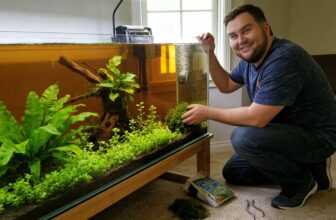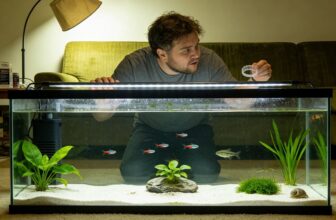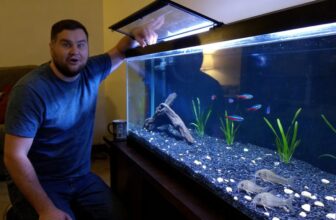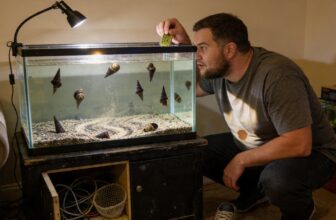
Skip the 5-gallon regret—grab a Tetra 20-gallon kit ($80-$100), pump four times your volume hourly through that filter, slap in 100 watts of heat, and you’ve got training wheels that actually work.
Ten gallons fit under a dorm desk, certainly, but twenty forgives your “just a pinch more food” mistakes and houses actual fish groups—tetras, cory cats, maybe a dwarf pleco who judges your life choices.
The Marineland Portrait 5 looks sleek until you’re changing cartridges weekly and explaining to your betta why his neighbors are shrimp.
Amazon discounts beat retail, Petco price-matches, and Facebook Marketplace haggling separates the patient from the broke.
Setup’s simple: dechlorinate, cycle two weeks, then stock slowly—no, “instant cycle” bottles don’t count, and yes, you’ll test water like a paranoid chemist.
Your fish will live longer, you’ll stress less, and your wallet stops crying—stick around and you’ll see exactly which kits survive the “oops, I dropped the magnet” years.
At A Glance
- Choose 20‑gallon kits like Tetra for stability, easier maintenance, and diverse fish stocking options.
- Ensure filter flow cycles tank volume 4× hourly and heater provides 5 W per gallon minimum.
- Set up gentle water flow in 5‑gallon tanks to accommodate single bettas or shrimp only.
- Purchase kits from Amazon, Petco, or Facebook Marketplace for discounts, price matching, or used deals.
- Add LED lighting sufficient for plants and consider dual‑stage CO₂ for enhanced planted‑tank growth.
What to Look for in a Starter Aquarium Kit
So, what exactly separates a decent starter kit from a money‑trap in a box? You need budget compatibility first—don’t blow your paycheck on bells you’ll never use.
Look for budget friendly kits around $50‑$100 that include the basics: tank, filter, heater, and decent LED lighting.
The $50-$$100 sweet spot gets you a tank, filter, heater, and decent LED lighting—everything you actually need to start.
Skip the fancy stuff, you can upgrade later.
Check the filter’s flow rate—it should cycle your tank’s volume 4x hourly.
Heaters must hit 5 watts per gallon, minimum.
Cheap plastic hoods warp; glass lasts.
Bottom line: buy what keeps fish alive, not what impresses strangers.
Always verify that the filter uses ultra-quiet, high-capacity technology for peaceful nighttime operation.
Best 5- to 20-Gallon Starter Kits Ranked
As you’re still scrubbing the sticker residue off your first tank, the right starter kit can mean the difference between a thriving underwater neighborhood and a glass coffin with a filter.
You need aquarium budgeting that won’t drain your wallet, and maintenance scheduling you can actually stick to.
Here’s the honest breakdown:
| Tank | Best For | Honest Catch |
|---|---|---|
| Tetra 20‑Gallon | Most beginners | Filter hums like a fridge from 1987 |
| Marineland Portrait 5‑gal | Desk aesthetics | Too cozy for most fish families |
| Aqueon 10‑Gallon | Tight spaces | LED won’t grow much beyond moss |
The Tetra 20‑gallon wins. Heater, filter, lid—everything included. You’ll spend maybe $100‑120, cycle it properly, and join the club of people who didn’t kill their first betta.
For planted tanks, adding a dual‑stage regulator with a silent solenoid ensures stable CO₂ delivery timed with your lights.
10- vs. 20-Gallon: Which Starter Kit Should You Buy?
Why torture yourself with a tank that’s already cramped before you’ve even bought a single plastic plant? You deserve room to grow, not a starter kit that boxes you in.
Why start cramped? You deserve room to grow, not a starter kit that boxes you in.
Let’s cut to the chase: the 20‑gallon wins, and it’s not even close.
The breakdown:
- Water stability: Twenty gallons dilutes fish waste and temperature swings; ten gallons punishes every mistake.
- Stocking flexibility: You can add a school of tetras, a few corydoras—maybe even that pleco you’ve been eyeing. In a 10‑gallon? You’ll debate every single neon like it’s prime real estate.
- Maintenance: Larger tanks actually require *less* frantic water testing. Go figure.
Current budget trends favor bigger kits—manufacturers know you’ll upgrade anyway. A quick price comparison shows 20‑gallon kits run only $30–$50 more than their cramped cousins. Skip two lattes, join the club that actually enjoys this hobby. For water changes, you can pair your kit with a Flipper Bucket Buddy organizing caddy to keep tools and hoses tidy.
Bottom line: Buy the 20‑gallon. Your future self—and your fish—will thank you.
Small Tank, Big Problems? 5‑Gallon Kit Reviews
You’ve got the budget for a “starter” kit, maybe a tight desk corner, and dreams of something alive bubbling away as you doom-scroll—so you’re eyeing a 5-gallon box.
Here’s the truth: tank size this small isn’t forgiving.
- Marineland Portrait 5-gal: sleek curved glass, hidden filter, mood lighting—pretty, but you’ll swap cartridges monthly.
- Fluval Spec V: cube design, efficient LED, back-wall filtration—quiet-ish, no thermometer, so grab one.
- Marina LED 5-gal: cheap, loud filter, warms your room more than your water.
Maintenance luxury? Fish? You’re looking at one betta, maybe shrimp. Remember that shrimp need gentle water flow, so avoid smart tanks with strong currents. Anything more, and you’re playing chemist daily.
Skip ** space absolutely demands it—bigger tanks forgive beginner mistakes; this one doesn’t.
Where to Buy Starter Kits Cheapest
Where exactly does a savvy beginner hunt down the best deal without ending up with a leaky box and regrets? You scour budget reviews, compare prices, and join online communities where fellow hobbyists share their wins and war stories. Big box stores move volume, but you’ll find budget friendly gems at specialty retailers and seasonal sales. Check clearance sections, too—last year’s model filters just fine. Later, you can pair your kit with a magnetic anti-jump cover to prevent fish from escaping.
| Where to Shop | Why It Works |
|---|---|
| Amazon | Frequent discounts, user reviews galore |
| Petco/Petsmart | Price matching, in-store returns |
| Local fish stores | Bundled deals, expert advice |
| Facebook Marketplace | Used kits, negotiate hard |
| Chewy | Auto-ship savings, solid selection |
You belong here. Start smart, spend less.
Which Starter Kit Lasts Longest? Durability Compared
Three kits rise above the rest when you’re playing the long game, and none of them are the cheapest option on the shelf—sorry, bargain hunters.
You want material longevity, so skip the plastic lids that warp like bad sunburns. The Tetra 20‑gallon, Aqueon 10‑gallon, and Marineland Portrait all use real glass, proper silicone seals, and hardware that doesn’t quit after year two. Check your warranty coverage—Tetra and Aqueon offer two years, Marineland one, but their tanks routinely outlast the paperwork anyway. Cheap kits leak, rattle, and die young. You belong with gear that sticks around. Wall-mounted acrylic tanks shatter less than glass but require stud verification for installation.
Frequently Asked Questions
How Often Should I Feed Fish in New Tanks?
You should feed fish once daily during tank cycling, offering only what they consume in 2–3 minutes.
Skip a day weekly—your fish won’t hold a grudge, and it actually helps water quality.
Overfeeding spikes ammonia faster than you’d think, especially in new, unstable tanks where beneficial bacteria haven’t established yet.
Small, infrequent meals protect both your fish and your fledgling ecosystem as the nitrogen cycle develops.
Can I Mix Freshwater and Saltwater Fish?
No, you can’t mix freshwater and saltwater fish—it’s like inviting a penguin to a desert party, someone’s gonna suffer.
Your compatibility concerns are massive here: different salinity needs mean stressed, sick fish.
If you’re starting out, focus on one type, get your tank cycling locked down (that’s the nitrogen process, basically growing good bacteria), and build confidence.
Your fish’ll thank you, probably.
Do Starter Kits Include Water Testing Kits?
No, most starter kits skip water testing gear entirely.
You’ll get the tank, filter, heater—maybe some food—but they’re leaving you blind on water quality. That’s rough, since pH, ammonia, and nitrite can crash your tank fast.
You need a liquid test kit, about $20-30 extra. The API Freshwater Master Test Kit is your best bet. Don’t eyeball it; fish don’t forgive sketchy water.
How Long Do LED Lights Typically Last?
You’re looking at 20,000 to 50,000 hours of LED lifespan—basically years of daily use before they dim like a tired flashlight.
That energy efficiency? It’s your wallet’s best friend. Most starter kits run 5‑10 watt LEDs, costing pennies a month, and cool operation means your tank won’t become fish soup.
However—and here’s the rub—cheap included LEDs sometimes yellow or weaken within 12‑24 months. Premium kits, like the Tetra 20‑gal’s bright white array, typically outlast budget options three‑to‑one.
Your move: buy once, cry once.
Should I Quarantine Fish Before Adding Them?
Yes, you absolutely should quarantine fish before adding them. Quarantine protocols protect your main tank from hidden illnesses, giving you time for disease monitoring without risking your established community.
Think of it as a fishy waiting room, not prison—two to four weeks lets you spot ich, fin rot, or other nasties before they spread.
Skip it, and you’ll learn expensive lessons the hard way.
Rounding Up
You’re now armed with the truth about starter kits, and the water’s fine—so jump in. The Fluval Spec V wins for tiny spaces, the Aqueon 20-gallon rules for beginners wanting room to grow. Size beats gadgets every time. Cycle before you stock, skip the dollar-store gravel, and you’ll dodge the heartbreak of dead fish floating like tiny tragedies. Your tank won’t run itself, but it won’t betray you either—if you start smart.