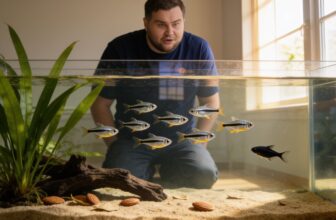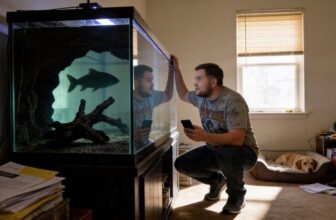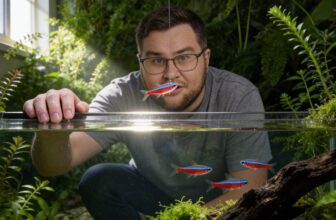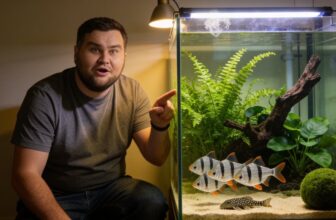
Your guppies need neighbors that won’t start drama, not a fin‑nipping soap opera.
Stick to 72–78°F matches, and don’t cram corydoras into a 5‑gallon—that’s a dinner party in a closet.
Nerite snails handle algae without rabbit‑snail overpopulation, chili rasboras flash ruby‑red in tiny schools, and female bettas work only in groups of three (fewer = passive‑aggressive roommates).
You’ll want peaceful types, proper schools—six minimum—and tanks sized to the species, since cramped fish get cranky fast.
The right picks balance looks, low maintenance, and actual compatibility, not just “community fish” hand‑waves from pet‑store staff.
Start matching temperature and temperament, and the specifics below will fill in the gaps.
At A Glance
- Nano snails like Nerites clean algae without overbreeding in 5‑gallon guppy tanks.
- Peaceful schoolers such as Chili Rasboras and Ember Tetras match guppy water needs.
- Bottom dwellers like Panda Corydoras need 10 gallons and soft substrate to thrive.
- Female Betta sororities require three or more to prevent aggression in community setups.
- African Dwarf Frogs add variety but demand stable filtration and careful feeding.
5 Criteria for Choosing Guppy Tank Mates
What makes a perfect guppy roommate? You’ll need five things dialed in, or you’ll watch your tank go sideways fast.
Tank size rules everything. You’re looking at 5 gallons minimum for guppies alone, 10 gallons once you add friends. Anything smaller, and you’re basically running a fish studio apartment—nobody thrives.
Color harmony matters more than you’d think. Neon tetras bring electric blue stripes, ember tetras warm things up with orange. Match lively guppies with complementary hues, not competing neon signs.
Temperament’s non-negotiable—peaceful only. Water parameters must align, 72-78°F for most. Diet compatibility keeps everyone fed without drama.
Bottom line: size appropriately, color-coordinate thoughtfully, and you’ll build a community that actually works.
A magnetic aquarium cover can prevent jumping fish, and high light transmission supports plant and fish health through clear mesh materials.
5-Gallon Tank Mates for Guppies
Running a 5-gallon puts you in tight quarters, but you still have options—just not many.
A 5-gallon tank limits your options, but strategic choices still leave room for a thriving miniature ecosystem.
You’ve got shrimp, a single betta (maybe), or, well, that’s mostly it.
Think of it like a studio apartment. You, the guppies, and maybe one roommate—max.
Your water hardness matters more than you’d expect, so test it with a reliable pH and TDS meter lest your fish throw a tantrum.
Lighting cycles? Eight to ten hours keeps algae in check, plants happy, and you from squinting at a dark box.
Skip schooling fish here. They need space, numbers, room to breathe.
Keep it simple. One species plus guppies, done.
Nerite Snails: Algae Cleaners for Nano Tanks
If you’re tired of scrubbing green fuzz off every surface in your nano tank, nerite snails are about to become your new best friends—and they work for free.
These tiny shelled janitors, barely three-quarters of an inch, transform algae control into effortless nano tank symbiosis. You’ll watch them cruise glass like slow-motion Roombas, scraping diatoms and green spot algae as your guppies dart above. No overpopulation headaches either—they won’t breed in freshwater, so your tank stays balanced. These snails are also completely safe to add alongside sterile tissue culture plants, which are guaranteed 100% pest- and algae-free.
- Temperature: 72-78°F (matches guppies perfectly)
- Tank size: 5+ gallons
- Lifespan: 1-2 years of spotless service
One or two handle a nano tank beautifully. They won’t touch your plants, won’t outstay their welcome, and definitely won’t judge your algae problem.
Female Bettas: Sororities of Three Minimum
While male bettas get all the glory—and the territorial rage—their female counterparts are the diplomatic secret your tank’s been missing, provided you’re willing to commit to a minimum of three.
You need that trio. Two females? They’ll tear each other apart. Three or more lets you establish a Betta hierarchy, a pecking order that keeps everyone polite.
At 2.25 inches, they’re guppy-sized neighbors, not bullies. Their 76-80°F range overlaps yours nicely. You get real Color synergy too—think iridescent blues and reds dancing beside your guppies’ sunset tails.
Bottom line: skip the solo drama, adopt the sorority. Stress indicators like faded stripes or prolonged hiding would signal poor water quality or incompatible tank conditions.
Chili Rasboras: Tiny Schoolers for Small Tanks
Since you’ve got barely enough water for a heavy sneeze, chili rasboras are your answer. These micro fish clock in at barely three-quarters of an inch, yet they school like they share one tiny brain—adorable, really.
Tank mate compatibility? Stellar. They won’t nip your guppies’ flowing tails, and they prefer the same 72-82°F range. You’ll want six minimum; they stress alone, like you at a party without your crew.
Their schoolborboras coloration shines ruby-red with a dark lateral stripe—subtle under normal light, electric when sunset hits your tank. A soft acidic blackwater setup triggers their natural pigment expression.
Bottom line: add them. Your nano tank finally feels complete.
Strawberry Rasboras: Red Alternatives to Chili Rasboras
Chili rasboras aren’t your only tiny option—strawberry rasboras bring the same micro size with a bolder personality. You’ll spot their striking red bodies instantly, no squinting required.
These fish max out at 0.7 inches and live eight years, outlasting your favorite pair of jeans. Their coral stripe patterns—those iridescent lateral lines—catch light like tiny emergency flares.
Breeding behavior stays low-drama, no special triggers needed. They scatter eggs among plants, letting you play grandparent without the stress.
At 72-82°F, they match guppies perfectly. Five gallons works, but don’t crowd them. For optimal health, maintain stable water conditions to prevent stress and swim bladder issues.
Verdict: Choose these when you want color that actually shows up.
When to Upgrade: 5-Gallon vs 10-Gallon Limits
You’re hitting the ceiling faster than you’d think—five gallons sounds roomy until you’ve got six adult guppies, two snails, and a plant that suddenly decided to take over half the tank.
Water chemistry shifts fast in cramped spaces. Ammonia spikes; you’re doing emergency changes at 2 AM, cursing your optimistic stocking plan. Ten gallons gives you breathing room, literally—more stable parameters, happier fish, fewer panic attacks.
| Tank Size | What You’re Signing Up For |
|---|---|
| 5 gallons | One species, tight monitoring, weekly water tests |
| 5 gallons | Snails, maybe a lonely betta sorority of three |
| 10 gallons | Real community options, forgiving water chemistry |
| 10 gallons | Schools shoaling, plants thriving, sanity intact |
When planning your upgrade, note that water weight per gallon is roughly 8.34 pounds, meaning a 10-gallon setup can easily exceed 100 pounds with gravel and equipment.
Upgrade when you start googling “is my fish gasping.” That’s your red flag, pal.
10-Gallon Tank Mates for Guppies
Why limit yourself to a glorified fishbowl when ten gallons releases actual options? You’ve graduated, friend.
In this space, you’ll welcome ember tetras, chunky 0.8-inch orange flames that school like they mean it, or panda corydoras—1.5-inch bottom vacuum cleaners living a decade if you’re lucky. Add otocinclus for algae duty, or sparkling gourami if you fancy something weirdly pretty.
Your tank filtration handles the bioload, but don’t skimp—guppies plus friends multiply waste fast. Light cycling matters too; plants need their rhythm, and so do fish kidneys, apparently. Red eye tetras can also thrive here, but they require dim lighting and a group of six or more to reduce stress.
Filtration handles the work, but don’t cheap out—waste multiplies fast, and even fish kidneys need their sleep schedule.
Bottom line: ten gallons buys you community. Choose small, peaceful, and don’t overcrowd.
Neon Tetras: Classic Schooling Companions for Guppies
Neon tetras work, plain and simple. You’ll watch your tank transform into a living jewel box when these electric-blue streaks mingle with your guppies’ fan tails, a color breeding dream that bonds you to fellow aquarists who get it.
You need ten gallons minimum—sorry, dreamers, no exceptions—and you’ll keep water chemistry steady in that 72-78°F sweet spot, soft and slightly acidic, matching what your guppies crave.
Here’s why you’ll feel at home:
- That iridescent stripe catches light like you’re sharing secrets
- Six-plus tetras school tight, making you the architect of their world
- Peaceful spirits, zero fin-nipping drama
- Classic status—join generations who started here
Bottom line: you’ve found your people.
For best results, maintain your tetras in a group of 6-8 to minimize stress and maximize their vivid coloration.
Ember Tetras: Orange Schoolers That Prefer Warmer Water
If neon tetras are the classic introvert’s choice, ember tetras are the friend who actually shows up to the party with snacks.
These tiny orange firecrackers bring warmth—literally. You’ll need 73-84°F water, so bump that heater up. They’re flexible on water hardness, thankfully, since you’re probably not testing that religiously.
School size matters more than you’d think. Six minimum, eight-plus preferred, or they sulk in corners like you at middle school gatherings. At 0.8 inches, they won’t intimidate your guppies.
Ten gallons minimum. They’ll shoal mid-water, flash copper-gold, and make your tank feel like a sunset.
Bottom line: Warm water, bigger school, instant community vibe. Like other schooling fish, larger groups deepen their natural coloration and confidence.
Panda Corydoras: Cool-Water Bottom Cleaners
Where everyone’s busy gawking at colorful mid-water swimmers, panda corydoras are doing the actual work—you know, the quiet competence you aspire to at your job but never quite achieve.
These 1.5-inch bottom dwellers thrive in 68-77°F waterinary habitat, making them perfect cool-water companions for your guppies.
Their substrate preference? Soft sand or smooth gravel—nothing sharp, they’re delicate little weirdos.
You’ll need ten gallons minimum, and honestly, that’s non-negotiable.
Here’s why you’ll bond with these guys:
- They live ten years—longer than most relationships you’ve had.
- They eat leftovers, so you’re basically getting a tiny, grateful roommate.
- They school in groups of six, and watching them makes you feel less alone.
- Their panda markings are subtle, like inside jokes only you get.
Bottom line: Get six. You’ll belong to something small and meaningful.
Glowlight Tetras: Mid-Level Swimmers for Guppy Tanks
Glowlight tetras are the understated middle managers of your guppy tank—less flashy than their neon cousins, but you learn fast that reliability beats drama. You keep them in groups of six or more, watching that copper-orange stripe ignite under your tank lights like a tiny ember parade.
They’re mid-level swimmers, so you balance your tank décor with open water above and plants below—everyone gets their zone. Moderate water flow suits them fine; nothing torrential, they’re not training for the Olympics.
At 1.5 inches, they match your guppies perfectly. No fin-nipping drama, no territory wars. Just peaceful schooling, 74-82°F, ten gallons minimum.
You add them, and suddenly your tank feels complete—like you finally found your people.
African Dwarf Frogs: Tricky Amphibians for Experienced Keepers
Since you asked for something different, African dwarf frogs deliver—just know you’re signing up for a pet that can’t decide if it’s aquatic or tragic.
Signing up for African dwarf frogs means committing to pets that embody beautiful, clumsy tragedy—perpetually confused about their own existence, yet weirdly endearing.
You’ll need a 10-gallon minimum, stable water filtration, and patience—these clumsy amphibians surface for air like they’ve forgotten how lungs work.
- They’ll wedge themselves in decorations, playing dead, until your heart stops.
- They’ll starve rather than compete with faster guppies for food.
- You’ll watch them “dance” at feeding time, and suddenly you’re emotionally invested.
- They’ll never thank you, yet you’ll keep their water pristine anyway.
Breeding? Forget it. You’re already managing fragile chaos.
Celestial Pearl Danios: Shy Fish for Planted 10-Gallons
The celestial pearl danio is basically the aquarium equivalent of that one friend who shows up to the party, finds the quiet corner with the houseplants, and somehow becomes the most interesting person there.
You’ll need that planted 10-gallon minimum—dense greenery isn’t optional, it’s their security blanket. Their plower color, those deep blue bodies speckled like tiny galaxies, pops against dark substrate.
Speaking of substrate compatibility, sand or fine gravel works; they’ll sift through it hunting micro-foods.
Their swimming behavior? Darting, then freezing. Timid spirits.
For breeding tips: add marbles or dense moss—eggs fall, parents won’t hunt them. Bottom line: peaceful, gorgeous, worth the quiet commitment.
Harlequin Rasboras: Hardy Marked Fish for Beginners
Celestial pearl danios demand patience, but maybe you want something that forgives your mistakes.
Enter Harlequin Rasboras. Their copper-orange bodies flash that iconic black “pork-chop” patch—Harlequin coloring so sharp you’ll double-take. These guys shrug off wonky pH, missed water changes, that time you overfed. Beginner friendly hardy? Absolutely. They school tight, move like synchronized swimmers, and won’t nip your guppies’ flowing tails.
- You finally belong in the fishkeeper club without the anxiety spiral.
- Their 72-82°F range overlaps yours perfectly—no thermostat wars.
- That 10-gallon minimum means you’re not breaking the bank.
- Watching them dart together, you’ll feel that quiet pride of keeping something alive.
Grab six. You’ll thank yourself.
Frequently Asked Questions
Can Male Bettas Live With Guppies Safely?
You shouldn’t risk it.
Betta aggression makes this pairing dangerous, and your guppies’ flashy tails trigger attacks. Male bettas see those flowing fins as rivals, not friends, so Guppy compatibility crashes hard here.
Skip the heartache, pick safer mates.
Female bettas work in 5‑gallon setups, groups of three, $8‑$15 each. Students swear by them, fewer casualties, more peace.
Bottom line: male bettas plus guppies equals stress, torn fins, and regret—don’t do it.
Do Guppies Need Tank Mates to Avoid Loneliness?
Bottom line: they’ll survive solo, yet you’ll see duller colors, less activity. It’s like eating pizza alone—fine, but better with friends.
- Solo guppy: ~$3, minimal cost, minimal spark
- Small group: $9-15, 10-gallon tank, actual personality
Add peaceful species—neon tetras, corydoras, snails—and you’ve got a community tank that hums. Five gallons minimum, ten recommended. Temperature: steady 72-78°F, filter required, plants help everyone chill.
Skip the drama species. Male bettas? Don’t. Trust me.
Your move: keep at least three guppies, or mix in compatible companions. They’re cheap date, they’re livebearers (free babies, yay?), and they’ll repay you with constant motion. Isolation works; connection works better.
How Many Guppies Fit in a 20-Gallon Community Tank?
You can fit 8–10 guppies in a 20-gallon community tank. That’s your max, assuming you’re adding other fish too.
Space density matters here—guppies need room to dart, not just survive. Guppy compatibility with tank mates like neon tetras or corydoras works best when nobody’s crammed. Think 2 gallons per guppy, minimum, then budget leftover space for friends.
Overcrowd and you’ll watch fins nip, tempers flare, water quality crash. Nobody wants that drama.
Your setup:
- 8–10 guppies (2 gallons each)
- 6 small tetras or 4 corydoras (bottom cleaners, total bargain at $4 each)
- 2 nerite snails (algae crew, basically free labor)
Bottom line: 20 gallons sounds roomy, but it’s cozy. Stick to 8 guppies if you’re adding extras, 10 if they’re flying solo. Your fish will thank you, probably by not dying.
Will Guppy Fry Survive With Adult Tank Mates?
Guppy fry won’t survive adult tank mates without intervention. Fry predation is guaranteed—adults, even peaceful ones, view babies as snacks.
You’ll need dense plants (think $5 java moss bunches), a breeding box ($8-12), or a separate nursery tank.
Water parameters matter less than physical separation here.
Bottom line: separate the fry, or accept casualties. Nature’s harsh, your tank doesn’t have to be.
Can Goldfish and Guppies Share the Same Aquarium?
Avoid this combo. Goldfish compatibility with guppies fails on basic biology.
- Temperature requirements clash—goldfish thrive in 65–72°F, as guppies need 72–78°F. Meet in the middle and everybody suffers, like a family road trip with broken AC.
- Goldfish grow huge (6–12 inches), outcompete guppies for food, and may snack on fry. They’re messy, too, taxing your filter.
- Guppies need warm, stable water; goldfish prefer cooler, oxygen‑rich environments.
Bottom line: Keep them separate. Your guppies’ll thank you, and your goldfish won’t stress about tropical roommates cranking the thermostat.
Rounding Up
You’ve got fifteen solid options now, and honestly? Your guppies won’t know what hit ’em—in a good way.
Pick tank mates that match your space, your skill level, and your tolerance for algae scrapers that occasionally “redecorate” your substrate. Snails for low-effort, tetras for color, frogs if you’re feeling brave.
- Nerites: $3–5, zero drama
- Ember tetras: $2–4, school beautifully
Start small, add slow. A cramped tank is just an aquatic waiting room nobody enjoys.
Bottom line: 10 gallons minimum for community bliss, and your fish will thank you by not dying.