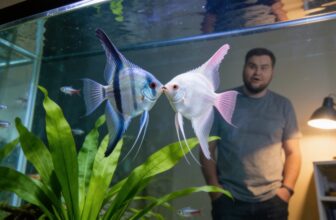
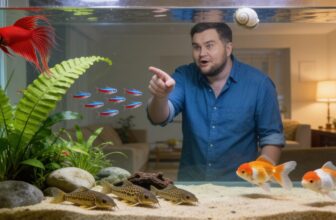
Fifteen predatory aggressive freshwater fish run the gamut from pint-sized terrors to tank-busting monsters.
Beginners can start with dwarf pea puffers in 10-gallon species tanks or convict cichlids in 30-gallon setups—both punch above their weight in attitude.
Mid-level keepers might manage tiger barb shoals, red tail sharks, or rainbow sharks in 30-55 gallon spaces with proper hiding spots.
Now, the heavy hitters—oscars, flowerhorns, jaguars, red devils—demand 70-75 gallons minimum, and that’s being generous.
The real showstoppers, like the afer knife at 150 gallons or the hoplias aimara pushing 300, aren’t for the faint-hearted or light of wallet.
Water quality, steel-frame stands rated way higher than you’d think, and the occasional hand bite come standard.
Each species brings its own flavor of chaos, from fin-nipping social hierarchies to solitary ambush predators who rearrange décor like interior designers with anger issues.
There’s a predator here for nearly every committed keeper, provided they’re honest about space, filtration, and their tolerance for aquarium drama.
The deeper you go, the more these fish reveal about what it really takes to keep them thriving.
At A Glance
- Large predators like Hoplias Aimara demand 300+ gallon tanks with robust filtration for survival.
- Territorial bottom-dwellers including Red Tail and Rainbow Sharks require dense caves and 55+ gallons minimum.
- Hyper-aggressive cichlids—Oscar, Flowerhorn, Jaguar—need 70-75+ gallons solo or carefully planned large communities.
- Knife fish and similar ambush predators rely on driftwood hides and demand substantial 150+ gallon spaces.
- Smaller aggressors such as Tiger Barbs and Dwarf Pea Puffers still need 10-30 gallons with proper groups or isolation.
Which Aggressive Fish Fit Your Tank Size and Experience Level?
Then there’s the Hoplias Aimara. This beast demands respect, and space—300 gallons minimum, probably more if we’re being honest about their growth.
Tank filtration isn’t optional here; it’s survival infrastructure for a fish that’ll outgrow most apartments.
Now, tank cycling matters for everyone, but for these wolf fish? It’s make-or-break. They’ll tolerate some conditions, certainly, but sloppy cycling invites disaster.
Beginners need not apply—this fish belongs to the committed, the slightly obsessed, the ones who’ve already killed a few plants and learned humility.
Experienced keepers find their match here. Everyone else, well, there’s always the 10-gallon club, a manageable entry point with options like the Glofish kit with LED lighting and filtration or the Aqueon starter kit with full equipment packages.
Tiger Barb: Aggressive Fin-Nipper for 30-Gallon Shoals
So why exactly does a three-inch stripy fish cause so much commotion?
Tiger Barbs pack attitude in those four vertical stripes. Their fin nipping behavior isn’t personal—it’s bored, anxious energy from groups too small, or stress from cramped quarters. Keep six, minimum, in that 30-gallon, and watch shoal hierarchy dynamics sort themselves. There’s chasing, posturing, a pecking order that’d make middle school seem gentle.
But here’s the thing: they don’t actually want solo tankmate space. They want their crew. Give them numbers, decent water movement, and maybe skip the angelfish neighbors. Those flowing fins? Irresistible targets.
Beginners welcome. Chaos, manageable.
For aquarists seeking to minimize tank noise from active schooling fish, installing an acrylic disk silencer can reduce turbulence and overflow sounds in sump systems.
Convict Cichlid: Breeding Aggressor That Needs 30 Gallons Minimum
Thirty gallons sits at the absolute basement. Give them less, and the violence scales up fast.
I mean, “Beginner-Intermediate” sounds gentle on paper. It isn’t.
Convicts prove that. These striped black-and-white brawlers bring aggressive breeding to any tank they enter—spawn once, and suddenly everyone’s getting chased through the decor.
They’ll eat whatever—flakes, pellets, the occasional guilt-inducing live snack. They’re hardy, adaptable, and completely unreasonable when protecting eggs.
Keep them solo, or accept that you’ve built a tiny warzone.
Even the 3‑gallon betta divider systems designed for territorial fish can’t contain convict cichlid aggression once breeding begins—this species demands far more space and isolation.
Beginners welcome. Victims, less so.
Dwarf Pea Puffer: Tiny Aggressor for 10-Gallon Species Tanks
Now, here’s a fish that punches so far above its weight class you’d swear it’s got something to prove. The Dwarf Pea Puffer packs territorial fury into one-and-a-half inches of striped attitude.
Habitat Requirements
Dwarf Puffer Habitat demands dense vegetation, rocks, driftwood—anything that breaks sightlines in that cramped ten-gallon space. They’re curious explorers, certainly, but they’ll also murder tankmates twice their size given half a chance. A separate housing solution like a breeding box may prove essential if aggression escalates during feeding or breeding attempts.
Social Dynamics
Social Aggression Management keeps this species-only setup functional. Groups work if there’s space, though males spar constantly.
| Trait | Specs | Notes |
|---|---|---|
| Size | 1.5 in | Deceptively small |
| Tank | 10-15 gal | Species-only, no exceptions |
| Temperament | Hyper-aggressive | Pure personality, zero chill |
For hobbyists who want community without the crowd, they’re perfect little monsters.
Red Tail Shark: Territorial Aggressive Fish for 55-Gallon Setups
The Dwarf Pea Puffer might’ve cornered the market on rage in miniature, but there’s something almost respectable about aggression you can actually see coming.
Enter the Red Tail Shark—six inches of sleek black body, blazing red fin, bottom-dwelling attitude.
Now, this fish demands a territorial tank layout. We’re talking dense rockwork, driftwood mazes, and caves galore.
Without it? They’ll claim the whole aquarium, chasing tankmates into corners.
Aggression mitigation techniques matter here. Skip similar-looking fish—Rainbow Sharks trigger wars—and stock robust, mid-water swimmers.
A 55-gallon minimum gives them space to patrol without declaring war on everything that moves.
For a sturdy foundation that supports their setup, consider a 55-75 gallon stand with secure storage for equipment and easy cord management.
Bucktooth Tetra: Aggressive Schooling Fish Requiring 12+ Individuals
While the Red Tail Shark holds its turf alone, the Bucktooth Tetra takes a completely different approach to aggression—strength in numbers, yes, but likewise chaos in numbers.
Now, these silvery devils with their trademark spots aren’t actually tetras, not really, and they’ll shred slower tankmates without remorse. Schooling dynamics demand twelve-plus individuals minimum; anything less and they’ll turn cannibalistic on each other. It’s a numbers game where more fish theoretically spreads the violence, though “theoretically” does heavy lifting here.
Tank capacity calculations get brutal fast—fifty-five gallons for a dozen five-inch scale-rippers means you’re committing serious real estate. Choose wisely, or don’t. Given their need for accurate interior volume and significant swimming space, this species exemplifies why larger tanks reduce stress even for aggressive schooling fish.
Jack Dempsey: Heavy Vegetation Lover in 55-Gallon Aggressive Tanks
Bucktooth Tetra schools demand numbers, but Jack Dempsey territories demand *architecture*—and these fish couldn’t care less about your landscaping budget.
Now, here’s where veget density saves your sanity. These eight-to-ten-inch bruisers need thick plant walls, driftwood caves, the whole overgrown aesthetic.
Tank lighting? Keep it subdued—think jungle floor, not surgical suite. Bright LEDs stress them, and stressed Dempseys redesign your aquascape with their jaws.
I mean, they’re gorgeous—electric blue speckles, those brick-red fins—but beauty’s secondary when they’re bulldozing through Vallisneria at 3 a.m.
Protein dominates their menu. Live worms, frozen shrimp, quality pellets. Skip the flakes; they’ll judge you.
Fifty-five gallons, minimum. Anything smaller, and you’ll witness divorce-court aggression.
For aquascapers concerned about structural integrity, rimless edge designs with 45° beveled edges create seamless visual transitions while maximizing the viewing area for these territorial fish.
Green Terror Cichlid: Brightly Colored 55-Gallon Aggressive Option
Two, maybe three things separate Green Terrors from the average cichlid chaos—and yeah, “terror” isn’t just marketing. I mean, they’re bright, electric green with thick black bars, like someone went overboard with highlighters in art class. But that flashy beauty masks serious attitude.
Their tank habitat matters. Rocks, driftwood, caves—you’re basically building a fortress so they don’t bulldoze everything. Fifty-five gallons minimum, though bigger’s smarter since they hit eight to ten inches and claim territory fast.
Their feeding schedule keeps things simple: morning and evening, protein-heavy. Pellets work, frozen shrimp thrills them. Now, here’s the catch—they’ll bite hands, rearrange décor, and stare at you like you owe them money. Respect the name. For a sturdy foundation that handles their territorial aggression and tank rearrangements, invest in a steel-frame stand rated for at least 1,100 lb to safely support their 55-gallon domain.
Red Devil Cichlid: Deep Red Aggressor Avoiding Other Cichlids
If you’re hunting a fish that looks like it swam through a paint can of crimson and carries a chip on its shoulder the size of a small boulder, the Red Devil Cichlid delivers.
This one’s aggressive, no question—Tank Compatibility means avoiding other cichlids entirely, since it’ll wage war on anything remotely similar. I mean, it’s a Red Devil; what did you expect?
Now, solo’s the move here, or maybe a very specific, roomy community (think 55 gallons minimum, probably more like 75 if we’re honest). Given their powerful swimming and tendency to dig, you’ll want reliable water circulation to prevent dead zones and maintain water quality in these larger setups.
Still, for Cichlid Alternatives that actually let you keep other fish? Look elsewhere.
Rainbow Shark: Semi-Aggressive Minnow for 50-Gallon Tanks
That bright red tail fin, sometimes bleeding orange onto the others, pops against a dark black body like a warning sign you can’t ignore, and honestly? That’s the appeal.
The rainbow shark demands respect, not fear—well, maybe a little fear.
Tank décor matters more than you’d think; caves, driftwood, thick planting break sightlines, define territories, keep the peace.
Water parameters stay forgiving, 72-79°F, pH 6.5-7.5, standard hardness. It’s hardy stuff.
Your semi‑agressive minnow needs:
- A 50-gallon minimum, no negotiating
- Heavy hiding spots, the more the merrier
- No bottom-dwelling lookalikes—territory wars get ugly
- Consistent water parameters, since stress flips the switch
When selecting a stand for a 50-55 gallon rainbow shark setup, prioritize heavy-duty metal frame stands with at least 800 lb capacity to safely support the tank, equipment, and water weight.
Oscar: Classic Aggressive Cichlid Demanding 75 Gallons
Oscar Care Basics
That rainbow shark’s got its charms, definitely—compact, flashy, manageable.
Now here’s where cichlid temperament gets serious. The Oscar doesn’t apologize for anything. This fish tops out at fourteen inches, demands seventy-five gallons minimum, and treats anything smaller like a snack.
Tank filtration? You’ll need heavy-duty hardware. Oscars dig, they mess, they make work. Canister filters run non-stop, and you’d better stay on water changes. Weekly, without excuses.
But here’s the belonging: Oscars recognize their keeper, beg for food, sulk when ignored. They’re messy roommates who actually care you’re home. That connection? Worth every gallon.
Bala Shark: Fast Aggressive Swimmer for 75-Gallon Open Space
Fast, Aggressive Swimmers for 75-Gallon Tanks
When you’ve wrangled the Oscar’s chaos, the Bala Shark seems almost sensible—sleek, silver, fast, no sulking.
Now, here’s the thing: they’ll hit twelve inches easy, maybe fourteen if you’re feeding right, and they *move*.
Water flow optimization isn’t optional—it’s survival, since these fish cruise currents like commuters on a highway, and stale corners? They’ll sulk, or worse, bash themselves against glass.
Shark tank design means open lanes, long tanks, nothing cramped.
Schooling fish, mostly, so don’t isolate them unless you enjoy watching anxiety with fins.
- 75 gallons absolute minimum, 100+ preferred
- Moderate-to-strong current, no dead zones
- Keep in groups of five or more
- Avoid tiny tankmates—anything mouth-sized disappears
Flowerhorn Cichlid: Interactive 70-Gallon Aggressive Giant
Interactive 70-Gallon Aggressive Giant
This hybrid cichlid packs aggression and playfulness into one bulky, twelve-to-sixteen-inch package. Flowerhorn behavior fascinates keepers since these fish recognize owners, begging for food with frantic wiggles and following hands across the glass. It’s charming, really, until they rearrange every plant you’ve carefully placed.
Tank enrichment matters here—heavy décor, thick driftwood, maybe a flower pot they can’t quite flip. Without mental stimulation, they’ll bully tankmates or sulk dramatically.
- Hardscape anchors territory
- Varied textures prevent boredom
They’re not community fish. One per tank, seventy gallons minimum, and you’ll belong to a fish who demands attention, respects no one, and somehow earns devotion anyway.
Jaguar Cichlid: Spotted Predator Outgrowing Most Aggressive Setups
Spotted Predator Outgrowing Most Aggressive Setups
Now, here’s the thing most people miss: this fish doesn’t merely grow large. It commits—body, spirit, and appetite—to size scaling that’ll laugh at your 55-gallon dreams.
Spotted hunting defines its methods, those juvenile silver-gold scales darkening into jaguar rosettes as it stalks tankmates twice its size. Joining its club means accepting brutality.
- Demands 70+ gallons minimum, really more
- Eats protein-rich pellets, then live foods, then anything that fits
- Territorial toward everything, including your hand
- Transforms tanks, dominates communities, outlives expectations
Afer Knife: Solitary African Predator for 150-Gallon Monster Tanks
Afer Knife
Since it spends daylight hours pressed against driftwood, waiting, the Afer Knife doesn’t demand attention—until it does, and then you’re reminded why 150 gallons is merely the starting line, not the finish.
The Afer Knife doesn’t demand attention—until it does, and then you’re reminded why 150 gallons is merely a starting line.
This African predator, native to shadowed western waters, reaches twenty to thirty inches of silent ambition. It’s solitary—absolutely—because two knives means one casualty, guaranteed.
You’ll need that monster tank dimmed, planted thick, stocked with meat. Live lance fish, earthworms, bloodworms; maybe carnivorous pellets if you’re lucky and it’s not judging you.
Intermediate-expert territory here. The Afer Knife belongs to keepers who’ve already outgrown “aggressive” and want something that watches back.
Frequently Asked Questions
Do Predatory Fish Require Live Feeding?
Not all predatory fish require live prey, though many enthusiasts assume they must.
Most adapt to frozen or prepared high‑protein foods with patience.
Feeding frequency varies—typically once daily for adults, twice for juveniles—depending on metabolism and size.
Offering variety, not just live meals, meets nutritional needs and reduces risk.
It’s simpler than tradition suggests, and nobody’s tank needs to become a horror show.
Can Aggressive Fish Coexist With Invertebrates?
Aggressive fish rarely achieve invertebrate compatibility. Shrimp become snacks, snails get harassed—it’s predation, not personal. Habitat partitioning helps marginally: dense plants, separate zones, caves upon caves.
But bold fish, they’re adventurers, they’re opportunists.
Now, dwarf pea puffers? They’ll murder shrimp armies. Larger cichlids? Snail-shell-crushing hobbyists.
Will Aggressive Fish Eat Plants in Planted Tanks?
Aggressive fish rarely cause serious plant consumption, though they’ll rearrange décor establishing tank hierarchy.
Most damage comes from digging, not eating—think Oscars uprooting stems, cichlids excavating spawning pits.
Hard-leafed plants like Anubias survive best.
Floating vegetation works, too, since few aggressive species reach the surface.
Don’t expect a pristine aquascape; it’s about managing chaos, not preventing it.
How Often Should Water Changes Occur for Predators?
Water changes? Weekly, mostly—30% if you’re disciplined, though tank size stretches that.
Bigger tanks, like 150+ gallons for your Afer Knife or Aimara, they’ll forgive you 10-14 days between swaps.
Smaller setups, think 55 gallons with those Red Tail Sharks or Convicts, they’re less forgiving.
Frequency schedule’s rigid since predators metabolize hard, protein-rich diets foul water fast.
Are Predatory Fish Suitable for Community Beginners?
Predatory fish aren’t suitable for community beginners, no, not really, and here’s why that matters.
Community compatibility demands careful stock selection, tricky with territorial hunters.
Beginners struggle managing feeding frequency—missed meals turn tankmates into snacks.
Now, aggression escalates fast, water parameter swings stress everyone, and diseases spread.
Better to build skills first, then graduate. Start simple, grow confident. The predators’ll wait.