Black Neon Tetra Care: Diet, Tank Mates & Tank Setup
Black neon tetras bring quiet electric magic to the midwater—pale gold stripes catching dim light like living fiber optics. These hardy schoolers punch above their weight, thriving in modest 20-gallon setups where dark sand and gentle flow mimic their South American roots.
Water parameters stay forgiving: soft acidic to neutral pH, steady 75°F, and pristine ammonia levels keep their obsidian bodies glossy. A Tetra Whisper IQ and compact 50-watt heater handle the mechanical work without cluttering your scape.
Stocking choices make or break the vibe—zebra danios and harlequin rasboras play nice, while any mouth wider than a tetra’s body earns a hard pass. Stay tuned for feeding strategies and where to source quality gear without the markup.
At A Glance
- Black Neon Tetras accept pH 5.0–7.5; Seachem Acid Buffer maintains acidic conditions.
- Minimum 20-gallon tank with dark substrate, subdued lighting, and gentle filtration is required.
- Ideal tank mates include Zebra Danios, Harlequin Rasboras, and Common Corydoras.
- Avoid fish that can swallow a tetra whole; cramped spaces amplify aggression.
- Diet information not provided in background; consult additional care sources for feeding details.
Why Black Neon Tetras Are a Top Pick for Beginners and Experts
Most aquarists, whether they’ve kept a single betta or a full rack of South American biotopes, find Black Neon Tetras an almost absurdly easy win. Their forgiving water chemistry, accepting pH from 5.0 to 7.5, takes the panic out of setup.
Most aquarists find Black Neon Tetras an absurdly easy win—their forgiving chemistry takes the panic out of setup.
For $3.99 each, a school of six delivers behavioral enrichment—these sociable fish swim actively at mid-level, flashing a vivid white-and-black stripe. They won’t nip fins or hide all day.
Dark substrate and gentle filtration, like a Tetra Whisper IQ, seal the deal; no fuss, no fail. A stand like the HOOBRO 3-Tier can support their tank with a 220 lb capacity.
Bottom line: they make any tank feel complete.
Natural Habitat and Behavior of Black Neon Tetras
The Black Neon Tetra hails from the shallow, tannin-stained streams of the Paraguay River basin in South America. There, dim light filters through dense canopy, and soft, dark riverbeds feel like home. Their lives sway with the seasons.
| Nature’s Rhythm | Tetra’s Response |
|---|---|
| Flood season | Seasonal migration; they spread to find food. |
| Dry season | Retreat to deeper pools, staying together. |
| Nightfall | Nocturnal behavior peaks; they rest huddled. |
| Dawn | Active, darting mid-water, flashing stripes. |
This schooling fish, moving as one, finds safety in numbers. You’re creating that same belonging in your tank—a quiet, dark haven they’ll adore. To match their peaceful nature, choose a filter with a low noise level like the BlueYu 4-in-1, which operates below 35 dB. A pump with ceramic bearings will further reduce operational hum for a tranquil environment.
Setting Up the Perfect Tank: Size, Substrate, and Water Conditions
Recreating a slice of the Paraguay River basin in a glass box is where the real fun begins—and it is surprisingly forgiving.
A 20-gallon tank, preferably longer than tall, gives these schoolers room to zoom.
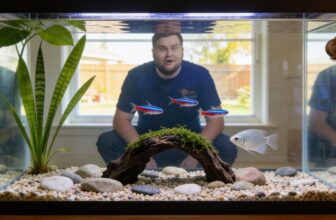
Dark, fine gravel or sand mimics their soft, natural riverbed.
Tank lighting should be subdued; bright lights stress them, so float plants or use low-wattage LEDs. Using low-wattage LEDs like the Pawfly 11 W clip-on provides respectable PAR for low-demand plants without stressing the fish.
Aim for a pH around 6.0 to 7.0; pH buffers help maintain stable acidic conditions, such as Seachem Acid Buffer which lowers pH for soft-water environments.
Stick to 73–81°F, soft water, and zero ammonia.
Get a liquid test kit—guessing gets you dead fish.
That’s your recipe.
Best Heater and Filter for Your Tetra Tank
Pick a heater and filter that won’t quit. For the black neon tetra’s 73–81°F range, a 50‑watt heater fits a 20‑gallon tank perfectly. Heater wattage matters—too low, and the tank stays cold; too high, and you risk cooking your fish. Go with the Orlushy, which is adjustable and reliable. The Orlushy model includes over‑heat protection to prevent dangerous temperature spikes. This heater also features dry‑burn prevention to stop heating if the water level drops too low.
Filters? Calm water is key for these active swimmers. An HOB filter with adjustable flow works best—the Tetra Whisper IQ Power Filter, 20 Gallons, 130 GPH, is a solid choice. Filter flow control dials it down so your tetras aren’t fighting a current.
Bullet points:
- Heater: Orlushy Submersible, ~$20
- Filter: Tetra Whisper IQ, ~$35
Bottom line: steady heat, gentle flow. Your tetras will thank you.
How to Create the Ideal pH, Temperature, and Hardness
Three numbers matter more than most when keeping black neon tetras happy—pH, temperature, and water hardness. Aim for a pH of 5.0 to 7.5, acidic side preferred. Keep temperature between 73-81°F, ideally 75°F. Water hardness should sit at 6-8 dGH.
These parameters mimic their natural streams, free from natural predators. Stable conditions come first, achieved through proper tank cycling. Use an adjustable heater and a reliable filter. Check levels weekly with a liquid test kit. For accurate readings, consider a digital pH meter with automatic temperature compensation to ensure consistent results.
Get it right, and your tetras will thrive. Get it wrong? They’ll let you know—by losing color.
Essential Decor: Live Plants, Driftwood, and Hiding Spots
| Decor Element | Purpose | Example Product |
|---|---|---|
| Driftwood | Creates caves, releases tannins | Malaysian Driftwood |
| Live plants | Reduces stress, improves water | Java Fern, $8 |
| Leaf litter | Mimics wild habitat | Indian Almond Leaves |
| Rock caves | Extra hiding spots | Slate or lava rock |
You’ll feel proud watching them investigate a setup that truly feels like home. For nano tanks, choosing small flat driftwood prevents overwhelming the scape while allowing essential biofilm growth. Adding Water Spangles as a floating plant provides natural shade that reduces algae and enhances visual depth.
What, How Often, and How Much to Feed Black Neon Tetras
Feeding black neon tetras isn’t complicated—they’re the kind of eaters who’ll accept almost anything you toss in, from flakes to live worms, without turning up their noses.
A balanced diet keeps them luminous; mix high-quality flakes with occasional brine shrimp or bloodworms.
Feed small portions twice daily, what they can finish in two minutes.
Overfeeding fouls water, undoing your hard work on tank cycling.
Stick to a consistent feeding schedule, skipping one day weekly to mimic natural fasting.
For added convenience, consider an automatic feeder with precision portion control to maintain consistent portions while you are away.
This routine prevents waste buildup, keeping your school healthy and your community tank harmonious.
For a protein boost, consider Fluval Bug Bites as a slow-sinking micro-granule option that enhances color and growth.
Choosing the Best Tank Mates for a Peaceful Community
Selecting tank mates for black neon tetras is less about strict rules and more about common sense—don’t house a fish that’s large enough to treat them as a snack. Stick with peaceful, comparably sized species for aquarium safety. These tetras thrive alongside calm tankmates that share their temperament and water preferences.
| Tank Mate | Compatibility | Notes |
|---|---|---|
| Zebra Danios | Excellent | Active, fast, and similar water needs |
| Common Corydoras | Great | Bottom dwellers, won’t compete |
| Guppies | Good | Calm, colorful, peaceful |
| Harlequin Rasboras | Excellent | Schooling fish, same size and behavior |
For plant compatibility, choose species like honey gouramis that won’t nip leaves. A community of 6 or more tetras with these pals creates a harmonious, thriving tank—no fuss, just fishy friendship. Ensure strong filtration to handle the bioload from both tetras and their tank mates. A filter with a gentle waterfall helps avoid uprooting delicate plants in the planted community.
Which Tank Mates to Avoid (And Why)
Additionally avoid any fish whose mouth can swallow a tetra whole. Tank size matters: cramped spaces amplify aggression. Water flow matters too—high flow exhausts these calm swimmers, so ensure the pump’s flow rate matches tank volume at just 3–5 times per hour. For example, a pump like the Hygger Adjustable Flow Wave Maker can be set to five flow patterns to avoid overwhelming the tank. Stick to peaceful, same-size tank mates. Bottom line: keep it chill, or your tetras hide.
How to Tell Male From Female Black Neon Tetras
Regarding distinguishing male from female Black Neon Tetras, the secret is in the belly. Females develop a noticeably rounder stomach when carrying eggs, like they’ve snacked on too many brine shrimp. Males stay lean and torpedo‑shaped.
It’s not about color morph variations—both sexes share those shimmering stripes. For fry development stages, this distinction matters when you finally spot a plump female.
No need for fancy techniques; just a patient look during feeding time will reveal who’s who. Remember, you’re part of a community that notices these subtle details—it’s what makes your tank feel complete.
Breeding Black Neon Tetras: Pair Selection and Setup
Breeding Black Neon Tetras begins with a deliberate choice of adults. Select a lively, full-grown pair, or one male with several females, from your existing healthy school—never introduce unknown fish.
Place them in a separate quarantine tank first to confirm they’re disease-free, then prepare a breeding setup with soft, acidic water and dim lighting.
Stick to a 12–14 hour lighting schedule to mimic their natural river habitat. Add fine-leaved plants for egg-laying.
For optimal health, use a conditioner like Seachem Prime that detoxifies ammonia while preserving beneficial bacteria in the soft, acidic water.
With calm water and patience, they’ll spawn readily. Just don’t rush it; breeding fish requires a little faith, friends. For optimal water quality, use a water conditioner to neutralize chlorine and chloramines before adding fish to the breeding tank.
Common Diseases, Color Loss, and How to Prevent Them
Keep your black neon tetras healthy, and they’ll flash that shimmering stripe for years—ignore the warning signs, and you’ll be nursing sick fish instead.
Color fading is often the first clue something’s off, whether from ich, dropsy, or neon tetra disease.
Disease prevention starts with clean water—replace 30–50% weekly. Stress from aggressive tankmates or cold water likewise causes fading. Limit bright light to 12–14 hours daily.
A stable 75°F tank, calm companions, and a balanced diet keep those stripes vivid.
Spot fading early, act fast, and your school stays lively.
Using accurate test strips weekly helps monitor pH, ammonia, and nitrate levels to catch imbalances before disease takes hold.
Store strips in a cool, dark place to preserve accuracy and prevent false readings caused by heat degradation.
Weekly Maintenance Routine for Thriving Tetras
That sparkling black neon stripe that signals a healthy tetra is a direct result of clean water. A weekly routine keeps them thriving and supports any future Breeding setup. Replace 30–50% of tank water weekly; it’s your main tool for Disease prevention. Test parameters with a liquid kit, aiming for zero ammonia and nitrites. To make water changes easier, consider a water-pressure powered gravel vacuum with a long hose to drain and refill directly from a sink. These models often use three-stage filtration to catch fine debris while sifting gravel.
| Task | Frequency | Why It Matters |
|---|---|---|
| Water change | Weekly | Removes waste, keeps colors bright |
| Filter check | Weekly | Guarantees gentle flow, not a whirlpool |
| Plant trim | Weekly | Prevents decay, adds hiding spots |
That routine might sound dull, but skipping it means sick, drab fish. Stick with it, and you’re part of a successful keeper’s club.
Quick Care Checklist for New Black Neon Tetra Owners
A new black neon tetra owner might feel a bit like a kid who just bought a magic set—excited, but similarly one wrong step away from a mess.
A new black neon tetra owner might feel like a kid with a magic set—one wrong step from a mess.
So, here’s your quick checklist for a smooth start.
- Complete Tank cycling first—it’s not optional. Without it, ammonia spikes kill fish fast. Use a product like Seachem Prime to bind ammonia for 48 hours during emergencies.
- Master the Acclimation process by floating the bag for 15 minutes, then adding small tank water every 5 minutes.
- Feed sparingly—a pinch once daily, skipping one day weekly.
- Test water weekly with a liquid kit, keeping ammonia and nitrite at zero. Liquid reagents generally provide higher precision than test strips for early problem detection.
Stick with this, and you’ll belong to the club of successful keepers.
Where to Buy Black Neon Tetras and Recommended Supplies
Buying black neon tetras should be the fun part, but it’s similarly where many new owners go wrong.
Your best purchase options are reputable online stores or local fish shops—skip big-box pet chains with stressed stock.
For crucial supplies, grab a 20-gallon tank, API Master Test Kit, and a heater like Orlushy’s. The ultra‑clear glass from premium starter kits resists scratches and survives accidental drops, offering long-term durability.
On feeding tips, stick to TetraMin flakes mixed with frozen brine shrimp; overfeed and you’ll foul the water, which kills vibrancy.
A whisper-quiet filter, dark sand, and live plants complete the setup.
Bottom line: choose healthy stock, invest in gear first, and join the confident aquarist crowd.
You can also monitor water quality weekly with 8‑in‑1 Water Test Kits to catch ammonia spikes early and keep your tetras healthy.
Frequently Asked Questions
Can Black Neon Tetras Be Kept in a Nano Tank?
No, black neon tetras should not be kept in a nano tank. They need a 20-gallon minimum for proper schooling—six fish minimum—and active swimming space.
Nano fish compatibility is poor here; these tetras are too energetic for small volumes.
Spawning substrate requirements are irrelevant in a nano setup, as cramped conditions prevent natural breeding.
A 30-gallon upgrade is better for adding tank mates.
Stick with a larger tank for their health and your peace of mind.
How Long Does It Take for Eggs to Hatch?
It takes 24 to 36 hours for black neon tetra eggs to hatch. Regarding black neon tetra egg care, make certain the water stays at the ideal hatching temperature between 78-80°F.
Adults will eat the eggs, so remove them or the parents. A separate breeding tank is a smart move.
Matt, the author, learned this the hard way—lost a batch to hungry parents. Lazy? Maybe. But a sponge filter keeps water clean without sucking up tiny fry.
What Causes Black Neon Tetras to Swim Upside Down?
Swimming upside down usually points to swim bladder issues, messing with a fish’s buoyancy. This can stem from overeating (try a day of fasting) or poor water quality—ammonia at 0 ppm and a heater holding steady at 75°F are musts.
A filter like Tetra Whisper IQ, 130 GPH, helps keep things calm. Think of it as a tetra’s version of a bellyache; clean conditions and careful feeding usually fix it.
Do Black Neon Tetras Jump Out of the Tank?
Like a skittish squirrel darting up a tree, black neon tetras can in fact jump out, so a tight-fitting tank lid is non-negotiable. Keep the water level an inch or two below the rim to reduce escape risk, since these little guys get spooked easily.
A lid runs about $15-30 and saves heartache. Remember: a covered tank means fewer floor-sweeping adventures for you. Stick with a secure setup—your school will thank you.
Can You Keep a Single Black Neon Tetra With Other Fish?
No, a single black neon tetra should not be kept alone. Schooling behavior is a core need—they require a group of at least six. Alone, it hides, feels stressed, and loses color.
A 20‑gallon tank supports their school and other small, peaceful fish like guppies or corydoras. Tank mates must be non‑aggressive; any fish big enough to swallow a tetra is a no‑go.
The bottom line is: stick with the group. A lonely tetra is a dull, stressed one.
Rounding Up
Black Neon Tetras? Easy. You get a striking fish without the drama. They’re small—barely an inch—but need a 20-gallon to school properly, which makes them look bigger than they are. Set pH around 6.5, keep temps at 77°F, and add a dark substrate. They’ll color up fast. A basic sponge filter ($15) works fine, but avoid aggressive tank mates like cichlids. Bottom line: low effort, high visual payoff. Buy six from a reputable breeder, skip the pet store impulse, and you’ll have five years of shimmer without the headache.