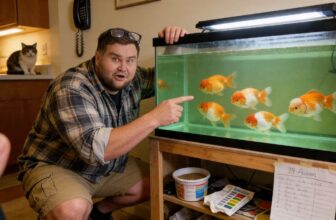
You’ll drop $5–$13 on basic fantails at big‑box stores, breeder fancies run $20–$80, and show specimens crack $500.
The real wallet‑killer? Everything else.
A proper 20‑gallon minimum per fish, filtration at $40–$80, and a quarantine setup you’ll regret skipping ($35–$60, or $250+ in disease disasters later).
Monthly hits: electricity $5–$15, quality food $10–$20.
That’s $150–$350 upfront, then steady bleeding.
DIY filters, community swaps, and juvenile buys trim fat without heartache.
Feeder fish? Aquatic petri dishes, friend.
Budget honest, buy smart, and yes—there’s more Intel ahead if you stick around.
At A Glance
- Big-box fantails and black moors cost $5–$13, while breeder fancies run $20–$80 and show-lines exceed $500.
- Entry-level setup totals $150–$350 including tank, filtration, substrate, and essential testing equipment.
- Monthly recurring expenses range $15–$35 covering electricity, quality pellets, and routine filter maintenance.
- Skipping quarantine risks $20–$250 in losses; basic isolation setup costs only $35–$60.
- Cheap feeder fish carry parasites causing $50+ in treatments; store-bought comets at $6+ are safer.
How Much Do Goldfish Really Cost in 2025?
At big-box stores, you’ll spot fantails and black moors swimming in circles for $4.99 to $12.99, while long-bodied pond types like shubunkins nudge the upper end at $5.99 to $8.99—not exactly breaking the bank, assuming you don’t fall for the siren song of ultra-select show lines that can run $500 or more because someone, somewhere, decided that fish should have pedigree papers.
Seasonal pricing kicks in around spring, when everyone’s suddenly a pond person, and genfish genetics—the selective breeding behind those bubble cheeks and twin tails—drives fancier varieties toward $80.
Size matters: jumbo grades command premiums, and proven breeders cost extra. Most hobbyists land in the $5–$20 sweet spot. Whether you choose a small tank or a larger setup, accurate interior volume is crucial to avoid crowding and reduce stress.
Big-Box vs. Breeder Goldfish Prices
Where exactly does your five-dollar bill stop being enough?
At the big-box door, mostly. You’ll grab a $4.99 fantail, indeed, but pricing trends show you’re gambling on mystery health, zero quarantine, and fish that’ve traveled farther than your last vacation.
Market dynamics favor breeders at $20–$80 for common fancies—higher upfront, but you get live-arrival guarantees, disease-free stock, and actual humans who answer emails.
- Big-box: cheap, convenient, risky
- Breeder: pricier, healthier, supported
Skip the $500 show fish if you’re entering contests. For most keepers, breeder-grade hits the sweet spot—your future self, staring at a thriving tank, will thank you. Investing in a quality setup often means also choosing a titanium heat exchanger for saltwater durability if you later add marine species alongside your goldfish.
Fancy Goldfish Varieties and Price Tiers
Once you’ve settled on a seller, the real fun begins: figuring out which fancy goldfish variety matches your budget and your tank space.
It’s like picking a car, but wetter.
You’ll find entry-level fantails and black moors at big-box stores for roughly five to thirteen bucks, nothing fancy but friendly.
Step up to specialty breeders, and you’re looking at twenty to eighty dollars for ranchus or short-body orandas with tighter breeding genetics.
If you crave a rare color mutation, prepare to drop five hundred plus, but any healthy fish makes you part of the club, trust me on that. For reference, maintaining healthy goldfish requires careful attention to stable ammonia levels, just like the cycling process described for gobies.
Why Bigger Goldfish Cost More
Since raising a fish to jumbo size takes time, food, and a whole lot of patience, you’re going to pay more for the privilege of skipping the waiting game. Breeders pour years into nailing down breeding genetics that produce showstopping specimens, and you’re cashing in on their sweat equity.
Jumbo fish don’t happen by accident—they’re built on years of someone else’s patience, and you’re paying to skip the line.
- Feed bills stack up – we’re talking hundreds of dollars in quality grub.
- Tank space gets pricey – bigger fish need bigger real estate, duh.
- Market demand surges – everyone wants instant bragging rights.
- Survivorship matters – reaching six inches means beating the odds.
Your wallet hurts, but your tank looks legendary. Proper sizing is essential from start to avoid later relocation, and this requires a 20‑gallon minimum per goldfish for healthy growth.
The Hidden Risks of Cheap Feeder Fish
Even if you’re tempted by that shiny price tag dangling at less than a buck, those feeder‑grade comets are a gamble that rarely pays off.
You’re joining a hobby where healthy stock matters, not just surviving stock.
Feeder fish carry heavy disease‑risk. We’re talking parasites, bacterial infections, and viruses that’ll torch your whole tank before you blink.
That “savings” evaporates fast when you’re dumping fifty bucks on medications, or worse, watching your entire shoal crash.
- No quarantine, no health guarantee
- Stressed, overcrowded origins
- Higher disease‑ transmission rates
Stress weakens immunity, making these fish prime candidates for Aeromonas bacterial infection, which causes fluid buildup and organ failure.
Spend the extra six dollars on a store‑grade comet.
Your future self, and your tank mates, will thank you.
Complete Goldfish Setup Checklist and Costs
You’ve avoided the feeder fish trap, so let’s talk about what you’ll actually spend to do this right.
- Tank and stand: $80–$150 for a proper glass starter, since nobody wants a cracked mess.
- Filtration and aeration: $40–$80—skimp here and you’ll host a funeral parade. A high-quality HOB filter like the Fishkeeper model provides triple-stage filtration with sponge, quartz balls, and carbon for reliable biological and chemical cleaning.
- Tank aesthetics: $25–$60 for rounded gravel, safe hardscape, and maybe a silk plant that won’t shred fancy tails.
- Goldfish breeding prep: $30–$50 for test kits, dechlorinator, and quarantine gear.
Budget $150–$350 total. Your fish will thank you, probably. They can’t talk, but trust me.
Goldfish Tank Size Requirements
If you’re still thinking a bowl cuts it, we need to have a serious talk—because that myth dies hard, and your future fish deserves better.
| What Your Fish Feels | What You Think |
|---|---|
| Suffocating in ammonia | “It’s just temporary” |
| Stunted growth, pain | “He’ll grow fine” |
| Temperature swings, stress | “Room temp is fine” |
| No place for natural behaviors | “He looks happy enough” |
You need 20 gallons minimum for one fancy, 40 for a long-body, since small tanks crash fast. Water temperature fluctuations stress them during Goldfish breeding cycles, stunting immune systems. Bigger tanks dilute waste, keeping parameters stable, and that’s non-negotiable. Stable water conditions are vital to prevent stress, just as steady filtration helps remove waste and maintain water quality for similar fish.
Equipment First-Timers Forget to Budget For
Let’s be real—you dropped two hundred bucks on a tank and filter, patted yourself on the back, and completely forgot the quiet little accessories that’ll make or break your setup.
These overlooked bits keep you in the club:
- Liquid test kit ($15–$25). You’ll need this to track ammonia, nitrite, nitrate—water chemistry basics. Skip strips; they’re liars.
- Air pump and stone ($12–$20). Your fish breathe better, and you’ll sleep easier.
- Gravel vacuum ($10–$15). Weekly water changes demand it.
- Spare heater or cooling fan ($15–$30). Temperature swings stress fish, ruining any goldfish breeding plans before they start.
Budget another $60. Seriously. Accurate floating thermometers start around $10 and help prevent those temperature swings by giving you a reliable readout instantly.
Monthly Goldfish Food and Supply Costs
Once your tank is humming and your fish are swimming in circles waiting for dinner, the real math starts.
You’re looking at $10–$20 monthly for quality pellets, but here’s where savvy keepers save. Use price tracking apps to catch seasonal discounts, and consider subscription services for 10–15 percent off regular deliveries.
Bulk purchases cut per‑ounce costs dramatically, though watch shelf life. DIY feed with organic ingredients appeals to control‑freaks, but factor your time into any cost breakdown.
Smart inventory management means fewer emergency store runs. Packaging options affect price elasticity—larger tubs cost more upfront, less per serving.
Check market trends, too. Supply chain hiccups hit aquarium supplies hard; consumer behavior shifts when prices spike. Price comparison across three retailers minimum.
You’ll land around $15 monthly, less with discipline. That’s coffee money for a thriving tank community. To avoid measurement errors that waste supplies, consider a model with auto-calibration up to 3 points for accurate pH monitoring.
Electricity and Filter Replacement Expenses
Although nobody brags about their electric bill at fishkeepers’ meetups, you’ll want to budget roughly $5–$15 monthly to keep filters humming and air stones bubbling, depending on tank size and how aggressively you cranked that canister filter’s flow rate. (Yes, it matters—your wallet notices, even though your fish don’t.) Filter cartridges and sponge media run another $40–$80 yearly, and you’ll learn fast that rinsing mechanical media in tank water beats tossing it monthly like the packaging suggests.
- Filter energy cost spikes with oversized pumps—match flow to tank volume, not ego.
- Filter lifespan doubles when you swap cartridges quarterly, not weekly.
- Sponge filters sip electricity, saving you maybe $3 monthly.
- LED lights add pennies; heaters in unheated goldfish tanks add zero.
Switching to a sine‑wave pump reduces noise and vibration while extending motor life by roughly 30%.
Is a Quarantine Tank Worth the Cost?
If you’ve ever watched a $80 oranda go belly-up since you skipped quarantine, you’ll figure out fast that isolation tanks pay for themselves in prevented heartbreak. You don’t need fancy gear—a 10-gallon tub, sponge filter, and heater runs maybe $40. That’s couch-cushion money against total tank wipes.
| Cost of Skipping Quarantine | Cost of Doing It Right |
|---|---|
| Lost fish ($20–$250+) | Basic QT setup ($35–$60) |
| Medication for whole tank ($15–$40) | Observation time (2–4 weeks) |
| Replacement plants/decor ($10–$30) | Peace of mind (priceless, Dad says) |
| Your sanity (undefined) | Solid breview methods learned once |
| Cycle crash risk (huge hassle) | Disease prevention locked in |
You observe, you spot ich early, you treat cheap. One saved ryukin covers the gear. You’ll join the club of fishkeepers who sleep soundly.
When Adult Goldfish Carry Premium Prices
Quarantine pays off, but here’s where patience gets weirdly expensive—adult goldfish sometimes cost more than your first car payment.
Adult goldfish sometimes cost more than your first car payment—patience has a price.
You’re chasing proven breeding lineage, and that pedigree costs. Market trends favor jumbo fancies, show-grade ranchus, and butterfly tails with perfect symmetry. Breeders know you’ll pay for instant impact.
Here’s what drives those premiums:
- Years of growth – Someone else paid the food bill, and now you’re buying their patience.
- Proven sex – No guessing games; you know exactly what you’re breeding.
- Show-ready conformation – That perfect wen or tail spread took culling hundreds of siblings.
- Established color – Juveniles change; adults deliver what you see.
Skip the gamble, join the club, but bring your wallet.
How to Lower Goldfish Costs Safely
Since you’ll burn through cash faster than a filter cartridge if you don’t plan it right, lowering goldfish costs takes strategy, not just bargain-hunting.
Build DIY filtration using foam, plastic bins, and a cheap pond pump—you’ll spend $30 instead of $150 for store-bought canisters.
Join Community swaps where local hobbyists trade plants, equipment, even healthy fish; you’ll skip quarantine fees and markup.
Buy juvenile fancies at $8, not adults at $40—they grow fast with good food.
Split bulk pellet orders with tank buddies.
Maintain steady water parameters; one crash costs more than prevention ever did.
Bottom line: join the frugal fishkeepers who spend smart, not often.
Build Your 2025 Goldfish Budget Step by Step
Before you even dip your toes in the water, you’ll need a number that won’t make your wallet flinch every time you stroll past the fish aisle.
Building a goldfish budget isn’t about pinching pennies until they squeak—it’s about joining a community that respects Goldfish genetics and Breeding ethics without going broke.
Here’s your roadmap:
- Set your fish fund: $5 feeder-grade won’t cut it, so plan $20–$250+ for quality stock that won’t belly-up in a week.
- Lock in gear costs: $150–$350 for tank, filter, and basics that actually work.
- Budget ongoing care: $100 yearly for food, testing, and supplies.
- Plan for growth: bigger tanks mean happier fish, and happier fish mean fewer tearful toilet funerals.
Skip the ultra-cheap route. Your future self, and your fish, will thank you.
Frequently Asked Questions
Do Goldfish Prices Vary by Season?
Yes, you’ll pay more in spring when seasonal demand spikes and breeders restock.
Regional availability hits you harder—rural areas with one pet store versus cities with competitive breeders.
You’re looking at maybe $5 extra for fancies in March, nothing dramatic.
Plan around it, or don’t, your wallet decides. That’s the game.
Are Imported Goldfish More Expensive?
Yes, imported goldfish typically cost more because of shipping, breeding costs, and the aquarium industry’s markup on overseas stock.
Why you’ll pay extra:
- Fancy varieties from Japan or Thailand run $100–$500+, versus $20–$80 for domestic fish
- Quarantine fees add another layer
- You’re covering international transport, import permits, and mortalities
But hey, someone’s gotta fund that fish’s frequent-flier miles.
Bottom line: Buy imported only for show-quality specimens; local breeders offer healthier, cheaper aquarium additions without the paperwork headache.
Can I Negotiate Prices With Breeders?
You can negotiate, but don’t push too hard.
Breeder reputation matters—established sellers rarely haggle on single fish, especially show-grade stock ($100+). They *will* offer bulk discounts if you’re buying three or four, sometimes 10–15% off. Newer breeders? More flexible. Build rapport first, ask about future clutch reservations, then mention your budget. Worst they say is no.
Pick your battles. Save the haggling for quantity, not quality.
Do Rare Color Morphs Cost Extra?
Yes, you’ll pay extra for rare color morphs.
A hypothetical chocolate ranchu from a breeder with limited morph availability rarity availability might run $180 versus $25 for standard orange, since pricing transparency timing matters—these fish take years to develop.
You’re buying scarcity, not just scales, so budget accordingly.
Is Shipping Included in Online Goldfish Prices?
Shipping’s rarely included.
You’ll pay extra—usually $15–$50 for live fish, depending on distance and speed. Some breeders build it into “free shipping” tiers, but you’re still covering it somewhere. Check the fine print.
Key points:
- Specialty breeders: often charge separately, with live-arrival guarantees
- Big-box online stores: may hit minimums for “free” shipping
Bottom line: factor $20–$40 into your budget, minimum.
Rounding Up
Take Marcus, a teacher from Ohio who dropped $80 on a tank kit, then watched his $5 comet balloon into a $340 odyssey—filter upgrade, 40-gallon tank, unexpected fungal meds. He’s not mad, just wiser.
You can absolutely save cash: buy used tanks, skip the fancy gravel, grow your own food. But skimp on filtration or space? That’s how you end up with a $5 fish in a $500 funeral.
Verdict: Budget $200–$400 upfront, $20/month ongoing, and you’ll swim, not sink.