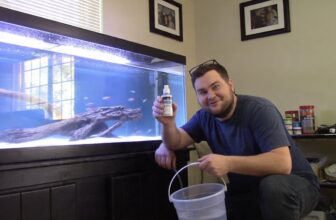
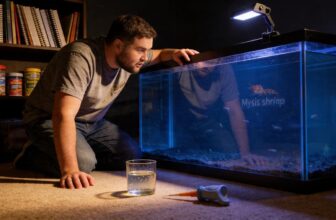
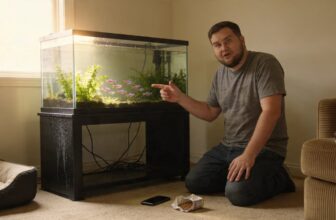
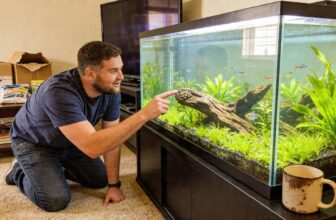
You’ll need a 20‑gallon softwater tank, an $80 RO unit, and a school of 10+ green neon tetras if you want that electric green‑blue stripe to actually glow instead of looking like a dim battery warning. These tiny fish—barely an inch long—demand the softest, most acidic water of all neon tetras, so forget tap water and start brewing blackwater with Indian almond leaves and driftwood like a fish‑keeping hipster.
Keep temps between 75–82°F, pH around 5.0–6.5, and run a gentle sponge filter as these guys panic in currents stronger than a lazy creek. Feed them crushed nano flakes, baby brine shrimp, and the occasional bloodworm, but skip one day weekly—fish need cheat days too, apparently.
Tank mates? Stick with pygmy cories, otocinclus, and honey gouramis; ditch the tiger barbs if you enjoy aquatic bullying. Dark substrate, dim LED lighting at 30–50%, and floating plants complete the moody rainforest vibe they’re built for.
Skip this setup, and you’re basically paying premium prices for stressed, washed‑out fish that hide behind your filter like it’s a witness protection program. Get the details right, though, and they’ll reward your patience with color that makes cardinals look modest.
Stick around, and you’ll learn exactly how to nail the water chemistry without turning your living room into a chemistry lab.
At A Glance
- House green neon tetras in schools of 10+ in a 20‑gallon tank with open swimming space and dense rear planting.
- Maintain soft, acidic water at pH 5.0–6.5 and 75–84 °F using RO water and Indian almond leaves for blackwater conditions.
- Feed crushed nano flakes twice daily with live or frozen brine shrimp to enhance iridescent green‑blue coloration.
- Use gentle sponge filtration, fine‑bubble aeration, and dim LED lighting at 30–50% power for 6–8 hours daily.
- Keep peaceful tank mates like Corydoras or harlequin rasboras while avoiding aggressive species such as tiger barbs or angelfish.
Green Neon Tetra vs. Cardinal and Common Neon Tetras
So you’re squinting at the fish shop wall, trying to figure out which tiny blue‑stripe thing to take home. Here’s your cheat sheet.
Green neons hit about 1 inch, cardinals push 2, common neons sit middle. Green neons sport that electric green‑blue glow almost head‑to‑tail; cardinals flaunt red lower halves, commons show red just halfway.
Green neons demand the softest water, making breitat selection trickier. They’re pickier about breeding behavior too—spawning needs dedicated tanks, peat, and patience. Cardinals? Easier to breed. Commons? Hardy as nails. For color intensity, ensure a stable group of 6–8 individuals with soft, acidic water.
Bottom line: pick green neons for that rare glow, but only if you’ll commit to the fuss.
Tank Size and School Numbers for Confident Green Neons
How much room does a fish smaller than your thumb actually need? More than you’d think, honestly.
Small fish, surprisingly big needs—space matters more than size suggests.
You’ll want 15 gallons minimum, though 20 gives you breathing room—literally, for your wallet and your sanity. Here’s the deal: these fish feel safest in numbers, and solo green neons? They’ll hide like teenagers avoiding chores. Aim for 10-plus fish, minimum six to eight. School size shapes everything—community dynamics fall apart without enough bodies to spread the anxiety around.
Your display tank design matters too. Open swimming space up front, dense plants in back—you’re building confidence through architecture, basically. For peaceful tank mates, consider slow, peaceful species like Cory catfish or green neon tetras to maintain a calm environment.
Verdict: spring for the 20-gallon kit, fill it with ten green neons, and watch them own the tank.
Soft, Acidic, Warm: The Blackwater Conditions They Crave
If you’re trying to keep these fish miserable, you’ll need to adopt their native blackwater chemistry—soft, acidic, and warmer than your average community tank.
You’ll want temperatures between 75–84°F and pH hovering around 5.0–6.5, with hardness so low it barely registers. Blackwater filtration keeps things gentle, no roaring waterfalls here, just a soft sponge filter doing the heavy lifting without tossing your tiny swimmers around like laundry. For optimal oxygen transfer, use an air stone that produces fine bubbles in the 300-500 µm range to avoid wasting oxygen or choking the pump.
Tannin dosing, that’s the secret sauce, Indian almond leaves or driftwood leaching that tea-colored goodness, makes them feel right at home, secure, and downright gorgeous.
Preparing RO Water and Lowering pH Naturally
Why sweat over chemistry sets when your fish just want water that doesn’t fight back? Grab yourself an RO unit—$80 basic models work fine, fancier ones just flex your wallet harder.
Skip the chemistry homework. Your fish crave simple water, not a science fair project on your counter.
You strip out the hard minerals, certainly, but now you’ve got blank-slate water that needs a personality transplant.
Enter tannin extraction: toss in Indian almond leaves (about $5 for 50) or driftwood, and watch your tank turn that gorgeous tea-stained amber. Your green neons? They’ll feel right at home, like you’re one of those fancy biotope keepers without the attitude.
To ensure your pH stays stable without guesswork, use a digital pH meter with 0.01 precision and calibrate it weekly for reliable readings.
Without the attitude. Test weekly, tweak slowly. That’s the secret handshake.
Dark Substrate and Driftwood for Security and Color
Since green neons evolved in tea‑stained blackwater streams where the bottom’s darker than your coffee at 6 AM, you’ll want to replicate that shadowy comfort zone if you expect them to show their best colors. Dark sand—cheap, $5 a bag at most pet shops—triggers their confidence immediately.
Driftwood does double duty: driftwood camouflage hides shy fish from above, substrate tannins seep out and stain your water that perfect amber‑brown. It’s like giving them sunglasses and a security blanket.
Three essentials for the look:
- Dark sand or fine gravel—no bright clown gravel, please
- Mopani or Malaysian driftwood—heavy, sinks fast, lasts years
- Indian almond leaves—dollar‑store cheap, tannins galore
Your green neons will thank you—they’ll glow like living emeralds against that shadowy stage.
Many aquarium covers use magnetic fish tank netting to allow easy access for feeding while keeping jumpers secure.
Gentle Water Flow: Filter Types and Flow Adjustments
So how do you keep filter current from blowing your tiny green neons around like confetti in a wind tunnel? You pick the right filter design, that’s how.
- Sponge filters win here—cheap ($10–$15), gentle, and impossible to suck fish through, though you’ll look like you’re running an aquarium from 1987
- Hang-on-back units work if you throttle that flow rate down with an adjustable valve or stuff a pre‑filter sponge on the intake
- Canisters? Overkill for a 15‑gallon, frankly, like bringing a leaf blower to blow out birthday candles
Aim for 4× tank turnover per hour, max. Your neons aren’t training for the Olympics here, they’re just trying to school peacefully without doing barrel rolls.
Bottom line: sponge filter, played. Done.
To further protect them, position the filter outlet toward a wall or corner to create gentle filtration that reduces strong currents.
Low to Moderate Lighting: What Green Neons Prefer
Once you’ve got that current dialed down to a lazy river, your next move is lighting, and here’s where a lot of people accidentally torment their fish. Green neons hail from shadowy blackwater streams, where sun barely whispers through the canopy, so blasting them with high LED intensity turns their world into an anxiety factory.
Blasting green neons with high LED intensity turns their world into an anxiety factory.
You’ll want to master photoperiod optimization, basically just fancy talk for “don’t leave the lights on all day.” Here’s your cheat sheet:
- Dim those LEDs to 30-50% power, or add floating plants as natural sunglasses
- Run lights 6-8 hours max; you’re not growing coral here
- Use a cheap timer ($10-15) so you don’t forget and stress the school
Your green neons will reward you with bolder colors and actual swimming, not cowering. Bright lights? That’s how you get fish that hide like teenagers avoiding chores.
For any glued hardscape or repair work near the tank, ensure you use ISO 11600‑F/G compliant silicone sealant to keep the water safe.
Plant Choices for Dark Water and Open Swimming
Three plant choices separate a decent green neon tank from one that actually looks like their home creek.
First, grab Java fern and Anubias for the dark corners—they thrive in low light and don’t mind that brown tint you’re chasing. Then, add Vallisneria or Cabomba along the back; tall and swaying, they create that open highway your fish need to which your fish need to strut their green stripe. Finally, float some frogbit or dwarf water lettuce up top—it diffuses light, cuts glare, and completes the canopy.
Your tannin filtration from driftwood works harder with plants absorbing the excess, and that leaf litter you tossed in? It breaks down, feeds roots, and makes you look like you actually planned this. If you’re setting up a smaller tank, the NICREW 2.5 Gallon Nano kit includes a rimless low-iron glass tank with high light transmittance and a self-cleaning filter that supports these plant types.
Weekly Maintenance in Soft, Acidic Aquariums
Since your water’s basically liquid espresso—dark, soft, and picky—you can’t coast on autopilot like people with hard tap water do.
Your water tank setup demands attention, or you’ll crash the chemistry these little green rockets need.
Weekly, you’ve got three non-negotiables:
- Test everything — pH, ammonia, nitrites; your water testing kit is your best friend, probably cheaper than replacing dead fish
- Swap 25% — use RO or aged, treated water; don’t shock them with tap
- Siphon gently — those leaves release tannins, but rotting ones? Nope
Skip this routine, and you’ll join the club nobody wants membership in: the “what happened?” forum posters.
Maintaining a pH of 6.5–7.5 is crucial for their health in this setup.
Micro Foods and Feeding Schedule Green Neons Will Eat
When you’re staring at mouths smaller than a grain of rice, you’ll realize your standard flake flakes harder than your uncle at Thanksgiving dinner.
You’ve got options that actually work:
• Crush quality nano flakes into powder—think dust, not chunks—or seek breron microfood recipes online, hobbyist formulations mixing spirulina powder, egg yolk, and yeast.
- Feeding frequency timing matters: twice daily, morning and evening, enough consumed in two minutes. Skip a day weekly—keeps their systems honest.
- Powdered fry foods, liquid invertebrate diets, even steep-boiled egg yolk strained fine work.
- Brine shrimp: Live or frozen, they’re protein powerhouses that crank up that iridescent stripe.
- Daphnia: Tiny crustaceans that improve digestion and prep ’em for breeding.
- Bloodworms: The occasional treat, not daily—think of ’em as neon junk food.
- Tiger barbs – They nip fins for sport, turning your neon stripe into shredded ribbon.
- Angelfish – Adorable juveniles grow into 6-inch predators that snack on anything bite-sized, including your algae control crew.
- Betta fish – Flaring drama queens in a community tank, they’ll harass your shy school into hiding.
- Curved spine or S-shape swimming—classic but easy to miss.
- Pale, fading color, especially that green stripe going dull.
- White cysts along tissue that aren’t ich (those are salt-grain sized, these embed deeper).
- Erratic behavior—hiding when you’re normally confident, or ignoring the group.
- Bloating that looks wrong, not just post-feeding.
- Shrimp compatibility works only with adult shrimp, not fry
- Dense moss gives babies hiding spots
- You’ll lose some offspring, that’s nature’s tax
Bottom line: match the mouth, watch them glow.
For safe habitat enrichment, consider artificial plants with soft PVC leaves that are fin‑friendly and require no maintenance.
Live and Frozen Foods for Color and Breeding Condition
If you want green neons that look like they swallowed a glow stick and breed like it’s their sole purpose in life, micro flakes alone won’t cut it—you’re gonna need the good stuff.
You’ll trigger spawning by dropping that water hardness way down, soft and acidic, just like their blackwater home. Feed live foods for two weeks before breeding, and you’ll see the difference. Worth the extra fridge space, trust me.
Peaceful Tank Mates That Match Green Neon Temperament
Once those neon stripes are blazing and your fish are fattened up on brine shrimp, you’ll notice something—green neons are shy.
You’ll want buddies that get it.
Rasboras (harlequins, espeis), dwarf corydoras, pygmy cories, otocinclus, honey gouramis, and endler’s livebearers all fit. Small, calm, and non-threatening—that’s the ticket. They won’t outcompete your green neons at feeding time or turn your tank into a wrestling ring.
Check water chemistry first, though. Most of these prefer soft, acidic conditions just like your neons, so finding a compatible school isn’t rocket science.
Stick with 10+ green neons minimum; bigger groups, bigger confidence.
Bottom line: keep it gentle, keep it small, and everyone’s happier.
Bulky and Nippy Fish to Avoid Completely
You can’t fix a bully, so don’t even try. Your tiny Green Neons, maxing out at one inch, become expensive snacks for the wrong tank mates. Protect your school—and your sanity—by skipping these troublemakers.
You can’t fix a bully, so don’t even try. Stick to peaceful tank mates and protect your school.
Avoid these three categories entirely:
Stick to your ag tank breeding plans with peaceful neighbors only. Your Green Neons will reward you with tight, shimmering formations instead of stressed, scattered hiding.
Neon Tetra Disease: Early Signs in Green Neons
Replace your early detection kit, as by the time things look bad, it’s often too late.
Spot these warning signs before fellow aquarists lose their whole school:
Test your water weekly; unstable water chemistry weakens immune systems fast.
Quarantine newcomers immediately—no exceptions. Remove infected fish promptly; there’s no cure.
Stay vigilant, you’re protecting the whole tank family.
Frequently Asked Questions
Do Green Neons Jump Out of Open Tanks?
Yes, you’ll want a lid.
Green neons jump when spooked by sudden tank lighting changes or cramped conditions. They’re skittish little rockets, not lemmings, but they’ll find gaps you missed.
Tank placement matters: keep it away from high-traffic areas, slamming doors, kids doing parkour. A 20-gallon glass lid runs $15–25, cheap insurance against carpet surfing casualties.
Dim your tank lighting, add floating plants for cover, and you won’t test their vertical ambitions.
Can Green Neons Live in Hard Alkaline Water Long-Term?
You can’t keep green neons in hard alkaline water long-term.
Their alkaline tolerance is basically nonexistent—they’re built for soft, acidic blackwater, and pushing them into high pH (7.5+) is like asking a penguin to vacation in Phoenix.
Certainly, they might survive for months, maybe even a year, but long term stability? Forget it.
You’ll watch their colors fade, their immune systems crash, and eventually, you’ll lose the whole school.
Stick to pH 5.0–6.5, or pick hardier fish.
How Long Can Green Neons Survive Without Food?
Green neons can survive roughly 1–2 weeks without food, though you’ll see stress, faded colors, and weakened immunity long before that.
Starvation tolerance drops fast in these tiny fish—they’re built for constant grazing, not fasting.
Stick to a feeding frequency of twice daily, tiny portions, and you’re golden.
Skip a weekend? They’ll manage.
Push past a week? You’re gambling with their health, and nobody wins that bet.
Will Green Neons Eat Baby Shrimp?
Yes, they’ll snack on baby shrimp. At barely an inch long, green neons have tiny mouths, but they’ll pick off newborn cherry or crystal shrimp like popcorn—it’s just their neon diet in action.
Bottom line: keep them together if you accept occasional losses, or separate for breeding projects.
Do Green Neons Need Air Stones or Extra Oxygen?
You don’t need air stones, but you’ll want gentle oxygen filtration.
Your tank filtration—think sponge filters or low-flow powerheads—handles gas exchange just fine. These fish hail from slow, oxygen-poor blackwater, so they’re built for efficiency. Lighting filtration matters too; dim setups reduce stress, which oddly helps them breathe easier. Skip the bubble wall, save your cash. Just keep that water surface moving slightly, and you’re golden.
Rounding Up
You spent $40 on tiny fish maxing at one inch, and honestly, that’s perfectly reasonable. These swimmers thrive in 78-80°F water with pH below 6.0, schooling in groups of eight to display that electric green lateral line. Skip the angelfish roommates, grab some Indian almond leaves, and watch them flash like living circuit boards. Your tank became 30% cooler, statistically speaking, since that’s exactly how much smaller they are than cardinals. Absolutely worth every penny.