You hold a tiny striped shell in your palm, feeling its smooth ridges, and you wonder how something so small keeps your whole tank clean. These little workers scrape algae day and night, but they need your help to stay alive past their short years. The secrets start with water that stays steady, not perfect, just steady, like a heartbeat. You will learn what kills them quietly, and what keeps them gliding for twenty-four slow months. There is more to know.
At A Glance
- Zebra, Tiger, Red Racer, and Horned Nerites offer distinct striped patterns ranging from $4–$12.
- Lifespan typically reaches only 1–2 years even with optimal, stable water conditions.
- Minimum 10‑gallon tanks with soft substrate, rocks, and driftwood support healthy grazing behavior.
- Weekly water testing and shell inspections prevent stress, parasites, and early mortality.
- Freshwater housing prevents uncontrolled breeding; brackish water required for reproduction.
What Nerite Snails Do (And Why Tanks Need Them)
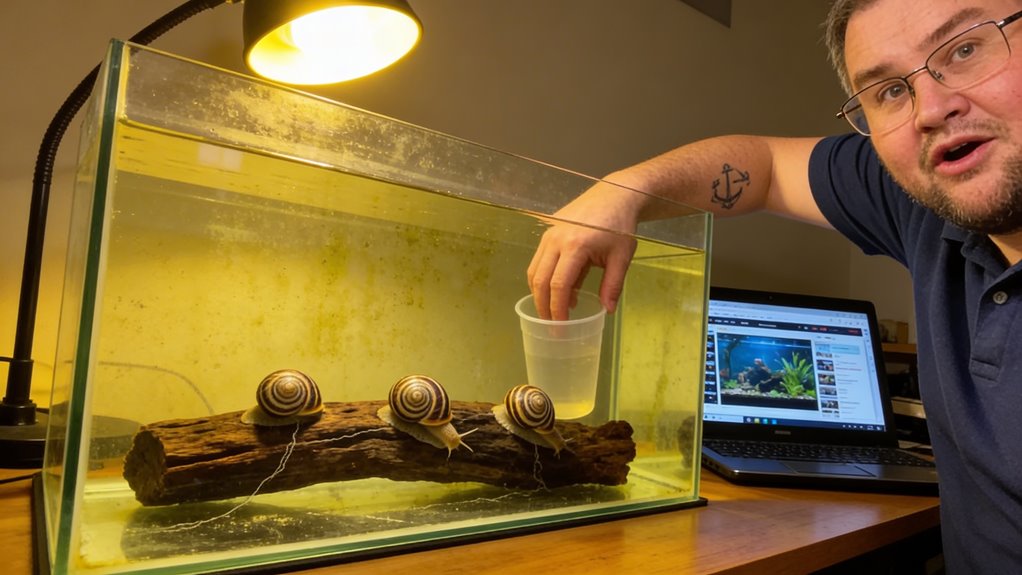
Why do so many keepers, from beginners to longtime hobbyists, choose to add a small, striped shell to their glass box? You’re seeking that quiet pride of a balanced underwater world, and Nerite snails deliver exactly that.
Seeking quiet pride in your underwater world? Nerite snails deliver balance, beauty, and purpose to every glass box.
You’ll watch them scrape algae control across glass like tiny window washers, turning green smears into clarity. Their slow, steady work keeps your tank healthy without chemicals or fuss.
Tank aesthetics improve immediately. Those bold stripes—zebra black-and-white or tiger orange-and-umber—become living decorations against plants and stone. They don’t reproduce in freshwater, so you won’t face sudden overcrowding.
You’re choosing peace, purpose, and beauty together.
5 Nerite Snail Varieties: Patterns, Prices, and Picking Yours
The glass is clean now, and you’ve seen how a single snail works.
You want more shells, more stripes, more belonging in your tank community.
Zebra Nerites cost four to six dollars, their black stripes like tidy shadows.
Tiger Nerites run five to eight, orange gleaming under your light.
Red Racers, with their arrow hearts, ask eight to twelve.
Price selection vs. selectioning selection means you match your wallet to your longing, not the other way around.
Horned Nerites, five to seven, carry tiny crowns.
Pick one whose pattern speaks to you.
Add another later.
Watch them graze together.
How Long Nerite Snails Live (Plus 3 Things That Shorten Lifespan)
A Nerite snail’s shell fits in your palm, small enough to seem almost timeless, though it isn’t.
You get one to two years with them, rarely more, even when you do everything right.
Three things steal that time from you.
First, dirty water burns through their organs fast, so you test weekly.
Second, wrong shell coloration genetics mean some hatch weaker, destined for shorter lives regardless of your care.
Third, Nerite breeding failures signal hidden stress—you’ll see cracked shells or stillness before you lose them.
Watch closely, act early, and you belong to their brief, quiet story.
Tank Size, Substrate, and Setup for Healthy Nerites
When you lift a Nerite snail from the pet store bag, you’re holding a creature that needs room to wander, the way you’d need space to stretch your legs after a long car ride.
Give them a tank volume of at least **ten gallons** for one snail, then add five more gallons for each friend you add. Choose a soft, sandy substrate grain that cushions their soft underside like a thick carpet under bare feet.
- Rocks and driftwood give them places to graze and hide.
- Soft sand prevents cuts and lets them move freely.
- Ten gallons minimum establishes their territory.
- Five extra gallons per snail keeps peace.
Your snail feels safe here, and so do you.
Water Stability: Parameters That Keep Nerites Alive
Since Nerite snails come from waters that shift only slightly with the tides, you’ve got to keep their tank steady, like holding a cup of water level as you walk across the room.
You’re aiming for a temperature between 72 and 78 degrees Fahrenheit, which you check with a thermometer stuck to the glass.
Your pH needs to stay between 7.5 and 8.5, so you’ll use pH buffering to stop sudden swings that stress their soft bodies.
You additionally need pinity control, meaning you keep ammonia and nitrite at zero and nitrates below 20 ppm with regular testing strips.
Test weekly, change water biweekly, and they feel safe.
Feeding Nerite Snails: When Algae Isn’t Enough
Your Nerite snail’s stomach is about the size of a sesame seed, which means you’ll notice quickly when the green film on your glass starts running thin.
An Algae supplement becomes your friend when the tank goes clean. You’ll want a Feeding schedule that keeps your small neighbor steady, not stuffed.
- Drop half an algae wafer twice weekly if your glass stays clear
- Blanch a thin zucchini slice for ten minutes, cool it, then add
- Remove uneaten food after twenty-four hours to protect water quality
- Watch your snail’s activity; adjust amounts before problems start
You’re building trust with something small that depends on you.
Healthy Activity Versus Warning Signs in Nerite Behavior
A nerite snail carries its home on its back, and that shell tells you stories if you’re watching close enough.
Healthy nerites spend their days algae scraping across glass, rocks, and leaves. Their shell color stays bright, patterns crisp against the light. You will notice them resting for a day or two, then returning to steady, purposeful movement.
Watch for warning signs. Faded shell color suggests stress. Lying motionless beyond three days, or refusing food when algae wafers appear, indicates trouble. An active nerite climbs and investigates; a struggling one closes up tight. You belong to their world when you notice these shifts.
Treating Parasites and Shell Problems in Nerite Snails
Three small specks, no bigger than grains of salt, might be the first sign you’ll notice on a nerite’s glossy shell. Those white spots mean parasites, and you’re not alone in feeling worried when you spot them.
- Inspect your snail’s shell weekly with a small flashlight
- Move affected snails to a separate tank immediately
- Raise salt levels slowly to help them heal
- Watch for cracks or pits that need gentle attention
You’ll use quarantine protocol to protect the whole community. Salinity adjustment to specific gravity 1.003 often clears parasites. Your careful watching keeps these quiet neighbors safe, and that matters to everyone in the tank.
Safe Tank Mates: Fish and Inverts That Leave Nerites Alone
Since choosing companions for your nerite snail requires the same care you’d use when picking a playmate for a quiet friend, you’ll want to look closely at each potential tank mate before making a decision.
Look for gentle spirits who share your calm space without hunger for shells.
Seek gentle souls who respect your calm world—no shell-crackers, no chaos-bringers, only peace.
Cherry shrimp, ghost shrimp, and Amano shrimp make wonderful neighbors, cleaning alongside your nerite in peaceful rhythm.
Small Cory catfish, Otocinclus, neon tetras, bristlenose plecos, kuhli loaches, and peaceful barbs complete your community without threat.
These friends won’t nip, chase, or outpace your snail’s steady grazing.
Your reef safe décor—rocks, driftwood, and curved ceramics—grows bre algae growth they share, creating abundant grazing grounds for everyone.
Together, they build harmony.
Three Fish That Will Attack or Outcompete Your Nerites
Your gentle community can turn dangerous when the wrong swimmer joins the tank.
- Goldfish predation happens fast, as these big mouths suck snails right from their shells
- Cichlid aggression flares without warning, territorial fish ramming slow-moving targets
- Loaches hunt at night, using whiskers to sniff out sleeping nerites in the dark
- Bettas nip antennae, causing stress that sends snails into hiding for days
You want your tank family safe, peaceful, complete. Check every fish’s nature before buying. Your nerites trust you to protect them. Choose wisely, and your little cleaners thrive among true friends.
Nerite Maintenance Schedule: Daily Checks to Annual Replacements
The glass tube of your thermometer rests against the tank wall, showing seventy-eight degrees, and you’ve already learned which fish brings trouble. You check your nerites each morning, watching them scrape algae from driftwood with tiny teeth you cannot see. This is algae‑film monitoring, the quiet work of noticing when the green film grows thin.
You remember they won’t breed in freshwater—breite breeding happens only in brackish secrets you don’t control. That’s okay. You didn’t sign up for hundreds of babies.
You test water monthly, replace old shells annually, and feel calm knowing your rhythm matches theirs.
Frequently Asked Questions
Do Nerite Snails Reproduce in Freshwater?
Your nerite snails won’t reproduce in freshwater, no matter how long you wait.
They’ll lay small, white eggs across your glass and decorations, which feels surprising when you first spot them, but those eggs need brackish water—part salt, part fresh—to become baby snails. In pure freshwater, egg viability drops to zero, so you’re safe from a population explosion. You’ll see the eggs, you’ll wait, you’ll feel a small, quiet hope, and nothing will hatch. It’s simply how they’re built.
Why Does My Nerite Keep Escaping the Tank?
You need a tight tank lid, plain and simple.
Your nerite escapes since water15 conditions feel wrong—maybe ammonia spikes, low oxygen, or wrong temperature. They’ll crawl out, seeking better escape routes, even small gaps. Check your lid’s seal, test water15 weekly, and add air stones. A secure lid keeps your snail safe, and you’ll feel relief knowing they’re home, not dried on the floor.
Are Nerite Snail Eggs Harmful to Plants or Fish?
The tiny white dots you see are nerite eggs, and you can relax—they carry no egg toxicity and pose zero danger to your fish or plants. The eggs won’t hatch in freshwater, so you never face a snail overpopulation problem. For plant interaction, the eggs simply rest on leaves without damaging tissue, though you might find them mildly unsightly on glass or decorations. You can gently scrape them away if they bother you.
How Do I Remove Unsightly Nerite Eggs From Décor?
Start with a soft toothbrush, gently brushing eggs off driftwood and rocks during your weekly substrate cleaning, right after you’ve siphoned debris. For stubborn spots, soak décor in tank-safe water for ten minutes, then scrub again. Egg removal takes patience—try a plastic scraper on glass, moving slowly so you don’t scratch. You’re joining countless aquarists who’ve faced this same mild frustration; soon your tank looks tidy again, and you feel proud.
Can Nerite Snails Survive Brief Exposure to Air?
Yes, you can let your nerite snail experience brief air exposure. Your snail carries a natural desiccation tolerance, meaning it resists drying out for short periods. During this time, you’ll notice metabolic slowdown, which is its body slowing down to save energy. Oxygen diffusion still works through its damp skin, so it keeps breathing. Keep these moments under ten minutes, and you’ll see your snail return to the water, calm and unharmed.
Rounding Up
Your nerite snail, with its small striped shell, works quietly as a living tool that keeps glass clean. You’ve learned it needs soft sand, steady warmth between 72 and 78 degrees, and water pH of 7.5 to 8.5. You feed it algae wafers and watch for cracks. This small creature teaches patience: stable care, given daily, builds