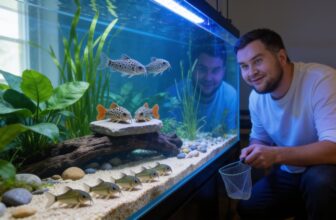
Betta fish digging in rocks is usually harmless, not a crisis. These curious little guys are simply foraging for leftover snacks or rearranging their space like underwater interior designers with fins. Normal digging lasts just a few minutes and happens daily. You’ll still see yours flare at reflections and patrol his territory like a tiny landlord with an attitude.
Frantic digging tells a different story. Check your tank size first—anything under five gallons stresses them out. Water temperature matters too; aim for a steady 78–80°F using a reliable thermometer. Cold spots trigger stress behaviors fast. If digging drags on for hours, your betta’s trying to tell you something’s wrong. Keep reading to decode what he’s saying and fix it before fins get frayed.
At A Glance
- Normal digging is exploratory foraging for food or redecorating, not stress.
- Frantic digging with flashing indicates parasites like velvet, ich, or gill flukes.
- Environmental stress from poor water quality, heat, or small tanks triggers digging.
- Digging at reflections suggests aggression toward a perceived rival in the glass.
- Switch to fine, smooth sand and vacuum debris to reduce food-scavenging digging.
Is Your Betta Digging in Rocks? Start Here (Triage)
During it can look a little ridiculous—like your betta suddenly decided to become a goldfish—digging in rocks is worth a serious look.
First, check for parasites. Velvet looks like gold dust, ich shows as white spots, and columnaris creates cottony growths. These pests cause flashing, where your fish scrapes against substrate texture to dislodge them. You can use API General Cure to treat such parasites in freshwater tanks. To confirm water quality isn’t worsening the irritation, testing ammonia levels with a reliable test kit is essential for ruling out environmental stressors.
Additionally, consider tank mates; aggressive neighbors can stress your betta into digging for security. If no pests or bullies exist, move on. This triage step rules out urgent health issues, so you can focus on environmental fixes next.
Bottom line: rule out parasites first, then dig deeper.
Is Your Tank Too Small? Check the 5-Gallon Rule First
Upgrade to a five‑gallon, like a $25 Aqueon, and watch the behavior fade. It fixes two problems—stress and digging—for one low price. You’ll feel like a hero, and your betta will actually stop redecorating. The Fluval SPEC, for example, offers a 5‑gallon kit with gentle filtration ideal for betta fins. A three‑stage filtration system like this conceals debris and chemical removal behind the tank, keeping the water clean without strong currents that stress bettas.
What Temperature Is Safe? Signs of Heat Shock and Digging
If your betta’s digging turns frantic—like it’s trying to escape through the gravel—temperature shock might be the culprit. Betta fish thrive in a steady 78–80°F range.
When the water gets too hot, often from a faulty water heater or a sudden heatwave, they panic. This erratic digging is a cry for help.
A tank thermometer is your best friend here—cheap and simple, under $5 at most stores. Place it opposite the heater to spot hot spots early. For precise control, consider a controller with 0.1 °F accuracy to maintain stable conditions.
Remember, rapid temp swings shock them fast. You belong to a community that cares about stable, safe homes. Using a heater with automatic shut‑off prevents overheating and protects your fish during power loss.
Check that thermometer daily, and your betta will thank you.
3 Steps to Fix Temperature Shock Fast
When the digging turns frantic and your betta seems to be trying to burrow through the bottom of the tank, temperature shock is often the real problem.
First, stop the rapid cooling or heating immediately. Unplug the heater, and if from a water change, drain most out.
Second, for gradual acclimation, float a bag with tank-temperature water for 15 minutes, adding small amounts of the new water every 5 minutes—don’t rush, or you’ll make it worse.
Third, stabilize the tank at 78-80°F using a reliable preset heater ($15-20) with electronic chip thermostats that maintain ±1.8°F accuracy. This fix works fast, giving your betta a chance to calm down and stop the frantic digging. Using a digital pH meter that includes temperature monitoring can help you confirm the water is stable before reintroducing your betta.
Is Your Betta Foraging for Food? Stop Scavenging Digging
From under the gravel, a betta might emerge with a mouthful of substrate, not from stress or illness, but from simple, undignified hunger. This natural behavior means your betta is foraging for leftover food that’s sunk out of sight.
Substrate texture matters here: large, rough gravel traps more food debris, encouraging digging. Stop scavenging by vacuuming the tank floor regularly, removing uneaten pellets within minutes. Feed smaller portions, sinking food slowly. A fine, pre-washed substrate like the Classic SandPlay Natural Aquarium Sand can reduce food traps and make cleanup easier. Choosing a non‑clouding natural stone type like the Non‑Clouding Natural Stone Gravel (2‑4 mm) can also help prevent murky water and make leftovers easier to spot and remove.
Your betta isn’t being dramatic; it’s just cleaning up scraps. Solve this, and you’ll both feel better—no more wondering if that gravel munch is a cry for help or just a snack run.
Why a Reflection Tricks Your Betta Into Digging (Fix It)
A reflection can turn a calm betta into a frantic digger, and it’s not since your fish is vain. It thinks that shimmering image is a rival, triggering an aggressive display. The result? It digs to defend its territory against a phantom enemy. Adding a nearby lamp can also reduce glare that mimics a magnetic aquarium lid, which prevents jump scares while maintaining clarity. For tanks prone to fish escape, choosing a cover with a strong magnetic hold provides reliable anti-jump protection during these displays.
This reflection stress is fixable. Turn off the tank light, or add a lamp nearby to balance brightness. That simple step stops the ghost fight.
You’ll save your betta from wasted energy—and yourself from watching a fish rage at its own face. It’s a cheap, easy fix for a silly problem.
5 Plants and Hides That Stop Security-Driven Digging
Your betta isn’t a little architect—it’s just trying to feel safe. Security-driven digging stops when you give it somewhere better to hide. Here are five failsafe options.
- Komer La Anubias on Driftwood ($12): Pre‑attached leaves provide instant cover; soft substrate selection below prevents injury.
- TerraFlora Betta Caves ($9): Smooth ceramic, no sharp edges. Your fish tucks in, stops digging.
- Java Moss Mats ($8): Dense, anchored coverage. Ideal burrowing enrichment that doesn’t shift gravel.
- Hornwort Bundles ($6): Floating stems create a canopy. No need to dig for security.
- Marimo Moss Balls ($7): Soft, round, easy to nudge. Mimics natural hiding spots without rock disturbance.
Bottom line: offer proper caves and plants, and your betta stops rearranging its floor.
Hornwort also provides oxygenation and biological filtration for a healthier tank.
For a reliable foreground option, try a Micranthemum Monte Carlo tissue culture cup to create dense, low-cover mats that further reduce digging behavior.
Spot a Parasite First: 4 Visual Checks for Velvet and Ich
Before ruling out digging as a personality quirk, it pays to check for uninvited guests.
*Velvet diagnosis* starts with a gold, dusty sheen—like fine pollen—across the body; your betta may likewise flash-scrape against rocks.
*Ich identification* is simpler: tiny white salt-grain spots, often on fins first.
Both parasites cause blinking, rapid gill movements, and loss of appetite.
Check under bright light daily.
If you spot either, treat immediately with a dedicated medication; they’re highly contagious.
Digging stops once the itch is gone.
You’ve got this, fellow fish parent—stay observant.
You can also use aquarium test strips for regular water parameter checks to prevent stress that invites parasites.
Using a conditioner like API Stress Coat can help heal fin tears from scraping and support slime-coat recovery during treatment.
Is Digging a Sign of Columnaris or Gill Flukes?
Cotton-like tufts around the mouth or gills? That’s columnaris, not a digging quirk.
Gill flukes, meanwhile, cause frantic scraping and mucus-covered gills—no amount of substrate size will fix that.
If your betta digs when gasping or flashing, suspect a parasite. Gradual acclimation to clean water helps, but medication is key for flukes or columnaris.
Don’t let digging mislead you; check for physical signs first. A calm tank with proper hiding spots reduces stress, but a sick fish needs treatment, not decor tweaks.
Don’t let digging mislead you—check for physical signs first; a sick fish needs treatment, not decor tweaks.
Ignore gill damage at your own risk—it’s serious. Digging alone isn’t proof, but paired with symptoms? Act fast.
A high-volume air stone may help boost oxygen levels in the tank, but it will not treat the underlying gill flukes or columnaris.
How to Treat Velvet, Ich, and Flukes at Home
Three common culprits—velvet, ich, and flukes—can each turn a digging betta into a flashing, scraping mess, but home treatment is doable with the right meds and a bit of patience. These external parasites spread fast, so disease transmission is a real risk—quarantine is your friend. Treat velvet and ich with a malachite green-based medication, raising the tank temperature to 82°F to speed the lifecycle. For flukes, praziquantel works wonders. During treatment, maintaining clear water quality is also critical to prevent stress, and using a formula designed to reduce clouding can support recovery. Below, a handy cheat sheet:
| Parasite | Symptoms | Treatment (Cost) |
|---|---|---|
| Velvet | Gold dust, lethargy | Malachite green ($8) |
| Ich | White spots, flashing | Heat + meds ($10) |
| Flukes | Gasping, mucus | Praziquantel ($15) |
A reliable automatic feeder with precision portion control can help maintain consistent feeding schedules during treatment to reduce water quality issues.
Stick to the label, and your betta will thank you.
What If the Digging Is Just Your Betta’s Personality?
Here’s what to watch for to confirm it’s just him being him:
Here’s what to watch for to confirm it’s just him being him.
- Consistency: He digs daily, same spot, no signs of stress.
- Health: Clear eyes, bright fins, and a hungry appetite.
- Happiness: He flares at you, eats eagerly, and patrols his tank.
If all check out, let him dig in peace. Tanks smaller than 2.5 gallons may lack the water volume to keep waste diluted, so check your ammonia levels regularly. Using a reef‑safe epoxy to secure unstable rocks can prevent accidental collapse during his digging.
How to Rule Out Every Cause in 5 Minutes
Run through a quick mental checklist in under five minutes.
First, check Water parameters. Grab a test kit; ammonia or nitrites above zero stress any betta, causing odd digging.
Next, feel your Substrate size—sharp gravel? Swap to smooth sand or rounded pebbles, like Fluval Plant Stratum ($20, 17.6 lbs). Consider using root-tab substrate fertilizer to support plant health and reduce substrate disturbance. These tablets often provide slow‑release nutrients for up to two to three months, improving root strength and reducing the need for bettas to dig in search of food.
Rule out reflection: lights out, lamp on, fixes that.
Then temperature; a sudden spike over 84°F? Erratic digging, fix with a controlled fan.
Finally, watch for food morsels; if crumbs vanish after gravel vacuuming, you’re good.
Digging stops? Likely solved. You’re in the club now.
Is Your Betta Happy? 3 Signs Digging Is Normal
So you’ve ruled out parasites, temperature shock, and a too-small tank. Congratulations, the sleuthing paid off. Now, consider these normal signs:
- Poking gravel after eating – foraging for tidbits, a natural instinct.
- Gentle rearranging near plants – redecorating, not stress.
- Occasional scooping with fins – playful exploration.
Good water quality keeps digging casual, not frantic. Add enrichment toys like floating logs—a $10 investment—and watch him dig with joy, not panic. For bettas in smaller tanks, using a mini round feeding ring can help keep their food contained and reduce waste while they forage. Adding soft, fin-friendly silk plants provides safe cover without risking injury during these playful moments.
When your betta pauses, flares at reflections, then resumes calmly, you’re part of a club that gets it. Welcome, fellow fish parent.
When to Call the Vet: Emergency Signs in Digging
Two telltale emergency signs mean it’s time to call the vet instead of watching another YouTube video. If your betta has gold dust coating its body, that’s velvet; white spots signal ich. Both require medication, stat.
Two telltale signs mean skip YouTube—call the vet: gold dust is velvet, white spots are ich.
Additionally watch for cotton-like growths on the mouth or gills, which is columnaris. These aren’t personality quirks.
Before panic, check reflection reduction—turn off the tank light. Confirm hide placement is correct with caves or driftwood. A 3D‑printed betta hide provides a safe floating cave that reduces stress while keeping the water surface accessible for bubble-nesting.
But if symptoms persist with lethargy, gasping, or clamped fins, skip home fixes. A vet visit costs $50-80, but beats losing your buddy.
Bottom line: emergency signs override all else.
For tanks up to 0.35 inches thick, consider an N52 magnetic algae scraper to keep glass clear without stressing your betta.
Frequently Asked Questions
Can Digging Be a Sign of Boredom in Bettas?
Yes, digging can be a sign of boredom in bettas. This is a verdict that feels almost too obvious, but it’s true. When a betta lacks enrichment foraging opportunities, it might start excavating gravel as a makeshift hobby.
A bored betta additionally loses interest in territory patrol, the daily swim-around that keeps it engaged. To fix this, add floating plants like hornwort (around $5) or a betta log ($10). They give the fish something to investigate.
Basically, if the tank feels empty, the betta creates its own fun.
Does Sand Cause More Digging Than Gravel?
Sand texture matters. Bettas dig more in sand than gravel since fine particles mimic their natural behavior. They sift through it for food, like a tiny archaeologist hunting crumbs.
It’s gentler on fins, too—less risk of scrapes. But if your betta’s digging relentlessly, check the checklist first. Mine once dug so much I thought he was planning an escape.
Typically, sand is safer, just keep it clean. Bottom line: sand wins for comfort, not control.
Should I Remove the Betta While Changing Substrate?
Yes, remove the betta during a substrate change. Disturbance stress spikes when you stir up old gravel, releasing trapped waste and bacteria.
A temporary holding cup or small tank keeps your fish safe while you work. This protects tank hygiene, preventing a sudden ammonia spike that could harm gills.
Think of it as a quick, five-minute vacation for your betta—less drama, cleaner water, and a happier fish afterward.
Can Other Tank Fish Trigger Betta Digging?
Yes, other tank fish can trigger betta digging. Territorial stress often drives this.
When a betta feels its space is invaded by tankmates, it may dig to reinforce boundaries or seek safety.
Predator avoidance is another factor; if fish seem threatening, digging becomes a hiding strategy.
To prevent this, include ample hiding spots and a spacious tank—5 gallons minimum. Watch for aggressive interactions, and separate fish if digging persists with frantic behavior.
Is Digging at Night Different From Daytime Digging?
Night digging is a different beast.
Under the moon’s hush, a betta’s night behavior often points to reflection stress or temperature shock, not daytime’s foraging or hiding triggers.
If the tank light is on whereas the room is dark, his own ghostly image spooks him.
Check the thermometer; a sudden drop can cause frantic, erratic digging.
Rule out these triggers first, then you can sleep easy.
Rounding Up
So, is your betta digging in rocks normal? In short, yes—mostly. The trick is knowing when to worry and when to laugh it off. We’ve all been there, staring at a fish rearranging its home like a tiny interior designer on a caffeine bender. If your tank is over five gallons, temperature is steady, and fins look clean, let the little weirdo dig. But remember: when in doubt, check for the “icky” stuff first. One bad water change can flip the script. Bottom line: rule out trouble, then enjoy the show.