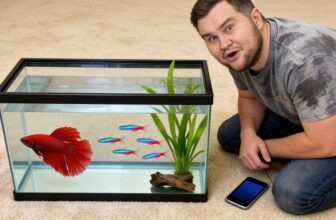
You hold a thumb-sized fish striped in emerald and coral, and you’re wondering if you can keep it alive. You’ll need a 10-gallon tank, though 20 gallons gives these Myanmar natives more stability, and you’ll want twenty friends swimming together so they feel brave enough to show their colors.
Keep their water cool at 70-75 degrees, soft, and clean with weekly changes, and you’ll watch them live three to five years. Spot the males by their brighter stripes and pointy fins, the females by rounder bellies and softer colors.
Feed tiny crushed flakes and frozen daphnia, breed them in a small warm tank with spawning mops, and fry will cling to glass for days before stripes appear in week three. Stay gentle with water flow, plant thick green walls for hiding, and they’ll reward your steady hands with calm, shimmering life.
There’s more waiting when you’re ready.
At A Glance
- Keep 20–30 fish in at least 20 gallons with dark sand and dense plants to mimic their natural Lake Inle habitat.
- Maintain cool water at 70–75°F, pH 7.0–8.0, and soft 2–10 dKH hardness with gentle filtration.
- Feed micro foods like crushed flakes, frozen daphnia, or live copepods daily to support health and coloration.
- House only with peaceful nano species such as Celestial Pearl Danios or Cherry Shrimp, avoiding aggressive or fin-nipping fish.
- Quarantine newcomers for 14 days, monitor water twice weekly, and watch for stress signals like faded stripes or gasping.
Are Emerald Dwarf Rasboras Right for Your Aquarium?
A single clear glass, 10 gallons of water, and a quiet corner of your home.
You hold everything needed for a small world of green stripes and curious eyes.
You’re watching active fish now, ones that dart through plants like sparks.
Fish that dart through plants like sparks, demanding your attention with every flicker of movement.
They need proper lighting to show their emerald and coral hues, or you’ll miss the full beauty.
Breeding genetics matter too, since stronger parent fish make healthier babies with brighter colors.
You feel hope when choosing them, a quiet anticipation.
Consider adding Water Spangles to your surface for natural shade that reduces algae and enhances their colors through dappled light.
They’re right for you if you enjoy gentle observation and can keep water clean and steady.
How Big Do Emerald Dwarf Rasboras Get?
Scale rulers, those small plastic strips you used in school, measure these fish well.
Adult Emerald Dwarf Rasboras reach just one to one-and-a-half inches long, about the length of your pinky finger’s top joint.
You’ll bring home juveniles half that size, watching them grow quickly to their full emerald glory.
Color variations between males and females help you tell them apart.
Males flash brighter coral and deeper green stripes, while females stay softer, their fins nearly see-through.
Lifespan expectations matter when you commit.
These tiny swimmers live three to five years with clean water and steady care, giving you time to know each fish’s quirks.
- You feel wonder holding something so small yet so vivid
- You feel responsibility knowing their years depend on your attention
- You feel connection as color shifts reveal personality
- You feel hope seeing fragile life thrive through your patience
A well-designed sump baffle system helps maintain the stable water parameters these sensitive fish need to reach their full lifespan.
What Tank Size and Shoal Size Do They Need?
When you picture your future aquarium, start with a ten-gallon glass box, the smallest home where these fish can breathe easy. They’ll survive there, but they’ll feel safer in twenty gallons.
Tank size matters since these fish live in groups, and groups need room to dart and weave. You’ll want twenty to thirty fish swimming together, their stripes flashing like scattered emeralds.
More fish means more waste, so you’ll need algae control through steady lighting schedule—eight hours on, sixteen off—to keep plants growing and algae slow.
Big groups also spark breeding triggers, the males brightening, circling, dancing for mates.
Placing your tank on a rustic brown aquarium stand with adjustable feet ensures stability on uneven surfaces, preventing stress fractures that could shatter glass during active breeding chases.
Water Parameters That Keep Them Healthy
Lake water holds memories of place, and you’ll want to match those memories in your glass tank at home. These fish come from cool, clear Lake Inle, and your water must respect that story.
- Keep temperature at 70-75°F, so they feel the familiar coolness against their scales
- Maintain Water hardness between 2-10 dKH, soft enough to cradle them gently
- Guard pH stability in the 7.0-8.0 range; sudden swings bring stress you can’t see
- Change 25% weekly, removing what harms before it wounds
Watch your test kit like you’d watch a friend’s face. Steady numbers mean peaceful fish.
Since ammonia spikes above 0.25 ppm can quickly turn fatal for these sensitive fish, test your water at least twice weekly to catch problems before they become visible distress.
Planted Tank Setup: Substrate, Plants, and Hiding Spots
Where would you hide if the world felt too big?
Your emerald dwarfs need the same comfort.
Start with substrate texture that feels like lake silt beneath your fingertips, dark fine sand two inches deep, something soft enough for delicate barbels to push through. You’re building security here, not just decoration.
Soft lake silt beneath delicate barbels—security, not decoration.
Plant density matters more than you’d think. Think thickets, not scattered stems. Stem plants reach fifteen inches, creating green walls where fish dart between leaves, momentarily vanishing from sight.
Add driftwood caves, small enough for one-inch bodies. Moss creates fuzzy hiding spots. Watch them peek out, judge safety, emerge. They’ll test every corner, since courage needs a place to retreat.
For nano setups under 10 gallons, consider flat driftwood pieces under three inches that provide low-profile hiding spots without overwhelming the scape.
Where Do Emerald Dwarf Rasboras Come From?
Water shapes the home of these tiny fish, just as it has shaped valleys and coastlines you’ve seen in photographs.
You’ll find Emerald Dwarf Rasboras in Lake Inle, Myanmar, a single shallow body of water about 13.5 miles long. Genetic studies reveal they’ve lived nowhere else for thousands of years, making them precious and rare. Water quality assurance tools help aquarists monitor the parameters that keep these sensitive fish thriving in captivity.
- You feel wonder knowing a whole species exists in one place
- You sense fragility as the lake changes from farming and climate
- You uncover cultural symbolism: locals see small fish as perseverance
- You carry responsibility for their survival in your aquarium
Their home is disappearing, so your care matters deeply.
Best Tank Mates for Emerald Dwarf Rasboras
A clear glass tank sits on your shelf, waiting for life to fill it.
You’ll want gentle water flow, not a rushing current, so your tiny swimmers don’t tire.
Aquarium lighting matters too—soft, plant-friendly beams help their emerald stripes glow against dark backgrounds, creating beautiful color contrast.
Consider regional species from Lake Inle, their original home. The Celestial Pearl Danio shares their waters, and you’ll feel calm watching them school together.
Sawbwa Barbs, Cherry Shrimp, or small snails work well.
Peaceful neighbors, about the same size, keep everyone safe and curious.
A 3‑stage filtration system ensures water clarity while maintaining the gentle flow these delicate fish need to thrive.
Fish to Avoid: Predators and Bullies
Since your rasboras are barely longer than a paperclip, you’ll need to be careful about who shares their home.
Predator identification starts with watching mouth size. Any fish with a mouth wider than your rasbora’s body sees a snack, not a friend. Angel fish, bettas, and most cichlids fit this category.
Bully mitigation means avoiding fin-nippers and territory-guarders. Your tiny shoalers can’t defend themselves.
- A sudden empty space in the tank where a friend used to swim
- Torn fins on your smallest, bravest male
- Fish hiding motionless behind the filter, afraid to eat
- Watching a predator stalk, knowing you placed them together
Choose gentle neighbors, or weep at your mistake. Creating a proper aquascape with inert ceramic weights helps provide hiding spots and territorial breaks that reduce aggression between species.
How to Feed Emerald Dwarf Rasboras
Their mouths are tiny, smaller than a grain of rice, so you’ll need to choose food that fits. Feed tiny crushed flakes, micro pellets, or frozen daphnia. They’re shy eaters, so watch them closely. You’ll feel calm seeing them nibble peacefully. For aquarium filtration systems, consider using push-in hose connectors to maintain clean, stable water for these sensitive fish.
| Food Type | Best Use |
|---|---|
| Live food | Daily protein, sparks hunting instinct |
| Biofilm | Natural grazing between meals |
| Powdered fry food | Tiny babies, first bites |
Avoid overfeeding; their stomachs hold almost nothing. You’ll notice biofilm growing on plants and driftwood, which they pick at all day like grazing sheep.
Schooling Behavior and Male Sparring
When you watch your emerald dwarfs glide through the water, you’ll notice they move as one body, dozens of tiny fish turning together like a single breath.
You’ll see the shimmer, then the flash, as males square off.
- Your heart catches when two males circle, fins flared like tiny flags
- You feel the quiet tension before the chase, not malice but measurement
- You witness the relief when one yields, the loser slipping back to the group
- You sense their world has order, and it soothes something in you
They’re establishing a courtal hierarchy a pecking order—through *territorial displays* that look like dancing. No one gets hurt. You’ll spot the dominant male by his boldest stripes, his brightest position near the center. Watch long enough, and you’ll read their moods like weather.
If aggression escalates beyond display, a temporary isolation tank with clear observation walls allows stressed fish to recover without disrupting the group’s hierarchy.
How to Spot Males and Females
Telling Emerald Dwarf Males from Females
Three small clues help you tell the emerald dwarf boys from the girls, and you’ll want to check all of them before you’re certain.
Color pattern variations show first. Males glow with coral-pink or orange beneath those emerald stripes, as females stay paler, more silver.
Fin shape differences reveal themselves next. Youll notice males carry longer, more pointed dorsal and anal fins, and their fins flash red or orange. Female fins stay shorter, rounder, and mostly clear.
| Feature | Males | Females |
|---|---|---|
| Body color | Vivid coral-pink or orange | Paler, silvery |
| Stripe intensity | Thick, bright emerald | Thinner, dimmer |
| Fin color | Red or orange | Transparent |
Size gives you the third clue. Females grow slightly larger, carrying eggs that make their bellies rounder.
Watch your fish during feeding time when colors pop strongest. Compare individuals side by side, and you’ll soon spot the pattern without struggle.
How to Breed Emerald Dwarf Rasboras
Breeding Basics
Most aquarists find breeding emerald dwarf rasboras easier than they’d expect. You set up a small tank with spawning mops or leafy plants, keeping the water clean and slightly warm. Choose a bonded pair or two males with several females, but don’t crowd them, or they’ll eat the eggs.
- You feel hope when tiny eggs appear, sticky and perfect.
- You feel wonder watching eggs hatch in about three days.
- You feel pride seeing genetic variation emerge in each new generation.
- You feel joy uncovering unexpected color morphs among your fry.
Fry Care: Six Weeks to Healthy Juveniles
Six Weeks to Healthy Juveniles
Eggs hatch, and now you’ve got something new to watch.
Tiny fries cling to glass like specks of dust, living off their egg sacs for three to four days.
You’ll set a light timer for gentle light cycling—ten hours on, fourteen off—so their small world feels like home.
This rhythm helps them settle, find food, and grow without fear.
Watch their stripes emerge around week three.
You’re seeing color genetics at work, each fish painting its own pattern from parents’ hidden codes.
Some show emerald early, others blush coral first.
Disease Prevention and Stress Signs
Recognizing Stress in Emerald Dwarf Fish
Stress spreads through your tank like a whisper, and you must learn to hear it.
Watch for these warning signs in your emerald dwarfs:
- Gasping at the surface—their tiny mouths working, desperate, like a child who can’t find breath after running too far
- Faded stripes—the emerald green dulling to gray, their spirit slipping away like color from old photographs
- Clamped fins held tight against their bodies—fear made visible, the way you might hug yourself when feeling small and uncertain
- Separating from the shoal—loneliness in a fish that needs companions, a sadness you can almost touch inside your chest
You prevent heartbreak through quarantine protocols.
New fish spend fourteen days apart, watched carefully, before joining your established family.
Seasonal outbreaks strike when temperatures shift in spring and autumn, so you test water twice weekly during these fragile windows.
Your attention keeps them safe.
Frequently Asked Questions
Do Emerald Dwarf Rasboras Jump Out of Tanks?
You should know that Emerald Dwarf Rasboras are capable jumpers, so you’ll need a secure lid. Even with proper tank size and appropriate tank height, they’ll surprise you with sudden leaps when startled or during playful chasing.
Are They Sensitive to Bright Lighting?
You’ll find they’re somewhat sensitive to bright lighting, as their Lake Inle habitat features diffused natural light. You’ll want to provide dimmer habitat lighting with plenty of plant cover, creating shaded areas where they feel secure and display their best colors.
Can They Live in Blackwater Conditions?
You shouldn’t keep them in blackwater conditions. Their native Lake Inle has neutral to slightly alkaline water, and blackwater pH levels fall below their preferred range. Tannin cycling isn’t suitable for these fish.
Do They Need an Air Stone or Extra Oxygenation?
You don’t need an air stone, but oxygenation maintenance matters. You’ll want gentle surface agitation from your filter’s outflow to guarantee proper gas exchange, especially when keeping large shoals in planted tanks with dense vegetation.
How Long Until Fry Show Adult Coloration?
You’ll notice color development begins around 6-8 weeks, with full adult emerald stripes and coral base emerging by 3-4 months. The juvenishing timeline varies slightly based on diet quality and water stability in your setup.
Rounding Up
A small glass jar, the kind you’d fill with fireflies, holds nothing special until you look closer. That’s your tank now.
You’ve learned what these fish need: clean water, ten or more friends, soft plants to hide in. The emerald stripes will flash when you do this right. When you don’t, the colors fade and the fish hide. That’s your signal to test the water, change some out, watch more carefully.
Three to five years of living color waits. Start tonight.