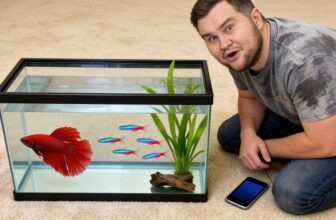
You want peaceful, sized‑right companions that won’t outcompete your nearly blind, clumsy frogs at mealtime.
Stick to small schooling fish like neon tetras or cardinal tetras (1.5–2 in., $3–5 each), cherry barbs for mid‑water color, or guppies and platies up top—just feed the frogs first so the speedsters don’t hog dinner.
Bottom‑dwellers like corydoras catfish ($4–8) or kuhli loaches sift sand without stealing sinking pellets, nerite snails ($3–4) and cherry shrimp handle algae, though shrimp fry become occasional snacks.
Avoid fin‑nippers, bullies, and anything large enough to see your frog as lunch.
Gentle filter flow, soft substrate, and a feeding ring keep everyone happy.
Pick two or three compatible groups, not the whole buffet, and you’ll dodge the chaos that wipes out hobbyists who overstock—there’s a smarter way to build this society, as you’ll soon see.
At A Glance
- Choose peaceful bottom‑dwellers like corydoras to avoid food competition and fin‑nipping aggression.
- Select small schooling fish such as neon tetras or cherry barbs that share 72–78 °F water parameters.
- Add gentle algae controllers like nerite snails or otocinclus that won’t harass slow‑moving frogs.
- Include fast‑reproducing cherry shrimp to sustain population despite occasional frog predation.
- Avoid fin‑nippers, bullies, and large fish that may intimidate or snack on 1–2 inch African dwarf frogs.
5 Compatibility Tests Every Tank Mate Must Pass
So you’ve finally set up a cozy tank for your African dwarf frogs, and now you’re eyeing potential neighbors like a cautious landlord screening tenants.
Here’s the hard truth five ways:
- Temperament: Skip fin‑nippers, bettas, and bullies. Your frogs are slow, peaceful bottom‑dwellers—no room for aquarium drama queens.
- Size: Think goldilocks. Too small becomes snack; too large brings intimidation. Aim for 1–2 inch companions.
- Feeding: Fast fish steal food from your near‑blind frogs. Sinking pellets help, but bottom‑feeders like corydoras work better—they clean leftovers without starting dinner wars. Using a feeding ring with food‑grade PP plastic can keep waste below 5% and prevent food from scattering.
- Filter tank compatibility: Frogs need gentle flow; powerful filters exhaust them. Check specs before buying.
- Algae control: Otocinclus or nerite snails handle green gunk passively, no frog harassment included.
Pass these tests, you’re in the club. Fail them, you’ve got a tiny watery tragedy.
Neon Tetras: Fast Schoolers Safe for African Dwarf Frogs
If you’re hunting for a splash of color that won’t turn your frog tank into a gladiator pit, neon tetras check more boxes than you’d expect from a fish that costs less than a cup of coffee.
These guys clock in around 1.5 inches—too big for snack status, too small to bully. Their Neon Tetra schooling behavior keeps them occupied mid-water, well above your bottom-dwelling frogs. You’ll want six or more; anything less and they get anxious, and nobody needs fish therapy bills.
Neon tetras hit that perfect middle ground—big enough to avoid becoming frog food, small enough to stay out of trouble, happiest in schools of six or more.
Neon Tetra lighting’s worth mentioning—they shimmer like chandeliers under subdued LEDs, not disco strobes. Match their 72-78°F range, keep pH near neutral, and you’ve got yourself a peaceful community. To mimic their natural habitat, consider blackwater conditions using Indian almond leaves or peat moss.
Bottom line: cheap, cheerful, and zero drama.
Corydoras Catfish: Bottom Cleaners That Won’t Steal Food
Since you’ve already got frogs camping the floor, adding another bottom-dweller sounds like a recipe for traffic jams—until you meet Corydoras catfish.
These little armored scavengers work different shifts, so you’ll build a real community, not a cage match. They’ll handle substrate filtration, sifting through sand to polish off crumbs your frogs miss, and pitch in on algae control without hogging the spotlight. Keep three to five together—they’re schooling entities who hate dining alone.
- They scavenge leftovers, not live prey, so your slow-eating frogs stay fed
- Soft substrate protects their delicate barbels (whisker-like feelers)
- Same 72-78°F range means no thermostat wars
Bottom line: Corydoras let you belong to a cleaner crew without the drama.
For easy installation, consider an adjustable magnetic cover that keeps jumpers safe.
Guppies & Endlers: Colorful Swimmers for the Top Level
Bottom-dwellers handled your substrate crew, now you need someone staking claim to the upper stories—guppies and Endlers livebearers fit that bill without crashing the party.
Bottom-dwellers handled your substrate crew—now guppies and Endlers stake claim to the upper stories without crashing the party.
You’ll watch them zip through brightful foliage as your frogs lounge below, no territorial drama required territorial drama. These guys stay small, peaceful, and obsessed with the surface—you’ll need floating plants up there anyway, so everybody wins.
- Active top-level swimmers, zero bottom competition
- Hardy, colorful, beginner-friendly
- Same 72–78°F comfort zone
- Guppies breed like it’s their job; Endlers keep it chill
One caveat: fast eaters. Drop frog pellets first, let them hunt as guppies snack above. For optimal tank health, consider adding an air stone that produces fine bubbles to boost oxygen levels and support species respiration.
Verdict: Perfect upper-floor tenants. Just feed strategically.
Cherry Shrimp: Will African Dwarf Frogs Eat Them?
One persistent question keeps popping up in aquarium forums: will your African dwarf frog turn that five-dollar cherry shrimp into an expensive snack?
Here’s the reality—frog predation isn’t your biggest worry. Your shrimp, bless their tiny hearts, usually outbreed any losses through shrimp breeding. Think of it as nature’s subscription service.
- Cherry shrimp breed fast enough to replace casual casualties, almost like they’re mocking you with their efficiency
- Frogs see poorly, so healthy adults rarely become frog food unless molting soft and vulnerable
- Dense plants and caves let shrimp vanish like they’re paying rent
Bottom line: you’ll watch shrimp numbers grow while your frog bumbles around, mostly confused, but tight-fitting lids prevent frogs from jumping out during the occasional escape attempt.
Harlequin Rasboras: Peaceful Mid-Level Dancers
Harlequin rasboras are, without question, your go-to choice when you want movement in the middle of your tank without turning your frog’s life into chaos.
Harlequin rasboras: middle-tank movement that keeps your frog’s world peacefully undisturbed.
You’ll watch them glide through the water column, tight schools weaving like synchronized swimmers at half-price.
Their gentle temperament fits your community perfectly. Keep six or more—loners get shy, and nobody wants wallflowers at this party.
What You’ll Need:
- Moderate aquarium lighting (they’re not sun-worshippers, just pleasantly lit)
- Smart plant selection—think Java fern, Anubias, maybe some floating cover
They’ll adapt to your frog’s 72-78°F world without fuss.
Peaceful, colorful, zero drama—exactly what your bottom-dwelling buddies deserve dancing overhead.
Use a dark sand or fine gravel substrate to mimic their natural streams and enhance their iridescent colors.
Otocinclus: Tiny Algae Eaters That Won’t Take Your Frog’s Dinner
If you’re staring down algae problems but don’t want your frogs to starve in the process, Otocinclus catfish are the tiny, sucker-mouthed solution you’ve been hoping for. These little guys max out around two inches, perfect for tanks ten gallons and up, and they’ll polish your glass as your frogs fumble for pellets below. For healthy growth, their tank’s lighting should provide blue wavelengths around 420-470nm for photosynthesis.
- Algae filtration keeps your tank glass spotless without lifting a finger
- Frog feeding stays drama-free since otos ignore meaty foods entirely
- They stick to the bottom, so your frogs won’t feel crowded upstairs
Keep them in groups of three or more, add some plants, and you’ve got yourself a tidy, harmonious little community.
Nerite & Mystery Snails: Slow Scavengers for Any Level
Whilst your frogs blunder around like they’re underwater, snails have already cleaned up the mess. Nerite and Mystery snails are the slow, steady roommates every community tank needs. You want algae cleaning without the drama? These mollusks deliver, grazing glass like tiny lawnmowers while your frogs nap.
Their snail shell—calcium-rich, spiral armor—protects against curious frog nibble, though well-fed frogs rarely bother. Mystery snails grow 2 inches, sporting fancy colors; nerites stay smaller, sportier, with zebra or tiger patterns. Both tolerate 68-78°F, neutral pH. They won’t outcompete your frogs for sinking pellets, either.
Bullet points:
- Zero aggression, zero stress
- Self-sufficient scavengers
- Eye-catching tank decor
Bottom line: Add snails. They work harder than you do, and they know it. they know it. A gentle bubble flow from a dense foam sponge filter keeps water crystal-clear without stressing your frogs or snails.
Cherry Barbs: Small Colorful Fish Without the Barb Bite
You’ll want a group of six or more, minimum. Cherry barbs school tight, and lonely barbs sulk—trust me, nobody wants a mopey fish.
Their Barb coloration pops: males flash cherry-red, females glow copper-orange. You’ll spot them mid-water while your frogs loaf below. Perfect separation, zero drama.
Habitat design matters. Plant the middle, leave swimming lanes open, and everybody finds their zone. These guys hit two inches max—too big to snack on, too small to bully. For a natural backdrop, consider Java Fern which provides gentle foliage and requires minimal light.
- Peaceful schooling keeps stress low for everyone
- Mid-level swimmers won’t outcompete slow frogs at feeding time
- Hardy enough that you’ll forgive your occasional overfeeding oops
Bottom line: Color, calm, and community. You can’t mess this up.
Kuhli Loaches: Eel-Shaped Hiders for Soft Substrate Tanks
Why do Kuhli loaches look like someone stretched a guppy into a noodle? You’ll never know, but you’ll love them anyway.
These eel-shaped bottom-dwellers fit your frog tank perfectly. They’re peaceful shadows, not competitors.
- They need soft substrate—sand, not gravel—or you’ll damage their delicate barbels (those whisker things). “Soft substrate lo substrate” isn’t a typo, it’s a mantra.
- They’ll sift through algae substrate for scraps, keeping things tidy without stealing your frog’s sinking pellets.
- Size: 3–4 inches, too big to eat, too chill to fight.
They’re hide-and-seek champions, so plant heavily. At 72–78°F, neutral pH, they’re low-drama roommates.
Bottom line: You want loaches, you need soft bottom. Simple.
Provide multiple driftwood pieces to create tunnels and hiding spots for these shy loaches, just as recommended for similar bottom-dwellers.
Platies: Hardy Livebearers in Your Frog’s Temperature Range
Platies are the reliable pickup truck of livebearers—nothing fancy, just gets the job done, and weirdly charming for it.
They cruise the middle and upper levels, so your frogs get the floor space they need.
It’s like sharing an apartment with a roommate who never borrows your stuff.
Platy breeding happens fast—females drop fry monthly—which means you’ll either raise generations or feed your tank naturally.
Color genetics fascinate; orange, red, even blue-sunburst varieties emerge from simple pairings, no PhD required.
- They share your frog’s 72–78°F sweet spot
- They won’t outcompete slow eaters at the bottom
- Fry production lets you watch genetics unfold in real time
Hardy, peaceful, and surprisingly pretty for “basic” fish.
Cardinal Tetras: Striking Colors in Dim Light
If you’re tired of fish that look like they were designed by committee, Cardinal Tetras deliver the kind of color that makes you wonder why you ever bothered with gravel-colored anything. These fish glow electric red and **deep blue**, especially when you dial back your tank lighting—think mood lighting for your living room, except underwater.
Electric color that makes gravel-colored fish feel like a design mistake.
They school tight, six minimum, and prefer dim conditions that also suit your frog’s shy nature. Water clarity matters here; tanks with slight tannins from driftwood deepen their jewel tones. Keep parameters stable at 72-78°F, neutral pH.
Verdict: You’ll both enjoy the twilight vibe.
The Good:
- Stunning bioluminescent color
- Thrives in subdued tank lighting
- Peaceful, compatible schooling
The Catch:
- Sensitive to water quality shifts
- Costs slightly more than neon tetras
Bottom line: Splurge once, smile daily.
Zebrafish: Lively Striped Swimmers-Lid Required
Keep that lid locked down tight, except you fancy explaining to your cat why there’s a fish on the floor.
Zebrafish earned their stripes—literally, those metallic blue ones you’ll watch for hours—and their striped temperament means they play nice, mostly.
They’re peaceful schoolers, perfect for your frog’s community tank.
You’ll need moderate zebrafish lighting, nothing fancy; they’ll thrive under standard LEDs while your frog lurks below.
Six minimum, or they stress out.
These guys cost maybe $3 each, cheap entertainment.
They stick to mid-level, rarely compete for food.
- Hardy as nails, forgive beginners
- Non-aggressive, won’t nip slow frog feet
- Active swimmers, bring life to still corners
Bottom line: affordable, forgiving, and they genuinely belong here.
Common Mollies: Hardwater Fish That Tolerate Warm Frog Tanks
A molly won’t win a popularity contest against neon tetras, but it’s the reliable friend who remembers your birthday without Facebook—steady, adaptable, and surprisingly perfect for your frog’s warm, neutral-pH world.
You need hardwater tolerance? Mollies bring it. These livebearers thrive in alkaline conditions where other fish flounder, matching your frog’s comfort zone without fuss.
Their frog friendly diet helps, too—they graze on algae, nibble veggies, and won’t outcompete your slow-eyed bottom-dweller for sinking pellets.
Keep two to three females per male, or you’ll witness drama worthy of reality TV. They’re peaceful, occupy the middle-upper levels, and tolerate 75–82°F swimmingly.
Bottom line? Mollies work harder than they look.
3 Tank Mate Combinations That Will Stress Your Frogs
Why do so many frog tanks turn into underwater gladiator arenas? You ignore compatibility, that’s why. Your frogs suffer silently while you wonder why they hide.
- Bettas: They’re beautiful bullies. One nip and your frog’s stress hormones spike, wrecking disease prevention.
- Goldfish: Cold water, messy eaters, way too big. They’ll outcompete your frogs for every sinking pellet.
- Cichlids: Territorial, aggressive, and they’ll shred your frog’s webbed feet on rough gravel that ruins substrate filtration.
You want a peaceful community, not a cage match. Skip these three, and your frogs will actually thrive.
Frequently Asked Questions
How Many Tank Mates Can I Safely Add?
You can safely add 6-8 small, peaceful tank mates to a 10-gallon tank, or 10-15 in a 20-gallon, assuming proper filtration maintenance and water quality monitoring.
Stick to species that won’t outcompete your frogs for food or stress them with hyperactive behavior—think neon tetras, corydoras, or cherry shrimp.
You’ll need compatible water temperature (72-78°F) and neutral pH, plus a soft substrate for bottom-dwellers.
Skip the fin-nippers and territorial bullies; nobody needs that drama.
Lighting should be gentle, diet varied, and health checks routine.
Bre? You’re part of a community now—act like it.
Do Frogs Need Extra Hiding Spots With Fish?
Yes, you’ll want hiding plants and proper substrate depth.
Your frogs can’t see well, so dense vegetation and at least two inches of soft sand let them retreat when fish get pushy.
Without cover, they’ll stress, and stressed frogs stop eating.
It’s like giving them a bedroom door that locks.
Bottom line: plant heavy, sand deep, everyone’s happier.
Can I Keep Multiple Male Frogs Together?
Yes, you can keep multiple male frogs together, but you’ve got to watch the numbers.
Male aggression flares when space gets tight, so give them elbow room—think ten gallons per frog.
Stable water chemistry matters too; swings stress everyone out and turn tankmates crabby.
Keep three or more males so no single frog takes the heat, and fill the tank with plants and hideouts.
It’s like a tiny bachelor pad—crowded and chaotic beats isolated and angry.
Bottom line: spacious tank, clean water, lots of coverage, and you’re golden.
Skip it if you can’t commit to the space.
Will Frogs Breed With Tank Mates Present?
Yes, they’ll breed just fine—frogs don’t care who’s watching.
Breeding compatibility isn’t the issue; it’s what happens next.
You’ll need stable water chemistry (pH ~7, temp 72–78°F), plus dense plants for hiding eggs and tadpoles.
Fast fish? They’ll snack on eggs.
Shrugs shoulders, such is life.
Bottom line: breeding’s easy, raising’s the real trick.
Plan for snacks-turned-snacks, or get a nursery tank.
What’s the Minimum Tank Size for Frog Communities?
You need at least 10 gallons for a community tank, though 20 gallons works way better.
Here’s why size matters for you:
- Space = peace. Frogs are clumsy swimmers, they bump into everything. More room means fewer collisions, less stress.
- Frog diet demands. These guys eat slow, they’re basically blind grandmas at the buffet. Bigger tanks let you target-feed sinking pellets without fast fish stealing everything.
- Water chemistry stability. Small tanks swing hard, pH crashes hit faster than your motivation on Monday. Larger volumes forgive your mistakes.
- Tank mate sanity. Remember those neon tetras you wanted? They need schools, schools need space. Same for corydoras cleaning the bottom.
A 10-gallon runs you maybe $15-25 bare tank, filter included pushes $40-60 total. Twenty gallons? Double that, still cheaper than replacing dead frogs weekly since your water chemistry tanked.
Your move: start at 20 gallons, you’ll thank yourself when your frogs actually survive past month three.
Rounding Up
Start with neon tetras and cherry shrimp if you’re nervous—both run about $3–5 each and forgive beginner mistakes. Add corydoras once you’ve got the hang of feeding, since those little vacuum cleaners (small bottom-dwelling fish that suck up food) need sinking pellets you must place near your frogs. Skip the drama. One bad tank mate kills the vibe—and sometimes the frog. Most keepers see 40% less frog stress with proper neighbors. Build slow.