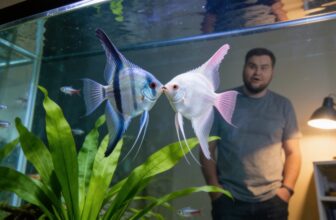
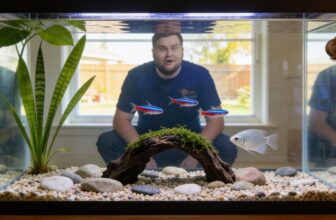
You’ll keep diamond tetras, small shiny fish from Venezuela’s slow waters, in a 20-gallon tank with six gentle friends like cory catfish.
They grow to 2.5 inches and live about four years if you feed them twice daily, change water regularly, and keep temperature steady between 72°F and 82°F.

Precise temperature control keeps the tank stable and diamond tetras stress-free.

Accurate heater with an easy-to-read dial maintains ideal tropical temperatures.

Dependable heating keeps water in the safe tropical range tetras need.
See today's best deals onAquarium Heaters
Their scales flash orange, blue, and green when healthy.
Watch their bellies stay slightly rounded, not bulging.
Keep going, and you’ll uncover how to breed them and keep those colors bright.
At A Glance
- Diamond tetras reach 2–2.5 inches and need 15–20 gallon tanks with stable 72–82°F water.
- Keep pH 6.0–7.5, hardness 4–8 KH, and nitrates below 20 ppm for vibrant colors.
- Feed small portions twice daily using flakes, frozen bloodworms, and baby brine shrimp.
- House with peaceful fish like cory catfish and celestial pearl danios; avoid angelfish and bettas.
- Males display longer dorsal fins and red eye marks; breed in soft, acidic 20-gallon tanks with leaf litter.
What Is a Diamond Tetra? Origin, Appearance, and Wild Habitat
Where does a fish get its sparkle? You’ll find your answer in the diamond tetra, a small swimmer named *Moenkhausia pittieri*.
This fish comes from slow, shallow waters in Venezuela, near Lake Valencia and two rivers called Rio Bue and Rio Tiquiriti.
Its body, compressed flat like a coin, flashes orange, blue, green, and gold when light hits those iridescent scales.
Males grow longer dorsal fins than females, and you’ll notice a red splash across each eye.
Cultural symbolism connects shiny fish to good fortune in many traditions.
Aquarium trade trends show you’ve favored this hardy species since the 1980s, valuing its calm beauty in home tanks worldwide.
When selecting housing for diamond tetras, consider that 2-gallon smart kits include features like full-spectrum LED lighting that can enhance the display of their iridescent coloration.
Diamond Tetra Size: How Big Do They Get?
A small jar of marbles sits on most kitchen counters, and you’ll find that’s roughly how much space a full-grown diamond tetra needs in your tank.
These fish reach two to two-and-a-half inches, about five to six centimeters, when fully grown. That’s slightly stockier than most tetras you’ll see in stores.
Diamond tetras grow slightly stockier than store-bought tetras, reaching two to two-and-a-half inches at full size.
Their compact size suits modern aquascape trends, where clean sightlines matter. You’ll appreciate how a group of six fits comfortably in a fifteen-gallon setup, leaving room for driftwood and low plants.
Smaller specimens sometimes appear in the breodium market, but buy adults when possible. You’ll see those iridescent scales immediately, the ones give this fish its diamond name.
Because diamond tetras prefer slightly acidic to neutral water conditions, you may need to use pH buffer products to maintain stable parameters in your community tank.
Diamond Tetra Lifespan: How Long Do They Live?
You’ve measured out that fifteen gallons for your six fish, and now you’re wondering how long you’ll keep this company.
With steady care, your diamond tetras typically reach three to six years. That’s their captive lifespan, shorter than you’d hope, longer than you’d fear. Biological filtration from a properly maintained undergravel system can help extend their lives by supporting stable water parameters.
| Factor | Impact on Years | Your Control |
|---|---|---|
| Water changes | Adds 1-2 years | Complete |
| Diet variety | Boosts immunity | Complete |
| Stress levels | Shortens if high | Partial |
Longevity trends in home aquariums show most hobbyists average four years. You’re tending living creatures, not decorations. Their brief stay teaches patience, the way a sparkler burns bright then fades.
What Tank Size Do Diamond Tetras Need?
How small can a tank be before your fish start to suffer?
Fifteen gallons, that’s your bare minimum tank size for keeping three diamond tetras. That’s about fifty-seven liters of water, a modest tank volume that fits on most desks. You’ll feel cramped watching them bump glass walls in anything smaller.
These active swimmers need length over height, room to dart between plants like kids chasing fireflies across a field. Every extra gallon lets them glide naturally, scales flashing blue and gold without restriction.
Remember: minimum means survival, not thriving. Give them space, and they’ll reward your patience with shimmering, peaceful motion.
While standard setups work fine, upgrading to a 20‑gallon Long tank allows you to incorporate a FijiCube 20‑gallon Long Baffle Kit for superior filtration and water quality management.
Diamond Tetra Water Parameters: Temperature, pH, and Hardness
The glass walls hold water, but it’s the invisible chemistry inside that keeps your diamond tetras truly alive.
You’ll want temperatures between 72 and 82 degrees Fahrenheit, which feels like a warm summer day.
Aim for a pH of 6.0 to 7.5—slightly acidic means it’s a bit sour, like lemon water but gentler.
Keep hardness between 4 and 8 KH; this measures minerals that help fish stay healthy.
KH between 4 and 8 keeps your diamond tetras’ mineral balance just right.
Stable water chemistry matters more than perfect numbers, since sudden changes stress your fish and make them sick.
For breeding, you’ll soften the water further and lower pH slightly, mimicking their wild home where eggs develop safely.
Test weekly, adjust slowly, and watch your tetras shimmer with contentment.
Given their sensitivity to nitrate accumulation, aim to keep levels below 20 ppm using reliable test kits that detect finer color gradations for early problem detection.
How to Set Up a Diamond Tetra Tank: Substrate, Plants, and Filtration
If you’re ready to give your diamond tetras a real home, start with what sits at the bottom. Your substrate choice matters more than you’d think. Use soft, dark sand about two inches deep; it cushions their delicate barbels and makes their silver scales flash brighter against the shadow.
Plants come next. Arrange tall stems in back, low carpets in front, and floaters up top. Your lighting strategy needs balance: bright enough for plants, dim enough to keep these fish feeling safe, like dappled sunlight through forest leaves.
Filter gently. Choose a hang-on-back or canister turning water four times hourly, creating calm current they can navigate without struggle. A 130 GPH internal filter delivers the gentle, adjustable flow diamond tetras prefer while supporting biological filtration through reusable sponge media.
Diamond Tetra Diet: What to Feed for Health and Color
Once you’ve got your tank running, with sand settled and leaves drifting overhead, you’ll notice your diamond tetras starting to sparkle, catching light like scattered coins.
Now, you’ll want to feed them right, so those colors deepen, and their bodies stay strong for breeding.
- Flake food that contains spirulina, plus color-enhancing vitamins, forms their daily bread.
- Frozen bloodworms, thawed in tank water, give protein for growth.
- Soft lettuce leaves, blanched and clipped, offer roughage.
- Baby brine shrimp, alive and wiggling, trigger hunting instincts.
Just as acrylic construction allows reef keepers to monitor protein skimmer foam levels at a glance, observing your tetras’ color response to different foods lets you gauge their nutritional health without disturbing the tank.
You’ll rotate these foods, watching scales shift from silver to flame.
How Often and How Much to Feed Diamond Tetras
Morning light hits the tank, and your diamond tetras start patting the glass, their little mouths working like they’re begging.
You’ll need a steady feeding schedule to keep these fish healthy and shimmering. Feed them small portions twice daily, morning and evening, giving only what they can eat in two to three minutes. This feeding frequency matches their small stomachs and active metabolism. Overfeeding clouds the water and harms their health, so skip a day each week to let their systems rest. Watch their bellies—slightly rounded means full, bulging means too much. Consistency brings out their best colors. Regular water quality testing with aquarium test strips helps detect ammonia spikes from uneaten food before they stress your fish.
Diamond Tetra Tank Mates: Compatible and Incompatible Species
Your aquarium glass holds more than water, it holds a community you’re building one fish at a time.
When you’re planning community dynamics, you want peace, not panic.
Choose tank mates who share your tetras’ gentle spirit:
- Celestial pearl danios darting like scattered pennies
- Cory catfish whiskering across soft sand below
- Molly fish drifting through planted corners
- Fellow tetras schooling in synchronized silver flashes
You’ll avoid angelfish, bettas, and any mouth wide enough to swallow your two-inch swimmers.
Shrimp become snacks, so skip them entirely.
For successful breeding later, you’ll need this harmony now—stressed parents won’t spawn.
Pick companions carefully, and watch your watery neighborhood thrive.
If you decide to breed your diamond tetras, a suction-cup mounted breeding box can safely house the fry while maintaining water circulation and visibility for monitoring their development.
Diamond Tetra Disease Prevention: Common Ailments and Treatments
Building a peaceful community protects your fish from stress, but water‑borne threats still find ways through the glass.
You’re guarding living jewels, so you check your water parameters twice weekly. Stable temperature, between 72 and 82 degrees, prevents ich—those tiny white spots that look like sprinkled salt. For the most reliable ammonia readings, use a moisture‑proof sealed test kit and store it away from heat, as temperatures above 82°F can cause accuracy drift in your results.
Disease prevention means quarantining new fish for fourteen days before they join your group. You watch for clamped fins, sluggish swimming, or torn skin. These signal bacterial infection or parasites.
If trouble appears, you have treatment protocols ready: raise temperature slowly, add aquarium salt sparingly, or use copper‑free medications. Clean water heals faster than any bottle.
Why Do Diamond Tetra Colors Fade? Causes and Solutions
Causes and Solutions for Fading Diamond Tetra Colors
You notice something’s wrong when the fish tank looks a little dim, like someone turned down a lamp you can’t find. Your diamond tetras have lost their sparkle, and you want to know why.
When your diamond tetras lose their sparkle, the tank itself seems to dim—like a lamp turned down just out of reach.
Some fish carry duller scales because of genetic variation, just like people have different hair colors you can’t change. Lighting intensity also plays a role—too bright, and they hide; too dim, their colors mute like a watercolor left in rain.
Restore their shimmer by checking four things:
- Replace old bulbs that grow yellow like fogged windows.
- Add floating plants creating dappled shade, forest-floor light.
- Test water weekly, keeping nitrates below 20 ppm.
- Feed color-enhancing foods containing carotenoids, orange pigments from nature.
How to Breed Diamond Tetras: A Step-by-Step Guide
Breeding Setup and Pair Selection
Three things sit on your counter that will decide if tiny silver fish become parents: a clean jar, a sponge filter, and a handful of java moss you pulled from your main tank.
You’ll set up a twenty-gallon breeding tank with soft, slightly acidic water chemistry—think pH near six and hardness below four degrees. This matters since eggs need gentle conditions to develop.
Add leaf litter for enrichment, which means hiding spots and microscopic food for future fry.
Introduce one pair with flowing dorsal fin (that’s the male) and one with shorter fin (the female). Turn lights low, wait, watch.
Raising Diamond Tetra Fry: From Hatching to Nine Months
From Hatching to Nine Months
When the eggs finally hatch, you’ll peer into the tank and see what looks like tiny bits of clear glass stuck to the java moss, each one holding a yolk sac that feeds the baby fish for two or three days.
Then free-swimming begins, and you’ll need proper hatchling nutrition: infusoria, then baby brine shrimp, then crushed flakes. Watch for these growth milestones:
Tiny swimmers demand a feast in stages: first infusoria, then brine shrimp, finally flakes—each bite powering their invisible journey toward silver stripes.
- Week one: fry cling to glass, nearly invisible
- Month one: faint silver stripes appear
- Month three: they school together, nervous and quick
- Month nine: adult colors finally emerge, diamonds catching light
Patience rewards you.
Male vs Female Diamond Tetra: How to Tell Them Apart
Telling Male and Female Diamond Tetras Apart
Once your young fish reach nine months and those diamond colors fully emerge, you’ll notice something curious in the group.
Look closely at the dorsal fins—that tall, sail-like fin belongs to the male, whereas the female carries a shorter, rounded one.
These differences in color genetics mean males flash brighter iridescence, especially during breeding patterns when they display for attention.
You might feel a small thrill spotting these distinctions, like noticing freckles on a friend’s nose you’ve never seen before.
Both sexes school together peacefully, yet knowing who’s who helps you anticipate spawning behavior before it begins.
Frequently Asked Questions
Can Diamond Tetras Jump Out of Tanks?
Yes, you’ll need to secure your aquarium since diamond tetras exhibit jump behavior that can lead to tank escape. You should install a tight-fitting lid and cover any gaps to prevent these active swimmers from leaping out.
Do Diamond Tetras Need an Air Pump or Bubbler?
You don’t strictly need a bubbler if your water filtration provides adequate flowrate and surface agitation. Good pump maintenance guarantees proper tank aeration. Yet, you’ll benefit from added oxygen in warmer setups or heavily planted tanks.
Are Diamond Tetras Sensitive to Bright Lights?
You’ll notice diamond tetras show light sensitivity; they prefer shaded areas with floating plants. You’ll see photoperiod effects on their iridescence too—bright lights dull their colors, so you’ll want subdued lighting and a consistent day-night cycle.
Can Diamond Tetras Change Gender?
No, you won’t see gender reversal in your diamond tetras; they’re genetically determined fish without natural sex-switching abilities. Hormonal influence in home aquariums won’t change their sex either.
Do Diamond Tetras School or Shoal Together?
You’ll observe diamond tetras display bre school social behavior, forming tight groups for security and navigation. Within these gatherings, they’ll establish a subtle shoal hierarchy, with dominant individuals often leading movement through the water column.
Rounding Up
You’ve got the tools now—tank size, water numbers, and breeding steps—to keep these fish happy and bright. Remember, their colors fade when stressed, so keep their home calm and clean. Diamond tetras reward patience with flashes of living color. Trust the process, watch carefully, and enjoy.
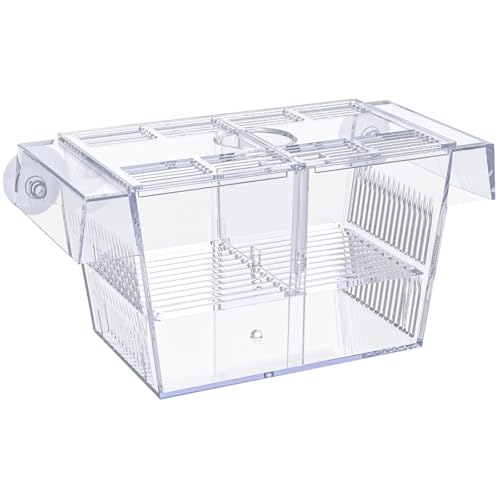
Hang-on nursery keeps eggs and fry safe from hungry tank mates.

Soft fibers give tetras a natural place to scatter and fertilize eggs.

Release tannins that lower pH and encourage shy tetras to breed.
Browse discountedBreeding Supplieson Amazon