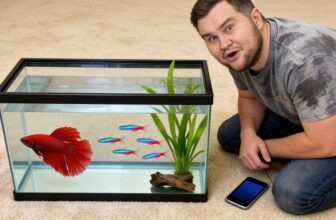
A betta sorority tank setup challenges even experienced keepers, but the payoff—watching females establish their pecking order—is addictive.
You’ll need 20 gallons minimum, a tight-fitting lid (these girls jump), and gentle filtration like a $15 sponge filter.
Stock exactly five tank-raised females, adding them simultaneously so no single bully claims territory first.
Feed sparingly—2-3 pellets each—and monitor closely for torn fins or reclusive behavior; failure means immediate separation into backup tanks.
Keep reading to learn how to spot troublemakers before blood hits the water, and when rehoming becomes your only option.
At A Glance
- Minimum 20-gallon tank with 3-5 calm, tank-raised females.
- Introduce all females simultaneously to prevent early dominance battles.
- Maintain 78°F, pH 6.8-7.5, and 20% weekly water changes.
- Scatter food; fast one day weekly; isolate aggressors immediately.
- Rehome aggressive fish; no shame in switching to single-betta setups.
What’s a Betta Sorority: And Why Think Twice?
A betta sorority is a group of female betta fish intentionally housed together in a single tank. Playing with gender dynamics, it sounds peaceful—until it isn’t.
Unlike males, females can form loose hierarchies, but bonding behaviors are fragile. One stressed, aggressive diva shreds fins and creates ulcers; she can kill everyone in a small tank. Costs add up fast: multiple fish, a quarantine tank, and meds. You’re not saving money. Adequate filtration with gentle flow is essential to avoid stressing their delicate fins and maintaining water quality in a sorority setup.
Granted, a stable sorority is beautiful, but failure means constant hiding or dead fish. Bottom line? Except you have big tanks, backup plans, and calm fish, skip it. A 10‑gallon tank is too small for a safe sorority, as it lacks the 220‑lb support needed for a larger setup with adequate space and hiding spots.
The Minimum Tank Size for a Betta Sorority
So, how big does a tank need to be to keep a betta sorority from turning into a fishy fight club? The minimum is 20 gallons.
Anything smaller, like a 10-gallon, is a recipe for torn fins and constant stress. That cramped space forces constant eye contact, which triggers aggression. A long 24-by-12-inch footprint, similar to recommended aquarium stands without overhang, helps active tetras and corydoras establish their own territory, further reducing conflict.
A 20-gallon gives each fish room to claim a corner, reducing the need for a tank divider. Even with space, add a quality stress coat to water changes; it helps heal minor nips and calms frayed nerves.
Bottom line: don’t skimp on gallons—your sorority’s peace depends on it. This aligns with the general guideline that 20 gallons is the minimum healthy volume for a single goldfish, highlighting how even larger tanks are necessary for community setups.
How Many Bettas in a 20-Gallon Sorority Tank?
The sweet spot for a 20‑gallon betta sorority tank is three to five females. This range respects territorial dynamics, giving each fish enough space to claim a cave or plant without constant conflict.
A behavioral hierarchy naturally forms, with a clear leader and followers, reducing stress. Fewer than three risks one fish being bullied relentlessly.
More than five crowds the tank, straining filtration and hiding spots. Stick to this number, and you’ll see calm swimming, not constant chasing. For a clear view of the fish, consider using low‑iron glass which eliminates the greenish tint often found in standard aquariums.
It’s a balance of space and social structure—enough room to breathe, enough company to feel secure. When selecting a filter for the tank, aim for a flow rate of at least 80 GPH to ensure adequate water turnover and reduce stress on the bettas.
Why Five Females Is the Magic Number
Five females is the sweet spot for a 20‑gallon sorority, not just a random number. This group size naturally establishes a stable tank hierarchy, preventing any single fish from becoming a tyrant.
With five, personality sorting happens organically—the bossy one, the shy one, the investigator—each finding her role. Fewer than five risks one bully dominating; more than five in a 20‑gallon strains space.
You get a balanced, dynamic community where squabbles are brief, not brutal. It’s the Goldilocks zone: enough fish to spread aggression, not so many you’re managing chaos.
Bottom line: five is your safest bet for harmony. Using a substrate like Aqua Natural Prairie Sand can help maintain water quality by supporting beneficial bacteria during the cycling process. Regular monitoring with a 9‑in‑1 Test Kit ensures ammonia and nitrite levels stay safe as the tank matures.
How to Pick Peaceful Bettas for Your Sorority
Picking peaceful bettas for a sorority is less about luck and more about careful observation—think of it as speed‑dating, but with fins. Look for these four signs:
- Watch body language cues: Avoid females flaring or chasing. Choose ones that explore calmly, ignoring tank mates.
- Seek tank raised origins: Tank-bred bettas are naturally calmer than wild-caught or aggressive show lines.
- Check fin condition: No torn fins or clamped posture—these signal stress or prior bullying.
- Observe feeding behavior: Peaceful bettas eat without dominating the food source.
You want a fish that’s steady, not spicy. Pick sisters, not rivals. For isolation or recovery, consider using a quarantine tank with transparent walls and easy access lids. Using a transparent plastic breeding box with full visibility can help monitor recovery and prevent further aggression.
How to Introduce Bettas All at Once
So you’ve picked your peaceful sisters—now it’s time for the group introduction. Float all bettas together in their bags inside the tank for 15 minutes. This lets them see each other without the risk of territory disputes.
Then release them at once, ideally five or more. Adding them simultaneously prevents one establishing dominance first, which reduces aggression triggers. Using 8‑in‑1 Water Test Kits to check ammonia levels during the first week helps prevent illness from stress-induced spikes.
A betta that enters alone becomes a target; a group spreads the attention. Confident, but have a spare tank ready for any fish that won’t settle. Installing a magnetic fish tank cover with strong hold helps prevent jumpers during the stressful introduction period.
Start together, stay together—that’s the shortcut to sorority success.
Must-Have Plants, Caves, and Driftwood
The right decor is the difference between a peaceful sorority and a fin‑shredding free‑for-all.
- Plants block sight lines. Anubias and java fern create natural barriers. Regular plant thinning prevents overgrowth, keeping each betta’s territory clearly defined.
- Caves provide retreats. Ceramic or resin caves offer escape from bullies. Weekly cave cleaning removes trapped waste, ensuring fresh, safe hideouts.
- Driftwood creates zones. Manzanita or mopani wood breaks up open space, giving each female her own corner to claim. For larger setups, choose a pre‑treated root that sinks instantly and saves preparation time.
- Mix textures for comfort. Combine broad leaves with fine moss so every personality finds a cozy spot. Use porous ceramic rings to anchor fine-rooted plants without damaging delicate stems.
Bottom line: dense, well‑maintained decor builds confidence.
Your sorority will feel like a real community, not a battleground.
Set Up Heater, Filter, and Lid First
Before dropping in any fish, the tank needs its backbone: a reliable heater, a solid filter, and a secure lid—install these first, no shortcuts. The filter provides gentle water flow; strong currents exhaust bettas. The lid prevents jumping—these fish leap surprisingly high.
A sponge filter for nano tanks ($15) works well. Adjustable heater set to 78°F guarantees stability. Skip the cheap stick-on thermometer. Choose gear together, like friends building a fort. This foundation feels right since you’re doing it right. For optimal nutrition, remember that hatchlings need 35% protein while juveniles and adults thrive on about 25%. However, also be careful not to use tap water for cleaning the sponge filter, as chlorine kills bacteria.
- Filter: Low flow, easy cleaning.
- Lid: Tight fit, no escape routes.
Get this trio right; the sorority thanks you with peace.
Ideal Water Temp and Chemistry for Sororities
A thermostat isn’t just a gadget; it’s your sorority’s peace treaty. For these fins to flourish, keep the water a stable 78°F—anything less invites stress, aggression, and disease. Chemistry matters just as much.
- Temperature Range: 76-80°F, ideally 78°F. A reliable heater is non-negotiable.
- Water Hardness: Soft to moderately hard (3-8 dGH). Hard water stresses bettas.
- pH Stability: Keep pH between 6.8-7.5; avoid swings. Stability beats perfect numbers.
- Conditioner: Use a quality water conditioner to remove chloramine and chlorine. For example, Seachem Prime is a concentrated formula that detoxifies ammonia while preserving beneficial bacteria.
Your sorority’s harmony starts here. Nail the temp and chemistry, and you’ve got a calm, happy tank. Choose a model with automatic shut-off to prevent overheating and keep temperatures stable.
Weekly Water Changes to Prevent Ammonia Spikes
Regularly—like clockwork, every seven days—the water change becomes a sorority’s best defense against ammonia spikes. Without it, waste builds faster than nitrifying bacteria can process it. Biofilm management likewise suffers, leaving mucus-loving bacteria to flourish. Remove 20% of the water weekly, vacuuming gravel to dislodge hidden decay. This keeps your sisterhood thriving. For bucket-free convenience, a water-pressure powered model with a long hose simplifies the task across multiple tanks. Manual siphon options like the Tetra Aquarium Gravel Water Cleaner Siphon work reliably for setups up to 55 gallons with no electricity needed.
| Task | Why It Matters |
|---|---|
| 20% water change | Dilutes toxins |
| Vacuum gravel | Removes waste |
| Scrub glass | Controls biofilm |
| Test for ammonia | Catches spikes early |
| Add conditioner | Protects gills |
Stick to this routine, and your sorority stays peaceful, not panicked.
How to Feed a Sorority Without Overfeeding
Weekly water changes keep the water safe, but even the cleanest tank won’t save a sorority from a feeding fiasco.
Overfeeding is the fast track to ammonia spikes and bloated bettas.
Overfeeding is the fast track to ammonia spikes and bloated bettas.
Master these feeding strategies to keep everyone happy:
- Portion control: Feed only what each betta can eat in two minutes—about 2-3 pellets per fish.
- Scatter food: Sprinkle pellets across the tank so shy bettas get their share without bullying.
- Use a net: Isolate aggressive eaters briefly to guarantee equal distribution.
- Fast one day weekly: Skip feeding to reset digestion and prevent constipation.
Stick to this routine, and your sorority stays healthy without waste.
Consider an automatic feeder with USB rechargeable battery to maintain precise portions while you’re away, avoiding skipped meals or overfeeding.
Using a copper-free liquid fertilizer like the Brightwell Aquatics shrimp-safe formula can help plants thrive without harming bettas or invertebrates in the sorority tank.
Signs Your Sorority Is Failing
No matter how carefully you set up your sorority, sometimes things go wrong. Subtle bullying is your first clue—a female nipping fins during feeding, or chasing others from hiding spots.
Watch for hierarchy shifts too; if the bottom fish stays pale and clamped, stress is winning. Torn fins, sores, or constant hiding aren’t drama, they’re cries for help. Using a soft-mesh net for handling stressed bettas can prevent further fin damage during tank maintenance. Long stainless steel tweezers can help you carefully remove torn plant matter or uneaten food without disturbing the hierarchy.
You want a peaceful sisterhood here, not a tense hangout. Don’t ignore it. Your tank’s balance starts slipping when one fish rules and the rest scatter.
The vibe should be chill, not survival mode.
When to Remove an Aggressive Female
Once you notice one female chasing others away from food or cornering them at the back of the tank, it’s time to decide if she stays or goes. Observing hierarchy is normal—pecking orders happen—but persistent bullying isn’t.
- Torn fins or sores—physical damage means she’s too aggressive.
- Hiding—if others won’t swim freely, stress is poisoning the group.
- Food guarding—one hogging meals means others starve.
- Chasing for days—not just initial squabbles; that’s a pattern.
Regular water testing using a phosphate test kit can also help identify environmental stressors that may amplify aggression. Using a Seachem PhosGuard product in your filter can help maintain stable water chemistry that supports less territorial behavior.
*Quarantine removal* is the fix: scoop her out into a spare tank for a week. If she calms down, reintroduce. If not, she’s not sorority material. Act fast, your group’s peace depends on it.
How to Split Up or Rehome Your Sorority
Sometimes, in spite of your best efforts—the careful introductions, the dense jungle of plants, the 20‑gallon tank you swore was big enough—a sorority just doesn’t work.
When fights persist, you need to split them up fast.
Pull the aggressor into a separate tank.
For the others, consider retirement ponds.
These are planted outdoor tubs for a single fish, offering chill, solo living.
As another option, individual 5-gallon setups work fine as sorority alternatives.
For a reliable single-betta setup, consider the Vimvins starter kit with its adjustable lighting and quiet filter. Use a digital hygrometer thermometer to monitor the tank’s climate and prevent environmental stress during isolation.
Rehome extra females to trusted aquarists.
It’s not failure; it’s doing right by each betta.
No shame in admitting this group wasn’t meant to be.
Frequently Asked Questions
Can Male Bettas Be Added to a Sorority Tank?
Adding male bettas to a sorority tank is a recipe for disaster. Male aggression is hardwired; they’ll see females as rivals or mates, destroying the tank hierarchy.
Expect torn fins, constant chasing, and likely death. It’s like adding a bull to a china shop—just messy.
Stick to females only. A 20-gallon minimum is needed for a proper group.
Save yourself the headache and skipped heartbeats. Keep males solo or in their own tanks; it’s safer and saner for everyone involved.
How Long Does a Betta Sorority Typically Stay Stable?
Like a fragile sandcastle waiting for a wave, a betta sorority’s stability is never guaranteed.
Sorority hierarchy shifts can cause constant, stressful fin-nipping that tears fins or creates sores, often requiring the group’s split.
Combating illness outbreaks is then a costly, risky venture.
A stable group needs a 20‑gallon home with plenty of caves and plants—just three to five peaceful females, same age, from the same tank.
Bottom line: even then, expect to break them up eventually.
Can a Sorority Work With Different Fish Species Besides Bettas?
A betta sorority can include other species, but it’s risky. Temperament compatibility is key—choose peaceful, non-fin-nipping tankmates like corydoras or neon tetras.
Swim space matters; a 20-gallon tank gives everyone room to avoid conflict. Add all fish at once to reduce bullying.
One aggressive betta can ruin it, so have a backup tank ready. Bottom line: it works with careful planning, but don’t expect a party—more like a cautious truce.
What Lighting Schedule Is Best for a Betta Sorority Tank?
A betta sorority tank thrives with 8–10 hours of light daily, using a timer for consistency. LED intensity should be moderate—too bright stresses fish and fuels algae.
Keep it on a uniform schedule, like 8 AM to 6 PM. Females need clear day-night cycles to reduce aggression. Think of it as a synchronized swim team that hates sudden blackouts.
Pair a dimmer (e.g., Nicrew $30) with a plug timer ($10). Bottom line: automate it, avoid spotlight drama, and watch them relax.
Should I Add Snails or Shrimp to a Betta Sorority Tank?
Yes, snails or shrimp work in a sorority tank, with caveats.
Snails offer fantastic algae control and low bioload impact, meaning they barely dirty the water.
Shrimp are riskier; bettas might see them as snacks.
For safety, start with larger, hardier shrimp like Amanos—they’re tougher and cost around $3 each.
Add them first, so they establish territories before the bettas.
Avoid tiny cherry shrimp except if the tank is heavily planted with hiding spots.
Bottom line: snails are safe and helpful; shrimp require a careful setup.
Rounding Up
Look, a betta sorority can work. But honestly? Most people shouldn’t try it. It’s a high‑risk project that demands a 40‑gallon minimum, five or more docile females, constant monitoring, and a backup plan for bullies. The gear alone—a solid sponge filter and heater—runs about $60, not counting fish. If you’re not ready to separate fighters fast, skip it. Bottom line: except if you’ve got the space, patience, and spare tank for casualties, stick with a single, happy betta. Why invite a headache?