EVERY Reason Your Goldfish Is At The Bottom Of The Tank
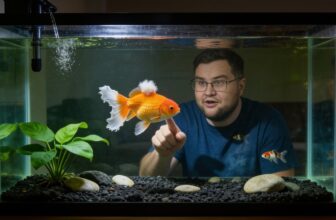
A goldfish resting at the bottom isn’t always dying—often it’s crying out for better water. Test ammonia first; anything above 0 ppm burns gills and leaves them gasping at the substrate.
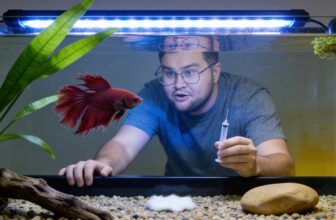
A 50% water change plus Ammo Lock ($35 kit) fixes most cases fast. Temperature swings or weak surface agitation from a failing air pump will drop them too.
Overcrowding, junk food, or parasites like gill flukes are common culprits. Check your pH sits between 6.5–8.0, switch to sinking pellets, and add an airstone for oxygen.
A constipated fish needs a fast day, then a shelled pea. Still stuck? The full breakdown covers each fix step-by-step.
At A Glance
- Ammonia poisoning from water quality issues forces goldfish to rest at the bottom.
- Temperature shock from sudden shifts causes goldfish to sink and become lethargic.
- Low oxygen levels from warm water or poor aeration lead to bottom-sitting behavior.
- Swim bladder disease or constipation makes goldfish unable to swim upright.
- Dropsy, indicated by pineconing scales, often results in bottom-dwelling and is frequently fatal.
Why Your Goldfish Is Lying at the Bottom of the Tank
Before you panic and assume your goldfish has given up on life, consider that its bottom‑dwelling behavior often boils down to one of a handful of solvable problems.
Sometimes, it’s just natural resting. Goldfish do have behavioral quirks—like chilling on the substrate when they’re tired or sleeping. It’s not always drama.
Sometimes, it’s just natural resting—goldfish chill on the substrate when tired or sleeping. It’s not always drama.
They pause, they hover, they flop sideways. Usually, they’re fine after a few minutes.
But if this becomes a daily habit, check other clues: is your tank boring? Add a hideout or rearrange decor. Adding a cave or tree trunk ornament can provide a secure resting spot that helps reduce stress and encourages activity.
Bottom line: occasional bottom sitting is normal. Constant—maybe not. Trust your gut.
Adding live plants like Jungle Vallisneria can also improve water quality and provide natural hiding spots that reduce stress.
Is Your Goldfish Gasping for Air? Check for Ammonia Poisoning
If your goldfish is gasping for air near the bottom of the tank, ammonia poisoning is the most likely culprit—and yes, it’s as urgent as it sounds.
Ammonia poisoning burns delicate gill tissue, making it nearly impossible for your fish to breathe. You’ll notice them gasping air, often in a corner, with reddened gills.
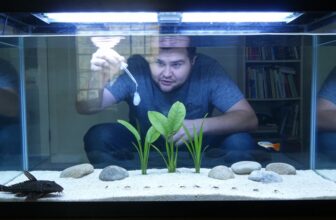
Grab an API Master Test Kit, about $35, and test immediately. Ammonia should read zero. If it’s anything above, perform a 50% water change now.
Add API Ammo Lock to neutralize remaining toxins. For longer-term safety, consider a chemical conditioner like Seachem Prime which binds ammonia for 48 hours. Use HOVIRAN Ammonia Test Strips for quick daily checks while levels normalize. Continue daily 10-15% water changes until levels normalize.
You’re part of a community that catches this early—don’t wait.
How Ammonia Poisoning Burns Gills and Causes Lethargy
Ammonia poisoning effectively performs chemical warfare on a goldfish’s gills. That beautiful, feathery tissue—critical for breathing—gets burned and inflamed.
This gill damage causes severe breathing difficulty, basically making your fish suffocate in its own home. Your goldfish feels like it’s drowning in poison gas. It becomes lethargic, resting at the bottom since it lacks the energy to swim.
Treat this fast. Test your water now. If ammonia reading is high, you must act. You can use an app-enabled digital kit for instant digital readouts and data logging to track the severity. Your fish is begging you for help from the bottom of that tank. Don’t ignore it. For precise readings, choose a meter with a precision of 0.01 to catch even slight spikes in toxins.
Test Your Water for Ammonia, Nitrite, and Nitrate Now
The only way to know for certain if ammonia is the culprit is to test the water. Wild fish thrive in stable, clean water, and your goldfish deserves the same. Grab an API Master Test Kit—about $35—and follow the rescue protocol. For even greater precision, consider using lab-grade liquid reagents which offer ±5% accuracy compared to typical test strips. For a more portable option, use 8-in-1 water test kits that detect eight parameters in seconds.
| Parameter | Safe Level (ppm) | Danger Level (ppm) |
|---|---|---|
| Ammonia | 0 | 0.25+ |
| Nitrite | 0 | 0.5+ |
| Nitrate | Under 20 | 40+ |
| pH | 6.5–8.0 | Below 6.0 or above 8.5 |
| Temp (°F) | 65–75 | Below 60 or above 80 |
Test weekly; it’s simple, cheap, and keeps your fish safe. Ignore it, and you’re basically guessing—bad idea.
The Fastest Fix for High Ammonia and Bad Water
High ammonia levels demand a two‑step fix that anyone can nail.
First, tackle that ammonia spike fast, doing an immediate 50% water change.
Second, add API Ammo Lock to neutralize remaining toxins.
This combo buys your goldfish breathing room as rebuilding your cycle.
For ongoing control, change 10-15% daily until levels drop.
Test weekly with an API Master Kit; it’s $35 and saves guesswork.
If another ammonia spike hits, repeat the process.
You’ve got this—water quality is the secret handshake of the fish‑keeping club.
For a comprehensive conditioner that also detoxifies ammonia while preserving beneficial bacteria, consider Seachem Prime as a complementary emergency tool.
To further stabilize your tank, supplement with live strains that offer documented CFU counts at manufacture for reliable biological filtration.
Nail it, and your goldfish will thank you from the bottom.
Can Temperature Shock Make Your Goldfish Sink?
Temperature can be a sneaky culprit. Sudden shifts cause temperature shock, making your goldfish sink to the bottom like a tiny submarine on a mission.
In cold water, fish slow down, entering a semi‑hibernation that stresses their little bodies. They follow the warm water, which sinks when it’s cold, leaving them stranded. Check your heater—it might be failing. A consistent 68–74°F keeps them active. Don’t let your fish freeze; they won’t forgive you. Keep conditions stable, and they’ll swim tall again. For reliable heating, look for models with automatic shut‑off to prevent dangerous temperature swings. Many modern heaters feature overheat protection that shuts them down at safe thresholds, like 97°F to 99°F, to avoid cooking your fish.
Does Hot Water Starve Your Goldfish of Oxygen?
Rising temperatures strip oxygen from water like a thief in the night. Hot water holds less dissolved oxygen, forcing your goldfish to the bottom where it’s slightly cooler—but still risky.
That’s a double whammy: temperature shock stresses them, and low oxygen invites bacterial infection. You want your fish to thrive, not just survive.
- Warm water above 75°F reduces oxygen capacity by up to 20%.
- Goldfish gasp at the bottom, not the surface, when oxygen is scarce.
- Sudden heater spikes cause temperature shock, harming their immune system.
- Low oxygen weakens gills, making bacterial infection more likely.
Add a Tetra Whisper air pump with an airstone to boost surface agitation and gas exchange—your goldfish will thank you.
For larger tanks, installing a Fitnet AL‑300L chiller can precisely maintain stable temperatures and prevent oxygen loss.
Boost Oxygen Instantly With Air Stones and Plants
An air stone or a handful of live plants can turn a suffocating tank into a breathable paradise.
Oxygen depletion is the silent killer here, but water aeration fixes it fast.
A simple Tetra Whisper pump, around $15 for 20-40 gallon tanks, pushes bubbles that break the surface tension, letting fresh oxygen in.
A simple Tetra Whisper pump, around $15, breaks surface tension for fresh oxygen.
Live plants, like hardy Anubias or Java fern, produce oxygen during the day, too.
No need for fancy CO2 setups—just add a bubbler and some greenery.
Your goldfish will stop gasping at the bottom, and you’ll feel like a hero.
Bottom line: oxygen first, everything else second.
For reliable back-flow protection, install a check valve on the air line to prevent water from siphoning back into the pump during a power outage.
For an even quieter setup, consider a pump built with vibration isolation to reduce hum against the tank stand.
Swim Bladder, Dropsy, and Constipation: 3 Common Bottom-Sitting Diseases
Dropsy, swim bladder disease, and constipation are the three amigos of bottom-sitting goldfish problems. Each hits your fish differently, but they share one thing: you need to act fast.
Dropsy symptoms include pineconing scales and bloating—it’s often fatal. Swim bladder treatment involves a three-day fast, then feeding a blanched pea. Constipation? Same fast, same pea.
What ties them together:
- All cause buoyancy loss, so your fish sinks.
- Dropsy is internal infection; treat with antibiotics.
- Swim bladder issues often fix with diet changes.
- Constipation resolves with a pea and Epsom salt bath.
Bottom line: fast first, then treat specific symptoms.
For dropsy, combine a fast with antibacterial powder for weak-eating fish like Kanaplex mixed into food using Focus binder for effective oral dosing.
A pea-based diet also helps maintain health, similar to how Tetra Goldfish Variety Pellets provide balanced nutrition for immune support and color enhancement.
How to Identify Gill Flukes and Bacterial Infections
Moving beyond swim bladders and constipation, gill flukes and bacterial infections are another reason your goldfish might be parked at the bottom.
Gill flukes are tiny parasites—think microscopic vampires—attaching to gills, causing gasping, reddened tissue, and clamped fins.
Gill flukes—microscopic vampires—attach to gills, causing gasping, reddened tissue, and clamped fins.
Bacterial infections like columnaris show as fuzzy white patches, lethargy, and frayed fins.
Both sneak in when water quality slips.
If your fish looks ragged, test water immediately.
For flukes, try API General Cure (around $12).
For bacteria, use Seachem Kanaplex ($10).
Treat in a quarantine tank using a breeding box to isolate the fish while maintaining water flow and visibility.
Catching it early? You’re a hero.
Ignore it? Well, your goldfish isn’t just lazy.
Does Your Goldfish Have Egg Binding or Old Age?
Egg binding and old age are two less-talked-about reasons your goldfish might be glued to the bottom.
When a female can’t release eggs, she gets bloated and lethargic—a dangerous condition needing a vet’s help.
Old age, meanwhile, just makes fish tired, slow, and prone to bottom-sitting as their energy fades.
- Egg binding causes visible swelling and a pinecone-like scale appearance.
- Old age fish may eat less and rest more, without other symptoms.
- Both conditions require patience; egg binding needs intervention, old age needs comfort.
- Watch for appetite and breathing changes to tell them apart.
Using a copper-free formula like Brightwell Aquatics Shrimp Florin can help maintain plant health in the tank without stressing your goldfish.
Adding Seachem Flourish provides vital trace elements that support plant root systems and shrimp molting in freshwater tanks.
How Overcrowding and Poor Diet Add to the Problem
So you’ve ruled out egg binding and old age, but your goldfish is still hugging the bottom like it’s trying to fuse with the gravel.
Overcrowding is a silent tank killer. Goldfish produce tons of waste, and when you ignore proper stocking limits, ammonia spikes fast—making fish lethargic. Aim for 20 gallons per fancy goldfish, 30 per single-tail. Additionally, choose a tank with robust filtration, such as the Whisper 20 filter, to handle their heavy bioload. Even with good filtration, small tanks like the 2-gallon or 3-gallon smart betta kits are far too cramped and omit heaters, which can cause additional stress from unstable water temperatures for a goldfish.
Poor diet likewise drags them down. Their nutritional needs demand sinking pellets with low protein, not flakes that cause bloating or swim bladder issues. Feed high-quality, gel-based foods twice daily.
Get the crowd and menu right, and your fish will stop the floor-hugging routine.
Stop Stress and Boredom With Better Tank Setup
Stress—the kind that makes a goldfish turn into a bottom-dwelling statue—is often a symptom of boredom and a bare, unchanging tank. A proper setup stops that.
Give your fish a reason to investigate; it’s not complicated, just thoughtful.
- Tank size matters; a 20-gallon minimum per goldfish prevents cramped, stressful quarters.
- Add hiding spots like silk plants or smooth caves—they reduce fear and mimic a natural home.
- Use gentle current from a filter like the Tetra Whisper; it boosts oxygen without tiring fish.
- Rearrange decorations monthly; novelty fights boredom, keeping your goldfish active and happy.
Your setup should include a secure low-profile hood with LED lighting to reduce stress from open-top anxiety and to support healthy plant growth. Many of these hoods feature energy-efficient integrated white LEDs that provide a natural daylight shimmer without overheating the water.
A stimulating tank turns a bottom-dweller into a curious swimmer, plain and simple.
Your Emergency Action Plan for a Sick Goldfish
| Symptom | Action |
|---|---|
| Gasping at bottom | Increase oxygen with air stone |
| Clamped fins, lethargy | Quarantine, treat for parasites |
| Bloated, floating sideways | Fast 3 days, then feed blanched pea |
| Red gills | Immediate water change; test ammonia |
You’re not alone—fellow owners face this. Stay calm, test, treat. For the best oxygen boost, select an air stone that produces 300‑500 µm bubbles to maximize gas exchange without overloading your pump. A stable light riser with stainless steel posts can resist corrosion and prevent unwanted sway from water movement.
Weekly Water Testing and Tank Maintenance to Prevent Relapse
Weekly water testing is the boring, but necessary, chore that keeps your goldfish from turning into a permanent bottom-dweller.
This routine monitoring is your best preventive care against relapse.
Without it, ammonia or nitrite spikes sneak back, stressing your fish into sickness again.
Without it, ammonia or nitrite spikes sneak back, stressing your fish into sickness again.
Here’s what a solid weekly checkup looks like:
- Test ammonia, nitrite, nitrate, and pH with an API Master Test Kit ($35).
- Perform a 10-20% water change, vacuuming the gravel.
- Scrub algae off decorations and glass.
- Check the filter for clogs and rinse it in old tank water.
- Ensure your resealable moisture-protective container keeps test strips dry and accurate between uses.
For crowded reef tanks, twice-weekly testing is recommended to maintain precise phosphate levels.
Do this every week, no excuses.
Your goldfish will thank you by swimming upright.
Frequently Asked Questions
Can I Use a Water Conditioner Instead of Ammo Lock?
A water conditioner removes chlorine and chloramine, not ammonia. Ammo Lock directly detoxifies ammonia, a key difference in this water conditioner comparison. For ammonia lock alternatives, the two are not interchangeable.
Without Ammo Lock, ammonia poisoning continues. Use a conditioner for tap water prep, but buy Ammo Lock particularly for ammonia spikes. Think of it: conditioner handles the welcome mat, Ammo Lock deals with the emergency guest. Both are necessary, but for different jobs. Bottom line: get both.
How Long Does It Take for a Goldfish to Recover From Ammonia Poisoning?
Recovery time from ammonia poisoning is rarely instant—ironically, the cure is more work. Typically, with proper treatment, a goldfish shows improvement in 3 to 5 days.
Daily water changes of 10-15% are critical, alongside a reliable ammonia test to keep levels near zero. Full recovery, including normal energy and appetite, usually takes 1 to 2 weeks.
Stick with it; your consistency—not magic—is what brings your fish back to the surface, swimming like nothing happened.
Is It Safe to Add Salt to the Tank for Gill Issues?
This salt helps reduce stress and improves gill function. Do not exceed stated doses.
Combine with a 50% water change if ammonia is high.
Avoid salt if your tank has live plants.
Beneficial aquarium salt works best as a short-term treatment—think of it as a gill spa, not a permanent soak.
What Temperature Is Ideal for a Goldfish Tank?
The ideal temperature for a goldfish tank is a steady 68–74°F (20–23°C). Consider one keeper whose sudden spike to 80°F caused oxygen levels to plummet, with fish gasping at the bottom—a lesson in thermal balance.
- Warmer water holds less oxygen, stressing gills.
- Cold water (below 60°F) induces dangerous semi-hibernation.
- Match heater wattage to tank size (5 watts per gallon).
Bottom line: keep it cool and stable. Your fish will thank you—no lifeguard needed.
Can a Goldfish Recover From Swim Bladder Disease on Its Own?
A goldfish can sometimes recover from swim bladder disease on its own, but it’s rare and depends on the cause.
Swim bladder recovery often relies on natural healing methods—like fasting the fish for a few days to clear constipation—but without intervention, the outcome is iffy.
Most cases need a tweak in diet or water.
Think of it like a stubborn hiccup: it might pass, but you’ll probably have to help.
Bottom line: don’t bet on it fixing solo.
Rounding Up
So, your goldfish is a floor-dweller. The verdict? Water quality is usually the villain, not ghostly pond drama.
Test the tank. Ammonia burns gills, makes fish sluggish. A twenty-dollar kit beats a fifty-dollar funeral. Fix the water, fix the fish—usually.
Think of your tank as a tiny, wet house. Clean it weekly. No shortcuts. Your fish isn’t lazy; it’s suffocating. Don’t be that owner. Test. Fix. Repeat. The end.