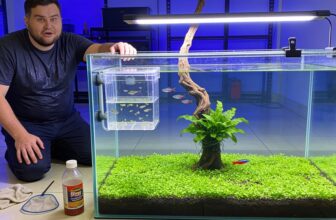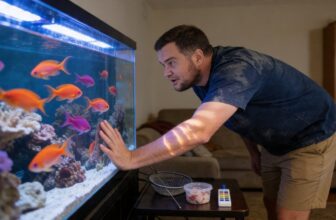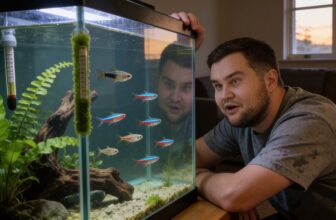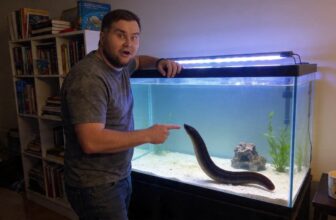
You’ll need 10 gallons for Dwarf, Honey, or Sparkling gouramis—easy starter picks—while Pearl, Three-Spot, and Snakeskin varieties demand 30 gallons with dense floating plants for security.
Skip the Paradise except you’re ready for aggression management, and forget Kissing gouramis entirely except you’ve got 100 gallons and a taste for chaos.

Keeps jumpers inside while allowing airflow and light penetration.

Lightweight cover blocks escapes without blocking oxygen exchange.

Sleek hinged lid fits neatly to keep gouramis from leaping out.
Check discounted items inAquarium Lids
Your non-negotiable checklist: soft acidic water (pH 6.0–7.0), still surface for bubble nests, tight magnetic lids—they’re jumpers, every last one—and gentle filtration that won’t shred their feeler fins.
Feed floating pellets twice daily, supplement with bloodworms when you’re feeling generous, and watch for fin rot in cramped quarters.
Giant gouramis? That’s pond territory, buddy.
The rest depends on which size class actually fits your living room.
At A Glance
- Choose tank size by species: 10 gal for dwarfs, 20–30 gal for medium types, 100 gal+ for kissing or giant gouramis.
- Provide soft, acidic water (pH 6.0–7.0) at 24–28 °C with minimal flow and floating plants for bubble nests.
- Offer varied diet of high‑quality pellets, live or frozen proteins, and vegetable matter fed in small portions 2–3 times daily.
- Use dense vegetation, dim lighting, and secure lids to reduce stress, aggression, and jumping in labyrinth‑breathing species.
- Perform weekly 20–30 % water changes, quarantine new fish, and monitor stable parameters to prevent disease and ensure breeding success.
What Makes Gouramis Different? Labyrinth Fish Essentials
What sets gouramis apart isn’t some flashy gimmick you’ll forget next week—it’s a genuine evolutionary quirk that changes how you keep them.
You’ve got gouramis, and you’ve got every other fish gasping at the surface. Here’s the difference: labyrinthine respiration (basically, a bonus lung organ that lets them gulp air). No bubbler? No problem.
Then there’s bubble nest architecture, the male’s foam condo construction for eggs. It’s weird, it’s charming, and it means you’ll need calmer water or you wreck his hard work.
- No frantic water-wiggling to breathe
- Surface access matters more than dissolved oxygen
- Males need still water to build nests
Bottom line: you’re not just keeping fish, you’re hosting tiny air-breathing architects.
To protect these surface-accessing fish from jumping out, consider using a magnetic aquarium lid to maintain safe ventilation and light transmission.
Which Gourami Fits Your Tank? Size Guide From 10 to 200 Gallons
Your tank’s empty, your wallet’s twitching, and somehow you’ve got sixty browser tabs open comparing fish you’ll probably mispronounce anyway.
Tank size dictates everything.
- 10 gallons: Sparkling Gouramis (1.5 inches, iridescent speckles) or Dwarf Gourami varieties—Honey, Flame, Neon Blue. Compact color palette poppers.
- 20 gallons: Paradise Fish, Moonlight, Licorice, or Thick-Lipped Gouramis. Room for personality.
- 30 gallons: Pearl, Snakeskin, Three-Spot, Chocolate, Gold, or Banded Gouramis. Mid-size stunners hit their stride here.
- 100+ gallons: Kissing Gouramis need serious real estate.
- 200 gallons: Giant Gourami. You’re basically building a *pond*.
Match dimensions to fish, not dreams. Your floor’ll thank you, and your gourami will actually swim. Always maintain stable water conditions through weekly testing to prevent stress and health issues for your gourami.
Dwarf Gourami Basics: Setup, Diet, and Common Health Issues
Since Dwarf Gouramis punch way above their weight in the personality department, you’ll want to get their setup right the first time—no one enjoys redoing a tank since they cut corners on the basics.
A proper Tank setup starts with 10 gallons minimum, warm water (72-82°F), neutral pH, and floating plants for cover—they’re surface breathers, remember? Light cycle management matters more than you’d think; stick to 10-12 hours daily, or you’ll stress them out and invite algae nightmares. Using a submersible light with timer features can automate these cycles and reduce fish stress.
Setup right from day one: 10+ gallons, warm water, neutral pH, floating plants for cover, and a strict 10-12 hour light cycle—or prepare for stressed fish and algae chaos.
Feed floating pellets and plant-based foods—they’re picky surface feeders.
Watch for these trouble signs:
- Lethargy hiding, not exploring
- Faded colors, clamped fins, clamped fins
- White spots or bloated belly
Dwarf Gourami Disease hits hard, so quarantine newcomers. Clean, stable water, stable water beats fancy meds every time.
Dwarf Gourami Colors Compared: Blue, Powder, Flame, or Honey?
If you’re staring at the aquarium store display wondering which dwarf gourami variant won’t ghost you with dull colors six months in, you’re not alone—I’ve picked the wrong one before, and my tank looked like a retirement community for boring fish until I swapped it out.
Here’s the straight talk on color genetics and market demand.
Blue stays vivid longest because of stable genetics.
Powder looks electric but fades fastest under poor lighting—think of it as high-maintenance glitter.
Flame keeps its orange pop reliably, though you’ll pay $2-4 more.
Honey stays subtle, perfect if you want calm over flash.
Skip Powder if you haven’t got high-light rigs. Flame‘s your safest bet for wow-factor that lasts.
Pairing your gourami with the right natural stone gravel helps maintain stable water chemistry and supports healthy bacterial colonization.
Paradise Gourami: Managing Aggression in Community Tanks
The dwarf gourami crowd might get all the shelf space at pet stores, but tucked in the back corner—usually priced around $8-12—you’ll find the Paradise Gourami, a fish that looks like someone lasered tropical sunset stripes onto armor plating.
Tucked in the back corner at $8-12, the Paradise Gourami wears tropical sunset stripes lasered onto armor plating.
You’re dealing with a fish that built its reputation on attitude. Aggression triggers include small tanks, bright lights, and—ironically—its own reflection. Community hierarchy matters here; Paradise Gouramis establish dominance fast, and they’ll test anyone smaller or slower. You need tank mates that can hold their own without starting wars.
- House them with large, peaceful fish like giant danios or robust barbs
- Maintain 20+ gallons with thick plant cover and sight breaks
- Avoid colorful, slow swimmers that trigger territorial responses
Skip the betta, skip the guppies, and you’ll actually have a functioning tank. They’re beautiful, they’re cheap, and they’re absolutely ready to ruin your day if you ignore their nature.
Monitoring water parameters with a quality pH meter ensures stable conditions that can help reduce stress-related aggression in the tank.
Honey Gourami: Plant Density and High-Protein Feeding
As the Paradise Gourami throws punches, the Honey Gourami’s out here asking for a plant canopy and a protein shake—no drama required.
You’ll want dense vegetation—think jungle-thick. Honey gourami vegetation density isn’t negotiable; we’re talking stem plants, floating cover, the works. They’ll weave through stems, hiding when the world’s too loud.
High-protein feeding keeps their buttery-yellow glow alive. Bloodworms, brine shrimp, tubifex—frozen’s fine, live’s better. Skip the bottom-feeder diet; they’re surface sipper surf-and-turfers. Adding a non-glare vinyl background can help reduce the fish’s stress by visually blocking external movement.
| What They Need | Why It Matters |
|---|---|
| Dense plant canopy | Security, stress reduction |
| Floating vegetation | Territory boundaries |
| Frozen bloodworms | Color vibrancy |
| Brine shrimp twice weekly | Breeding readiness |
| Algae flakes occasionally | Gut balance |
Twenty gallons, 74-82°F, and you’ve got a peaceful tankmate who actually wants you around.
Pearl Gourami: Low Light and Floating Plants for Shy Fish
Why’s the Pearl Gourami hiding? You’re watching shy behavior in action—this fish craves security, not the spotlight.
Your 30-gallon tank needs dim lighting, dark substrate, and heavy vegetation. Floating plants become vital here; they diffuse harsh light as creating cozy, accessible canopy zones where your Pearl feels safe enough to show off those pearly white spots and that striking black lateral stripe.
- Floating plants cut glare, easing stress
- Low light brings out reddish-brown coloration
- Dense cover encourages exploration
Keep temperatures steady at 77-82°F, feed varied diets including blanched veggies, and you’ll earn trust. A low‑wattage HOB filter like those with quiet motors ≤ 40 dB maintains gentle flow without startling shy fish.
Worth the patience.
Kissing Gourami: Do You Really Have Room for 100 Gallons?
So you’ve fallen for that puckered-mouth charm, huh?
Join the club—those “kisses” look adorable until you realize Kissing Gourami tank size requirements demand serious space planning.
These fish grow to 6 inches, live 5-7 years, and need 100 gallons. Minimum. No negotiating, no “they’ll grow into it” hopes—crowding turns those cute puckers into territorial bullies.
- 100+ gallons for a pair, more for groups
- Floating plants for shade (they’re light-shy)
- 72-82°F, standard gourami temps
Skip them except you’ve got the footprint—they’re basically the Great Dane of gouramis. Pretty, personable, but绝对 not apartment-sized.
A secure lid is also essential, as these fish are prone to jumping just like Tiger Barbs.
Thick-Lipped Gourami: Air Stones and Rear Planting Strategies
Your tank’s too cramped for kissing gouramis, but that doesn’t mean you’re out of the gourami game—just size down ambitions and look at Thick-Lipped Gourami instead.
These three-and-a-half-inch charmers fit twenty gallons comfortably, and you’ll want to nail the substr placement—keep plants clustered toward the rear, leaving open water up front for their meandering patrols. Oxygenation matters more than you’d think; their maze organ helps, but still, add an air stone for gentle water flow and consistent gas exchange.
- Plant density: pack the back corners, sparse everywhere else
- Water flow: low-to-moderate, no hurricane currents
- Air stone placement: rear-mounted, bubbling softly behind vegetation
Skip the python-patterned cousin for now—that’s next week’s problem.
For precise rear-planting, use stainless steel aquarium tweezers to tuck stems behind the air stone without disturbing the substrate.
Snakeskin Gourami: Python Pattern Care and Algae-Based Diet
What makes a fish look like it borrowed its wardrobe from a constrictor? You guessed it—the Snakeskin Gourami‘s gorgeous, mottled pattern pattern camouflage that shimmers with iridescent green.
You’ll want a 30-gallon tank, moderate lighting, and dense plants—think of it as their “do not disturb” sign. They’re not divas, just introverts who appreciate personal space.
For feeding, you balance algae nutrient balance with tablets as the main course, tossing in brine shrimp or bloodworms for variety. It’s like being a part-time vegetarian who cheats occasionally.
Keep water between 76-78°F. They’re low-maintenance companions, really—no drama, just steady presence. Perfect if you want belonging without chaos.
If you later expand their home, consider a sturdy 75 gallon aquarium stand to support a larger setup.
Three Spot Gourami: Flexible Water Parameters and Tank Mates
Even though some fish demand water chemistry so specific you’d need a PhD in chemistry to keep them alive, the Three Spot Gourami shrugs and asks, “What pH?”—thriving anywhere from acidic to alkaline, soft to hard, warm and everything in between. This water flexibility makes you look like a pro even when you’re winging it.
The Three Spot Gourami doesn’t ask what pH—it asks what pH *is*, then thrives anyway.
Their community compatibility opens doors you didn’t know existed. These laid-back swimmers play nice with tetras, rasboras, and other peaceful types, though fin-nippers get the boot.
- 30-gallon minimum gives them room to breathe, literally—they gulp air at the surface
- Opaline, gold, lavender varieties let you pick your flavor without changing care
- Leaf litter and driftwood create cozy zones, but skip the rooted-plant obsession
You get stunning color with training-wheels-hardiness. Bottom line: start here, impress everyone, actually enjoy fishkeeping.
Chocolate and Moonlight Gouramis: Soft-Water Blackwater Secrets
So you think blackwater tanks are reserved for overly ambitious aquarists with too much time and money?
You’re wrong, and that’s okay—we all start somewhere.
Chocolate Gouramis demand acidic, very soft water, those vertical cream stripes popping against dark brown bodies like nature’s own mood lighting. You’ll need blackwater filtration: peat, leaves, or that fancy alder cone bundle your local shop overcharges for. Moonlights? Simpler—neutral to slightly acidic, soft-hard, but they still shimmer like underwater moonbeams when you get it right.
Soft water breeding triggers in both when tannins hit that sweet, tea-stained spot. Thirty gallons, floating plants, patience.
Worth it.
Sparkling and Licorice Gouramis: Nano Tank Specialties
Chocolate and Moonlight Gouramis taught you blackwater craft—tea‑stained water, patient hands, aquariums that look like flooded forest floors.
Now you scale down. Sparkling Gouramis, barely 1.5 inches, flash red‑blue spots like living glitter. Licorice Gouramis wear zebra stripes and attitude.
Scale down, not ambition. Sparkling Gouramis flicker like living glitter; Licorice Gouramis bring stripes and swagger to nano tanks.
Both demand nano filtration—think gentle sponge filters, not waterfall currents that blow them around.
You’re running tight tanks, 10‑20 gallons, so algae bloom control matters: dim lights, floating plants, patience. No shortcuts.
- Sparkling Gouramis need dense vegetation to feel safe; open water stresses them.
- Licorice Gouramis require Indian almond leaves for proper blackwater chemistry.
- Both species punish sloppy water changes with fin rot—stay consistent.
You belong here, in the small‑tank community where tiny fish rule.
Giant Gourami: Vegetable-Heavy Diet and Monster Tank Requirements
One fish, two feet long, and suddenly you’re rethinking everything.
The Giant Gourami demands respect, space, and a serious grocery budget. You’re looking at a 200-gallon minimum tank size—yes, really, that garage aquarium you’ve been joking about finally has purpose. This tank‑giant gourami grows to 28 inches, turning your living room into an aquatic showcase whether your spouse approves or not.
Your vegetarian diet plan centers on lettuce, spinach, peas, and algae-based flakes, with occasional bloodworms as treats—think of it as feeding a swimming zucchini enthusiast.
Filtration needs? Massive. Think canister filters rated for triple your water volume, since these gentle giants are messy eaters who’ll test your maintenance commitment weekly.
Bottom line: impressive, demanding, utterly worth it if you’ve got the square footage.
Gourami Compatibility: Pairing Species by Temperament and Size
Before you throw a Dwarf Gourami in with a Paradise Fish and hope for The Little Mermaid ending, let’s talk about what actually works in your tank.
You’ve got to match temperament and size, or someone’s sleeping with the fishes—literally. Aggression spikes when hierarchy gets cramped, so your enclosure matters. Pairing a 2-inch Honey Gourami with tankmates triple its size? That’s just asking for stress-fueled behavior.
- Match size within 2 inches to prevent bullying
- Test temperament by observing chasing during feeding
- Give bottom-dwellers their own territory
Bottom line: research beats regret, every time.
Frequently Asked Questions
Do Gouramis Need Bubblers if They Breathe Air?
Nope.
Gouramis breathe air through a maze organ—they gulp from the surface like tiny, awkward snorkelers—so bubblers aren’t mandatory for oxygen levels. Still, you’ll want gentle surface agitation, not hurricane-grade churning, to prevent that oily protein film that blocks their bubble nests. A low-flow air stone runs you maybe $8–$15, cheap insurance.
Pros:
- Keeps surface clean for bubble nest building
- Stabilizes oxygen levels if your tank’s crowded
Cons:
– Too much turmoil stresses them; they’re not training for Olympics here
Skip the bubbler if you’ve got filter flow breaking the surface, but add one if you’re keeping heavy stock. Your call, Captain Aquarius.
Can Gouramis Recognize Their Owners?
Yes they can, within limits.
You’ll find gourami fish possess basic owner bond perception—they distinguish your silhouette, routine, and feeding vibrations from strangers.
It’s not love, it’s survival smarts.
Through simple recognition training, like feeding at consistent times and staying visible, you’ll notice them greeting you, ignoring others.
Some species, dwarfs and honeys especially, show clearer responses.
You’re not bonding with a dog here, but hey, fish enthusiasm counts.
Bottom line: They know you, kinda, and that’s enough.
Why Do Male Gouramis Build Bubble Nests?
Male gouramis build bubble nests bubble nest purpose ties directly to reproduction—it’s where they’ll stash fertilized eggs, keeping them oxygenated and safe from hungry tank mates.
This behavior additionally screams male territoriality, since dudes claim their floating foam fortress as personal property, defending it aggressively against rivals.
You’re watching ancient instinct kick in, even without females present. It’s basically bachelor pad construction, fish-style—functional, competitive, and oddly compulsive.
Are Gourami Color Variations Genetic or Environmentally Influenced?
Both factors matter, friend.
Genetic inheritance locks in your gourami’s base palette—that powder blue dwarf didn’t choose that electric shimmer, it inherited it. But environmental adaptation tweaks the volume knob. Poor water quality, stress, or dim lighting’ll dull even the brightest flame dwarf’s fiery reds.
Key drivers:
- Genetics set the potential (think color genes as a paint set)
- Environment reveals it (lighting, diet, water quality act as brushes)
Bottom line: buy healthy stock, then nail your tank conditions.
How Long Can Gouramis Survive Out of Water?
They’re stubborn survivors.
Most gouramis breathe air through maze organs, so you’ll find them flopping around for 15 minutes to several hours, gills clamped shut, bubble nest durability utterly irrelevant at that point.
Desiccation tolerance varies— betta cousins, dwarf types, maybe 30-60 minutes if humid.
Larger species? Hours, occasionally overnight in wet grass.
Don’t test it, obviously, but yeah, they’re tougher than you’d expect from such pretty fish.
Rounding Up
You’ve got fifteen gourami flavors to choose from, and picking wrong means either a bored betta snob or a fish that’ll outgrow your bathtub. Stick to dwarf varieties for ten‑gallon dabbling, crank past fifty for pearls or paradise, and surrender two hundred gallons if you’re insane enough for a giant. Match water hardness, dodge the aggression, feed them right—it’s not rocket surgery, people. Your perfect maze fish is waiting. Go get ’em.

Measures pH, ammonia, nitrite, and nitrate for total peace of mind.

Get instant pH readings to keep soft acidic water your gouramis love.

Quick dip-and-read strips catch deadly ammonia spikes before fish suffer.
See today's best deals onAquarium Test Kits