A fifty-gallon glass box sits quiet on its stand, its soft sand bottom stirred only by the flick of a rope fish‘s tail. This odd, eel-shaped creature—part fin, part snake, all patience—hides in driftwood caves by day and prowls at twilight, hunting bloodworms in dim light. But here’s what most keepers miss: the rope fish isn’t just surviving, it’s watching, waiting for conditions that feel like home. And that waiting? It reveals something about care that applies well beyond fish tanks.
At A Glance
- Provide a 50-gallon minimum tank with soft sand, caves, driftwood, and a tight-fitting lid with pencil-width gaps.
- Maintain stable water parameters: 72–82 °F, pH 6.0–7.5, and 8–22 KH with gradual adjustments only.
- Feed carnivorous diet of bloodworms, chopped meat, and insect larvae at night, skipping occasional days.
- Use gentle dimming lights and tall plants like hornwort to create hiding spots and encourage natural weaving behavior.
- Ensure temperature stability above 72 °F to promote activity, breeding, and overall long-term health.
What Is a Rope Fish? (And Why They’re Worth Keeping)
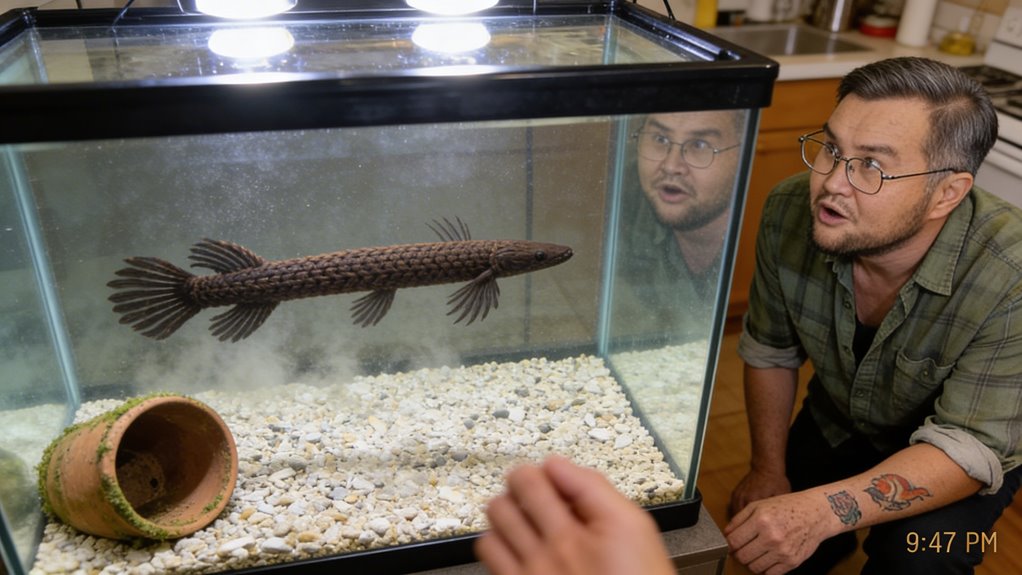
Since they’re shaped like a frayed rope left in water, rope fish earned their common name the moment anyone saw one swim. These freshwater fish—scientific name *Erpetoichthys calabaricus*—slither through Central and West African rivers, their earthy dark-yellow bodies glinting with visible scales and tiny fins.
Aquarium folklore fills glass tanks everywhere with tall tales about their behavior. Some conservation myths wrongly label them endangered, though they’re responsibly collected from Cameroon and Nigeria waters. Don’t believe everything you hear.
In the right tank, rope fish live fifteen to twenty years. They’ll surface for air, wedge into hiding spots, and prove that patience rewards those who wait for twilight activity.
How Big Do Rope Fish Get?
How much room does a rope fish truly need?
Imagine holding a yardstick—that’s how long these gentle giants stretch when fully grown.
Most rope fish reach fifteen to twenty inches in captivity, though wild specimens occasionally exceed two feet. Their breeding growth stays modest in home tanks, where space and diet limit expansion. Young fish display pale, almost sandy coloration patterns that deepen to rich earthy yellow-brown as they mature, like autumn leaves darkening on the branch.
They grow slowly, adding mere inches yearly, so aquarists feel patience rewarded. Watching their transformation builds connection—you’ve witnessed their journey from slender worm to stately serpent.
Minimum Tank Size for Rope Fish
A fifty-gallon aquarium sits like a modest studio apartment for one rope fish, the minimum space where these long swimmers can stretch, turn, and breathe easy.
Every additional rope fish needs ten to fifteen more gallons, room enough so each feels at home rather than crowded.
Tank décor optimization matters deeply here. Soft sand, caves, and driftwood create hiding spots where rope fish rest during daylight hours, feeling safe and unseen. These choices transform a glass box into territory that belongs to them.
When owners provide this space, rope fish reward them with calm, gliding presence—proof that thoughtful preparation builds trust between keeper and kept.
Water Parameters Rope Fish Need to Thrive
The thermometer and test strips sit ready on the counter, tools that tell a story rope fish cannot speak aloud.
These fish need a temperature range of 72–82°F, warm like the African rivers they remember.
Rope fish thrive when temperatures stay warm and steady, mirroring the African rivers flowing through their ancient memory.
Water hardness must stay between 8–22 KH; too soft, and their scales suffer, too hard, and they grow tired.
pH balances between 6.0 and 7.5, neither sour nor sweet.
Stability matters more than perfection. When parameters swing, rope fish feel unsafe, hiding instead of gliding through evening shadows.
Test weekly. Adjust slowly. They’re trusting you with their whole world.
Why Rope Fish Escape: And How to Stop Them
A gap in the aquarium lid, no wider than a pencil, invites disaster. Rope fish wriggle through impossibly small spaces, driven by instinct to investigate.
They escape since they breathe air at the surface, a habit called maze breathing. Poor aquarium design forgets this need, leaving gaps around filters or lights. Tight-fitting glass tops solve this—every crack sealed, every hole blocked.
Lighting cycles matter too. Sudden darkness startles them, sending them hunting for safer waters elsewhere. Gentle dimming at night keeps them calm, keeps them home.
Your rope fish depends on you. Build carefully, and they’ll stay.
Best Substrate and Hiding Spots for Rope Fish
Soft sand forms the foundation rope fish need to feel safe, letting them burrow their snouts and settle in without scraping their smooth, scale-covered bodies.
A proper bur habitat includes four essentials:
- Fine gravel or sand, two inches deep, so they can dig without injury
- Smooth PVC pipes, four inches wide, where three rope fish often rest together
- Live plant clusters, such as Java fern tied to driftwood, breaking sight lines and removing toxins
- Coconut caves, one per fish, positioned near the tank’s shadowed back wall
These features create belonging. Your rope fish will emerge at night, calm and curious, knowing their space holds them.
What Do Rope Fish Eat? A Carnivore’s Diet
Once their sandy hiding spots feel like home, rope fish begin searching for food with quiet determination.
They need proteinival feeding to stay healthy. Bloodworms, chopped meat, and beef hearts give them strength. Insect larvae and frozen meat-based foods also satisfy. Flakes work as extras, not main meals.
Nocturnal hunting drives their appetite. They stir when darkness arrives, tracing scents through the water. This night-seeking feels familiar, like how we crave comfort foods after long days.
Live food brings joy, though it isn’t required. A keeper’s steady hand, offering nourishment after sunset, builds trust between human and fish.
When and How to Feed Nocturnal Rope Fish
Since rope fish sleep as the sun shines, their dinner bell rings after dark.
Nocturnal by nature, rope fish wait for darkness before their evening hunt begins.
A protein rich diet keeps these long, shy swimmers strong for many years.
- Turn tank lights off an hour before feeding, so they know it’s safe to come out.
- Sink meaty foods near hiding spots, where they hunt like patient shadows in a quiet room.
- Offer small portions, enough to vanish in five minutes, no more.
- Skip a day now and then; their slow bellies don’t need daily stuffing.
This feedingurnal feeding schedule builds trust, watcher and watched sharing moonlit moments together.
Best Tank Mates for Rope Fish
What kind of neighbors turn a rope fish’s tank into a home where every creature sleeps easy?
Peaceful mid-sized swimmers like rainbow sharks, bala sharks, and pictus catfish share space without conflict. Dwarf gouramis and honey gouramis drift through plants without stirring trouble. Angelfish glide above as kuhli loaches burrow below, each finding their own corner. These companions offer breeding benefits—calm waters mean less stress, so rope fish display natural courtship behaviors when conditions align. Lighting considerations matter too; dim setups after dusk let nocturnal rope fish emerge confidently, as tank mates adapted to low glow never compete for brightness. Together, they build a quiet community where every inhabitant belongs.
Fish That Stress Rope Fish (Avoid These)
A tight lid keeps a rope fish inside, but the wrong neighbor keeps it hiding.
The wrong tank mates stress rope fish into missing meals, including nocturnal feeding times when they’re meant to eat. Peace rope fish need calm waters, not chaos.
- Tiny fish – neon tetras, ember tetras, anything small enough to swallow disappears fast.
- Aggressive cichlids – African cichlids chase, bite, and never let rope fish rest.
- Oscars – large, pushy, and always hungry for trouble.
- Jack Dempsey – territorial bullies that claim every hiding spot as their own.
Choose friends wisely, and your rope fish will belong.
Rope Fish Breeding: Can You Do It at Home?
Breeding rope fish at home feels like waiting for a shy friend to share a secret—possible, but it asks for patience and the right setting.
These fish rarely spawn in captivity, yet dedicated aquarists succeed by replicating nature’s signals.
Breeding behavior begins with temperature shifts, rising from 75°F to 82°F over two weeks to mimic seasonal warmth.
Climate impact matters deeply; stable warmth triggers courtship, whereas cold stalls everything.
Pairs weave through tall plants like hornwort, depositing eggs in quiet corners.
Hatchlings need separate quarters, tiny and vulnerable.
Hormones sometimes help reluctant spawners.
Success welcomes you into a small, patient community.
Frequently Asked Questions
Do Rope Fish Need Brackish Water?
Rope fish don’t strictly need brackish water, though they’ll tolerate it. Freshwater suits them perfectly fine.
They thrive with pH stability between 6.0 and 7.5, feeling safest when conditions stay steady. A brackish tank isn’t required for their comfort.
Keep their water warm, 72–82°F, and they’ll flourish. Stability matters more than salinity ever does, helping these gentle eel-like fish feel truly at home.
Why Do Rope Fish Gulp Air at the Surface?
Rope fish gulp air at the surface since they possess a lung-like organ that lets them breathe atmospheric oxygen, a survival trick from their African river homes where water sometimes grows stagnant. This surface breathing supplements their gills, boosting oxygen uptake when dissolved levels drop. It’s normal behavior, not distress—like carrying a backup snack. They’re simply using the tool nature gave them, calmly adapting.
How Long Do Rope Fish Live in Captivity?
Rope fish live 15 to 20 years in captivity when people care for them properly, though poor water quality or diet shortens this span. They’re hardy companions, really, but their long lifespan demands commitment. Breeders note that successful breeding strategies require patience, just like building trust with tank compatibility, where peaceful, right-sized neighbors keep everyone calm. Good care rewards aquarists with decades of quiet, nocturnal companionship.
Are Rope Fish True Eels?
No, rope fish aren’t true eels.
True eels belong to the order Anguilliformes, whereas rope fish sit in the bichir family, Polypteridae. This mix-up stems from diet biology myths about their eel-like shape. Their aquarium design needs reflect this distinction: true eels demand different water chemistry, whereas rope fish need air-gulping access and secure lids. They’re ancient fish with lungs, not eels with gills alone. Understanding this builds confidence in one’s tank choices and connects hobbyists who value precision over assumptions. They’ll feel proud knowing their rope fish carries 400 million years of separate evolution, not just an uncanny resemblance.
Do Rope Fish Have Poor Eyesight?
Yes, rope fish have poor eyesight.
Their vision fish, it’s not their strongest sense. In their natural habitat, slow-moving murky rivers in Cameroon and Nigeria, clear sight isn’t vital. Instead, rope fish rely on smell and touch to find diet items like bloodworms and insect larvae. They’re nocturnal, so they navigate dark waters comfortably. This limitation doesn’t bother them; they’ve adapted beautifully to their environment, feeling safe and capable just as they are.
Rounding Up
A fifty-gallon aquarium, soft sand beneath their bellies, and twilight dimness—these simple elements let rope fish flourish. They’ll grow slowly, eat sparingly, and perhapseven breed, if you’re patient.
Keep the lid tight. They’ll wriggle through gaps you never noticed.
These odd, eel-like swimmers ask little: stable warmth, calm water, meaty meals at night. In return, they offer something rare—quiet wonder, the kind that builds when you stop rushing.
Worth the care? Absolutely.