You’ll keep Congo Tetras in a 30-gallon tank minimum, though 40 gallons lets them school freely and shine brightest. They grow three to four inches, males longer with flowing purple fins.
Keep water soft, pH 6.0–7.5, temperature 76°F, and darken the tank with driftwood and floating plants so their iridescent scales glow like stained glass. Feed varied foods twice daily—flakes, frozen brine shrimp, bloodworms—and skip one day weekly.
House them peacefully with Pearl Gouramis, Bolivian Rams, or Corydoras, never bullies or rough gravel that tears fins. Watch for Ich’s white salt spots, treat with heat and salt, and you’ll feel calm satisfaction watching dozens move as one thought.
There’s more ahead about breeding them at home, and what their tiny fry need to thrive.
At A Glance
- Congo Tetras reach 3–4.5 inches, with males displaying longer fins and more vibrant iridescent colors than plumper females.
- House six or more in a 30–40 gallon tank with dark substrate, driftwood, and dim lighting to enhance their shimmering, stained-glass appearance.
- Maintain stable water at 73–79°F, pH 6.0–7.5, and soft hardness, as sudden changes cause stress and color fading.
- Feed varied diet of flakes, frozen foods, and micro-granules twice daily for three minutes to preserve brilliant rainbow hues.
- Keep with peaceful schooling fish like Pearl Gouramis, Bolivian Rams, and Corydoras while avoiding aggressive species or rough gravel substrates.
What Is a Congo Tetra?
You uncover the answer in the Congo Tetra, discovered in 1949 and beloved since the 1970s aquarium hobby trends took hold.
Picture a four-inch ribbon of living light, swimming from the Congo River basin into your home.
A living ribbon of light, swimming from distant waters into your quiet home.
You’ll see iridescent scales, blue, gold, turquoise, that shift like oil on water.
The male’s fins flow purple with white edges, a flag of Congo mythology come alive.
They school together, dozens moving as one thought, and you feel calm watching them.
Their three-to-five-year lifespan teaches patience.
You provide stable water, they reward you with quiet wonder.
Just as adjustable baffle chambers help maintain steady water flow in sumps for sensitive species, consistent conditions bring out their best color and behavior.
That’s the gentle magic you’ve been seeking.
How Big Do Congo Tetras Get?
When you’re choosing a tank for these shimmering fish, you’ll want to know exactly how much space they’ll need.
- Picture a fish the length of your thumb, stretched to three inches
- Imagine males growing slightly longer, with flowing fins like silk ribbons
- See wild specimens reaching four and a half inches, bigger than their tank-raised cousins
- Watch how size reveals itself through color genetics, brighter fish often fuller-bodied
- Notice breeding pairs showing plumper females, ready to scatter eggs
You’ll find captive Congo Tetras measure three to three and a half inches typically. Their growth depends on water quality, food, and room to swim freely. Give them care, and they’ll reward you with size and splendor. To maintain the pristine water quality these fish need for optimal growth, consider using a porous inorganic granule media that supports anaerobic denitrification in your filter system.
What Tank Size Do Congo Tetras Need?
A thirty-gallon aquarium serves as the starting point for keeping Congo Tetras happy and healthy.
You’ll want even more space if you’re keeping six or more, since these fish need room to school and display their shimmering colors.
Tank dynamics matter here. Crowded conditions stress Congo Tetras, making them pale and withdrawn. You can picture how you’d feel in a crowded room, unable to stretch or move freely.
Lighting aesthetics play a surprising role too. Dim corners and floating plants let these fish show their best colors—they shine like stained glass when light filters through water just right.
A forty-gallon setup gives you flexibility, and your fish will repay you with constant gentle motion and those rainbow flashes that first caught your eye.
For those struggling to maintain cool water temperatures in warmer climates, a titanium heat exchanger chiller provides corrosion-resistant cooling essential for keeping Congo Tetras comfortable in their preferred 73–79°F range.
How to Set Up a Congo Tetra Tank
Since these fish hail from the murky, plant-choked streams of Central Africa, you’ll want to start with a dark sandy substrate that mimics the leaf-littered bottom they know. Your substrate selection matters more than you’d think, since it grounds the whole look and calms jittery fish.
- Floating driftwood casts dappled shadows like a forest canopy
- Java Fern clumps sway like underwater performers
- Peat-stained water glows amber in afternoon light
- A gentle bubbler mimics a lazy stream
- Caves of smooth stone offer secret hiding spots
Set your lighting schedule to dim mornings and soft evenings, maybe eight hours daily, and you’ll feel the quiet satisfaction of watching your fish settle into something like home. An Aquarium Light Timer with 24-Hour Program offers precise dimming control to replicate those natural sun rhythms through a wired digital interface.
What Water Parameters Do Congo Tetras Need?
You check your aquarium more carefully, since Congo Tetras feel worry when conditions shift. Keep their temperature at 76°F, right in the middle of 72–82°F, and you’ll see them relax.
Watch for rapidity fluctuations—these quick changes in temperature or chemistry stress their bodies, like when you step into a shower that suddenly turns ice-cold. Their hearts beat faster, their colors fade, and they hide.
pH stability matters most. Hold it between 6.0 and 7.5, aiming low. Test weekly with a simple kit. Hardness stays soft, 3–18 dGH. Calm water means calm fish, shimmering bright.
For more comprehensive monitoring, choose a kit with four parameters in one sweep—testing pH, nitrite, nitrate, and phosphate together—to catch imbalances before they stress your fish.
What Should You Feed Congo Tetras?
What do Congo Tetras eat when the lights come on and they swim forward, hungry?
You’ll want a varied diet that keeps their rainbow colors bright under your aquarium lighting.
- Flakes drifting down like autumn leaves
- Frozen brine shrimp, pink and wiggling
- Bloodworms, thin as red threads
- Tiny pellets, sinking slow through bubbles
- Live daphnia, darting, alive
Feed them twice daily, morning and evening, enough they finish in three minutes. Skip a day weekly. Their stomachs are small, about the size of their eye, so you mustn’t overfeed. Good food means less stress, longer life.
Consider supplementing their diet with slow-sinking micro-granules rich in insect protein to enhance their color and immune support even further.
Are Congo Tetras Peaceful Enough for Community Tanks?
A Congo Tetra’s fins spread like quiet hands in church, and that stillness answers your question before any words do.
You’re looking at a fish that prefers companionship over conflict. Their color dynamics behavior changes in response to stress, you’ll notice, dimming like a lamp left on too long. They school peacefully, weaving through plants without bothering neighbors.
Lighting ambiance matters greatly to their comfort. Harsh, bright lights make them hide; soft, diffused glow brings them out. They feel safe when shadows give them cover.
Keep six or more together. They’ll reward your patience with gentle swimming, and calm mornings watching them feels like peace itself.
Their peaceful nature makes them ideal candidates for larger 20‑gallon curved glass systems where they can school comfortably with ample swimming space.
Which Tank Mates Work Best With Congo Tetras?
Once you’ve seen how Congo Tetras move through water like living prisms, you’ll want neighbors who won’t shatter their calm.
You need peaceful fish, similar in size, who share their gentle rhythm.
Consider these companions:
- Six or more fellow Congo Tetras, their school creating rippling light
- Pearl Gouramis, their soft orange glow floating beneath leaves
- Bolivian Rams, digging through dark sand with purpose
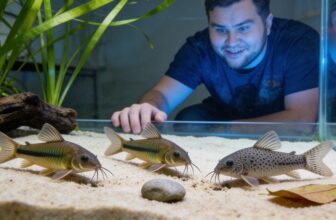
- Sterbai Corydoras, whiskers twitching across enriched substrate
- Apistogramma cacatuoides, pausing to catch lighting effects on scales
Dark substrate enrichment makes everyone feel hidden and safe. Dimmed lighting effects let colors bloom without fear.
A static-cling aquarium background in deep blue or black can enhance these dimmed lighting effects and help your Congo Tetras’ iridescent colors truly shine.
Which Tank Mates Should You Avoid?
Three kinds of trouble live in tanks: fish too fast, fish too mean, and fish too small.
Not all tank mates play nice: speed steals their meal, meanness steals their color, smallness steals their life.
You’ll want to skip aggressive tank mates, those speed demons that zigzag constantly, and tiny creatures that vanish into hungry mouths.
Aggressor species, like certain cichlids, bully your Congo Tetras until they hide. Their stress builds, you see, and stress steals color.
Fast swimmers outcompete them for food.
Small shrimp or fry become snacks.
Watch your bright lighting too—harsh beams expose skittish fish.
And mind your substrate choice; rough gravel tears their flowing fins.
Peace brings out their rainbow best.
Consider your tank’s filtration flow rate carefully, as excessive water movement from powerful filters can exhaust these gentle swimmers and damage their delicate fins.
Why Do Congo Tetras Lose Their Color?
Your Congo Tetras glow like living opals when they’re at ease, but that shimmer can vanish almost overnight, leaving them pale and worried-looking.
Stress drains their rainbow sheen faster than you’d think.
A cramped tank feels like a too-small coat, pinching their spirit.
- *Dull fins* hanging like wet laundry
- *Faded stripes* melting into gray mist
- *Clouded eyes* losing their bright morning gleam
- *Hunched bodies* hovering near the dark gravel
- *Scattered schooling*, each fish drifting alone
Diet change shocks their system, too. Suddenly new flakes confuse their guts, stealing nutrients that paint their scales. You must shift food slowly, mixing old and new like blending two rivers, giving them time to adjust their tiny internal chemistry.
PAR importance plays a crucial role in their coloration, as proper lighting directly correlates with fish health and vibrant pigmentation, much like the coral reef systems these principles derive from.
How to Treat Ich in Congo Tetras
Identifying and Treating Ich in Congo Tetras
Where do those tiny white specks come from, the ones that suddenly dust your Congo Tetra’s fins like spilled salt? That’s Ichthyophthirius multifiliis, a tiny parasite that burrows into skin, causing those salt-like spots.
| Stage | What You See | What You Do |
|---|---|---|
| Early | Few white dots, mild scratching | Begin quarantine treatment immediately |
| Middle | Fin clamping, labored breathing | Add aquarium salt, 1 teaspoon per gallon dissolved slowly |
| Late | Heavy coating, isolation at bottom | Combine heat (82°F) with proper salt dosage and medication |
Move infected fish to a separate tank—this quarantine treatment protects healthy schoolmates. Raise temperature gradually to speed the parasite’s lifecycle. Maintain salt dosage consistently for fourteen days, even after spots disappear. Test water daily; clean conditions reduce stress, helping your Congos recover their rainbow shimmer.
How to Breed Congo Tetras at Home
Setting Up a Spawning Tank
Once you’ve watched your Congo Tetras flash their rainbow colors at feeding time, you might wonder what it takes to see tiny versions darting through the water.
You’ll need a separate 20-gallon tank with peat moss on the bottom.
Breeding triggers include raising the temperature to about 77°F and dimming the room.
Lighting effects matter too—turn off the tank lights completely when you want them to spawn.
Add breeding mops and floating plants so eggs have somewhere safe to land.
Remove the parents right after spawning, or they’ll snack on the eggs hiding in the moss.
What to Feed Congo Tetra Fry
Feeding Congo Tetra Fry from Day One
How Long Do Congo Tetras Live?
Average Lifespan and Longevity
A small clock ticking on your kitchen wall reminds you that time matters, even for fish.
You’ll find Congo Tetras live three to five years in your care, though longevity trends show rare individuals reaching seven. Their color genetics work like inherited recipes, passing down that rainbow shimmer from parents to fry.
Picture these moments:
- Morning light catching violet fins through glass
- A school pausing, silver sides flashing gold
- Gravel sifting gently under steady currents
- Your test strip matching that perfect pH number
- Old age bringing faded hues, like memory itself
Stable water, good food, and calm tankmates stretch their years.
Frequently Asked Questions
Do Congo Tetras Need a Lid on Their Tank?
You don’t strictly need a lid, but you’ll want one since they’re skittish jumpers. Check your water compatibility and keep water hardness stable at 3–18 dGH to reduce stress that triggers leaping.
Can Congo Tetras Jump Out of Open Aquariums?
Yes, they can. You’ll risk losing them if you ignore their jumping behavior, as they spook easily and launch from the water. Open top risks include injury, death, and stress from escape attempts—so cover your tank.
Why Do Male Congo Tetras Have Longer Fins?
You’ll notice male Congo Tetras exhibit striking fin length differences from females, a clear case of sexual dimorphism. Their elongated fins serve mating display purposes, signaling reproductive fitness and establishing dominance hierarchy through visual communication during territorial behavior and competitive encounters.
Are Congo Tetras Difficult for Beginners to Keep?
You’ll find Congo Tetras moderately challenging as a beginner since they demand stable water chemistry and ample tank swimming space; their stress sensitivity means you can’t slack on maintenance or skimp on group size.
Do Congo Tetras Prefer Dim or Bright Lighting?
You’ll want dim lighting for your Congo Tetras, as bright lights stress them and dull their iridescent colors. Your habitat design should include floating plants to diffuse light and create the shaded conditions they naturally prefer.
Rounding Up
Your Congo Tetra school rewards patience with living light. Keep your water steady, your group large, and your filter gentle. Watch for that flash of violet when the afternoon sun hits the tank just right. Remember, these fish need friends to show their best colors, nine at least, swimming together like one creature. You have the tools now. Go build something beautiful, and enjoy the quiet pride that comes from keeping them well.