You hold a small, dark fish with a bright orange fin, and you wonder if your aquarium can truly become its home. That fish needs space—at least 50 gallons—and you might feel surprised by how much room one “shark” demands. The rainbow shark is not a shark at all, but a type of carp with a fierce temper hiding in its streamlined body. You will need sturdy plants, caves, and driftwood to give it boundaries, or it will chase tankmates until dawn. The water must stay steady between 72 and 79 degrees Fahrenheit, or stress will creep in like a slow leak. You are standing at the edge of something more complex than the pet store suggested, and that is exactly where the real questions begin.
At A Glance
- Provide a 50‑gallon minimum tank with caves and plants to manage territorial aggression.
- Keep water at 72–79 °F, pH 6.5–7.5, and maintain excellent oxygenation through surface area.
- Feed small portions 2–3 times daily using quality flakes, algae wafers, and frozen foods.
- House alone or in groups of five or more; avoid red‑finned or similarly colored companions.
- Perform weekly water changes and monitor ammonia, nitrite, and nitrate to prevent disease.
What Is a Rainbow Shark? (And Why It Isn’t One)

What does a rainbow shark look like when you first spot one in a pet store?
You’ll see a sleek, dark fish, about six inches long, with fins glowing like embers.
It isn’t a true shark. It belongs to the minnow family, Cyprinidae, native to sandy rivers in Myanmar, Thailand, Laos, and Malaysia. You’re looking at *Epalzeorhynchos frenatum*, the red-finned or ruby shark.
Not a true shark, but a fiery-finned minnow from Southeast Asia’s sandy rivers—*Epalzeorhynchos frenatum*, the ruby shark.
Males shimmer brighter, with thin gray tail stripes. Females grow rounder, carrying eggs.
In its native habitat, breeding timing follows seasonal floods. Captive breeding proves rare, needing caves, gravel beds, and precise water conditions. Most aquarists never witness it.
You belong among careful keepers who respect such limits.
How Big Do Rainbow Sharks Get?
Most of them reach about six inches from nose to tail, roughly the length of a grown man’s hand.
That’s the size you’re planning for, though some giants stretch to eight inches, like finding an oversized zucchini in your garden.
You’ll notice males flash brighter *bre coloration* on their fins, a signal you can read like a mood ring. Females grow thicker, rounder, storing energy for future *breeding behavior*.
They mature around four inches, keeping you patient through years of growth. Your care shapes their final size, clean water and space letting them fill out like a well-tended plant reaching toward light.
Are Rainbow Sharks Too Aggressive for Your Tank?
Since you’re holding a gray fish with cherry‑red fins in your mind, you need to know what happens when that pretty package gets its own territory.
Your rainbow shark claims the bottom like a landlord with a deed.
A smart tank layout spreads them out, so they don’t guard one cramped corner.
| Aggression Trigger | Your Solution |
|---|---|
| Small tank space | 50+ gallons, 4 feet long |
| Mirror‑colored fish | Skip red‑finned tank mates |
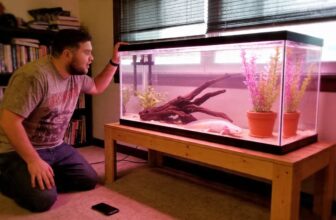
| No hiding spots | Caves, plants, driftwood |
| Lonely breeding behavior | Keep five+ or just one |
You’ll feel relief watching peace replace chasing.
What’s the Minimum Tank Size They Actually Need?
A 10-gallon tank fits on your desk like a lunchbox, but your rainbow shark needs room to roam. These fish, native to Southeast Asian river systems with sandy bottoms and dense vegetation, grow six inches long—sometimes eight—and they swim with purpose. You will watch gray bodies flash with red fins, a visual signal of health that demands space to display.
cramped quarters trigger aggression, especially toward fish that share their silhouette or color pattern. A single rainbow shark requires 50 gallons minimum, with a footprint of at least four feet long by 18 inches wide. This floor space creates territories, reduces stress-induced behaviors like fin-nipping, and allows you to observe natural foraging across the bottom. Water chemistry stabilizes more readily in larger volumes; your nitrogen cycle buffers against ammonia spikes when you miss a water change by a day.
For a breeding pair, or if you keep five or more individuals to distribute aggression, 75 gallons becomes your baseline. Surface area matters—sixty square inches per fish supports oxygen exchange at 72–79°F, and your heater maintains this without cycling on and off hourly. Sand substrate, driftwood caves, and floating plants reduce visual barriers, which lowers cortisol in measurable ways. You are building habitat, not just containing a pet.
Four measurements to anchor your planning:
- 50 gallons for one adult, verified by tank manufacturers’ volume ratings, not aquarium store labels
- 75 gallons for social groups or breeding pairs, installed before introducing any fish
- 4 feet length × 18 inches width as non-negotiable footprint, regardless of advertised height
- 60 square inches surface area per individual, calculated by multiplying length by width, then dividing by fish count
Choose once for longevity.
What Water Conditions Keep Them Healthy?
Your test strips sit in the drawer like forgotten promises, but your rainbow shark feels every number you ignore.
You must maintain pH between 6.5 and 7.5, that’s the acidity scale, where zero is very sour and fourteen is very bitter, seven is perfect balance. P hardness, or general hardness, measures minerals dissolved in water; keep it moderate so your fish’s scales stay strong without cracking.
Temperature matters too. You hold steady between 72 and 79 degrees Fahrenheit, like a warm spring day, using a reliable heater.
Oxygenation keeps your rainbow shark breathing easy; you provide several inches of surface space for air exchange at the top.
Good water supports healthy growth rate; cramped chemistry stunts bodies and sours moods.
Clean conditions bring disease prevention; you change water weekly, treating chlorine with drops so gills don’t burn.
You’re building a home where your fish thrives, not merely survives.
How Should You Arrange Their Tank to Stop Fighting?
When you look at your aquarium, you’re really looking at a piece of territory your rainbow shark will defend with surprising fierceness.
Territory mapping means you break one big space into smaller, separate areas your shark can call its own. Use driftwood, rocks, or caves to build walls between zones. Lighting zones help too—bright spots for exploring, dim corners for resting. Your fish feels safer when it chooses where to be.
Divide your tank into claimed zones using hardscape and light—your shark needs walls to feel safe choosing where to be.
Here’s how you create peace:
- Add at least three caves spaced far apart, so each fish claims its own bedroom.
- Plant thick greenery along the back and sides, making natural fences.
- Keep lights low and varied, with shadows where they hide.
- Leave the middle open, a shared yard for swimming together.
Which Fish Can Safely Share Their Space?
The caves you placed, those three stone bedrooms spaced wide apart, now sit waiting.
You need compatible tank mates who swim high, not low. Rasboras, danios, gouramis, loaches, rainbowfish, and barbs understand the deal: they stay mid-level or above, you avoid trouble. Bottom-dwellers like red tail sharks or catfish feel like intruders in your rainbow shark‘s claimed floor space, and fights follow.
Add your other fish first, then introduce the rainbow shark last. This order matters, like letting guests settle before the host arrives.
For compatible breeding behavior, you’ll need 75 gallons, hiding spots, and gravel for eggs. Patience rewards you with belonging.
What Should You Feed Them: and How Often?
A flake of food drifts down like a leaf on a slow stream, and your rainbow shark notices. You hold the power to nourish this creature properly.
Feeding frequency matters twice or thrice daily, small portions they finish in minutes. Too much food fouls their water, too little leaves them hungry. Nutrient balance means variety—flakes, algae wafers, frozen bloodworms, plus peas or spinach you chop small. You’re building trust through each meal.
You belong to a community of careful keepers who understand: what enters the tank shapes everything living within. Feed with intention, watch them thrive.
How Long Do They Live? (And What Health Issues to Watch For)
If you stay attentive through the years, a rainbow shark will accompany you four to six years, sometimes reaching eight with excellent care.
Bre lifespan troubles emerge when water grows dirty, so you test weekly, you change water, you guard against ammonia spikes.
Disease susceptibility rises with stress, cramped tanks, sudden shifts in temperature. Watch for ich, white spots like salt grains, or fin rot, where edges fray like old fabric.
You notice quickly, you treat immediately, you keep your fish among community rather than alone. Your steady presence, small daily acts, extend years together.
Is Your Rainbow Shark Male or Female?
How can you tell whether your rainbow shark is a boy or a girl? You look at the fin pattern differences and body shape, since sex identification methods aren’t tricky once you know where to check.
Sexing rainbow sharks comes down to fin patterns and body shape—simple once you know where to look.
- Look at his tail—males carry thin gray lines, females don’t.
- Check her belly—females grow thick and rounded, males stay slender.
- Watch his fins—males flash brighter red, especially when claiming space.
- Compare their size side by side when they’re four inches long or more.
You’re not just labeling fish; you’re learning who shares your tank.
Do Albino Rainbow Sharks Need Different Care?
Since albino rainbow sharks look so different, you might worry they need special treatment, but their care stays nearly the same as their gray cousins. Albino genetics simply remove dark pigment, leaving white or pink bodies with familiar red fins. You feed the same foods, though a coloration diet with carotenoid-rich options like shrimp helps their reds stay vivid. Water temperature, tank size, and hiding spots match standard requirements. You belong in this hobby whether you choose classic gray or striking white varieties. Trust your setup, watch your fish thrive, and enjoy the community you’ve built together.
Frequently Asked Questions
Can Rainbow Sharks Jump Out of Uncovered Aquariums?
Yes, rainbow sharks can jump out of uncovered aquariums.
You must secure a tight-fitting lid, as these active fish dart toward the surface when startled. Aquarium safety depends on barriers you install yourself, since jumping behavior peaks during stress or poor water conditions. You’ll protect your fish by covering every opening, checking clips weekly, and maintaining calm water parameters below 79°F.
Do They Need Special Lighting for Their Red Fins?
Their red fins don’t need special lighting, but you’ll see those colors better with standard full-spectrum bulbs.
Good fin fin care means you provide steady light, 10–12 hours daily, so your fish feels secure and shows its best colors. Diet variations help too—foods with carotenoids, like brine shrimp, keep those fins bright. You’re creating a home where your rainbow shark thrives, and that care reflects back in vivid, healthy fins.
Are Rainbow Sharks Legal to Own Everywhere?
You can’t own rainbow sharks everywhere, friend. Some places have legal restrictions that stop you from keeping them at all. You might need import permits to bring one across borders, too. Check your local laws before you buy, so you don’t face fines or lose your fish. Rules change by country, state, even city, so do your research first.
Can You Keep a Single Rainbow Shark With No Tank Mates?
Yes, you can keep a single rainbow shark in a solo tank, and many people do. When the fish lives alone, you’ll manage color dynamics more easily since no rivals trigger stress-fading. You’ll adjust feeding frequency to twice daily, watching portions carefully. You’ll monitor water parameters weekly, keeping pH at 6.5-7.5 and temperature steady at 72-79°F.
You’ll practice health monitoring by checking fins for tears and watching swimming patterns each morning.
You’ll add habitat enrichment like caves, driftwood, and plants, creating territories within the 50-gallon minimum space. This prevents boredom, which fish feel as restless pacing.
The single life suits this fish naturally. In rivers, they often feed alone along sandy bottoms. You’re replicating that independence, not denying companionship the fish never sought. Your consistent presence becomes the companionship—you’re the reliable pattern in its world.
A solo tank demands more attention from you, but you’ll find it’s manageable. You’re building a small ecosystem where one bright fish thrives under your care, and that’s enough.
Do Rainbow Sharks Recognize Their Owners?
Your rainbow shark won’t know your face like a dog might, but it’ll learn to connect your owner behavior with food and safety. Consistent movement near the tank, gentle tapping before feeding, these patterns become familiar.
Over weeks, you’ll notice it emerging faster when you approach, less skittish than with strangers. This recognition grows from stable habitat preferences, too, clean water and hiding spots where it feels secure enough to observe you. Watch closely. You’ll see curiosity replace fear, a kind of trust that builds slowly, like friendship does between careful people. It feels nice, being noticed, even by a fish.
Rounding Up
A fifty-gallon tank, drifting plants, and steady water tests give your rainbow shark a calm home. You will watch its red fin slice through currents like a small flag of courage. Keep one alone, or gather five friends, never two or three. Feed them well, change water weekly, and they will stay with you five to eight years. That is the quiet promise of good care, kept.