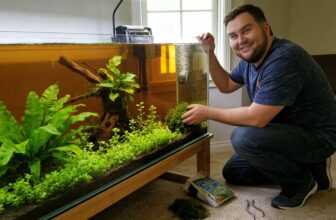
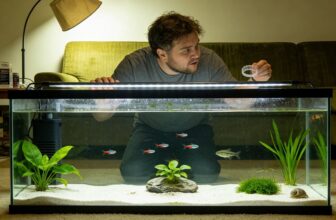
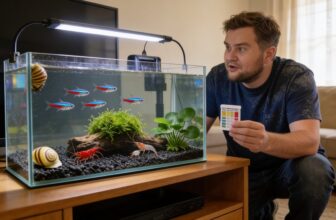
You’ll recognize Anacharis by its bright green stems and leaves arranged in neat whorls of four to six, like clasped hands around the stalk. This fast-growing plant reaches six to eight inches in stores but can stretch three feet in the wild, with fine white roots waving beneath.
Keep your water between 72 and 78 degrees Fahrenheit, with a pH of 6.5 to 7.5, and anchor stems two inches deep in gravel or sand. Give it eight to ten hours of moderate light daily, trim twice monthly above leaf whorls, and watch it release oxygen bubbles each morning as it absorbs ammonia that would harm your fish.
Pair it with tetras, cory cats, or cherry shrimp, but keep goldfish and cichlids away—they’ll shred it like hungry lawnmowers. The following sections hold every practical detail you’ll need.
At A Glance
- Keep water temperature between 72–78 °F with pH 6.5–7.5 and soft to moderate hardness.
- Provide moderate lighting for 8–10 hours daily, using roughly 2 W per gallon to prevent algae.
- Plant in sand or gravel at least 2 inches deep, trimming stems twice monthly to maintain density.
- Propagate by cutting 5‑inch stems and inserting bottoms into substrate, where roots develop within a week.
- Avoid goldfish, cichlids, and silver dollars; instead pair with tetras, corydoras, shrimp, or snails.
What Is Anacharis and Why Add It to Your Tank?
Anacharis is a plant you’d recognize by its bright green stems, although you’ve never heard the name before.
You might know it as waterweed or Brazilian waterweed, names that describe how it grows. This plant comes from warm rivers in Brazil and Argentina, but you’ll find it thriving in tanks worldwide.
Its stems reach six to eight inches in stores, although wild plants stretch three feet. Leaves circle each stem in neat whorls of four to six, like hands clasping around a pole. You’ll see roots, fine as baby hair, waving underneath.
Benefits for Your Aquarium
Anacharis transforms your aquarium aesthetics, creating underwater forests or gentle accents wherever you place it. Fish dart through its branches, feeling safe. Shrimp cling to its leaves, grazing peacefully. You’re building a small world where creatures hide and rest.
Beyond beauty, you’ll appreciate its role in nutrient cycling. The plant absorbs fish waste and extra food, cleaning water you’d otherwise change constantly. It pulls in nitrates, the stuff that harms fish, and uses them to grow greener. You’re letting nature do work you’d struggle to manage alone.
Oxygen bubbles from its leaves, tiny pearls rising each morning. You watch, and you feel calm.
If you prefer plants requiring no pruning, no rot, and simple rinse maintenance, artificial aquarium plants offer a durable alternative that maintains color and structure without nutrient cycling demands.
How to Spot Healthy Anacharis (and Fake Look-Alikes)
Walking into a pet store, you’ll face rows of green stems floating in plastic tubes, and you need to know which ones are worth your money.
Healthy Anacharis shows bright, even green from tip to root, like fresh grass after rain. You’ll spot four to six flat leaves circling each node in neat whorls, not jumbled or sparse. The stems feel firm, not mushy, and they smell clean like a pond, not rotten. If you’re setting up a sump system, maintaining water flow distribution through spray bars can help recreate these gentle pond conditions in your aquarium.
Bright, firm stems with neat whorls of flat leaves and a clean pond smell mark healthy Anacharis worth buying.
Watch for soil algae clinging to stems—that’s a sign of stagnant water, not real health. Some sellers pack dead plants with fertilizer, creating nutrient spikes that fool you with temporary green. Real Anacharis roots are thin and white, not brown or falling off.
Don’t trust plants with black spots or dark, crumbling leaves—that’s decay, not rest. If stems look too perfect, too uniform, ask yourself what they’re hiding. Trust your eyes, your nose, and your gentle touch.
What to Check When Buying Anacharis in Stores
Before you hand over your money, you’ll want to roll up your sleeves and look at what’s really inside those plastic tubes.
You’re checking for stems that stand straight without browning, leaves that feel crisp rather than slimy, and roots that look white or pale, not blackened. A store market often sells bundles rubber-banded tight, which squishes stems and invites rot, so pick ones with looser bands.
You’ll feel frustrated if you skip price comparison, since healthy six-inch bunches vary widely between shops. Trust your eyes over labels. Paying more doesn’t guarantee better plants, and saving a dollar on damaged stock means you’ll replace it twice.
Avoid epoxy putty containing petroleum or chemical residues that could leach into tank water and harm delicate aquatic plants.
Best Tank Sizes and Backdrop Placement for Anacharis
When you set up a home for Anacharis, you’re really choosing how much room its roots will get to wander and how tall its stems can stretch before they bump the glass.
You can use any tank, though ten to fifteen gallons works as a practical minimum.
Larger volumes let you build layered aquarium scenery with depth and hiding spots.
Position Anacharis at the rear wall.
This placement creates lighting contrast: bright stems against a darker background draw your eye inward, making the tank feel deeper than it is.
Your fish will appreciate the cover, too.
For smaller setups, consider a rimless edge design with 45° beveled edges to maximize your viewing area and eliminate visual obstruction of the dense stem growth.
- Ten to fifteen gallons serves as your starting point
- Larger tanks showcase denser, more dramatic aquarium scenery
- Rear placement maximizes lighting contrast and visual depth
- Tall stems need vertical clearance, or they’ll crowd the surface
Substrate Types That Anchor Anacharis Roots
Sand, gravel, or pebbles—your substrate choice matters since Anacharis roots need something solid to grip as they weave their fine, thread-like anchors through the grains.
You’ll feel relief knowing simple gravel works beautifully.
Two inches minimum depth lets those wispy roots spread wide, creating a dense network for strong root anchoring.
You might wonder about fancy options.
A nutrient-rich base layered beneath coarse gravel supports robust growth without overwhelming you.
Soilstrate chemistry affects how roots absorb minerals, so test your water monthly.
You don’t need perfection here.
Stability and patience reward you as roots slowly establish their hold, giving your plant confidence to thrive.
For added aquarium background depth, consider a dark vinyl backdrop that makes the green foliage pop visually.
How to Plant and Secure Anacharis Stems Step by Step
Your substrate waits, ready, and now you hold a bundle of Anacharis stems in your hands.
Remove the rubber bands carefully; they squeeze too tight and rot the stems.
- Separate each stem gently, like untangling thin green ribbon
- Trim cracked ends with clean scissors, leaving healthy green behind
- Push each stem two inches deep into gravel, fingers pressing firm
- Space them finger-width apart, shorter stems forward for stem aesthetics
Stem anchoring takes patience. Roots will spider out, invisible threads locking into place. You’ll feel doubt those first days, watching them sway. Trust the process. In two weeks, tug gently—resistance means home.
Position your planted stems away from high-traffic environments where accidental bumps could disturb their delicate anchoring, allowing the roots time to establish undisturbed.
Water Conditions That Keep Anacharis Healthy
Three numbers matter most: the thermometer reading, the pH strip color, and the watts glowing above your tank. You keep your Anacharis happy when you lock these in place.
You aim for 72 to 78 degrees Fahrenheit on that thermometer—think room temperature on a mild spring day. Your pH strip should rest in the green zone, between 6.5 and 7.5, which means neither sour nor soapy water. Anything from 60 to 82 degrees works in a pinch, so don’t worry if you drift a little.
Water hardness sits comfortably at 3 to 8 kDH, soft enough that minerals don’t choke the stems. You check these weekly with simple test kits from any pet store. For planted freshwater setups, the Seachem Equilibrium Kit offers a non-phosphate, three-part mineral foundation that builds custom alkalinity from scratch while keeping your pH variable between 5.0 and 8.5.
Nutrient balance means feeding your plant without overloading the tank. You add liquid fertilizer sparingly, watching for pale leaves that beg for more food. Carbon sequestration happens naturally as your Anacharis pulls carbon dioxide from the water, locking it into new growth like a tiny green vault. You help this along by keeping surface agitation gentle, letting gas exchange flow steady.
You anchor your stems, wait for roots to grip, and trust the chemistry to follow.
How Much Light Anacharis Needs (and Algae Risks)
Since light is the engine that drives every leaf, you give your Anacharis about two watts of bulb power for every gallon of water in your tank.
Your light intensity sits at moderate levels, bright enough for photosynthesis but gentle enough to prevent trouble.
Watch your lighting duration carefully—you’ll want eight to ten hours daily, never more. Excessive light sparks algae growth that coats your stems in green fuzz. For persistent algae buildup on glass surfaces, a floating magnetic cleaner prevents loss in substrate if the halves separate during maintenance.
Keep these balances in mind:
- Stick to eight-hour light cycles, even if your tank looks prettier illuminated longer
- Raise lights higher, or add floating plants, to soften brightness
- Check nutrient balance weekly; extra fertilizers feed algae, not just your plant
- Dimmer periods let your Anacharis rest, like you after a long day
How to Trim Anacharis for Fuller, Tighter Growth
Water reaches the surface faster than you might expect, and that’s when you’ll know it’s time.
Stem care trimming keeps your Anacharis happy and compact. You’ll want to cut two inches below the surface, right above a whorl—that’s the ring where leaves sprout. Use sharp scissors, make a clean slice, and the plant will heal without fuss.
Regular cutting twice monthly increases growth density, creating that thick forest look you’re after. Don’t worry about perfect technique; Anacharis forgives mistakes.
Remove any side shoots that crowd neighbors, or keep them for a fuller middle section. You’re shaping living architecture, and patience rewards you.
If you’re keeping your Anacharis in a smaller desktop setup, remember that LED strength must support live plants for healthy sustainment just as much as careful trimming does.
How to Propagate Anacharis From Cuttings
Those trimmings you’ve been collecting aren’t garden waste, they’re tickets to new plants sitting right in your hand.
DIY propagation with Anacharis feels like magic, but it’s just stem rooting doing its quiet work. You’ll watch cuttings become full plants in days, not weeks.
Here’s how you turn scraps into forests:
- Snip stems five inches long, minimum — shorter ones struggle to anchor
- Cut just above a leaf whorl, that ring of leaves around the stem
- Push the bottom two inches into substrate, gently but firm
- Trimmed tops grow roots downward while cut bottoms sprout new tips upward
Most stems root within a week. You’ll feel patience rewarded when new growth unfurls, green and certain.
To protect your air pump during propagation setups, install a check valve inline to prevent back‑siphoning if power fails while you’re tending to new cuttings.
Fish and Shrimp That Thrive With Anacharis
Anacharis builds underwater neighborhoods where tetras dart, catfish root, and shrimp safely raise their young among sheltering stems.
When you lower a bundle of Anacharis into your tank, you’re not just adding a plant, you’re building a neighborhood where certain neighbors feel right at home.
You’ll find Neon Tetras and Black Skirt Tetras darting through the stems, feeling safe among the greenery.
Cory Catfish root gently below, stirring sediment without uprooting your careful work.
For shrimp breeding, nothing beats this shelter. Cherry shrimp tuck their babies among the leaves, hiding tiny ones from hungry mouths. The dense growth gives them cover, exactly what’s needed for success.
Fish compatibility matters here. Small, peaceful species thrive. They don’t trample, don’t strip leaves, don’t destroy what you’ve built.
Consider snails, too. They clean slowly, harming nothing.
You create balance.
Which Fish Will Destroy Your Anacharis?
Fish That Will Destroy Your Anacharis
Some neighbors don’t know how to treat nice things. You feel disappointed when your Anacharis vanishes overnight.
The plant-eater problem starts with mouths built for tearing vegetation. You must recognize these tankmates before planting.
- Goldfish rip stems apart, leaving floating debris everywhere
- Most Cichlids devour leaves like salad, using roots as tug-of-war toys
- Silver Dollars strip foliage bare within forty-eight hours
- Koi treat submerged growth as an all-you-can-eat buffet
These species reverse algae control by destroying your living filter. You’ll watch your green helper disappear while the fish predator prospers.
Choose peaceful tankmates instead.
How Anacharis Oxygenates Your Tank and Reduces Maintenance
Invisible Oxygen and Easier Tank Care
Your aquarium water holds invisible gifts you’ll never see with your eyes alone. Tiny oxygen bubbles cling to Anacharis leaves each morning, proof of the oxygen exchange happening as you sleep. You’ll watch stems release these pearls of air, turning sunlight into dissolved oxygen your fish breathe.
You’ll find this plant asks little of you, making it genuinely low‑maintenance. Its rapid growth pulls ammonia and nitrates from your water, naturally stabilizing conditions you’d otherwise test and adjust weekly. Dense foliage traps debris before it clouds your tank. You’re grateful, perhaps quietly, for work you don’t have to do.
Yellow Leaves, Melting, and Algae: Solving Anacharis Issues
Yellow leaves catch your eye first, floating like tiny warning flags among green stems, and you know something’s gone wrong beneath the surface.
You’re seeing nutrient deficiency, a silent thief stealing your plant’s health. When leaves melt into mush, you’re witnessing rot from crowded stems or poor anchoring.
You’ll spot algae like fuzzy green sweaters wrapping stems when light burns too bright, too long.
- Test water weekly for missing minerals
- Trim yellowing stems immediately
- Reduce lighting to eight hours daily
- Space stems two inches apart for airflow
You’re preventing nutplant disease through watchfulness. Your careful eye transforms trouble into thriving green life.
Frequently Asked Questions
Does Anacharis Grow Floating or Must It Be Planted?
You can grow anacharis either floating or planted, depending on your preferred planting method. Its adaptable growth form lets you anchor stems in substrate or let them drift freely, though planting typically yields denser, more controlled results.
How Fast Does Anacharis Grow per Week?
You’ll see light growth rates of 1–2 inches weekly under moderate conditions, though seasonal variation can push this faster in summer warmth and brighter light, or slower when temperatures drop below the ideal range.
Can Anacharis Survive in Outdoor Ponds?
You’ll find anacharis thrives in outdoor ponds when outdoor temperature stays within its 60‑82°F tolerance range, and it actively benefits pond ecology by oxygenating water, absorbing nutrients, and providing shelter for fish and beneficial microorganisms.
Does Anacharis Need CO2 Injection to Thrive?
You don’t need CO2 injection for anacharis to thrive, though CO2 benefits its growth rate and density. You’ll want moderate lighting requirements of about 2 watts per gallon, and it’ll flourish through nutrient absorption from the water column.
Will Anacharis Flower in Aquarium Conditions?
You won’t see anacharis complete its flowering cycle in your aquarium, as the small white blooms require specific conditions rarely met indoors. Focus instead on its substrate preference—two inches of nutrient-rich base keeps it thriving.
Rounding Up
You’ve got the tools now, friend. Grab a bunch of Anacharis, trim it weekly, and watch your tank come alive. Your fish will breathe easier, your water will stay clearer, and you’ll feel that quiet pride of growing something green. Start simple, stay patient, and let this plant do its work. That’s all there is to it.