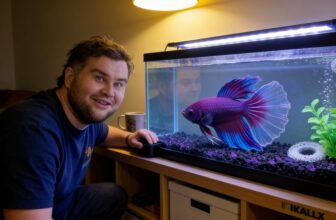
Keeping loaches means embracing chaos in a long, low tank with soft sand—gravel shreds their barbels, so don’t chance it.
You’ll need a group of five or more; solo loaches hide and sulk.
Water should stay 75–82°F, pH 6.5–7.5, with zero ammonia.
Feed sinking foods, blanched veggies, and live treats like blackworms.
Skip floating flakes entirely.
For chain or hillstream loaches, add strong current and an airstone.
Stick with these specs, and your loaches will thrive instead of just survive.
Stick around for the full species breakdown.
At A Glance
- Choose long, low tanks with soft sand substrate to protect loach barbels.
- House loaches in groups of five or more to prevent stress and fading.
- Maintain water temperature 75–82°F, pH 6.5–7.5, and zero ammonia.
- Provide one hideout per loach using caves, driftwood, or PVC pipes.
- Feed varied sinking foods like live blackworms, frozen bloodworms, and blanched vegetables.
Why Tank Shape and Substrate Matter More Than Size
As you’re stressing over tank gallons, your loach is actually worrying about something else entirely—whether it can touch the bottom without scraping its belly.
That’s where shape and substrate steal the show.
Skip tall tanks. Loaches want length, not height—more floor to patrol. Think long, low, like a 20-gallon long instead of a standard.
Now the ground: sand, not gravel. Soft, sandy substrate lets them dig without shredding their sensitive barbels—those whisker-like feelers.
Gravel’s a no-go; it scrapes and traps waste.
You’re building their home, their safe zone. Get the floor right, and they’ll thank you by acting like loaches.
Just like twig catfish, a dark, soft sand substrate supports natural foraging and prevents injury to sensitive body parts.
What Water Parameters Keep Loaches Healthy and Stress-Free
- Temperature: Most loaches chill between 75–82°F. Hillstream species prefer cooler 68–75°F, or you’ll stress them out fast.
- pH: Stick to 6.5–7.5. They’re not picky, but sudden swings send them into hiding for days.
- Ammonia/Nitrite: Both must be zero. Nitrates under 20 ppm. Test weekly—subscription strips help you stay accountable.
Use test strips and wait three minutes for full color development to ensure accurate readings.
Your loaches deserve a home that feels like yours. Consistency is your secret weapon.
Set Up Hiding Spots the Right Way
Why do loaches love a good cave? They’re skittish by nature, so a proper hideout makes them feel safe.
Place caves, driftwood, and PVC pipes around the tank’s perimeter—never the open center.
Bury them slightly in soft sand to mimic natural riverbanks.
Live plants like Java fern add cover and grazing spots.
A single, bare cave won’t cut it; you need one per loach, spaced out to avoid squabbles.
For breeders, breeding boxes can also serve as temporary isolation spaces for skittish fry or injured adults.
Remember, a hidden loach is a happy loach, and a happy loach is more likely to come out and entertain you.
Your tank, their sanctuary.
How Many Loaches Should You Keep Together?
So, how many loaches should you keep together? The short answer: more than you think. These fish need a crew to feel secure and show their quirky personalities.
The short answer: more than you think. These fish need a crew to feel secure.
- Small loaches like Kuhlis need groups of 5 or more in a 15‑gallon tank. They’re shy solo, but a bunch turns them into playful noodles.
- Mid‑sized Yo‑Yo loaches thrive in groups of 5‑6 minimum, with 40 gallons for the first fish and 15 extra per addition. They bounce around like they own the place.
- Larger Clown loaches require groups of at least 5, but need 30 gallons per fish. They grow to 12 inches, so plan big or plan to upgrade.
A lone loach is a stressed one. They belong with their kind, so don’t skimp on numbers—you’ll get happier, healthier fish that actually act like loaches. Ensure you provide ample caves and rockwork to mimic their natural territory and reduce stress.
Why Stable Water Quality Is Critical
Picking the right number of loaches matters, but it won’t save them if the water’s a wreck.
Loaches have thin, partially embedded scales—think of them as armor with chinks. That makes them disease‑prone, so ammonia or nitrite spikes hit them hard.
You’ve got to keep parameters stable, using a mature tank and consistent water changes.
Filter intake covers? Non‑negotiable for Kuhli loaches.
A strong current? Essential for hillstream species.
Monitor temperature, especially for cool‑water types.
The bottom line: stable water equals happy loaches. Master that, and you’re part of the club.
Mastering water quality includes using a mature tank that is properly cycled and covered to prevent jumpers.
What to Feed Your Loach (And What to Skip)
Ever watched a sinking pellet float past a loach’s nose like an ignored dinner invite? That’s your cue to rethink the menu. You’re part of a crew that knows better, so here’s the scoop on what works and what flops:
- Skip floating flakes entirely—they’re for top-dwellers, not your bottom-snuffling buddy. Your loach will starve while those floaties rot.
- Ditch high-protein carnivore-only foods unless you’ve got a panda loach; most need a balanced, omnivorous spread.
- Avoid cheap pellets that crumble into dust—they cloud water and offer zero nutrition.
Stick with high-quality sinking staples, and you’ll see that nose twitch with approval. For clear water and healthy bacteria, choose a sponge filter that provides gentle bubble flow and easy mechanical filtration.
Sinking Foods: Live, Frozen, and Veggies
Seven kinds of sinking foods belong in your loach’s menu, and they split cleanly into three piles: live, frozen, and vegetable‑based.
You’ll feed live blackworms or daphnia for that primal hunting thrill. Frozen bloodworms, brine shrimp, or mosquito larvae deliver protein without the squick factor. Blanched zucchini, cucumber, or shelled peas round them out.
- Live foods: high reward, but you might culture your own cultures.
- Frozen blocks: $5–8 each, easy to portion, lasts months.
- Veggies: cheap, you blanch ’em, they sink, done.
Mix all three piles weekly. Your loaches will thank you with frantic wiggles. That’s belonging. To keep these foods fresh and effective, store frozen blocks in a cool, dark place, as high heat above 30°C can reduce accuracy by up to 30%.
Small Bottom-Dwellers: Kuhli vs. Panda vs. Pond
So, how do you choose between a kuhli, a panda, and a pond loach? Let’s break it down, no fluff.
- Kuhli Loach: You’re after a noodle-like, 3–4 inch introvert that thrives in groups of five. Needs a 15-gallon minimum, soft sand, and a covered tank—they’re escape artists. Perfect for a peaceful community. Like the rubbernose pleco, they require gentle lighting to avoid stress.
- Panda Loach: Tiny but demanding: 20 gallons for a four-pack, requires strong current and high oxygen—think mini whitewater rapids. Fussy, but their personality rewards you.
- Pond Loach: The tough guy; tolerates poor water and low oxygen, but hits 8 inches and needs a 50-gallon. They burrow and might outcompete shy tank mates.
Bottom line: Want chill? Kuhli. Want challenge? Panda. Want a workhorse? Pond. You’re in good company—we all started somewhere.
Polka-Dot, Bengal, and Orange-Fin: What to Know Before Buying
Why buy a loach that’ll turn your tank into a headache? These three aren’t beginner choices. Polka-Dot loaches need a 65-gallon minimum and a group of six—plus they’ll bully slow, long-finned tankmates. Bengal loaches stay small in captivity (2.5 inches) but get aggressive at night. Orange-Fins are semi-aggressive, demanding meaty foods and pristine water. Unlike these loaches, Cory catfish form peaceful, synchronized schools that never turn aggressive and forgive small mistakes.
| Species | Tank Size & Group |
|---|---|
| Polka-Dot | 65 gal, group ≥6 |
| Bengal | 30 gal, group 4+ |
| Orange-Fin | 55 gal, group 6–8 |
You’re joining a club of patient keepers. Skip these if you want a chill community tank. They’re for individuals who love personality over peace.
Yo-Yo, Skunk, and Zebra: Active Swimmers That Need Space
If you’ve got the floor space and a taste for fish that actually swim with purpose, the Yo‑Yo, Skunk, and Zebra loaches are where the fun starts. They’re active, daytime swimmers that’ll use every inch of your tank.
- Yo‑Yo: Start with a 40‑gallon tank, add 15 gallons per extra fish; they bounce vertically and need 5‑6 buddies.
- Skunk: At least 30 gallons, with 5+ loaches, or they’ll nip fins; they burrow near rocks.
- Zebra: Likewise 30 gallons minimum, 5+ fish; avoid long‑finned tankmates.
Match them with fast‑swimming upper‑level fish, and you’ve got a community that moves with purpose. A minimum group of four to five loaches reduces aggression and establishes a proper pecking order. Ready to join the active-swimmer club?
Chain and Hillstream Loaches: Special Care Tips
Chain and Hillstream loaches throw a curveball at the standard loach care playbook—they demand strong current, cool water, and serious swimming room. You’re basically setting up a trout stream, not a tropical lagoon.
Start with a 30‑gallon minimum for Chain loaches, 50 for Hillstreams, and add a powerhead for that fast flow. They need high oxygen, so airstones aren’t optional.
Keep temps between 68‑75°F—skip your heater.
Groups of 3‑4 Hillstreams or 6‑10 Chains spread aggression. Provide smooth rocks and rounded caves; they’ll graze algae off them like living roombas.
If you don’t have a chiller or a basement tank, rethink this. They’re flashy, fussy, and worth it.
Male Hillstream loaches build a shallow bowl in the strongest current to guard eggs for 10–14 days.
Clown Loaches: Why They Need Big Tanks and Large Groups
Clown loaches are the extroverts of the loach world—they’re bold, social, and will absolutely sulk if you skimp on tank space or group size.
You’ll need at least 30 gallons per fish, as they hit 12 inches and live a decade. Anything smaller stunts growth and invites disease.
To keep them thriving:
- Tank size: A 75-gallon minimum for five loaches, long and low to maximize floor space.
- Group count: Five or more prevents hiding; they’re miserable solo.
- Substrate: Soft sand protects their barbels—gravel’s a no-go.
Bottom line: provide ample room and company, or watch these clowns vanish. They’ll reward you with years of personality.
A protective mat of closed-cell neoprene under the tank absorbs vibrations and protects seals for a calm environment.
Which Loach Species Fit Your Tank Size and Community?
Wondering which loach species will actually thrive in your tank without turning your community into a mess of nipped fins and stressed-out hiders?
For small tanks under 30 gallons, stick with peaceful bottom-dwellers like Kuhli loaches—they need at least five buddies and soft sand, no exceptions.
In medium 30- to 50-gallon setups, Yo-Yo or Zebra loaches work, but only if you group them in fives or more; less than that, and they’ll get nippy.
For 55 gallons and up, you’ve got room for active Chain or Golden Zebra loaches, provided your upper-level fish can handle some chasing.
Pick based on your tank’s length and current, not just looks.
Loaches and all tank inhabitants thrive when you maintain stable water parameters with regular testing and weekly partial water changes.
10 Things to Verify Before Adding Loaches
Before you rush out to buy a shoal of loaches, there are a few non‑negotiable checks to run first. Let’s save you from a “sinking feeling” later.
- Substrate matters. Soft, sandy bottoms protect their delicate undersides and barbels—those whisker‑like feelers. Gravel shreds them fast.
- Patience pays. Add loaches only to a mature tank. A six‑week cycle slashes disease risks; they’ve got thin, exposed scales.
- Pick your posse. Most loaches need groups of five or more. Solo loaches hide, stress, and fade. “One’s a sad loner, five’s a party.” For the best view of your fish, choose a low-iron glass tank that enhances their true colors.
Bottom line: check sand, cycle, and shoal size before you buy. Your loaches will thank you with years of wiggly antics.
Frequently Asked Questions
Can Loaches Jump Out of Uncovered Tanks?
Yes, they absolutely can.
You’ll find loaches are notorious escape artists, especially at night when they get spooked.
That’s why you need a tight-fitting lid on your tank—they’ll wedge through gaps you’d never expect.
Missing one means you might find your kuhli or clown loach dried up on the floor.
Don’t risk it; secure that cover with clips or tape.
A dry loach is a dead loach, and nobody wants that guilt.
How Do You Treat Sick Loaches Without High-Dose Medications?
You’ll treat sick loaches by removing them to a quarantine tank first—that avoids stressing their tankmates and lets you use mild, loach-safe meds.
Stick to half-doses of antibiotics or antiparasitics, as their thin scales make them sensitive.
Raise the temperature slightly (2-3°F) to boost metabolism, add aquarium salt at 1 teaspoon per 5 gallons, and keep water pristine.
This gentle approach works better than blasting them with harsh chemicals.
Do Loaches Breed Easily in Home Aquariums?
No, you won’t get loach fry without serious effort. Most species need specific triggers—temperature drops, heavy rains—you can’t easily mimic.
You’re better off buying captive-bred ones. They’re not like guppies; breeding them takes patience and a separate tank.
Stick to enjoying their quirky personalities. The reward’s in keeping them healthy, not baby loaches.
Should Loaches Be Kept With Shrimp or Snails?
You should avoid keeping most loaches with shrimp. Loaches are bottom-dwelling foragers, and they’ll snack on cherry shrimp like they’re popcorn.
Snails, though? That’s a mixed bag. Small pest snails get eaten—great for control.
But nerite or mystery snails? Those are risky. Loaches can pester them, and some species, like yo-yo loaches, actively hunt snails.
Want both? Pick a peaceful bottom-dweller, not a loach.
Bottom line: shrimp are snacks, snails are possibly doomed.
How Often Should You Replace Sand or Gravel Substrate?
You don’t need to replace sand or gravel regularly—just if it’s coated in gunk or shards.
Stick with sand for loaches; it’s soft on their barbels (those whisker-like feelers).
- Siphon clean it during water changes, not full swaps.
- Swap half the gravel every few years if it traps waste.
Honestly? If it looks clean and doesn’t cut your loach’s face, you’re fine.
Bottom line: replace only when it’s nasty, not on a schedule.
Rounding Up
So, you’ve got the skinny on loaches. Now, don’t overthink it. Pick a long, low tank, grab a bag of sandy substrate—$15 for 20 pounds at Petco—and secure your filter intakes with a sponge. Group of five minimum, sinking pellets, and stable water. It’s not rocket science; it’s just a little elbow grease. Your loaches will patrol, play, and thrive. That’s the bottom line.