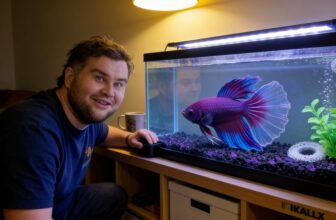
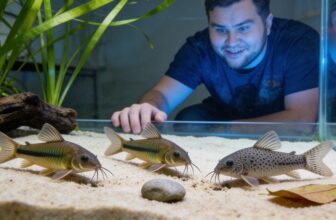
Killifish are small, colorful fish from warm, shallow waters around the world, living 2–5 years in tanks but often only months in the wild.
You’ll want a 10–20 gallon tank with dark sand, soft water (pH 6.0–7.0), and gentle filtration, plus a tight lid since they jump.
Keep one bright male with several females, and add plants like Cryptocoryne to break sight lines and calm tempers.
Annual killifish need dry incubation of damp peat for 90 days to hatch their eggs; non-annual types breed year-round in permanent water.
Feed fry infusoria five times daily, then baby brine shrimp after ten days, keeping water stable since sudden changes kill quickly.
Compatible tank mates include Celestial Pearl Danios and Thai Micro Crabs, which share the bottom without trouble.
Stay steady with testing and patience, and you’ll find even more layers waiting.
At A Glance
- Killifish species divide into annuals (temporary puddle dwellers) and non-annuals (permanent water, 2–5 year lifespan).
- Maintain stable water parameters: pH 6.0–7.0, temperature 68–75 °F, and gentle filtration to prevent sudden mortality.
- Compatible tank mates include Celestial Pearl Danios, Neon Tetras, and Thai Micro Crabs with ample hiding spaces.
- Breed annuals via dry incubation: store damp peat 90 days, then re-flood; use plastic grids to separate breeding groups.
- Reduce male aggression with dense planting, driftwood barriers, and a one-male-to-multiple-females ratio in 10–20 gallon tanks.
What Are Killifish? Origins, Families, and Signature Traits
When you peer into a small stream shaded by overhanging leaves, you might spot a flash of color darting between roots and stones, and that quick silver could be a killifish.
You find these fish worldwide, from Canada down to Argentina, across Africa, Asia, and beyond.
They’ve spread everywhere except cold northern Europe, Antarctica, and Australia.
You’ll notice their name comes from “killy,” Dutch for low channels and ditches where they live.
They’re small, usually one to two inches long, rarely six, with over 1,200 species showing different patterns.
Males shine brighter, with bigger fins. Females stay duller.
You’ll see their pike-shaped bodies, flat on top, with mouths low and teeth pointed.
When you design a tank, you’re practicing microhabitat design, just like arranging a home for a Thai micro crab, another small creature needing hidden spaces and gentle flow.
Their compact size makes them ideal candidates for small aquarium starter kits, which provide the controlled environments these sensitive fish need to thrive in home settings.
How Long Do Killifish Live? Aquarium vs. Wild Lifespans
A small glass tank on your desk holds living secrets in its water. You peer inside, wondering how long these darting jewels will stay.
Your killifish can live 2–5 years in a proper aquarium. That’s five times longer than their wild cousins, who manage just 6–12 months in fleeting pools. You hold their lives in your steady hands.
In your steady hands, captivity becomes kindness—years where wild fish know only months.
- Watch your water parameters: pH 6.0–7.0, temperature 68–75°F.
- Match their habitat preferences: slow water, shaded light, places to hide.
- Keep conditions stable; sudden changes bring quick death.
You might add a Thai microcrab, another small wonder needing similar care. Your patience rewards you with time. To protect against ammonia spikes that shorten their already brief wild lives, test water parameters twice weekly using strips that read in 30 seconds.
Annual vs. Non-Annual Killifish: Choosing Your Type
Look at the jar of peat moss on your shelf, and you’ll hold the difference between two kinds of killifish.
Annual killifish live in puddles that dry up completely.
You keep their eggs in damp peat for ninety days, then add water.
It’s like waiting for rain to wake sleeping seeds.
Non-annual species stay in water year-round, breeding without dry spells, living two to five years instead of mere months.
Both require patience, like watching a Thai micro crab finish its molting cycles hidden under driftwood—vulnerable, then renewed.
Choose annuals if you enjoy seasonal mystery.
Pick non-annuals for steady, longer companionship.
For maintaining separate breeding groups or protecting delicate eggs and fry, many killifish keepers rely on high-density plastic grid dividers that allow precise water flow while preventing aggressive adults from reaching vulnerable young.
Killifish Water Parameters: Why Stability Matters
Your peat moss jar is closed and labeled now, so you can turn to the water itself.
Killifish feel stress you can’t see when temperature or chemistry swings wildly. Their bodies, adapted to slow jungle streams, panic at sudden change.
You must guard three things:
- Keep pH between 6.0-7.0, like their shaded home waters.
- Hold temperature steady at 68-75°F; buy a reliable heater.
- Maintain hardness at 7-10 dGH for most species, higher for Nothobranchius.
Stable water mirrors the Thai micro-crab diet principle: small, consistent inputs beat heroic fixes. Micro-fauna larval feeding also depends on unwavering conditions—fluctuations kill the tiny organisms your fry need.
Where needed, buffer capacity can help resist dangerous pH swings by neutralizing acidic compounds before they destabilize the system.
Tank Size and Setup Basics for Healthy Killifish
When you lift the lid to set up a killifish home, you’re holding more than glass and water—you’re building a small world where shy, bright fish will live out their years.
| Space | Dimensions | Feel |
|---|---|---|
| 10–20 gallons | 24″ long footprint | Room to dart, hide, breathe |
| Nano tank | 5 gallons minimum | Cozy, but watchful care |
| Thai micro crab tank | 10 liters, fine sand | A tiny neighbor below |
You need sponge filters, gentle flow, and a tight lid—they jump when startled.
Keep temperature steady at 68–75°F, and you’ll feel the calm of stability watching them investigate.
That patience pays off.
For those considering a sump setup, gentle flow distribution devices like spray bars can further reduce water turbulence and protect delicate killifish from stress.
Substrate, Plants, and Hardscape for Killifish
Three layers wait beneath your killifish: the ground they sift, the plants they hide under, and the hard shapes that break the light into safe corners.
Beneath the water, three worlds meet: soil for searching, leaves for hiding, shadow for safety.
You’ll want to feel the substrate texture with your fingers before you buy it.
Coarse sand, not gravel, lets them push their mouths through without scraping soft lips. Peat moss works too, especially for annual species who need to bury eggs.
- Dark sand, 2-3 millimeters thick, holds warmth and hides fry
- Cryptocoryne and java moss, low and shadowy, stop bright light from above
- Driftwood and smooth rocks, arranged with hardscape aesthetics in mind, create broken sight lines so two males won’t see each other too clearly
Test your tap water hardness before you choose. Soft water needs more peat. Hard water wants more driftwood.
For killifish tanks, silk leaf compact plants in the 6-inch range work well as mid-level cover since their soft edges won’t damage delicate fins and the weighted resin bases stay put in shallow water columns.
What Do Killifish Eat? Protein-Rich Feeding Routines
Since killifish evolved in streams where food comes and goes, you’re signing up to become a short-order cook for a tiny, picky customer with exacting standards and a fast metabolism.
You’ll serve brine shrimp, live or frozen, two or three times daily. Rotate in mosquito larvae, daphnia, and chopped worms—think of it like packing a lunchbox with variety. Small portions matter, about what they finish in two minutes.
Breeding pairs need richer food, like beef heart paste, to fuel egg incubation. When adding a Thai micro crab as a tank mate, check it doesn’t steal their meals.
Killifish kept in planted aquariums benefit from gradual sunrise simulation lighting that mimics their natural stream environment, encouraging active feeding during dawn hours when they naturally hunt.
Are Killifish Peaceful? Temperament and Male Aggression
Your fingers are still damp from feeding brine shrimp, and now you’re watching your killifish glide through the tank, wondering if that bright male will stay calm or turn into a tiny tyrant.
Killifish are usually peaceful, laid-back fish, making them good neighbors in community tanks. Nonetheless, males can show aggression toward other males, especially when competing for females or territory.
You can manage this behavior through smart microhabitat design:
- Add dense plants like java moss to break sightlines between rivals
- Include caves and driftwood to create separate territories
- Consider a Thai microcrab as a calm bottom-dweller that won’t provoke fin-nipping
Keep one male with multiple females, and you’ll see harmony instead of fights.
For killifish enthusiasts seeking optimal filtration without disturbing their sensitive species, a 3-stage filtration system provides the gentle water flow and superior ammonia removal that supports both fin health and breeding success.
Locked Lids and Jumping: Essential Killifish Behaviors
Since killifish are built for survival in shallow, drying streams, they’ve evolved into powerful jumpers that can launch themselves out of an uncovered tank in a heartbeat.
You’ll need a sturdy lid, friend, not just any cover resting on top.
Your lid design matters more than you might expect.
Choose tight-fitting glass or acrylic with no gaps larger than a quarter-inch, since these fish can squeeze through surprisingly small spaces.
Jumping feels urgent to them, like escaping a pond that’s shrinking in hot sun.
You understand that feeling, don’t you, when you need to move quickly?
Secure latches prevent tragedies you won’t see coming.
A gentle water flow from a pump like the Pawfly 550 GPH Wave Maker can reduce surface tension and make jump attempts less frequent without stressing your fish.
Best Tank Mates for Killifish: Compatible Species
A well-chosen neighbor makes any home feel safer, and the same holds true when you pick tank mates for your killifish.
You’ll want peaceful companions who respect boundaries. Small, calm fish fit this bill perfectly.
Consider these three compatible friends:
- Celestial Pearl Danios — tiny, shimmering fish that swim in the middle waters, rarely bothering anyone below
- Neon Tetras — schooling fish, six or more, whose gentle movements soothe the whole tank
- Thai Micro Crabs — miniature bottom-dwellers from Thailand, no larger than your fingernail, who hide among plants and rocks
Watch your Thai micro crabs closely during their molting cycles, when they shed their hard shells and grow new ones. During this vulnerable week, they need extra hiding spots. Provide driftwood caves and dense java moss, spaces where soft, new shells stay protected from curious noses.
Peace in your aquarium grows from matching temperaments, not just colors.
If any of your peaceful companions fall ill, a compact quarantine tank with crystal-clear observation walls allows for isolated treatment without disturbing your main community.
Breeding Annual Killifish: Dry-Incubation Steps
Dry-Incubation Steps for Annual Killifish
The peat moss in your tank holds secrets you cannot see, tiny eggs waiting for a signal nature alone can send.
You must drain the water slowly, leaving the peat damp but not flooded.
Your microhabitat design mimics dry African floodplains, where pools vanish for months.
You store the peat in a sealed bag, warm, for ninety days exactly—patience becomes your quiet partner.
Then you re-flood, and life resumes.
| Step | Action |
|---|---|
| Drain | Remove water, keep peat damp |
| Store | Seal in warmth for 90 days |
| Re‑flood | Add soft water, watch for hatchlings |
A Thai micro crab in a nearby nano‑tank reminds you: small creatures need careful worlds.
Breeding Non-Annual Killifish: Year-Round Methods
Year-Round Breeding Methods
Non-annual killifish keep their eggs wet all the time, and you’ll find this rhythm gentler than the dry-wait-dry cycle their cousins demand.
You’ll want a shallow tank with leaf litter and fine plants where eggs fall, rest, and wait.
- Maintain water at 72-75°F, steady and soft.
- Feed parents live foods daily—this energy passes into healthy eggs.
- Check for fungus on eggs, removing bad ones with gentle tweezers.
Thai micro crabs make peaceful tank mates, their quiet molting cycles signaling water quality you can trust.
Raising Killifish Fry: Diet, Growth, and Survival
Raising Tiny Fry
Three small jars sit on your counter, each holding newly hatched life no bigger than a comma on this page.
Three small jars, three commas of life, waiting.
You’ll feed these fry five times daily, starting with infusoria—tiny swimming food too small for your unaided eye to see—then vinegar eels, and finally baby brine shrimp after ten days. Each meal fits on a pinhead, no more.
Watch their growth like you’d watch a Thai micro crab molt: quietly, without touching. The crab sheds its hard shell and hides until the new one hardens, vulnerable, patient. Your fry need this same protected stillness.
Clean water, steady warmth—that’s how they survive.
Killifish Health: Spotting Gill Flukes and Diseases
Spotting Gill Flukes and Diseases in Killifish
When you first cupped your killifish in your palm—wet, quick, no bigger than your thumb—you made a quiet promise to notice things.
Gill flukes betray themselves through small acts. You’ll see your fish scraping against rocks, gasping at the surface, or wilting like a leaf left in sun.
Watch for these signals:
- Excess mucus coating the gills, like fog on a window
- Rapid breathing, even when water holds plenty of air
- Rubbing behavior, as if scratching an itch that won’t quit
Treat early with anti-worm medication. Just as your Thai micro crab needs perfect water for safe molting health, your killifish needs steady parameters to fight infection.
Frequently Asked Questions
Can Killifish Live in Outdoor Ponds During Summer?
You can keep killifish in outdoor ponds during summer if you manage sun exposure with shaded vegetation and prevent temperature fluctuations by monitoring daily; they’ll thrive in stable, sub‑tropical conditions mimicking their natural habitat.
Do Killifish Need Aquarium Salt in Their Water?
You don’t need aquarium salt for most killifish, though brackish species tolerate it. Focus instead on maintaining proper water hardness between 7–10 dGH; if you do use salt, keep salt dosage minimal and species-appropriate.
How Many Killifish Should Be Kept Together?
You’ll keep one male with two to three females to balance group density and reduce social hierarchy conflicts. For breeding pair compatibility, guarantee stable water parameter monitoring supports their stress-sensitive nature.
Can Killifish Recognize Their Owners?
You’ll find killifish recognize you through consistent owner behavior near the tank, though they won’t bond like mammals. They respond to your presence, interpreting feeding times, light changes, and water chemistry shifts you’ve caused as reliable cues.
Do Killifish Sleep or Rest on the Bottom?
You’ll notice killifish don’t truly sleep, but they do rest motionless near the bottom behavior zones during darker hours. Their substrate preference includes fine gravel or sand, where they’ll settle peacefully, preserving energy as remaining alert to threats.
Rounding Up
Killifish reward your patience with living color. You’ve learned their two life strategies, water needs, and breeding steps. Start with one pair,watch them closely, and adjust slowly. Small mistakes bring quick lessons. Your tank becomes a window into streams you may never visit. That connection,quiet and steady, is why aquarists return to these fish year after year. Keep learning.