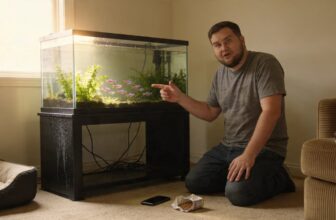
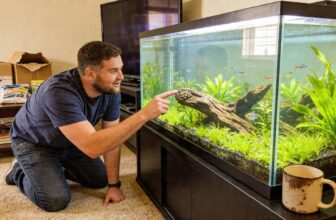
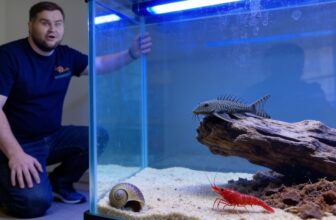
You’ll want a 10-gallon tank or larger for your glowlight tetras, with soft sand and open swimming space between leafy plants. Keep your water warm at 74-82°F, pH 5.5-7.5, and hardness under 15 dGH.
Feed them tiny pellets or flakes two to three times daily, and they’ll live two to four years, sometimes five. Choose peaceful neighbors like cardinal tetras or Corydoras catfish, and avoid bullies such as tiger barbs or angelfish.
If you’re hoping for babies, a separate breeding tank with soft, acidic water and Java moss will give those delicate eggs a fighting chance. There’s more groundwork to cover before you’re fully prepared.
At A Glance
- Keep 6–10 glowlight tetras in soft, acidic water (pH 5.5–7.5, <15 dGH) with dim lighting to highlight their orange stripe.
- House in a minimum 10‑gallon tank with fine substrate, open swimming space, and tannin‑rich vegetation.
- Feed micropellets or small flakes 2–3 times daily, supplemented with protein treats and liquid vitamins for coloration.
- Select peaceful tank mates like small tetras, Corydoras, or cherry barbs; avoid aggressive cichlids and fin‑nipping species.
- Breed in a separate shallow tank with Java moss, soft acidic water, and remove adults after eggs hatch in ~24 hours.
What Is a Glowlight Tetra and Where Does It Come From?
What does a tiny fish with a glowing stripe look like when it darts through your tank? You see a torpedo-shaped body, semi-transparent and silvery, with a reddish-orange line running from head to tail. That stripe, your glowlight tetra’s signature, continues onto the dorsal fin edge and crosses above the eye. Other fins stay clear as glass.
Since 1933, you’ve found this species in pet shops worldwide. Its species origin lies in Guyana, South America. The habitat range covers blackwater rivers and streams, where tannins stain the water tea-colored and soft. You recognize a hardy, shoaling fish that gathers in shimmering groups, bringing calm movement to your aquarium without demanding expert skills.
Their preference for blackwater conditions aligns with tanks using botanicals or driftwood to replicate their natural environment.
How Big Do Glowlight Tetras Get and How Long Do They Live?
When you hold a glowlight tetra in your mind’s eye, you’re picturing a fish barely longer than your thumb, about 1.5 to 2 inches from nose to tail tip.
You’ll watch their size growth finish within eight to ten months, reaching adult length.
Here’s what to expect:
| Stage | Length | Time Frame |
|---|---|---|
| Fry | 0.25 inches | Just hatched |
| Juvenile | 0.75 inches | 2-3 months |
| Adult | 1.5-2 inches | 8-10 months |
Your glowlight’s lifespan expectancy sits at two to four years, though you’ll feel a quiet hope when some reach five.
Clean water and good food stretch their time with you.
Maintaining stable water parameters with a digital pH meter helps prevent stress that can shorten their lifespan.
What Tank Size Do Glowlight Tetras Actually Need?
A 10-gallon tank will hold your first small group of glowlight tetras, though you’ll soon feel the gentle pull to give them more room.
Your glowlights need a group size of at least six to feel safe, but eight to ten fish creates proper group dynamics you can actually see. In small tanks, they hide and lose their shimmer.
A 20-gallon aquarium lets your shoal spread out, flashing their orange stripes as they move together. This mirrors their wild rivers, where tight groups confuse predators.
Bigger tanks likewise keep water steadier, which means calmer fish and fewer worries for you.
For stable water conditions in these larger setups, consider adding a digital temperature controller to maintain consistent warmth and prevent dangerous fluctuations.
Tank Scaping: Substrate, Plants, and Open Swimming Space
Once you’ve settled on enough gallons for your shoal to swim, it’s time to think about what they’ll actually touch, hide among, and move through.
Choose a fine substrate grain, like soft sand or small gravel, so their delicate fins won’t scrape.
Soft sand or fine gravel keeps delicate fins safe from scrapes and injury.
Add plants of varied plant height: tall stems in back, short carpets in front, creating layers like a forest edge.
Leave the tank’s middle open, a wide swimming corridor where your glowlights can flash their orange stripes in unison.
Driftwood and a few smooth rocks complete the scene, giving shy fish places to rest when the world feels too bright.
For a stable nitrogen cycle that keeps water parameters consistent in your glowlight tetra tank, select a 2-4 mm grain size that maximizes surface area for beneficial bacteria colonization.
Water Parameters: Temperature, pH, and Hardness Ranges
Water temperature is the first thing your fingertips notice when you dip them into the tank, and you’ll want that water to feel like a warm summer stream, somewhere between 74 and 82 degrees Fahrenheit, with 77 being just about perfect.
Next, you’ll test the invisible chemistry. Keep your pH between 5.5 and 7.5, leaning acidic like their Guyanan home waters.
Watch for pH fluctuations, since sudden swings stress their small bodies. Check water hardness too, aiming for soft conditions up to 15 dGH, though 6 dGH suits them best.
Stable water means calm, colorful fish.
For maintaining these precise conditions, a sump with adjustable chambers allows you to customize filtration zones and stabilize water chemistry through mechanical and biological filtration stages.
What Should You Feed Glowlight Tetras Every Day?
When you sprinkle food into the tank each morning, you’re giving your glowlight tetras the energy they’ll spend darting through plants all day long.
Your daily feeding routine matters. Offer micropellets or small flakes, portions they can finish in two to three minutes, two or three times daily.
Mix in occasional treats, like brine shrimp or freeze-dried tubifex, for protein that keeps their colors bright.
Notice seasonal variation in their appetite; they’ll eat less when temperatures drop, even slightly, just as you feel hungrier in autumn chill.
Watch their bellies—slightly rounded means satisfied, not swollen.
Remove uneaten bits immediately. You’re building trust, flake by flake.
For enhanced coloration and immune support, consider soaking frozen foods in liquid multivitamin supplements designed for freshwater fish before feeding.
Safe Tank Mates for Peaceful Community Tanks
Behind the soft glow of your aquarium glass, you’re building more than a tank—you’re shaping a neighborhood where every resident needs to feel safe.
Behind the soft glow of your aquarium glass, you’re building a neighborhood where every resident needs to feel safe.
You’ll want companions that match your glowlights’ gentle community behavior. Think small tetras like cardinals or neons, who school alongside without fuss. Corydoras catfish work beautifully too, sweeping the bottom while your glowlights glide above.
Consider lighting compatibility carefully. Your tetras prefer dimmer waters, so choose tank mates comfortable in subdued glow rather than harsh brightness. Cherry barbs, guppies, and peaceful loaches like Kuhlis share this preference.
Keep groups of six or more for each species. Peace spreads when everyone speaks the same quiet language.
A 3‑watt ultra‑quiet pump is ideal for maintaining gentle water flow that won’t disturb your dimly lit community tank.
Fish to Avoid Keeping With Glowlight Tetras
Your glowlight tetra—small, soft-finned, and trusting—cannot defend itself against fish built for aggression. Avoid cichlids like Oscars and angelfish; their size and aggression overwhelm gentle companions.
Skip tiger barbs and serpae tetras too, as their fin-nipping habits cause constant stress.
Large predatory fish—bettas with temper, or any mouth wide enough—see your tetra as prey, not friend.
Stress from aggression weakens immune systems, raising disease susceptibility you’ll face with heartache and medicine.
Choose peace. Your glowlight’s bright stripe fades, then disappears, when housed with bullies.
Select calm neighbors instead, and watch them thrive together. A submerged motor design like those found in quiet HOB filters helps maintain the peaceful environment glowlight tetras need by minimizing vibrations that can disturb sensitive fish.
Essential Equipment: Heater, Filter, and Lighting Setup
A glowlight tetra’s world depends on three quiet machines working day and night. You’ll need a filter heater combo to keep water at 77°F with reliable thermostat control. Gentle sponge filters work beautifully here, creating soft water flow rate these fish prefer. Add subtle powerhead circulation if you keep plants, but keep currents mild.
Dim LED lighting lets their orange stripe glow without stress. Skip bright lights; these fish feel safer in subdued tanks. Carbon filtration helps, though UV sterilizer units prove optional for small setups. Consider automatic top-off systems for stability. An algae scrubber keeps glass clean, completing your peaceful underwater home.
For optimal filtration performance, consider a 3‑stage filtration system that handles biological, mechanical, and chemical processes simultaneously with minimal noise.
How to Tell Male and Female Glowlight Tetras Apart
Sexing glowlight tetras means looking past their bright orange stripe into the subtler shapes beneath. You’ll notice females grow rounder, softer, and longer than males—about half an inch bigger when fully grown.
If you’re handling these delicate fish for closer inspection or moving them between tanks, aquarium tongs with rubber tips help protect their sensitive fins and scales from injury.
| Feature | Female | Male |
|---|---|---|
| Body shape | Fuller, rounder belly | Slimmer, streamlined |
| Fin shape (dorsal) | Slightly rounded tips | More pointed, angular |
| Fin shape (anal) | Broader curve | Narrower, sharper angle |
| Size | Up to 1.6 inches | Up to 1.5 inches |
| Stripe brightness | Slightly duller | Often more vivid |
Your color identification sharpens with practice. Watch them from above—that round female belly swells with eggs. Males stay sleek, darting. It’s like telling twins apart: you learn the small cues, then you can never unsee them.
How to Set Up a Glowlight Tetra Breeding Tank Step by Step
Basic Breeding Tank Setup
Since you want healthy fry, you’ll need a separate tank that’s small and simple.
Start your breeding tank with a 5–10 gallon aquarium. Add fine-leafed plants like Java moss, plus spawning mops—these look like floating yarn mops where eggs stick. Keep water soft, under 6 dGH, and slightly acidic.
A 5–10 gallon tank with Java moss and spawning mops gives eggs a soft, acidic home under 6 dGH.
Lower the water level to 6–8 inches so pairs swim together easily.
For egg incubation, keep lights dim—eggs die in brightness. Temperature near 77°F works best. Eggs hatch in about one day, so watch closely.
Spawning Triggers and Egg Protection Methods
Getting your glowlight tetras to spawn means understanding what signals the change from “not ready” to “active,” and you’ll want to watch for these cues carefully.
You’ll start by feeding them tiny protein-rich foods, like baby brine shrimp, several times each day.
Keep the lights off for a day or two, then slowly increase the lighting over morning hours.
This dim-to-bright pattern copies rainy seasons in their home rivers, and it tells their bodies it’s time to make eggs.
After spawning, you’ll remove the adults quickly.
Their eggs need camouflage among fine plants, since parents see tiny clear spheres as snacks, not babies.
First Foods for Glowlight Tetra Fry
Live Foods, Pellets, and Feeding Schedules
Once your glowlight fry shake free of their egg sacs, you’ll need food tiny enough to fit in mouths no bigger than a pinhead.
Infusoria—microscopic organisms you culture in jars of old tank water and vegetable matter—become your first weapon. These microscopic feeding techniques establish healthy infant gut flora, which means beneficial bacteria that help tiny fish digest nutrients and fight sickness.
Crush flakes between your fingers until they turn to dust, or use liquid fry food from pet shops. Feed six times daily, tiny amounts each time, so bellies stay round but never bulge.
| First Food | What It Does |
|---|---|
| Infusoria | Living microscopic organisms fry chase and eat |
| Liquid fry food | Sinks slowly, easy for new swimmers to find |
| Crushed flake dust | Adds variety after day three or four |
| Hard-boiled egg yolk | Emergency protein, use sparingly |
| Vinegar eels | Step up in size, feed after one week |
Ich, Fin Rot, and Neon Tetra Disease: Prevention and Treatment
Prevention and Treatment
Your fry are eating well, growing stronger, but illness can strike any tank without warning.
Watch for white spots flicking on fins, the first sign of ich, a tiny parasite you treat with raised temperature and copper-free medicine.
White spots on fins flicker like warning beacons—ich has arrived, and swift action with heat and copper-free cure saves your fry.
Frayed, receding fins mean fin rot, a bacterial infection from poor water; you cure it with clean conditions and aquarium salt, 1 teaspoon per gallon, dissolved first.
Neon disease, called false neon disease in glowlights, shows as a pale stripe, curved spine, and no cure exists—you remove sick fish quickly to protect the rest.
Prevention wins: test water weekly, change 25 percent each Sunday, and quarantine newcomers two weeks.
Frequently Asked Questions
Can Glowlight Tetras Survive Without a Filter?
You can’t keep glowlight tetras without a filter; you’ll compromise water clarity and risk their health. Proper filter maintenance keeps their soft, acidic water stable, and without it, you’re inviting ammonia spikes that’ll kill these sensitive fish quickly.
Do Glowlight Tetras Need an Air Pump?
You don’t strictly need an air pump if you’ve got proper filtration, but you’ll benefit from one. It boosts oxygen, improves water circulation, and keeps things oxygen-quiet while maintaining healthy, bubble-free conditions for your shoal.
How Many Glowlight Tetras Should Be Kept Together?
You’ll want a minimum group size of six for proper schooling behavior, though ten or more reduces stress and improves community dynamics. Plan your tank decoration and lighting requirements around this active, tightly-grouping shoal.
Are Glowlight Tetras Fin Nippers?
They’re typically not fin nippers, so you don’t need to worry about aggressive fin behavior. Their semi-transparent fins and peaceful nature means you won’t see the fin anatomy damage typical of true fin nippers in your community tank.
Can Glowlight Tetras Live in a Planted Tank With CO2?
You can keep glowlight tetras in a CO2‑injected planted tank, but you’ll need to manage your CO2 lighting carefully since they prefer dimmer conditions. Choose a dark substrate choice to make their colors pop and reduce glare.
Rounding Up
Your glowlight tetras will reward your care with years of gentle motion and copper light rippling through your tank. Start with a ten-gallon tank, soft water, and six companions minimum. Watch their stripe brighten when they feel safe. Breed them in a separate, dim tank with java moss for egg hiding. You will feel quiet pride when fry rise to eat infusoria. Keep temperatures steady, check water weekly, and trust your growing skill. These fish forgive small mistakes.