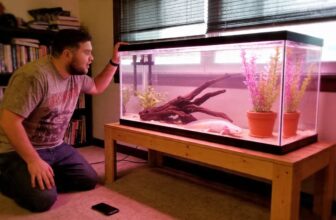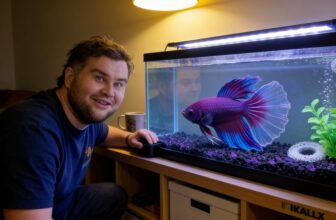
You’ll need a thirty-gallon tank with a gentle filter that won’t hurt your crayfish’s fan organs, soft sand two to three inches deep for digging, and a dark cave with one entrance where your Electric Blue Crayfish can hide when molting makes it vulnerable.
Keep the water clean, test it weekly, hold the temperature steady near seventy degrees, and add cuttlebone for calcium so its shell grows strong. Feed sinking pellets and vegetables once daily, remove uneaten food after two hours, and never handle your crayfish while it’s molting.
With patience and care, you’ll watch this striking blue creature thrive for five to six years, and there’s more to uncover about keeping it healthy.
At A Glance
- House one adult in a 30‑gallon tank with gentle flow, sponge pre‑filter, and baffle system to protect delicate fan organs.
- Maintain pristine water: zero ammonia/nitrite, nitrates below 20 ppm, weekly 25% changes, and temperature stable at 70–72 °F.
- Use 2–3 inches of sand substrate with a solid, dark cave and cuttlebone for calcium to support natural digging and molting.
- Offer daily sinking pellets, blanched vegetables, and calcium‑rich foods; remove uneaten food within two hours.
- Avoid handling during molts, monitor iron at 0.1 ppm, and check weekly for shell discoloration or lethargy to catch disease early.
Tank Setup Essentials: What Your Blue Crayfish Actually Needs
A 30-gallon tank usually holds one adult Electric Blue Crayfish comfortably.
You’ll want aquarium lighting that’s gentle, not harsh—about eight hours daily mimics their Florida home.
Filtration upgrades matter more than you’d think. These busy scavengers stir up sand constantly, so you’ll need a filter rated for forty gallons minimum. A sponge pre-filter protects your crayfish’s delicate fans from getting sucked in. Your setup feels secure when you’ve got these basics right.
Consider a cascading HOB filter with bio-falls oxygenation to keep up with the heavy bioload from constant scavenging.
Water Parameters That Keep Blue Crayfish Thriving
When you’re steadying the thermometer against the glass, you’ll feel the weight of watching those numbers stay put—crayfish can’t shrug off a cold snap the way you might shake off a chill.
Keep your tank between 65 and 75 degrees Fahrenheit, with 70 being just right. Stability matters more than perfection; swings stress them out.
Check the pH level in your tank weekly, holding it between 6.5 and 7.5—neutral water, like a calm pond.
Maintain a mineral balance of 3 to 10 dKH hardness, which means enough calcium and magnesium for healthy molting.
Test ammonia and nitrites—they should read zero.
Given the sensitivity of crayfish to nitrogenous waste, using non-bleeding fiber paper test strips stored in cool, dark conditions helps ensure your readings stay accurate between those crucial weekly checks.
You’re building a steady world.
Substrate and Hiding Spots: Cave Requirements Explained
Once your water stays steady, you’ll want to look down at what lines the bottom of the tank. Sand works best, letting your crayfish dig and filter through it naturally.
Aim for a substrate depth of two to three inches, which gives them enough room to burrow when they need privacy. You’ll additionally need a solid cave material, like an overturned flowerpot, PVC pipe section, or stack of smooth stones. Choose something with one entrance, creating a dark, snug space. Place it against the glass where you can peek inside. Your crayfish feels safest there, and watching them settle in brings quiet satisfaction.
Consider adding slow-release root tabs beneath the substrate near any live plants to provide essential nutrients without disturbing your crayfish’s burrowing behavior.
Molting 101: Protect Your Blue Crayfish at Its Weakest
Since your crayfish grows a hard outer shell called an exoskeleton, it must shed that armor to get bigger, a process called molting.
Growing crayfish must shed their rigid exoskeleton to grow larger—this process is called molting.
You’ll notice molting timing follows no strict calendar. Young crayfish molt often, maybe monthly, while adults slow to every few months. Watch for cloudy eyes and faded color, signs the old shell is loosening.
Your crayfish needs a calcium boost to build its new armor. Add cuttlebone to the tank, or feed calcium-rich foods like kale. Without enough calcium, the new shell grows soft and weak.
During molt, your pet hides, vulnerable and still. Leave the old shell in the tank, they’ll eat it for minerals. Don’t touch them now, gentle patience wins.
Testing water parameters weekly, including 0.1 ppm iron sensitivity, helps ensure your molting crayfish isn’t stressed by poor water quality during this vulnerable period.
Tank Mates for Aggressive Blue Crayfish: Who Survives
A crayfish claws through the tank divider you’ve built of hope, and you’re left holding the pieces.
You learn their aquip behavior—aggressive, territorial, always hungry for a fight.
| Tank Mate | Survival Odds |
|---|---|
| Fast danios (top swimmers) | Good, if quick enough |
| Slow bottom fish | Poor, become snacks |
| Another blue crayfish | Risky, needs 40+ gallons each |
Color genetics won’t calm their temper; that bright shell hides a bully.
You place caves, you test water, you watch.
Some fish survive.
Most don’t.
You accept this, or you keep a species tank.
An automatic aquarium fish feeder with precise portion control can help maintain consistent feeding schedules that reduce competition-induced aggression during mealtimes.
One Blue Crayfish or Several? Housing Decisions First
How many crayfish belong in your tank? You’ll need to decide before buying any, since this choice shapes everything that follows.
Decide your crayfish count first—this single choice determines everything that follows.
One crayfish lives peacefully alone, claiming the entire tank as personal property. You’ll watch it patrol boundaries, learning its territory mapping routine like a mail carrier knowing every house on a street.
If you want several, you must plan carefully:
- Provide 30 gallons minimum per adult, plus extra caves
- Add same-sized individuals together, avoiding size mismatches
- Accept that color genetics vary—offspring may show brown, not blue
Multiple crayfish create tension you must manage, or they’ll fight.
A modular grid system similar to those used in undergravel filtration can help you plan cave placement throughout the tank bottom, allowing you to rearrange hiding spots as territorial boundaries shift.
Feeding Schedule: Foods That Work and Foods That Fail
Feed your blue crayfish once daily, and they’ll clean up whatever hits the bottom. This feeding frequency keeps them active without fouling their water. For crayfish nutrition, offer variety: sinking pellets form the base, whereas vegetables and proteins round out their needs. High-fiber sinking wafers with concentrated vegetable cores provide complete balanced nutrition that mimics their natural foraging behavior.
| Foods That Work | Foods That Fail |
|---|---|
| Sinking pellets (2-3 pellets) | Floating flakes (won’t sink) |
| Blanched zucchini, spinach | Raw potato (toxic compounds) |
| Frozen bloodworms, brine shrimp | Processed meats (too salty) |
| Algae wafers | Bread (swells in gut) |
| Crushed cuttlebone (calcium) | Citrus fruits (acid burns) |
Remove uneaten food after two hours. You’re building trust through consistency, like showing up when you promised.
Keep Water Clean: Weekly Maintenance That Prevents Disease
Once you’ve cleared away those last scraps of zucchini, it’s time to roll up your sleeves and tend to the water itself.
Your electric blue crayfish breathes through delicate gills, so clean water keeps him feeling calm and strong. Think of it like changing his sheets—he can’t do it himself.
Good water filtration, meaning a filter that pushes water through special materials to trap waste, works hard but needs your help.
- Test ammonia and nitrite weekly; both should read zero.
- Replace 25% of the water every seven days.
- Rinse filter media in old tank water, never tap.
Adding a baffle system with adjustable chambers can further reduce turbulence and protect your crayfish’s sensitive gills from stress.
This routine disease prevention protects your crayfish for years.
Cuttlebone Placement: Calcium for Stronger Shells
After your crayfish sheds its old shell, you’ll notice it looks soft and vulnerable, almost like a jellybean in a see-through wrapper.
At this moment, your pet needs calcium enrichment to rebuild.
Place a cuttlebone—the white, chalky shell from a cuttlefish, found at pet stores—into your filter or tuck it under a rock. Your crayfish will nibble it directly. This mineral dissolves slowly, raising water hardness just slightly.
You’ll see the payoff in shell strength within weeks. The new exoskeleton hardens faster, growing thicker and more resistant to cracks and infection.
Check the cuttlebone monthly. Replace it when pieces grow small, roughly every six to eight weeks.
In planted tanks with water column feeders, ensure chelated iron supplements don’t conflict with calcium absorption by monitoring plant health alongside shell development.
Spot Shell Disease and Infection Early
Your crayfish’s shell, that bony armor you’ve watched grow harder over months, can quietly start to fail.
That bony armor you’ve watched grow harder over months can quietly start to fail.
You’re checking for three warning signs during each feeding. First, look for shell discoloration, patches turning white, brown, or strangely spotted where healthy blue once shined.
Second, notice lethargic behavior, your usually busy scavenger sitting still, ignoring food, hiding when they’d normally investigate.
Third, watch for soft spots or cracks, especially after molting, when their new shell stays rubbery too long.
You must act quickly. Poor water quality, dirty from leftover food, causes most infections. Test ammonia weekly, change water often, and you’ll keep them safe.
For a more complete picture of water health, also test nitrate levels weekly with 7-in-1 test strips, as elevated nitrates above 20 ppm stress the immune system and delay shell hardening.
How Long Do Blue Crayfish Live? Realistic Expectations
Five to Six Years, Not Months
That bright blue creature you’ll bring home from the pet store, the one with busy claws and curious eyes, will stay with you longer than you might expect.
You’ll hear lifespan myths claiming these crayfish die in months.
Don’t believe them.
With clean water and proper care, your electric blue crayfish lives five to six years, sometimes longer.
Longevity myths spread when people keep them in tiny bowls or ignore water changes.
You control their fate.
Test your water weekly.
Keep ammonia at zero.
Feed sparingly.
Molting stresses their bodies, so provide calcium and hiding spots.
Your patience rewards you with half a decade of blue scuttling companionship.
Breeding Setup: Managing Eggs Without Killing Fry
Breeding Setup for Protecting Eggs and Fry
Water changes and clean glass bought you those five or six years of companionship, and now you wonder what comes next.
Breeding genetics start with healthy parents, so pick active, full-colored adults. You’ll need a separate 20-gallon tank, soft sand, and a dark flower pot cave.
Here’s how you protect fry survival:
- Move the female to the breeding tank before she molts, when she’s ready to mate
- Remove the male within 48 hours, or he’ll eat the eggs
- Keep water at 72°F, stable and clean, as she carries 100-300 eggs for four weeks
Watch her hide. She knows what she’s doing.
Blue Crayfish Fry Care: First Foods and Female Removal
First Foods and Female Removal
Once the eggs hatch, you’ll spot tiny, transparent versions of their mother clinging to her swimmerets for about three days.
These little ones haven’t eaten yet, they’re still absorbing leftover yolk, like a snack packed from home.
After day three, you’ll gently move the female to her own tank, since even good mothers get hungry, and hungry means accidents happen.
Now the fry need food, real food, you’ll feed them powdered spirulina, it’s just algae ground fine, and baby brine shrimp you hatch yourself.
Watch which babies show the brightest blue, you’re seeing genetic line quality, the foundation of future color morphs.
Choose Healthy Blue Crayfish: Avoid Sick Specimens
Choosing a Healthy Blue Crayfish
Before you bring a crayfish home, you’ll want to look closely at its body, since a healthy shell tells the whole story.
Check these three signs carefully:
- Bright, even color — poor color genetics can fade patches, but sick ones look chalky or spotted.
- Solid, smooth exoskeleton — cracks or soft spots mean trouble coming.
- Active, curious movement — lethargy feels wrong, like a sleepy friend avoiding play.
Their natural habitat range in Florida waters makes them sensitive to stress in new tanks.
Skip specimens with missing limbs, they’re vulnerable until next molt, and you deserve a strong start together.
Frequently Asked Questions
Can Blue Crayfish Regenerate Lost Claws?
Yes, you’ll observe claw regeneration in your blue crayfish after they molt, though molting frequency decreases as they age, so younger individuals regenerate faster than mature ones.
Do Electric Blue Crayfish Need Land Access?
No, you don’t need to provide land access. Your electric blue crayfish’s habitat preferences are fully aquatic; you’ll maintain proper water chemistry and depth throughout, ensuring they’ve got caves and hiding spots instead of dry areas.
Why Is My Blue Crayfish Turning White?
Your blue crayfish turns white because of stress, often from poor habitat suitability—check water parameters, hiding spots, and tank mates. You’ll need stable conditions and proper molting support to restore its vivid color.
How Do I Stop My Crayfish From Escaping?
Secure your escapevy tank with a tight-fitting lid your crayfish can’t lift. Check lid security daily, seal gaps, and lower water levels two inches to prevent climbing reaches. You’re stopping an active, determined escape artist.
Should I Remove the Crayfish Exoskeleton After Molting?
Don’t remove the exoskeleton; your crayfish will consume it for calcium. Maintain proper water hardness and stable conditions, as molting frequency depends on water quality. The shell provides vital nutrients for healthy recovery.
Rounding Up
You’ve got everything you need now. Your hands know the work—testing water, counting drops, stacking caves. The crayfish doesn’t need perfection, just your steady attention through five years of molts and moods. Trust yourself. Keep the calcium ready, the tank mates careful, and your eyes open during breeding season. This creature rewards patience with color, with young, with survival. That quiet satisfaction, that’s yours.