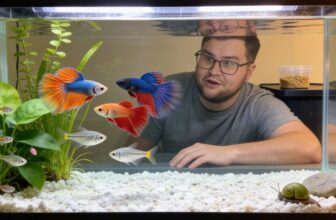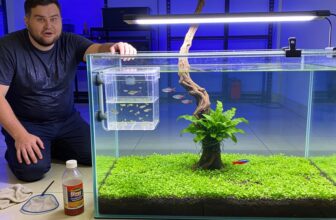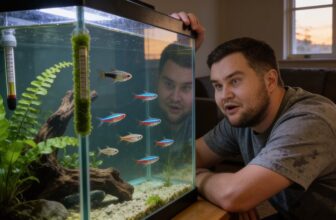
What is the best tank size for betta fish? Five gallons is the sweet spot—anything smaller spells trouble fast.
A one-gallon bowl causes ammonia spikes within hours, constant temperature swings, and zero swimming room.
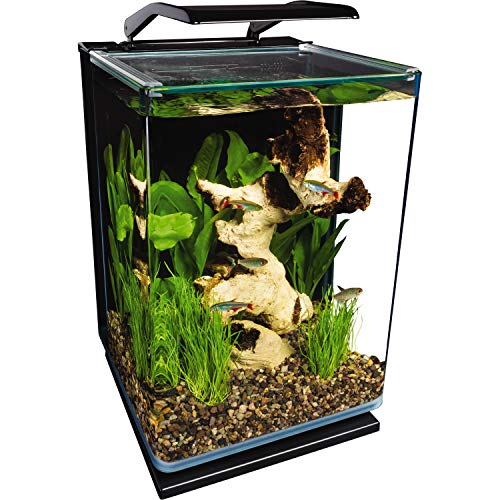
Roomier five-gallon size prevents ammonia spikes and gives your betta space to swim.

Gentle flow filters waste effectively without creating currents that stress bettas.

Keeps water temperature steady, avoiding the dangerous swings that harm bettas.
Find great deals onAquarium Equipment
Five gallons hits the mark: stable water parameters, manageable weekly 25% water changes, and space for plants like Anubias.
Bigger tanks reduce aggression and stress while giving your betta room to patrol his territory.
Skip the 1-gallon-per-inch rule—bettas are territorial gladiators, not passive community fish.
Stick with long, shallow tanks for easy surface access, then watch how proper space transforms your fish’s health and color.
At A Glance
- Minimum tank size for a single betta is 5 gallons.
- Larger tanks (10+ gallons) provide better water stability and swimming space.
- Long, shallow tanks are preferred for easy surface access.
- One betta per 5-gallon tank; no tank mates in smaller volumes.
- Deep or tall tanks cause stress; horizontal space is essential.
What’s the Absolute Minimum Tank Size for a Betta?
Regarding the absolute minimum tank size for a betta, the short answer is five gallons. Smaller tanks, like two-point-five gallons, cause stress, weaken immunity, and stunt growth. You want your betta to thrive, not just survive. Small bowls cause ammonia spikes within days or hours, making them unsuitable for any fish.
In a five-gallon, substrate choice matters—smooth gravel or sand works best. Filtration speed should be gentle; bettas dislike strong currents. A sponge filter, at a low flow setting, costs around fifteen dollars and keeps water stable without tiring your fish. The Fluval SPEC kit offers a premium three-stage filtration system with a gentle flow suitable for betta fins.
A five-gallon tank remains manageable, it’s easier to heat, and it dilutes waste far better than any tiny bowl. For a happy, healthy betta, five gallons is the absolute starting point, not the ideal.
Can a Betta Live in a 1-Gallon Tank?
A one-gallon tank is a death sentence for a betta, not a home. That tiny, cramped volume offers zero habitat stability, causing ammonia to spike fast and temperatures to yo-yo constantly. Some small self-cleaning tanks, like the 1.2-gallon SYSENCIAGA models, still fall short for a betta because they lack the stable volume needed to dilute waste effectively.
Your finned friend deserves better than that stressful puddle, frankly.
Your finned friend deserves better than that stressful puddle, frankly.
- Toxic soup brewing: Waste builds up dangerously quick, poisoning your betta.
- Stress overload: No room to swim or investigate wrecks behavioral wellness.
- Growth stunting: That myth about fish growing to tank size? A cruel lie.
You didn’t just want a fish; you wanted a companion. That one-gallon bowl fails them, and you.
Join the five‑gallon club; your betta will finally thrive. For a truly stable and healthy environment, consider a tank with a self‑cleaning system to drastically reduce maintenance and water changes.
Why the 5-Gallon Tank Size Is the Gold Standard
The five-gallon tank hits the sweet spot for betta keeping: big enough for stability, small enough to fit on a desk.
Here, a proper nitrogen cycle—bacteria that break waste into safe compounds—runs smoothly, preventing ammonia spikes.
Plant selection is generous: Anubias or Java Fern thrive without crowding.
One male betta fits perfectly, no aggression from tank mates.
Water changes stay manageable, weekly at 25%.
Heaters hold steady, temperature fluctuations minimized.
It’s a goldilocks zone.
No cramped 1-gallon guilt, no massive tank overwhelm.
Simple gear, one betta, real habitat.
Bottom line: 5 gallons delivers a stable, stress-free home.
Join the club that gets it right.
For shrimp keepers, however, note that self-cleaning systems may limit compatibility due to strong currents.
In smaller betta tanks, a sponge filter provides the gentle flow that bettas prefer while maintaining water quality.
How a Bigger Tank Makes Your Betta Healthier
Five gallons is a solid start, but bigger tanks turn a decent setup into a health powerhouse.
A spacious environment delivers benefits that small tanks simply cannot match.
- Increased activity from real swimming room—your betta won’t just hover.
- Mental stimulation via new hiding spots and plants, reducing boredom.
- Easier maintenance thanks to diluted waste, meaning fewer water changes.
You want your betta thriving, not just surviving.
A larger tank gives them space to investigate, flare occasionally, and feel secure. A stable environment is supported by natural stone substrates that promote healthy bacterial colonization.
It’s a simple upgrade that pays off in a calmer, more lively fish.
Your betta deserves that freedom.
For a healthy setup, choose a sand substrate with live nitrifying bacteria to instantly cycle the water and reduce ammonia stress.
Does Tank Size Affect How Big Your Betta Gets?
Notwithstanding what the old aquarium wives’ tale claims, a bigger tank does not turn your betta into a giant koi. That’s one of those Betta myths that just won’t die.
The truth is, your betta has hard genetic growth limits, typically topping out at 2.5 to 3 inches, even in a swimming paradise. A small tank, nevertheless, can stunt that growth, causing stress and illness. Even in larger tanks, using a porous dry base rock can support beneficial bacterial growth and stable water chemistry, helping prevent the stress that stunts development. Maintaining stable water chemistry with regular testing and a reliable filtration system is essential to ensuring your betta reaches its full genetic potential.
Is There Such a Thing as a Tank That’s Too Big?
- Avoid deep tanks; bettas need quick surface access to breathe, so a tall, narrow aquarium is a bad idea.
- Stick with long, shallow shapes—like a 20-gallon long—for ample swimming room without drowning risk.
- Decorate densely with plants and caves to reduce stress; a bare big tank feels like an empty stadium.
- For planted setups, a light such as SEAOURA 12‑18 in with a built‑in timer and gradual sunrise simulation supports low‑demand plants without overwhelming the betta.
- A wide, shallow tank is a betta’s paradise.
- Just keep the water shallow enough for easy gulps.
- For adjustable light positioning, consider a Hygger adjustable bracket to eliminate dim corners and support uniform illumination.
Why Deep Tanks Are a Bad Tank Size for Bettas
For bettas, a deep tank is like a skyscraper without an elevator—impressive to look at, but exhausting to live in. Excessive tank depth forces them to swim farther for each breath, straining their delicate bodies.
Bettas need frequent surface access; deep water makes that a chore, not a convenience. They’re maze fish, after all, gulping air directly.
A tall, narrow column might look sleek, but it’s a vertical nightmare for a fish that prefers horizontal cruising. Stick with standard shapes—longer, shallower tanks—where surface access is easy. Your betta deserves a home that works with its nature, not against it. For a healthy setup, ensure the tank height is at least 1.5× the fish length to provide adequate vertical space without excessive depth.
A cube design with excessive depth, like the 12.6×12.6×18.5 inch option listed among 10-gallon tanks, would be problematic for a betta due to the vertical swimming strain.
Essential Decor for Large Tank Sizes
Large tanks—anything 10 gallons and up—give you room to create a proper underwater seascape, not just a glass box with a filter.
You belong to the club that understands bettas need more than bare glass. Here’s what makes a large tank work:
You belong to the club that understands bettas need more than bare glass.
- Live plants like Anacharis or Java Fern soften light and stabilize water—your betta will thank you by not glass-surfing.
- Hiding spots from driftwood or cave structures reduce stress; a stressed betta is a grumpy betta.
- Dense foliage near the surface gives easy breathing access whilst feeling secure.
Skip the plastic plants; they tear fins. Your betta deserves a home, not a prison. A Water Spangles floating plant automatically multiplies to create natural shade and reduce algae.
How Many Bettas Fit in a 5-Gallon Tank?
So, once the tank is decked out with plants and hiding spots, the obvious question is who gets to live in it.
In a 5-gallon tank, the answer is simple: one betta. That’s it. Only one male or one female, period. Adding more bettas crashes bioload stability, spiking toxins, and that’s a bad time. An auto top-off system with dual optical sensors can help maintain stable water levels in a small setup, reducing evaporation-related stress on the single occupant.
Tank depth matters too; a 5-gallon setup is shallow enough for easy surface access. Adding even one extra betta turns this peaceful space into a gladiator arena.
Stick with one—they’ll be happier, healthier, and your water stays stable. It’s not a party tank. It’s a cozy bachelor pad. For nano tanks like this, a compact chiller can help maintain stable temperatures without overpowering the small space.
Best Stocking for a 10-Gallon Betta Tank
A 10-gallon tank is where betta keeping starts to get interesting, offering space for more than just a single fish without veering into the deep-end territory of a 55-gallon setup.
This size lets you investigate community options whilst keeping your betta happy.
- House one male betta with peaceful tank mates like small tetras or corydoras, including other species that won’t nip fins.
- Keep two to three female bettas together in a sorority, using a dividing tank if aggression flares.
- Add a snail or shrimp for cleanup, as they thrive in stable, planted 10-gallon setups.
You’re part of the club that knows bigger tanks mean easier maintenance and happier fish.
For optimal water quality, choose a filter with a minimum 80 GPH flow rate to ensure proper turnover and biological filtration. Many top-rated models operate at under 40 dB, making them nearly silent in a quiet room.
Calculating Space for Multiple Female Bettas
The math for a female betta sorority isn’t complicated, but it’s strict—and ignoring it usually ends with shredded fins and a very stressed fishkeeper. For these female sororities, start at 5 gallons for one, then add 3 gallons per extra lady. Odd numbers reduce drama. Even in larger tanks, skip tank dividers; females need space to sort their own pecking order. A 29-gallon tank, for example, can house up to nine females and is available as a rimless ultra-clear glass option for high visibility. Large models like this often feature low‑iron glass for true color viewing.
| Fish Count | Minimum Tank Size | Why It Matters |
|---|---|---|
| 1 female | 5 gallons | She needs her turf |
| 3 females | 11 gallons | Odd numbers calm chaos |
| 5 females | 17 gallons | More room, less bickering |
| 7 females | 23 gallons | Space for retreats |
| 9 females | 29 gallons | Crowding invites fin nipping |
You’re not just housing fish; you’re building a peaceful community. Give them room to breathe.
Why the 1-Gallon-Per-Inch Rule Doesn’t Work for Bettas
Aggression makes a mockery of neat formulas. The 1-gallon-per-inch rule assumes fish are passive, but bettas are territorial gladiators. A 3-inch male in a 3-gallon tank is a recipe for stress, not math. A setup with horizontal space similar to a rectangular 24‑inch footprint reduces stress by allowing active patrolling, as seen in long 20‑gallon tanks designed for active fish.
Aggression makes a mockery of neat formulas—bettas are territorial gladiators, not math.
- Tank dimensions matter more than volume. A long, shallow 5-gallon gives better surface access than a tall 3-gallon.
- Bettas need horizontal space to patrol. They don’t swim vertically; cramped depth frustrates them.
- Aggression spikes in undersized tanks. Even a 5-gallon is the minimum for a single betta to feel secure.
Forget the rule. Give your betta room to breathe—literally. A dual-betta separator plate enables two bettas safely in a 3-gallon tank, but only if you prioritize horizontal space and filtration.
How Small Tank Sizes Increase Betta Aggression
Plop a betta in a space smaller than 5 gallons, and you’re basically forcing it to live with a neighbor it hates—itself.
In such cramped quarters, territory size shrinks to almost nothing, leaving no room for escape.
This lack of space triggers stress aggression, making the fish constantly flare at its own reflection, a pointless battle that wears it down.
You see, bettas aren’t just angry; they’re stressed.
Small tanks amplify that, turning a calm fish into a perpetual grump.
Bottom line: a bigger tank gives your betta room to chill, not fight.
This hostile environment is worsened when ammonia and nitrite levels spike due to limited water volume, but using Seachem Prime can bind ammonia for 48 hours to offer critical temporary protection during these crises.
How to Set Up a Large Betta Tank for Less Stress
Peace of mind begins with structure. A large tank, properly set up, transforms a stressed betta into a confident one.
Tank cycling is non-negotiable; it establishes beneficial bacteria that break down waste, preventing ammonia spikes. Without it, even a 20-gallon tank becomes a toxic prison.
- Cycle first, fish later. Run the filter for 4-6 weeks, testing water until ammonia and nitrite read zero.
- Dense planting is key. Use Anubias, Java Fern, and driftwood to create hiding spots, reducing aggression and encouraging a bubble nest.
- Heater and gentle filter. Keep water at 78-80°F; a sponge filter provides flow without exhausting your betta, and its gentle bubble flow prevents suction stress on small fish.
Incorporating a breeding or isolation box can help separate aggressive fish or protect fry during tank setup.
A calm tank means a calm fish—and fewer frantic water changes for you.
Frequently Asked Questions
Can Bettas Live With Other Fish in a Big Tank?
Yes, bettas can live with other fish in a big tank, but only with the right community species. A 10-gallon or larger setup reduces aggression—think of it as giving a grumpy introvert a mansion, not a closet.
Avoid aggressive companions like male bettas or fin-nippers. Stick to peaceful tank mates like small tetras or corydoras. The bigger the tank, the more stable the water, and the less your betta feels the need to flare.
Bottom line: a spacious, well-planted tank works—just pick calm roommates.
How Often Should Water Be Changed in a 10-Gallon Tank?
For a 10-gallon betta tank, water changes should happen weekly, replacing 20-25% each time.
This frequency schedule keeps water quality stable, preventing ammonia spikes—think of it as a weekly spa day your fish didn’t ask for.
Larger tanks like this are more forgiving than tiny ones, but neglect leads to stress.
Stick to this routine, and your betta stays healthy, proving you belong to the smart fish-owner club.
What Heater Size Is Best for a 20-Gallon Betta Tank?
A 100-watt heater is best for a 20-gallon betta tank. Heater power of 100 watts maintains stable temperature in that volume.
Submersible placement near the filter outflow guarantees even heat distribution. You want to avoid temperature swings that stress your betta.
A 50-watt heater might struggle in colder rooms. The Aqueon Pro 100W runs about $30 and reliably holds 78°F.
One tip: get an adjustable heater, not a preset, so you can dial in that perfect 78–80°F sweet spot.
Bottom line: 100 watts, submersible, adjustable.
Can a Betta Jump Out of a Large Open-Top Tank?
“A cat will always land on its feet, but a betta won’t always stay in its tank.”
Yes, bettas can and do jump out of large open-top tanks. Their jumping behavior is instinctive, often triggered by poor water quality or stress, so a lid necessity is clear.
Even a 10-gallon without a cover is risky. A simple glass canopy or mesh lid, costing around $15–$30, prevents escape.
It’s a small price for peace of mind, ensuring your betta stays where it belongs—swimming, not flopping on the floor.
Do Bettas Need a Lid on a Large, Planted Tank?
Yes, bettas absolutely need a lid on a large, planted tank. Even with dense plants, they can jump out through small gaps.
A lid further helps by reducing evaporation, which cuts down on maintenance and prevents temperature shock from cool drafts. Think of it as cheap insurance—glass lids cost around $15–$25. Without one, you might find your betta exploring your floor.
Simple rule: if it’s open, expect a jumper. Secure that tank, and you’re part of the smart crowd.
Rounding Up
A betta in a small tank is a bird in a cage with clipped wings—it breathes, but never flies. The five-gallon tank is the key that opens the door. It turns survival into thriving, stress into calm. Skip the bowl, skip the guilt. Give your fish room to stretch his fins, and he’ll repay you with color and spark. A bigger tank isn’t a luxury; it’s a lease on a real life. Buy him a mansion. He’ll fit it.
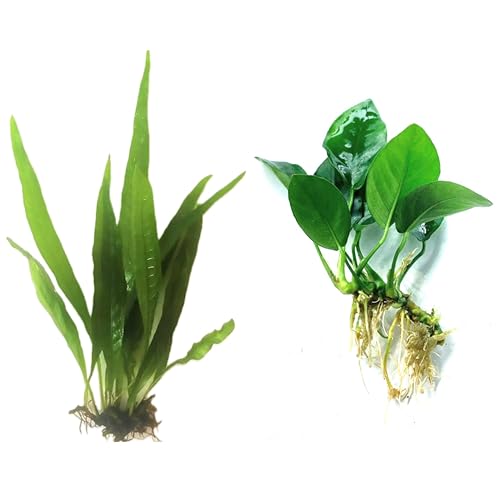
Easy low-light plant that gives bettas comfortable resting spots and natural shelter.

Hardy, low-maintenance plant that stabilizes water conditions without special substrate.

Fast-growing oxygenator that helps keep tank water clean and natural.
Explore today's best deals onAquarium Plants