You’ve picked the most forgiving betta in the hobby—a fish that’ll flash iridescent blues and reds through that swooping, asymmetrical tail whilst tolerating your rookie mistakes.
The veiltail‘s dominant VT gene means no genetic lottery surprises, and its four skin layers (think living stained glass) pop under dim lighting without needing a chemistry degree to maintain.
Budget $3–5 for the fish, then house it in a minimum 10-gallon tank—none of that teacup nonsense—with soft water at 76–81°F and a sponge filter angled to keep the surface glassy-calm for maze breathing (that’s their backup lung, basically).
Feed quality pellets plus frozen daphnia or bloodworms twice weekly, drop in one Indian almond leaf per two gallons for natural tannins and pH buffering, and you’ve got a four-year companion.
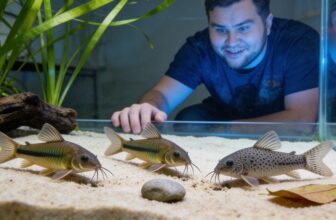
Tank mates? Small, fast neon tetras or peaceful corydoras work fine; anything semi-aggressive becomes an expensive snack.
Test weekly for zero ammonia and nitrite, keep nitrates under 20 ppm, and you’ll spend more time admiring finnage than troubleshooting water crashes—though there’s plenty more to know about breeding setups and disease prevention if you’re curious.
At A Glance
- House veiltail bettas in a minimum 10‑gallon long, shallow tank with depth under 12 inches for easy surface breathing.
- Maintain water at 76‑81 °F, pH 6.5‑7.5, and 3‑4 dGH with weekly 20‑30 % changes and zero ammonia.
- Feed quality pellets plus frozen daphnia or bloodworms on a regular schedule to enhance color and growth.
- Choose peaceful tank mates like neon tetras, African dwarf frogs, or Corydoras catfish; avoid semi‑aggressive species entirely.
- Add Indian almond leaves for tannins, bubble‑nest anchors, and bacterial reduction while monitoring weekly water parameters.
What Makes Veiltail Bettas Different?
So you want a betta that won’t cost a fortune or demand an advanced degree in genetics?
You’ve found your people. Veiltails are the original gateway betta, the one your dad probably had in college, and they’re still kicking around for $3–$5. No fancy gen breeding genetics required here—the dominant long-tail gene (that’s VT, if you’re feeling technical) passes reliably to offspring, so you won’t roll the dice on fin shapes.
Their coloration patterns come from four stacked skin layers: iridescent, red, black, and yellow. Males flash brighter hues and longer fins, while females rock an oval body and a visible ovipositor spot. For stable water conditions, consider a temperature controller to maintain precise heat and prevent stress.
Bottom line: Classic looks, beginner-friendly genes, wallet-approved.
Veiltail Betta Size and Growth Potential
Let’s clear up the “teacup betta” myth once and for all—you’ve probably seen those sad, tiny cups at the pet store and assumed these fish stay pint-sized forever. Nope. With proper care, your Veiltail reaches 2.25 to 3 inches, though genetic variability means some stay smaller.
Males show longer fins and flashier genal coloration—that’s the cheek area, by the way—while females stay plumper with shorter fins.
Growth potential depends on what you feed them and where they live. Cramped quarters stunt development, period. Give them room, quality pellets, and frozen treats, and you’ll watch your fish transform from that depresso cup survivor into a flowing-finned showpiece. A nutrient-rich diet with frozen daphnia and bloodworms enhances coloration and supports healthy growth.
Why Your Veiltail Needs at Least 10 Gallons
That cramped cup didn’t just stunt your betta’s growth—it set the stage for a lifetime of problems you’re now stuck fixing. You’re not a villain, just misinformed, but your veiltail’s paying the price.
Ten gallons changes everything. Here’s why:
- Water cycling actually works — bacteria colonies stabilize, breaking waste into safer compounds instead of toxic soup.
- Bubble nest territory — males need surface space to build their foamy love hotels; less room means stressed, half-hearted attempts.
- Swimming room — those flowing fins need space to stretch without snagging.
Small tanks crash fast. For example, most bowl options under 5 gallons fail to provide the stable filtered environment needed for long-term health. Your fish deserves better, and frankly? So do you.
Best Tank Shape for Surface-Breathing Bettas
Since your veiltail’s a surface breather—meaning he gulps air through a maze organ, basically a built-in lung strapped to his head—you can’t just shove him in any old tank and call it a day.
Skip the fancy vertical towers; your fish needs room to cruise that waterline like he owns it, since, well, he thinks he does.
Here’s your tank-shape playbook:
- Go long and shallow — more surface area equals easier labyrinth breathing, simple as that.
- Wide beats tall — bubble nest design needs stable, undisturbed territory up top.
- Limit depth to 12 inches max — nobody wants to swim a marathon for a breath.
- Prioritize surface tension control — avoid filters that churn like Jacuzzis.
For even light distribution, pair your long tank with a proper light riser bracket to eliminate dim corners and reduce algae growth.
Your veiltail’s not asking for a penthouse, just a ranch-style with good airflow.
Water Parameters That Keep Veiltails Healthy
If you’re going to keep a veiltail alive past the warranty period on your phone, you’ve got to stop treating water like an afterthought—it’s basically the air he breathes, except he’s swimming in it, which makes your job trickier and his more impressive.
Lock that thermometer at 76‑81°F (24‑27°C); swings stress him out. You need temperature filtration—meaning a heater with a reliable thermostat, not some bargain‑basement unit that’ll cook him while you’re at work. Soft water (3‑4 dGH) and pH between 6.5‑7.5 keep his colors popping.
Test weekly: zero ammonia, zero nitrite, nitrates under 20 ppm. Breeding algae control means dim lighting—8‑12 hours max—and no direct sun, unless you enjoy scraping green slime instead of watching your fish.
Twenty‑to‑thirty percent water changes weekly, no excuses. Your veiltail rewards you with flowing fins and bubble nests. Skip the testing, and you’re just renting heartbreak. For tanks below five gallons, investing in a wall‑mounted acrylic display simplifies maintenance while keeping your fish within safe temperature and water‑change routines.
How to Reduce Surface Flow for Your Betta
Your heater’s dialed in, your pH is behaving—now your betta’s getting pushed around like a leaf in a hurricane every time he swims up for air. Too much current ruins everything.
Too much current turns your betta’s world into chaos, pushing him around like a leaf in a hurricane every time he swims up for air.
Your guy builds that bubble nest, he needs the surface still as glass, not a washing machine. Dim lighting calms him too, keeps him from stress‑darting into the flow like he’s got somewhere to be.
Here’s how you fix it:
- Stick a sponge filter in there. Gentle, cheap, doesn’t churn the top.
- Angle your output nozzle upward. Breaks the current before it hits him.
- Add a water baffle. DIY a plastic bottle slice, done in five minutes.
- Plant thick up top. Floaters kill chop, give him refuge. Using airline tubing with check valves prevents backflow and protects your equipment during power failures.
What to Feed Your Veiltail and How Often
So what exactly goes into keeping a Veiltail’s fins flowing and colors popping without turning your tank into a buffet line gone wrong?
You feed **high-quality betta pellets, two to three pellets, two to three times daily**—think of it as breless breeding for your fish’s metabolism, no complicated spawning required.
Rotate frozen brine shrimp, bloodworms, or daphnia twice weekly; your Veiltail’s color genetics respond directly to protein diversity.
Blanch peas occasionally for fiber, since even showy fish need their greens.
Skip the sprinkle-and-walk-away routine. Uneaten food degrades water fast.
Remove leftovers within two hours, or two minutes with pellets.
Your fish stays lively, your tank stays clean, and you avoid that awkward “why is my betta bloated” conversation.
A protein-dense option like Fluval Bug Bites provides sustainable insect-based nutrition for occasional rotation.
Veiltail Tank Mates: Compatible Species and Risks
Since Veiltails carry the most laid-back reputation in the betta world, you might assume they’ll host a tank-wide mixer without drama—think again.
Laid-back betta? Think again—their bold colors still spark territorial fire, even in the chillest Veiltails.
Their bree behavior coloration still triggers territorial instincts, and long fins make tempting targets for nippy fish.
You’ve got options, but choose carefully.
- Neon tetras – small, fast, ignore your betta’s bubble-nest architecture
- African dwarf frogs – peaceful bottom-dwellers, won’t compete for surface space
- Corydoras catfish – stay low, clean up scraps, couldn’t care less about fin displays
- Cherry shrimp – risky snacks, but cheap enough ($2-3) to test the waters
Bottom line: ten gallons minimum, have a backup tank ready, and never trust a fish labeled “semi-aggressive.”
For water changes and tank maintenance, consider using a 5‑Gallon Collapsible Bucket to safely transport and hold conditioned water without spills.
Signs Your Veiltail Is Thriving or Stressed
Picking tank mates is only half the battle—you still need to know if your fish is actually happy, or just putting up with your nonsense.
Thriving signs: vivid fins, bubble nest construction (classic breeding behavior), and hearty appetite. You’ll see active swimming, upright posture, and colors that pop under proper lighting preferences—dim, 8-12 hours daily, no harsh glare.
Stress signals: clamped fins, faded color, horizontal stress stripes, hiding, or listless hovering. Erratic darting means something’s wrong, pal.
Check your water params weekly, keep that temp stable at 76-80°F, and watch. Your veiltail’s basically a tiny roommate who can’t text complaints—you’ve gotta read the room. Just as a stable stand prevents wobbling that stresses fish, your power‑integrated stand can simplify lighting and filter management.
Preventing Fin Rot, Ich, and Common Diseases
Fin rot doesn’t knock before it moves in, so you’ll want to lock the door ahead of time. Your veiltail’s flowing fins are gorgeous but fragile, making stress health and disease prevention your top priorities.
You’ll avoid heartbreak by following these basics:
- Test water weekly—ammonia and nitrite must hit zero, always
- Keep temperature rock-steady at 76-80°F; swings weaken immunity
- Quarantine new tank mates for two weeks minimum, no exceptions
- Feed varied, quality food without overloading the tank
Skip these steps, and ich—the fish equivalent of glitter—gets everywhere. Using only fish‑safe, non‑toxic glues for any repairs or aquascaping ensures no harmful chemicals leach into the water. Stay vigilant, stay consistent, and your fish stays golden.
How Indian Almond Leaves Improve Water Quality
Indian Almond Leaves are your tank’s quiet overachievers—cheap, low-effort, and weirdly effective at turning mediocre water into something your veiltail actually wants to swim in.
Drop one leaf per two gallons, and you’re basically brewing tea for your fish. The tannins leach out, tinting your water that appealing amber-brown your veiltail recognizes from home. These tannins aren’t just for looks—they fight bacteria, reduce stress, and help heal minor fin damage.
You’ll additionally get natural pH buffering, softening water toward that 6.5-7.5 sweet spot without chemical guesswork. Leaves float for bubble nest anchors, then sink as cozy hideouts. Replace monthly, or when they crumble to skeletons.
Testing and Maintaining Betta Water at Home
Since your veiltail can’t exactly tap you on the shoulder when something’s off, you’re stuck playing detective with a bunch of plastic tubes and color charts—and honestly, that’s not as terrible as it sounds. You’re joining thousands of fishkeepers who’ve learned that consistent testing beats crisis management every time.
Your veiltail can’t tap your shoulder, but consistent testing beats crisis management every time.
- Grab a liquid test kit ($15-25), not strips—they’re about as reliable as a weather forecast.
- Check ammonia, nitrite, nitrate weekly; zero, zero, under 20 ppm keeps your fish thriving.
- Monitor water hardness (GH 3-4 dGH, KH 3-5 dKH); stable levels mean less stress, better bubble nest construction.
- Change 20-30% weekly, match temperature, dechlorinate.
Bottom line: Test religiously, adjust sparingly.
Extending Your Veiltail’s Lifespan to 4+ Years
If you’re hoping your veiltail sticks around long enough to judge your taste in tank decorations, you’ll need to commit to the boring stuff—because four years doesn’t happen by accident, and wishful thinking won’t keep ammonia at zero.
You’ll test water weekly, like it or not. Bubble nest building? That’s your boy feeling safe. No bubble nest plus stress‑stripe detection means trouble—fix it fast.
| Sign of Health | Action Required |
|---|---|
| Bubble nest present | Pat yourself on the back |
| Faded colors | Check temperature, ammonia |
| Horizontal stress stripes | Immediate water change, reduce flow |
| Clamped fins | Test all parameters |
| Lethargy + no appetite | Quarantine, consult vet |
Skip the 2‑gallon bowl. Give him 10+ gallons, warm clean water, and frozen bloodworms. You’re in this together now.
Can Beginners Breed Veiltail Bettas Successfully?
Breeding veiltail bettas isn’t impossible for beginners, but you’ll need more patience than a parent waiting for a teenager to clean their room.
You’re joining a community of hobbyists who’ve cracked genetics—veils carry one dominant gene (VT), so fry usually stay true to type, no fancy Punnett squares required. Still, breeding demands prep.
Your starter checklist:
- Source adults from a breeder ($15-30 pair), not big-box stores with mystery genetics
- Condition with live foods for two weeks minimum
- Set up a 10-gallon shallow tank, 80°F, with floating plants for bubble nests
- Remove the female post-spawn, then dad after fry free-swim—cannibalism’s real
Microworms cost pennies, egg yolk works two days, then switch.
You’ll lose fry. Everyone does.
Worth it? Absolutely. There’s nothing like watching your first bubble nest hatch, trust me.
Frequently Asked Questions
Do Veiltail Bettas Recognize Their Owners?
Yes, you’ll notice they respond to you specifically. They track your movement, flare less aggressively at familiar faces, and often swim to the glass during feeding times—classic owner interaction. It’s not deep emotional bonding, more like species recognition tied to food and safety.
- They’ll ignore strangers, greet you—sort of their version of a handshake
- They learn routines, not names
Bottom line: you’re basically a vending machine they tolerate, and honestly, that’s healthy.
Can Veiltail Bettas Jump Out of Open Tanks?
Yes, they absolutely can. Your Veiltail’s jumping behavior is no joke—those long, flowing fins don’t slow them down.
- Bettas are maze fish, meaning they gulp air at the surface, so they cruise up there constantly
- A startled betta can launch several inches, sometimes more
- Tank height matters less than you’d think; they’re horizontal jumpers, not high divers
Secure that lid. Seriously. You’re not trying to explain to a five-year-old why “Blueberry” went carpet surfing.
Bottom line: no open tanks, no exceptions.
Is a Heater Necessary in Warm Rooms?
Yes, you’ll need a heater.
Even warm rooms fluctuate, and your Veiltail craves temperature stability—think 75-82°F, no exceptions.
A $15-25 adjustable heater with a built-in thermometer keeps things steady, since “room temperature” swings at 2 AM when you’re asleep.
Your fish won’t forgive you for chills.
Get the heater, set it, forget it—sleep easy knowing your betta’s cozy.
How Often Should I Change Filter Media?
You shouldn’t change all your filter media at once—ever.
Rinse mechanical sponges monthly in tank water, not tap, and replace only when they fall apart, typically every 6–12 months.
For chemical media like carbon, swap it every 3–4 weeks since it exhausts fast.
Your beneficial bacteria live in that gunk, so preserve it, or you’ll crash your cycle and stress your fish.
Why Did My Veiltail Lose Its Color?
Your Veiltail lost color due to stress, plain and simple.
Check your water quality first—ammonia or nitrite spikes will drain that vibrancy fast.
You’re running the tank too small? That’ll do it.
Lighting duration matters too; 8-12 hours max, or you’re throwing off their rhythm.
Gen stress from cramped quarters, bad parameters, or bullying tankmates fades those four skin-cell layers.
Fix the environment, the color returns.
Rounding Up
Look, your Veiltail‘s not demanding a penthouse suite, but it does want room to stretch those dramatic fins without turning into a decorative roomba bumping glass. Ten gallons, stable water, decent food—that’s the difference between a fish that’s merely surviving and one that’s thriving. Skip the flashy gimmicks, nail the basics, and you’ll have a companion that sticks around long enough to judge your life choices. Worth it? Absolutely.