I’ll break the rules that never made sense anyway.
I keep my filter media dirty—rinsing sponges in old tank water, never tap, since that bacterial colony is doing the heavy lifting.
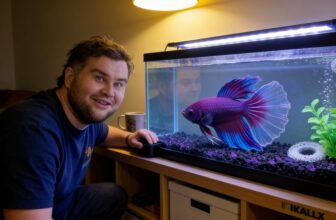
I stock by fish behavior, not gallons; my betta needs five gallons, indeed, but my danios need length to sprint.
I test weekly, change water when chemistry demands it, not since the calendar says so.
I’ll let algae coat the back glass—free nitrate sponge, that—while I keep the front clean for viewing.
And quarantine? I’ll skip it if I know the breeder’s reputation, though I accept that’s a gamble.
These aren’t rebellions, really—just paying attention instead of following scripts—and there’s more where this came from if you’re curious.
At A Glance
- Keep sponge filters dirty by rinsing in old tank water to preserve beneficial bacteria.
- Replace inch‑per‑gallon calculations with species‑specific spatial and behavioral needs.
- Skip scheduled water changes when weekly tests show stable parameters.
- Allow algae growth on back glass to naturally filter nitrates and phosphates.
- Omit quarantine when introducing fish from verified, reputable breeders.
Keep Your Filter Media Dirty (It Saves Your Fish)
- Rinse sponges in old tank water only, never tap—chlorine’s a bacterial massacre
- Squeeze gently, don’t scrub sterile; you’re preserving colonies, not detailing a car
- Skip that “change every 30 days” nonsense on the box; it’s salesman math, not fish math
My bacterial balance took months to establish.
Now, my cleaning schedule bends to water stability, not calendar alerts.
When ammonia reads zero, I shrug and walk away.
The gunk stays.
Even bio sponge filter media like the Aquaneat pads can harbor these vital bacterial colonies while blocking fish waste without the recurring cost of replacement socks.
Stock by Behavior, Not Gallons: The Real Aquarium Math
I threw out my inch-per-gallon calculator years ago, right around the time I crammed twenty neon tetras into a 10-gallon and watched them flare, sulk, and eventually die—not from poisoned water, but from psychic claustrophobia, that fishy despair of nowhere to sprint.
Now I weight tank capacity by behavior, not volume. A betta loafs in five gallons; zebra danios need a runway.
Calculate tanks by how fish live, not liters they hold.
- Species compatibility matters more than math
- Active swimmers need length, not just liters
- How you care fish—plants, filtration, maintenance—shapes real capacity
Heavy planting and sponge filters? You’re freer than any rulebook admits.
A stable stand with adjustable leveling feet prevents wobbling that stresses skittish fish more than cramped quarters ever could.
Test Water Weekly: Change It When Needed
Sometimes I skip water changes for three weeks straight, and my fish don’t stage a mutiny—they’re too busy nibbling algae off the anubias to care.
And here’s the thing: I still test. Weekly testing, religiously. Parameter monitoring tells me when the tank actually wants fresh water, not when the calendar says so. Ammonia zero, nitrates tolerable? I’m good. It’s like checking your oil instead of changing it every Tuesday.
A robust 7-in-1 test kit covering pH, nitrite, nitrate, and chlorine gives me the full picture without multiple trips to the store.
Now, I’m not sloppy—I mean, I own a test kit, I use it—but I trust data over dogma. Stable chemistry matters more than my bucket schedule.
Join the club. We’re not lazy; we’re empirical.
Let Algae Live: Your Tank’s Natural Cleanup Crew
Since I’ve learned the hard way that spotless glass is for living rooms, not living ecosystems, I stopped apologizing for the green haze on my back panel three years ago.
Now I watch my otos scrape it clean as the stuff does my filtering for me.
Algae benefits run deeper than most hobbyists admit—it’s your tank’s original workforce, pulling nitrates, phosphates, whatever’s building up, straight from the water column.
Natural filtration doesn’t need a plug.
I mean, sure. Wipe the front glass. Keep the view.
But that back wall? That’s a buffet, a buffer, a badge that says you belong here.
For aquarists who still prefer mechanical control, granular ferric oxide works in reactors to bind phosphate before algae ever sees it.
Skip Quarantine Only When You Trust the Source
Though I’ve preached quarantine sermons with the fervor of a convert, I’ll admit I once smuggled a dozen neon tetras straight from a breeder’s greenhouse into my display tank—no bucket, no waiting room, no drama. They thrived. Trusted source vetting matters more than rigid protocols when you know the water parameters, the feeding schedule, the breeder’s reputation like a neighbor’s. A 3‑gallon betta tank offers enough stability to absorb minor bioload shocks from carefully vetted fish, making calculated introductions less risky than in volatile nano setups.
| What I Check | Why It Matters |
|---|---|
| Tank cleanliness | No detritus, no ich |
| Breeder’s documentation | Health history, water params |
| My own tank stability | Minimizes introduction shock |
Direct fish introduction isn’t reckless—it’s calculated intimacy. We’re building trust, not just tanks.
Frequently Asked Questions
Can I Use Tap Water Without Dechlorinator?
I use tap water without dechlorinator only when chlorine levels read zero through chlorwater testing.
Most municipal water contains chloramine or chlorine, both toxic to fish gills and beneficial bacteria.
I mean, skipping dechlorinator is a gamble, really.
Now, some well water users get lucky, but I’ve learned municipal supplies fluctuate. Test first. Always.
My fish tank, my call, but dead fish teach expensive lessons, friend.
How Often Should I Feed My Fish?
I feed my fish once, maybe twice daily—small pinches they finish in two minutes.
My feeding schedule stays loose; I skip days when I’m lazy, and they’re fine.
Portion size? Think “less than their eyeball,” not handfuls.
Overfeeding’s the real killer, not hunger.
I mean, fish don’t have watches.
They’ll beg forever—ignore them.
Now, frozen bloodworms? That’s my weekend treat, not daily bread.
Do I Need an Air Pump in My Tank?
Now, if your fish are gasping at the surface, that’s your cue. Surface agitation matters more than bubbles themselves. I use:
- Hang-on-back filters
- Sponge filters with gentle flow
- Lily pipes
Air pump alternatives work fine when you’ve got decent water movement and moderate stocking. Test, watch your fish, adjust.
What Temperature Is Safe for Tropical Fish?
Most tropical fish thrive in the 75-80°F tropical range, though I’d check your specific species since “tropical” covers a lot of ground.
Now, temperature fluctuations matter more than hitting some magic number—swings of more than 2-3 degrees daily stress fish, weaken immunity. I mean, consistency beats precision here.
- Use a reliable heater with ±1°F accuracy
- Place it near filter flow for even distribution
- Monitor with two thermometers—trust neither completely
Stable, slightly wrong beats perfect, volatile.
How Do I Know if My Fish Are Sick?
I spot sick fish by watching behavior symptoms—erratic swimming, gasping at the surface, hiding when they’re usually bold, or ignoring food like it’s a bad joke.
Water quality’s the usual culprit, honestly. I test ammonia, nitrite, nitrate weekly; spikes make fish vulnerable before visible signs appear.
- Clamped fins? Probably stressed or infected.
- White spots? Likely ich, that irritating parasite.
- Torn fins? Aggression or rot setting in.
I mean, I’d rather catch trouble early than play marine coroner later.