You’re buying a genetic oddity, not a sick plant—variegation is a chimera, where cell layers carry different DNA like stripes in toothpaste. Stick with stable periclinal types, since sectorial chimeras revert faster than your resolve to skip that next plant order. Right, the lineup: *Nymphaea lotus* brings moody spots, *Shinnersia rivularis* flaunts white veins, *Acorus gramineus* offers pale-edged blades, and the marbled Anubias “Pinto” is a slow-growing, low‑light‑tolerant oddball that refuses to fade. You’ll need higher light to compensate for lazy chlorophyll, keep PAR at 20–30 µmol m⁻² s⁻¹ with a strict 6–7 hour photoperiod, dose CO₂ steadily like a metronome, and feed iron to pale patches. Propagation demands finesse—tip cuttings from the top few inches or grafting with a ~15% success rate, always culling reverted green shoots to prevent a botanical mutiny. Caring for them is part science, part hostage negotiation—and honestly, the rest of the guide will probably save your scape.
At A Glance
- Variegation stems from chimeras with mutations in distinct shoot meristem layers, creating stable periclinal or marbled patterns.
- True genetic variegation shows sharp, consistent borders, unlike nutrient deficiencies which cause fuzzy, spreading paleness.
- Stable variegated types include Tiger Lotus, Shinnersia “White‑green”, Variegated Sweet Flag, and Anubias “Pinto”.
- Provide 20–30 µmol m⁻² s⁻¹ PAR, steady CO₂, and a 6–7‑hour photoperiod to support pale tissues and deter algae.
- Propagate patterns by top‑snip cuttings or grafting variegated scions, immediately culling any reverted green shoots.
What Makes a Plant Variegated in the First Place?
You’ve probably squinted at a neon-pink stem plant at the pet shop and wondered if someone splashed bleach on it—but that streaky, speckled, or edge-painted look isn’t a factory error.
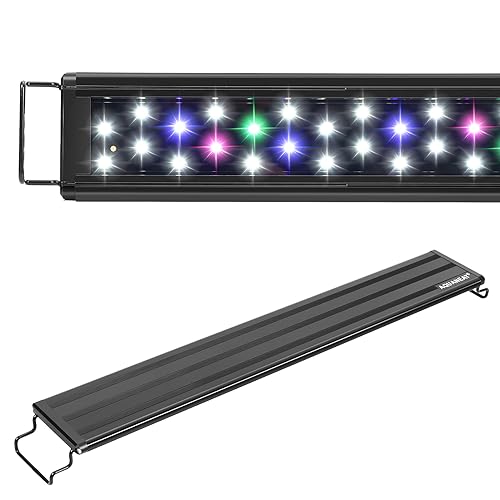
Gives variegated plants the light they need for stable, compact growth.

Delivers steady CO2 to keep pale leaves healthy and prevent algae.

Restores the iron that keeps variegation crisp and prevents yellowing.
Check discounted items inPlanted Aquarium Supplies
That streaky, speckled, or edge-painted look isn’t a factory error. It’s a botanical patchwork quilt.
It’s a chimera: a plant with genetically distinct cell layers, like a botanical patchwork quilt.
The shoot tip’s microscopic layers—L1, L2, L3—mutate independently, so you get stable white edges (periclinal) or marbled speckles (meridional patterns).
True variegation isn’t a disease or nutrient glitch; it’s a built-in quirk.
Think of it as nature’s tie-dye, only slower-growing and pricier. This slow growth is partly because the white sectors lack chlorophyll, making them rely on precise light conditions, similar to how a high light transmission mesh lid is critical for maintaining aquarium plant health.
Bottom line? If the pattern’s crisp and consistent, it’s a genuine chimera.
Unlike artificial alternatives that require no pruning and stay color-fast, a living chimera’s variegation is a dynamic and demanding biological process.
Naturally Variegated Aquarium Plants Worth Knowing
Now that the whole chimera thing’s settled—you’re hunting for plants that strut their stripes without a laboratory intervention. You’re in luck, since nature’s already showing off. These are your must-know, naturally variegated gems:
- Tiger Lotus (*Nymphaea lotus*) – Broad leaves splashed with dark, moody spots, no lab coat required.
- Shinnersia rivularis “White‑green” – Its veins forgot how to make chlorophyll, creating a stark roadmap of white against green.
- Variegated Sweet Flag (*Acorus gramineus*) – Crisp, pale edges that look painted on, a true periclinal stable showpiece.
They’re slow growers—less green means less gas in the tank—so be patient or you’ll just cultivate algae.
Chimera Genetics: How Cell Layers Create Color
Since each leaf’s color story starts underground—well, at the shoot tip, inside a tiny dome called the shoot apical meristem, or SAM—understanding variegation means zooming into the three‑layer club sandwich that builds every stem and leaf.
You’ve got L1, your outer wrapper, L2, the edge‑maker, and L3, the solid core.
A mutation stuck in just one layer creates a chimera—a genetic patchwork, not a fully mixed smoothie.
So if L2 lacks chlorophyll, your leaves flaunt white edges, like a sharp‑dressed ghost.
It’s not sick; it’s just genetically quirky.
Belong to this club: you’re not fixing a problem, you’re curating a layered masterpiece.
Much like a Twig Catfish relies on its own layered genetic toolkit to build tiny, sandpaper‑like scraping structures instead of true teeth, a plant’s chimeric identity is a similarly specialized mosaic.
This genetic patchwork echoes how a collapsible bucket uses double‑stitched seams to create distinct structural zones from a single material.
Mericlinal, Periclinal, and Sectorial Chimeras Explained
What determines whether a plant’s variegation sticks around or pulls a disappearing act? It’s all about which shoot **meristem** layer got hit by the mutation. You’ve got three chimera types—I once called a mericlinal “moody,” don’t be me.
- Mericlinal: mutant wedge in one layer. Fades faster than your New Year’s resolution.
- Periclinal: whole layer’s mutant, stable as your trusty coffee mug. Grab Ludwigia ‘White-and’ for about $12 online.
- Sectorial: vertical mutant slice through all layers. Unstable—might ghost or suddenly explode in growth.
Bottom line? Periclinal chimeras stick. They’re the reliable pals in your planted tank. A cyanoacrylate gel bonds tissue in seconds, just like it anchors coral frags underwater. For consistent results, using a meter with auto-calibration up to 3 points simplifies weekly maintenance.
The Marbled Chimera and the Anubias “Pinto”
Unlike its mericlinal and sectorial cousins, a marbled chimera treats stability like a permanent, messy fingerprint—no disappearing acts here. You’ve met the Anubias ‘Pinto’, our hobby’s patchwork sweetheart. It’s a slow-grower, certainly, but that just means less trimming for you. Spot-clean debris from its pale leaves gently with a turkey baster to prevent algae without disturbing the roots. Its gentle needs make it compatible with the low current of an undergravel filter uplift tube, preventing debris buildup.
| Trait | Reality |
|---|---|
| Speed | Glacial, but steady. |
| Light | Low to avoid algae on pale bits. |
| Multiply | Rhizome division keeps the pattern. |
| Price | $20ish, a slow-sculpture tax. |
True Variegation or Deficiency? How to Tell the Difference
Spotting the difference between a true genetic variegation and a nutrient tantrum can feel like diagnosing a rash—awkward, but totally doable once you know the signs.
You’re looking for a stable pattern, not a plant’s cry for help.
That white‑edged *Hygrophila lancea* “Chai” you paid $25 for? It’s a periclinal chimera, a genetic mix in its shoot tip.
Check these clues:
- Edges: Sharp, consistent borders mean chimera; fuzzy, spreading paleness usually means your fertilizer routine stinks.
- Veins: Dark green veins with yellow between them point to an iron shortage, not a cool mutation.
- Whole Plant: True variegation shows up across all leaves, not just the oldest ones sulking at the bottom.
Is It Disease? Spotting Mosaic Virus and Leaf Pathogens
Sometimes your “cool new mutation” is actually a virus throwing a tantrum, and mosaic viruses in aquarium plants love to impersonate legit variegation.
You’ll spot the difference quickly: mosaic patterns look blurry, with twisted growth and fading spots, not crisp edges.
It’s like your plant caught a bug—literally.
True chimeras boast sharp, stable margins, whereas viruses cause deforming, inconsistent markings.
I’ve been fooled before.
Remember, healthy plants don’t look patchy and sad.
So, if it’s fuzzy and spreading, isolate it.
Bottom line: A clean, stable pattern means you’ve got a gem; otherwise, it’s just a pathogen tantrum.
Why Variegated Plants Grow Slower Than Green Ones
So you’ve weeded out the fakers—viruses, nutrient gaps—and now you’re holding a genuine, white‑streaked chimera that just sits there like a couch potato as your green plants sprint toward the light.
Blame it on chlorophyll, or rather, the lack of it. Those creamy sections are genetic freeloaders, unable to photosynthesize. Your plant’s working with a partial solar panel.
- Less chlorophyll means less energy produced.
- The plant submerges sugars to sustain unproductive white tissue, like a leaky bucket.
- Variegated plants act like shade‑avoiders, saving energy instead of bolting.
Bottom line: Accept the slow pace; it’s not you, it’s the chimera’s laid‑back lifestyle. This energy deficit makes them as slow to bulk up as a full cure 24‑hr epoxy, so stop blaming your care routine. Even under high‑output 7000 K LED lighting, the white tissue simply cannot convert that lighting quality into growth.
How to Keep Variegated Aquarium Plants Thriving
Once you’ve accepted that your variegated plant isn’t just being stubborn—it’s running on half a tank of gas thanks to those chlorophyll‑poor patches—you can actually keep it thriving with a few low‑fuss tweaks.
You’ll baby them a bit: sip on CO₂ steady as a metronome, since they can’t photosynthesize fast enough to outrun algae.
Trim that one renegade green shoot—it’s an Olympic marathoner hogging the buffet.
And please, no ammonia spikes; these divas detest drama.
Just a weekly 25% water change, a tiny squirt of iron for those pale patches. Incorporate full-spectrum lighting to compensate for limited photosynthesis. Maintaining consistent buffer capacity through regular dosing also helps stabilize pH and reduce plant stress. And you’ll feel like a plant whisperer in no time.
Lighting Demands for Chlorophyll-Deficient Leaves
When your variegated plant’s got less chlorophyll than a ghost in a snowstorm, you can’t just blast it with light and hope for the best—those pale patches are basically solar panels with half the plugs pulled, so they’ll fry faster than a vampire at a beach party. You, savvy aquarist, need a gentler touch. Think of it like a dimmer switch, not an on/off toggle.
- Start low: Aim for 20–30 PAR at the substrate—enough to tickle green parts without scorching white ones.
- Shorter photoperiods: Cap lights at 6–7 hours; these slowpokes can’t process a marathon day. Many timer-equipped lights offer preset cycles like 6-hour durations that prevent accidental overexposure.
- Use floating plants: Frogbit or salvinia naturally dapple light, creating forgiving shade zones.
Many small kits offer adjustable multi-color LED brightness that lets you fine-tune intensity for delicate leaves. It’s all about finding that sweet spot where your plant feels like part of the crew, not an outcast. Bottom line: Dial back intensity, lean on diffusion, and your chlorophyll-challenged friend will thrive without turning into leaf jerky.
How to Propagate Without Losing the Variegated Pattern
Why does snipping a stem of your fancy variegated Ludwigia sometimes give you a pot of plain green leaves instead of that coveted white-and-pink brushstroke? Blame the chimera—a plant Jenga of mutant and normal cell layers.
Your Ludwigia’s white pattern lives in layer two, like frosting on a cake. Cut below a node, and the new shoot might sprout from layer three, which is all green.
Think of your Ludwigia as a layered cake. Snip wrong, and you’ll only serve up green.
Easy fix: always take tip cuttings, those top few inches where the layers mingle. Or pinch off a variegated side shoot. It’s less plant surgery, more tip-picking. For cuttings that need temporary isolation, a setup with transparent observation windows allows you to monitor root development without disturbing the delicate new growth. The gentle flow from a spray bar flow distribution prevents turbulence that can damage these sensitive cuttings.
Bottom line: top-snip, don’t chop. You’ll keep your brushstroke.
Why Seeds Won’t Grow Variegated Offspring
It’s a letdown, certainly—you harvest a seedpod from your prized “Pinto” Anubias, nurse the seedlings for weeks, and all you get is a tub of plain green sprouts.
This happens because your showpiece is a marbled chimera, a mix of genetically distinct cell layers. Seeds, however, don’t inherit this mix.
- Seeds form from one layer, often the L2, and lose the vital mutated companion layer.
- Sexual reproduction resets the genetic deck, discarding the unstable variegation.
- You’re not doing it wrong—it’s a botanical dead end, like expecting a lottery ticket to win twice.
Stick to cuttings if you want more of that leafy gold. For stable multiplication, isolating a prized specimen in a transparent acrylic breeding box allows you to monitor new cuttings without disturbing the parent plant. Maintaining a stable environment is critical, so pairing the setup with a digital hygrometer helps you track humidity shifts that could cause transplant shock.
Grafting and Callus: How to Create New Chimeras
So seeds are a bust for multiplying your variegated treasures—no way around that botanical lottery reset. You can forge new chimeras through grafting, though. It’s like plant surgery: you join a variegated scion onto a vigorous rootstock, then wait for callus—a healing tissue blob—to form at the wound. From that chaos, new shoots sometimes emerge with shuffled cell layers. It’s slow, messy, and honestly, our success rate hovers around 15%. But when it works, you’ve birthed a one‑of‑a‑kind pattern. Much like how reusable sponges reduce long‑term costs in aquarium systems, establishing a perpetual mother plant from a successful graft saves you from repeating the finicky process.
| Method | Your Goal |
|---|---|
| Graft two stems | Force cell‑layer mixing at the union |
| Let callus develop | Trigger disorganized growth from wound cells |
| Regenerate shoots | Capture a new, stable sectorial pattern |
Bottom line: grafting isn’t cloning, it’s creative chaos—perfect for shaping your own aquatic clan. Just as L-Ascorbyl-2-Polyphosphate resists breakdown in water, a well-established graft can provide consistent variegated beauty over time.
Meristem Selection: Stabilizing Unstable Patterns
When you’re staring down a plant that can’t make up its mind—half emerald, half ivory, one branch stable and the rest melting back to plain green—the fix often sits right at the tip, in a tiny dome of chaos called the shoot apical meristem, or SAM for short. You just need to coax it toward stability. Here’s how:
- Spot a branch with consistent, crisp variegation—no muddy edges.
- Snip its tip, where the SAM’s layers are still arguing, and root that cutting.
- Repeat, culling any reverted green shoots, until the pattern holds.
It’s like convincing a stubborn friend to commit—patience wins. Similarly, the simplest fish puns transcend language, proving that a well-placed “fintastic” can ease any social current. You’re not just pruning; you’re curating a living mosaic.
Frequently Asked Questions
Can I Force My Aquarium Plant to Become Variegated?
You can’t reliably force a plant to variegate—it’s mostly genetic luck.
You’re better off nurturing those rare, unstable sports that pop up on their own, since intentional methods like grafting are fussy aquatic nightmares.
A beautiful tiger lotus with its moody black splotches? That’s a freak of nature you simply buy, not bully into existence.
Don’t chase unicorns; your tank chemistry is better spent on a stable, periclinal chimera from a trusted seller.
Do Variegated Plants Need Co₂ Injection?
No, you don’t need CO₂ injection just for variegation’s sake, but it certainly smooths the road. These plants, often chimeras with less chlorophyll, grow slowly and demand steady care—liquid carbon’s a fine budget alternative at about $12 a bottle.
- CO₂ boosts: stronger color stability, faster recovery from cuts, fewer algae battles.
- Without it: expect leggy stems, duller patterns, and a bit of sulking.
Bottom line: splurge on gas if you’re serious, but a low-tech setup won’t guarantee failure.
Why Did My Variegated Plant Revert to Solid Green?
Your plant reverted since it’s a chimera—a mix of normal and mutant cell layers—and the normal, more vigorous green layer won out. This often happens when you trim below a variegated node, losing the patterned shoot tip. It’s just nature being ruthlessly practical.
- Light stress: Too little light, and the plant prioritizes green chlorophyll to survive.
- Nutrient imbalance: Over-fertilizing can favor the faster-growing green tissue.
Propagate only from branches showing strong variegation, and cross your fingers—sometimes they stay.
Are White-Leaf Aquarium Plants Harder to Keep Alive?
Yes, they’re fussier—you’re dealing with a plant that has less chlorophyll, its solar panel.
So growth slows to a crawl, and it throws a tantrum if light, CO₂, or nutrients dip.
- Expect algae magnets—bare white patches don’t photosynthesize.
- They melt back more readily in new tanks.
- Pay attention: stable periclinal chimeras, like that ‘White‑and’ Ludwigia, survive, but a random mutant often fizzles.
Stick to easy ones, or accept you’ll become a helicopter plant parent feeding liquid carbon, and you’ll manage fine.
Can I Fix a Nutrient Deficiency Without Losing Color?
You can fix a deficiency and keep that splashy color, but do it gently. First, rule out a true chimera—those sharp-edged white zones won’t turn green from mere feeding.
- Target the specific shortage: yellowing between green veins usually screams iron or magnesium, not nitrogen.
- Dose lean, liquid fertilizers at half-strength so you don’t blast your slow-growing plant with a buffet it never ordered.
- Watch new growth; a periclinal chimera’s crisp white margin stays put while the green bits perk up, like redecorating only the rooms you actually use.
It’s just steady, modest nutrition, not a buffet.
Rounding Up
You can now tell a true chimera from a deficiency.
- Grab a stable periclinal Anubias Pinto ‘White’ (~$45) and propagate by cutting above a node, keeping the L2 layer.
- Skip seeds—they revert.
Melt a leaf? I’ve toasted plenty of pricey rhizomes myself. But with low light, a whiff of CO₂, and steady hands, your living mosaic will thrive. So go on, buy that weird leaf.

Trims top cuttings and culls reverted green shoots with one clean snip.

Places delicate variegated stems and rhizome divisions gently without damage.

Anchors Anubias and grafted pieces within seconds, even fully underwater.
See today's best deals onAquascaping Tools