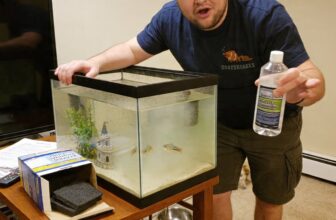
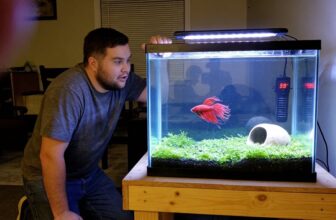
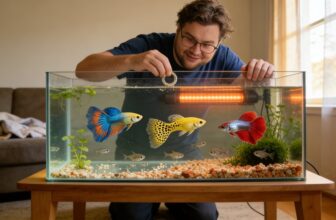
Cloudy water won’t kill your fish instantly, but it’s basically making them swim through their own filth—not exactly a spa day.
The cloud itself isn’t the killer; it’s what’s hiding inside: ammonia spikes, oxygen crashes, or bacterial chaos that can turn your tank into a fish graveyard within days.
You’ve got three main culprits—milky gray bacterial blooms, green algae explosions, or white specks from un‑rinsed gravel—each needing a different fix.
Your first move is always test the water, swap out 25% with dechlorinated stuff, and stop feeding until you know what’s up.
Most cloudiness clears in one to two weeks with patience, but ignoring it invites fin rot and sudden death—think of clarifiers as $15 band‑aids and UV sterilizers as $60 preventative surgery.
Stick around, and you’ll learn exactly which fix matches your murk.
At A Glance
- Cloudy water itself is usually harmless short-term, but its root causes—ammonia spikes, low oxygen, or toxins—can stress or kill fish.
- Milky gray bacterial blooms, green algae outbreaks, and brown decay water each signal different dangers requiring specific fixes.
- Test ammonia and nitrite immediately; perform 25% water changes with dechlorinated water until parameters stabilize and clarity returns.
- Reduce feeding, cut lighting to 6–8 hours, and add floating plants to starve algae and bacterial blooms at their source.
- Persistent cloudiness needs filtration upgrades—UV sterilizerskill free-floating pathogens while activated carbon absorbs dissolved organic pollutants.
What Causes Cloudy Aquarium Water?
When you peek at your aquarium and find it resembling a glass of skim milk rather than the crystal-clear entryway you envisioned, several overlapping culprits are throwing a microscopic party in your water column.
Your substrate selection matters more than you’d think. Skip rinsing that bag of gravel, and you’ll have particles floating for days, like a snow globe nobody asked for.
Then there’s your lighting schedule—leave those LEDs blazing 12 hours daily, and algae blooms turn your tank into pea soup. Bacterial blooms during cycling? Totally normal, if unsightly.
Overfeeding’s the classic rookie move. That extra pinch? It’s rotting, clouding everything, and your fish aren’t impressed.
While addressing cloudiness, a magnetic aquarium lid can help prevent fish from jumping during cleaning or maintenance.
What to Do Right Now to Clear Cloudy Water
You’ve stared at that murky tank long enough—time to roll up your sleeves, not that you actually need sleeves for this, but you get the idea.
First, test your water chemistry. Grab a liquid test kit ($15–25), since strips lie like cheap rugs. You’re checking ammonia and nitrite—if either’s spiking, you’ve got a bacterial bloom on your hands. Liquid master kits provide detailed quantitative readings for precise ammonia and nitrite levels that strips often miss.
Liquid test kits only—strips lie like cheap rugs. Check ammonia and nitrite for bacterial blooms.
Next, shut your filter filtration off for ten minutes, let the gunk settle, then restart it. Surprisingly simple, right?
Now siphon out 25% of that cloudy water, replace it with dechlorinated, temperature-matched water. Skip feeding today. Your fish won’t starve—they’ll actually appreciate the break.
Finally, stuff some activated carbon in your filter. It’s like a Brita for your tank, soaking up dissolved crud the mechanical filtration misses.
Those three steps—test, settle, and exchange—cover the immediate triad. Do this now, breathe easier tonight.
How Much Water to Change: and When
Since cloudy water rarely fixes itself, you need a water-change game plan that actually matches the problem you’re facing. You’re not alone in staring at murky water, wondering if you’re doing too much or too little.
For bacterial blooms, you’ll swap 20-25% water volume every 24-48 hours until it clears—think of it as diluting bad soup, not throwing out the pot. Algae troubles? Same water volume, but stretch your optimal schedule timing to twice weekly, cutting nutrients without shocking your tank’s chemistry.
New tank syndrome demands patience—small 10-15% changes weekly, letting bacteria establish. Your fish depend on consistency, not heroics.
- Too little: ammonia builds, fish suffer
- Too much: you crash the cycle, fish suffer worse
Bottom line: match water volume to severity, lock in optimal schedule timing, and trust the process. Your tank’s a living thing—treat it like one.
During water changes, adding electrolytes for gill function from a quality freshwater salt like API Aquarium Salt can aid disease recovery and reduce stress on your fish.
Which Type of Cloudiness Is in Your Tank?
Not all cloudiness is created equal, and your tank’s basically sending you a coded message through that murk.
Here’s your decoder ring:
- Milky gray — bacterial bloom, usually in new setups. It’ll clear in a week or two, patience, grasshopper.
- Green pea soup — algae bloom. Your light types are overachieving, or you’re basically running a fertilizer factory with extra fish food.
- Brownish yellow — decaying waste. Your filtration’s slacking, or you’re overfeeding like it’s Thanksgiving.
- White specks — substrate debris. Did you rinse that gravel? No judgment. (Okay, some judgment.)
- Hazy tap water — minerals or unconditioned water hitting you right out the gate.
Check your light duration, upgrade that filtration if it’s gasping, and you’ll crack the code. For a precise diagnosis, use API GHKH Lab-Accurate Certified Kit to test for pH, hardness, and carbonate levels in your tank.
How to Fix Bacterial Bloom in New Aquariums
Bacterial bloom hits new tanks like a fog rolling in off the coast—thick, annoying, and surprisingly normal.
You’re cycling a new tank, and billions of bacteria are throwing a party in your water column. Don’t panic—you’ve got this.
- Cut feeding to every other day; starving the bloom beats adding chemicals
- Skip water changes for now; you’re just feeding the cycle (dad joke: it’s like mowing your lawn in the rain)
- Add an air stone; bacteria choke oxygen fast
- Test ammonia daily; that’s your real enemy, not the haze
Your bacterial bloom will settle. Patience beats panic, every time.
For long-term clarity, ensure your tank seams are sealed with a 100% silicone sealant to prevent leaks that could introduce contaminants.
How Long Bacterial Bloom Really Lasts
You’ve got your bacterial bloom handled, or at least you’re not panicking about it anymore, but now you’re staring at the tank wondering when this milky haze will actually pack its bags and leave.
Here’s your straight answer: bacterial bloom duration typically runs 1 to 2 weeks, sometimes stretching to 3 if your cycle timing stalls. Those cloudy bacteria are actually your tank’s workforce—colonizing surfaces, processing ammonia, doing the invisible heavy lifting. Faster colonies establish, faster clarity returns.
- Patience beats panic: resist massive water changes, they reset progress
- Test ammonia daily; if it spikes hard, you’re off schedule
- Temperature around 78°F speeds bacterial reproduction
Bottom line? Let it ride. Your future clear water lives inside this awkward phase. During this bloom, ammonia must be 0 ppm to prevent additional stress on your fish.
How to Stop Green Water Algae for Good
Green water algae turns your tank into an aquarium-shaped pea soup, and it’s not going anywhere until you cut off its all-you-can-eat buffet.
Nutrient control is your Excalibur here. You’re not fighting magic, just biology, and green algae loves your laziness.
- Slash feeding—your fish aren’t starving, you’re just projecting. Less food, less nitrogen.
- Black out the tank for 48-72 hours. No peeking.
- Add floating plants like Salvinia ($8-12)—they’ll outcompete algae for nutrients.
- Install a UV sterilizer (9W for 40-gallon tanks, around $40-60)—zaps free-floating algae, dead.
- For persistent outbreaks, run an adjustable ozone generator alongside your filter to oxidize dissolved organic waste before algae can feed on it.
Stay consistent, or you’ll be right back here.
How to Clean Gravel Without More Cloudiness
Since you’ve already wrestled with one cloudy water demon, you’re not about to summon another one just by cleaning your substrate—except you totally will if you plunge in like a caffeinated raccoon.
Here’s the deal. Gravel rinsing matters, but substrate disturbance is your enemy in disguise.
You’ll crush this by siphoning gently, using a gravel vacuum with the flow dialed low—think polite whisper, not fire hose. Hover above debris, don’t bulldoze through. Clean small sections weekly, not the whole tank at once. Your good bacteria need a home base, capisce?
Stirring too deep? That’s your cloudiness culprit right there.
Skip the power wash urge. Slow and steady wins the crystal-clear race.
A gentle bubble flow from a sponge filter avoids disturbing the substrate during maintenance.
How to Tell If Your Filter Is Causing Cloudy Water
Your filter’s probably guilty and doesn’t even know it. Weak filter flow lets debris float like confetti at a party nobody wanted, and media clogging turns your sponge into a slimy brick that water just glides past, laughing. You’re basically running a very expensive water feature at that point at that point.
Here’s how to catch it red-handed:
- Check filter flow—hold your hand near the outflow; if you feel a gentle sigh instead of a steady push, it’s slacking.
- Inspect for media clogging—squeeze that cartridge; brown sludge means it’s choked.
- Watch particles swirl after stirring gravel—if they don’t clear in an hour, your filter’s napping.
- Note the hum—a strangled, labored motor sound screams restriction.
Clean that media, replace if it’s crusty, and match your filter’s gallon-per-hour rating to your tank size—usually 4–5× volume. Don’t skimp; your fish notice. For smaller tanks, submersible filters provide quiet, low-power operation that won’t disturb your setup.
How to Feed Less and Fix Cloudy Water
Once you learn to put down the fish flakes a little, you’ll be surprised how fast that murky water clears up. You’re probably overfeeding—most people do, it’s not a moral failing. Try this: feed only what your fish demolish in two minutes, twice daily. That’s feeding optimization in action.
Most aquarists overfeed without realizing it—cut back, and that murky water clears faster than you’d expect.
Low-frequency feeding matters too. Skip a day weekly; your fish won’t hold a grudge, and you’ll starve the bacterial bloom causing that pea-soup look. Consistent timing prevents excess waste and maintains water quality.
– Remove uneaten food immediately—it rots fast
Remember to also monitor your fish for signs of overfeeding like lethargy or bloating, and adjust portions accordingly.
Bottom line: feed less, watch clearer. Your fish, and your water, will thank you.
Should You Use Water Clarifiers or UV Sterilizers?
Feed less and things got better, undoubtedly, but that water’s still hazy, and you’re staring at the pet store shelf wondering if that bottle of clarifier or that glowing UV tube is the cheat code you need.
Here’s the deal: both work, but they fix different problems.
Verdict split:
- Clarifiers glue particles so filters grab them—cheap, fast, but you’re masking root causes.
- UV sterilizers nuke algae and bacteria floating around—no chemicals, just light doing the dirty work.
- Clarifier safety matters: overdosing can clog fish gills, so follow that label like it’s a recipe you actually respect.
- UV-sterilizer benefits shine for green water nightmares; 3-5 watts per 50 gallons, roughly $30-$80, and you’re running a clean machine.
Bottom line: clarifiers patch, UV prevents—pick your fighter.
Do UV Sterilizers Kill Beneficial Bacteria?
Since you’re already eyeing that UV tube, you might be wondering if it’ll torch your bio-filter and undo all the cycling you waited through. Relax. You’re not nuking your ecosystem here.
UV safety comes down to placement—most beneficial bacteria cling to surfaces, not the water column. A sterilizer zaps free-floating pathogens and algae, leaving your filter’s biofilm balance intact. Think of it like weed-whacking without uprooting the garden.
UV sterilizers target water-column threats while your filter’s biofilm stays rooted—precise weeding that leaves the garden intact.
- Install inline or as hang-on—expect $40-$150 for wattage matching your tank
- Flow rate matters: 1-2x tank volume per hour for algae, slower for bacteria
- Bypass option for medication days (UV degrades treatments)
You won’t restart your cycle. You’ll just see your fish, finally.
Weekly Habits That Prevent Cloudy Water
You’ve got the gear dialed in, but cloudy water doesn’t care about your fancy UV sterilizer if you’re winging it day-to-day. You need a tribe-approved routine, not chaos.
- Stick to a filterfeeding schedule—clean your filter media in tank water, never tap, so you don’t nuke your beneficial bacteria colony.
- Vacuum your gravel weekly—that gunk’s an all-you-can-eat buffet for trouble.
- Master substrate rinsing before adding anything new; dusty gravel’s a rookie move we all make once.
- Do that 25% water change like clockwork, test your parameters, and you’re golden.
Stay consistent, and your fish will thank you.
When Cloudy Water Indicates a Bigger Tank Problem
Sometimes cloudy water is just a phase, like that brief obsession you’d with aquascaping driftwood, but other times it’s your tank waving a red flag that something’s gone sideways in a way no amount of water changes will fix.
Persistent murkiness demands you check your density indicators hard. Your filtration capacity might’ve hit its ceiling, or your flow rate could be choking, both killers of oxygen levels. Temperature stability and pH fluctuations stress your fish, whereas nitrate spikes poison them slowly. Revisit your substrate selection, lighting schedule, and fish density—you’ve likely overstepped your tank’s true limits.
Frequently Asked Questions
Can Cloudy Water Kill Fish Overnight?
No, cloudy water won’t usually kill fish overnight, but certain types pose immediate threats.
Bacterial spikes during cycling can spike ammonia to toxic levels within hours, suffocating your fish.
pH drift from decaying waste compounds the danger, burning gills and disrupting basic fish biology.
Green algae blooms deplete oxygen after dark, as milky bacterial clouds signal ammonia trouble.
You’re playing detective here—cloud type matters, test your water fast, and don’t assume you’ve got time to spare.
Is Cloudy Water Safe for Betta Fish?
Cloudy water isn’t automatically deadly for your betta, but you’re rolling the dice. Poor water chemistry stresses their maze organ (that’s their fancy lung-like breathing structure).
You’ll want betta-specific filter maintenance—gentle flow, no whirlpools—and weekly 25% water changes. Test ammonia weekly; zero’s your target.
Green water? Cut the lights. Milky? Bacterial bloom, probably.
Bottom line: cloudy means something’s off, fix it before your fish pays the price.
Why Does My Water Clear Then Turn Cloudy Again?
Your water clears then clouds again since you’re treating symptoms, not causes.
Algae spikes resurge when light and nutrients persist, as filter clogging lets debris recirculate—clean that media, don’t just replace it.
You’re stuck in a loop, friend. Break it with consistent maintenance, not panic fixes.
Test weekly, feed less, and accept that tanks are moody ecosystems, not set-it-and-forget-it appliances.
Can I Add Fish During Bacterial Bloom?
Adding fish during bacterial bloom? Absolutely, if you love watching them gasp.
Don’t do it. Here’s why:
- Your tank’s cycling—beneficial bacteria colonies are establishing, ammonia/nitrite spike
- Water clarity looks like milk; toxic compounds hide in that fog
- Existing fish already stressed; newcomers? Recipe for die-off
Wait 1–2 weeks. Test ammonia, nitrite—zero means you’re clear.
Bottom line: Patience now, live fish later.
Does Cloudy Water Mean My Tank Is Cycling?
Not always, but it’s a dead ringer for a bacterial bloom—those milky, gray clouds that show up when your tank’s finding its footing.
You’re witnessing water chemistry in action: beneficial bacteria colonize your filter and surfaces, multiply like rabbits, and temporarily fog the view. It’s harmless short-term, usually clears in 1-2 weeks.
Test your parameters weekly. Ammonia and nitrite should spike, then drop to zero. That’s your cue the cycle’s working.
Patience, young grasshopper.
Rounding Up
Cloudy water won’t always hurt your fish, but it’s a warning you shouldn’t ignore.
Think of it like smoke in your kitchen—usually manageable, occasionally catastrophic. White bacterial blooms stress fish through low oxygen. Green algae blooms? They’re ugly but rarely lethal. Brown detritus? Now you’re risking ammonia burns.
Your move: test water first, act second. Small, frequent water changes beat drastic overhauls. Patience beats panic—most blooms clear in 3–7 days if you stop feeding so darn much.
An ounce of prevention, a pound of cure, right? Stick to weekly 25% water changes, don’t overstock, and your tank stays clearer than your conscience.