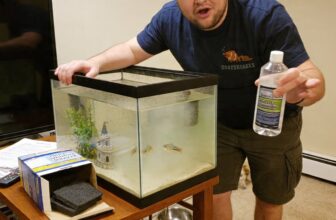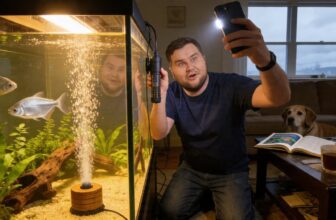
You’ve got flatworms—arrow-shaped heads, cross eyes, maybe 10 mm long—and they’re not leaving on their own.
Skip the tweezers; you’ll just make more.
Starve them first: feed less, target your shrimp directly, vacuum weekly.
Then hit them with traps (bottles, cones) or flubendazole if you’ve got hundreds.
Boil your gear, freeze what you can’t heat, and quarantine every new plant like it’s smuggling fugitives.
Two weeks of consistency, or you’re breeding them by accident.
There’s more to this than you’d think.
At A Glance
- Reduce feeding to starve planaria: measure portions, skip days, and ensure food disappears within 2–3 minutes.
- Use chemical treatments like fenbendazole or flubendazole, dosing multiple times over 14 days to target regeneration cycles.
- Deploy overnight traps with bait to capture adults, though eggs may survive and require follow-up treatment.
- Introduce predator fish such as guppies, zebra loaches, or bettas to consume planaria biologically.
- Quarantine new plants and livestock, boil or freeze décor, and maintain strict cleaning to prevent reintroduction.
Is This Planaria? How to Identify the Flatworm in Your Tank
What exactly is that tiny thing slipping across your glass at 2 a.m.?
You’re squinting—you’re tired, you’re curious—and you’ve spotted planaria morphology in action. These flatworms hit about 10 millimeters, maybe half an inch on a good day, and they glide with this weird, rippling confidence. Look for the arrow-shaped head, those tiny cross-shaped eyes. That’s your giveaway.
Now, detection techniques? Simple stuff. Check at night, shine a flashlight, watch for movement near food or biofilm. White, black, brown—color doesn’t matter. You’ve found your culprit.
Testing your water parameters regularly—including ammonia, nitrite, and nitrate levels—can help identify underlying conditions that allow these flatworms to thrive.
Will Planaria Kill Your Shrimp? (Fish Owners, Relax)
So here’s the thing you actually want to know:
So here’s the thing you actually want to know:
I mean, probably not doomed, but you’re not off the hook either. Belonging means knowing the real risks, so here’s the deal.
- White planaria: They hunt eggs and babies, turning your shrimp nursery into a snack bar.
- Black/brown planaria: Nastier. They secrete paralytic slime—think chemical warfare at the bottom of your tank.
Sharia genetics (yes, that white cross-shaped head pattern) and water chemistry matter here. Soft, acidic conditions? Your shrimp slow down, planaria speed up. It’s unfair, really.
Fish owners, you can relax—your guppies might actually snack on these guys. Shrimp keepers? Stay vigilant, test your parameters twice-weekly as recommended for crowded setups, and maybe invest in a trap.
Where Planaria Hide: and Why Your Tank Invited Them
Even though you scrub your glass until it squeaks, planaria are already staging their invasion in the places you’re too polite to disturb—the dark, crumb-filled crevices where your decor goes to retire, the undersides of leaves that never see your algae scraper, and that mysterious biofilm coating your driftwood like forgotten fridge leftovers. Acrylic disk silencers and other baffle components can trap organic debris in sump chambers, creating similar hidden feeding zones that sustain worm populations.
| Where They Lurk | What They’re Eating | Why You Missed It |
|---|---|---|
| Filter sponge ridges | Decaying fish flakes | You never opened it |
| Substrate valleys beneath rocks | Trapped pellet dust | Too heavy to lift weekly |
| Plant root tangles | Decomposing leaf litter | Looks “natural” so you leave it |
| Heater suction-cup rims | Biofilm buffet | Who checks there? |
| Glass-edge silicone seams | Organic slime buildup | Requires flashlight, patience |
Your tank invites them, really. Overfeeding’s the VIP pass, and those hidden hiding spots? They’re the velvet rope.
Skip the Tweezers: Why Physical Removal Fails
You’ve mapped their hideouts, you’ve cut the buffet, and now you’re standing there with tweezers in hand, ready to pluck planaria like unwanted eyebrow hairs. I mean, you’re committed. We see you. But here’s the thing: every time you grab one, you miss three more, and that partial worm? It regenerates. Now you’ve got twins. Planaria detection at 2 a.m. isn’t a hobby, it’s a lifestyle you didn’t ask for.
Physical removal creates a Sisyphean loop. You’re exhausted, they’re multiplying, and your shrimp are nervous.
Real solutions look like this:
- Accept the math – one worm becomes hundreds; tweezers don’t scale.
- Know when precision fails – Chemical eradication, fenbendazole or flubendazole, interrupts reproduction cycles you can’t reach manually.
- Let go of control – surrender the fantasy of surgical extraction; your community tank deserves systemic intervention, not your sleep-deprived pinching.
A flubendazole-based powder treatment effectively starves planaria and other parasites while remaining safe for shrimp, snails, and planted tanks when dosed correctly.
Overnight Planaria Traps: Setup and Limits
Three tools, maybe four, sit between your shrimp and the flatworm tide: a trap, some bait, and the patience to let gravity do what your tweezers couldn’t. You set the Trap design at dusk—a narrow-necked bottle, baited with raw meat or shrimp pellet. Morning brings dozens, writhing. For those dealing with persistent fry or shrimp babies alongside planaria, a floating breeding box with mesh walls can serve dual duty—protecting vulnerable young while you trap the worms below.
| Trap Type | What You Actually Get |
|---|---|
| Glass bottle | Adults, mostly |
| Commercial cone | Moderate numbers, easy |
| DIY bottle + rock | Budget win, messy |
| Bait dish trap | Slime trails, not worms |
The Limitations hit quick: you miss eggs, you miss babies, you’re playing whack-a-worm forever. And yeah, some sneaky types crawl back out come sunrise.
Fish That Eat Planaria: Predator Options by Tank Type
Once you’ve accepted that traps alone won’t save your tank from the worm apocalypse, it’s time to think about mercenaries. Different predator tank types demand different hitmen, and compatibility considerations seal the deal or wreck your community.
- Community tanks: Zebra loaches, guppies, and mollies patrol the middle and bottom, though they’ll snack on shrimp fry too—consider the collateral damage.
- Species-only setups: Bettas and gouramis hunt with grim persistence, perfect when you aren’t juggling fragile tankmates. A 5-gallon Fluval SPEC provides ample space for a single betta to establish territory and hunt effectively, with gentle filtration that won’t stress their flowing fins while they stalk planaria through the etched glass.
- Coldwater/sturdy stock: Goldfish and shiners bulk-eat worms, clumsy but thorough, if you’ve got the space and filtration to handle their mess.
Choose wisely, or you’re just feeding new problems.
Dewormers That Work (and What Else They’ll Wipe Out)
If you’re staring down a full-blown planaria invasion and the fish aren’t finishing the job, it’s time to bring out the chemical artillery—though fair warning, you’re trading one problem for the privilege of carefully orchestrating several others.
- Flubendazole and fenbendazole (cat/dog dewormers) work, but watch for medworm resistance—rotate treatments, never lean on one.
- Your dosing schedule matters: treat, wait fourteen days, hit them again. Planaria regenerate, so you commit or you fail.
- Now, the collateral damage. These meds? They’ll wipe your snails, stress your shrimp, maybe gas your biofilter. You’re not just deworming; you’re rebuilding, carefully, for weeks after.
Any aquarium treatment that strips your system this hard should make you think seriously about water quality restoration—just as RO/DI systems with multi-stage filtration and remineralization capabilities help rebuild ideal conditions from the ground up.
Should You Treat With Shrimp or Snails Present?
Since you’re juggling living creatures that can’t exactly read warning labels, this part gets dicey fast. Most dewormers you’ll reach for don’t care about your precious cleanup crew. Shrimp compatibility? Practically nil with standard treatments. Snail safety? Additionally questionable, depending on the compound.
Standard dewormers treat your cleanup crew as collateral damage—shrimp and snails don’t get hazard pay.
- Quarantine your shrimp and snails first—treat the main tank, then rebuild the community slowly.
- Spot-dose problem areas with minimal water volume if relocating everyone feels overwhelming.
- Skip chemical warfare entirely and lean into biological control if you’re attachment-prone.
Your invertebrate friends didn’t ask for this war. Keep them out of friendly fire, and you’ll sleep better. Beneficial bacteria supplements can help stabilize water parameters during post-treatment recovery, supporting the nitrogen cycle that your shrimp and snails need to thrive.
The 14-Day Medication Protocol for Planaria
Even though most dewormers will turn your aquarium into a warzone if you rush, here’s a protocol that actually works without turning you into a nervous wreck.
Your medication schedule runs fourteen days, since planaria regenerate, and one round never finishes the job.
- Day 1: Dose fenbendazole at 0.1g per 10 gallons
- Day 3: Partial water change, redose
- Day 7: Full dose again, you’re hitting survivors
- Day 14: Final treatment, and dosage timing matters—always dose lights-off, when worms emerge hungry
Trust the process. Snails won’t, but you didn’t buy this tank for snails anyway. After treatment, consider upgrading to low-decibel operation equipment to minimize stress during the recovery period and maintain a calm habitat for your fish.
How to Confirm Planaria Are Actually Gone
Though you’ve nuked the tank for fourteen days straight, you’ll still lie awake wondering if something flat and hungry is gliding across your glass at 2 a.m.—that’s just aquarium keeper paranoia, and honestly, it’s not unwarranted.
Post‑treatment testing demands patience, not panic. I mean, these flatworms regenerate, hide, and wait.
Your detection protocol needs rigor:
- Wait fourteen days after final dose—no cheating—then flashlight the glass at midnight, hunting for triangular shadows.
- Drop a bloodworm bomb; hungry planaria swarm food within thirty minutes, give or take.
- Check filter sponges weekly, since survivors love dark, flow‑reduced corners.
You’ve earned your sleep eventually.
Boil, Freeze, or Trash: Sanitize Gear Now
Once you’ve stared down flatworms in your tank, you can’t just toss your gear in a closet and hope for the best—these regenerating little strips of stubborn will hitch a ride on a single pebble, waiting for you to slip up, and I mean that literally, since one damp corner of driftwood can restart your whole nightmare.
Now, here’s your protocol: temperature extremes kill where wiping fails.
Boil nets, décor, anything heat-tolerant—fifteen minutes, maybe longer, I’m not your thermometer.
Freeze sensitive items solid for seventy-two hours.
Trash plants, porous rock, anything you can’t trust; that’s gearbage disposal, and local bio-waste rules apply, so check those.
For any aquarium-safe structures you rebuild afterward, reef-safe epoxy putty can bond new rockwork without introducing contaminants.
Feed Less: Starve Planaria With Portion Control
Since planaria feast on whatever your fish ignore, you’ve got to cut them off at the source, and that means looking hard at how much food you’re actually dumping in there—no, really, I mean actually measuring it, not the “pinch and hope” method you’ve been coasting on since you set the tank up.
Portion control isn’t about starving your fish; it’s about feeding what disappears in two, maybe three minutes tops. Waste reduction follows naturally when you stop overfeeding, and suddenly those flatworms find the buffet closed.
- Measure portions with a small spoon, not your fingers.
- Feed once daily, skipping a day weekly.
- Target-feed bottom dwellers directly so nothing hits the gravel.
You’re breaking the cycle, and honestly? Your tank looks sharper already.
Quarantine New Plants Before Planaria Sneak In
Quarantine New Plants to Stop Sneaky Planaria
Live plants are the gift that keeps on giving—sometimes with hitchhikers you never ordered.
You know the drill. That gorgeous java fern arrives, you plop it straight in, and three weeks later you’ve got planaria doing the backstroke across your glass. Not exactly the community you signed up for.
Plant quarantine saves you this headache. Set up a bare tank, float those newcomers for two weeks, and watch. No substrate, no hiding spots—just you, the plant, and any stowaways revealing themselves.
Float new plants bare for two weeks—no substrate, no hiding spots, just stowaways caught red-handed.
Soil sterilization helps too. A quick dip in diluted bleach (maybe 1:19, or thereabouts—I’m not your chemist), thorough rinse, and you’re golden.
Your shrimp will thank you. Probably.
Weekly Maintenance Routine for Planaria Prevention
Planaria Prevention Routine
Though planaria can regenerate from a single slice of worm, you can stop their buffet before it starts with a routine that’s part housekeeping, part detective work.
Your lighting schedule matters more than you’d think—eight hours max, or you’re just farming algae and, well, planaria groceries. Substrate cycling, which is just a fancy way of saying “disturb the bottom so gunk doesn’t settle,” keeps those flatworms from throwing a block party.
- Vacuum your gravel weekly, hitting those dead zones behind rocks.
- Scrape glass before lights-out; you’ll spot wanderers easier.
- Log your feeding—if it’s gone in two minutes, you’re golden. More? You’re asking for trouble.
Stay sharp, stay consistent, and you’re in the club.
Frequently Asked Questions
Can Planaria Survive Without Food for Weeks?
Yes, you can expect planaria to survive food starvation for weeks, maybe three to four, possibly longer—who’s counting, really?
They manage this through metabolic slowdown, entering a kind of dormant feeding state where their bodies just… pause.
Their stress tolerance kicks in, and they’ll shrink, wait you out, then bounce back when flakes hit the water.
Persistent little freeloaders, aren’t they?
Do Planaria Pose Any Risk to Adult Fish?
Do planaria pose any risk to adult fish? Not really, no. They’re harmless hitchhikers, mostly, though poor tank maintenance—excess food, mucky substrate—lets them explode, and that’s where you’ll see indirect fish stress.
They don’t attack healthy adults, but white ones munch shrimp eggs, black ones paralyze snails.
Keep water quality tight, skip overfeeding, and you’re managing fish health without breaking a sweat. They’re gross, not dangerous.
Are There Visible Signs of Planaria Eggs in Tanks?
You’re unlikely to spot planaria eggs easily—they’re tiny, translucent cocoons, maybe 1–2 mm, stuck to glass or plants.
Egg detection takes patience, and egg morphology doesn’t stand out; they look like specks of gel or debris.
So you won’t see obvious signs.
Watch instead for the worms themselves, especially at night when they’re gliding about after you’ve fed your tank.
That’s your real clue.
Will Raising Water Temperature Eliminate Planaria?
Raising water temperature won’t eliminate planaria. They’re tough little survivors, handling shifts from chilly streams to warm ponds, so your tank’s temperature tweaks won’t faze them.
But don’t abandon hope—you’ve got real options that work:
- Deploy traps, they’re cheap and oddly satisfying to check
- Dose fenbendazole or flubendazole, though you’ll need filtration patience afterward
- Add fish predators—zebra loaches, bettas, guppies—who’ll snack gladly
Keep your tank clean, mind the overfeeding, and you’ve got this.
Can Planaria Regenerate From Tiny Fragments Alone?
Yes, they absolutely can—planaria pull off fragment regeneration, it’s kind of their party trick.
You chop one up, you’re not solving a problem, you’re multiplying it.
Each tiny bit regrows the whole body through tissue polarity, meaning cells know front from back, head from tail, like they’ve memorized a map.
So physical removal? You’re basically cloning your headache.
Use traps or dewormers instead, trust me on this one.