French angelfish need 250 gallons minimum—anything less stunts growth and invites aggression.
Water stays tight at 76–78 °F, pH 8.1–8.4, nitrates under 10 ppm.
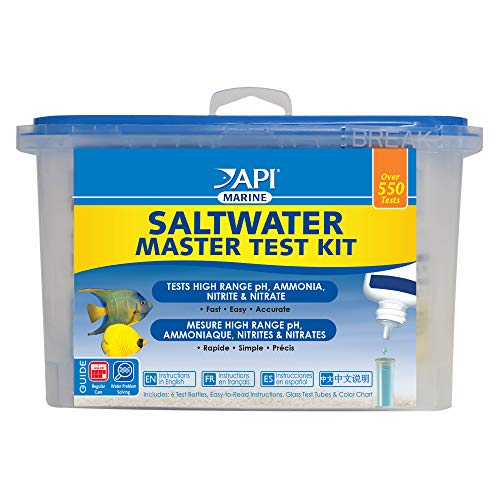
Monitors pH, ammonia, nitrite, and nitrate to keep your angelfish's water stable.

Tracks alkalinity precisely so pH stays steady and your sensitive angel stays calm.

Measures salt level instantly so water changes match your target salinity every time.
Check discounted items inAquarium Test Kits
They eat algae, pellets, mysis, two or three small meals daily.
Pair up around ten inches, monogamous, needing 150–200 gallons to breed with flat slate and gentle flow.
Large, active tank mates work; other angelfish don’t.
Live 10–15 years if you’re patient—most die early, but survivors click after year two.
Now, the details get interesting.
At A Glance
- Minimum 250‑gallon tank required for adult French angelfish to prevent stunting and aggression.
- Feed omnivorous diet of marine algae, quality pellets, and mysis shrimp two to three times daily.
- House with large, active tank mates like tangs and foxface rabbitfish, avoiding other angelfish species.
- Breed in dedicated 150–200‑gallon tank with flat rock, dim lighting, and strict 76–78°F temperature control.
- Maintain pristine water with pH 8.1–8.4, nitrate under 10 ppm, and gentle 8–10 turnovers per hour flow.
Why Do French Angelfish Change Colors as They Grow?
Though it might seem like a magic trick, the French angelfish doesn’t swap its wardrobe on a whim—this color shift, from yellow-striped youngster to speckled adult, is hardwired biology doing what it does best. Spot growth replaces those bold juvenile bars, each fleck emerging as chromatophore cells rearrange their pigment payloads beneath the skin. I mean, it’s basically cellular redecorating.
Cellular redecorating at its finest: chromatophores swap bold bars for grown-up speckles beneath the skin.
Now, here’s the quiet engine: hormonal pigment regulation, timed by maturity signals, tells these cells when to switch expression. No costume change, no drama. Just fish chemistry, doing what fish chemistry does. This dramatic transformation differs from the steady flow patterns maintained in aquarium systems where water circulation remains constant throughout the fish’s life.
- Striped baby pattern fades
- Speckled adult pattern emerges
- Chromatophores = pigment cells that hold color
- Hormones trigger the timing
Is a 250-Gallon Tank Really Necessary?
Those cells finish their pigment shuffling, hormones quiet down, and suddenly you’re looking at a fish that barely fits the nursery tank it once called home.
Now, about that tank size—250 gallons sounds excessive, I mean, who has the space? But here’s the thing: these fish cruise coral reefs, they need length, height, space to turn, to establish territory, to not bash into glass every time they spook.
The cost stings upfront—tank, stand, filtration, lights—but skimping means stunted growth, aggression, early goodbye. Nobody wants that. So yes, 250 gallons. Really.
Unlike the 20-gallon starter kits designed for desktop setups or small community fish, French Angelfish demand serious volume to thrive long-term.
What Water Parameters Do French Angelfish Need?
How particular can a fish be about its bathwater? Very, if it’s a French angelfish, and missing the mark means a drab, stressed specimen instead of the community showpiece everyone gathers to admire.
Water parameters—and keeping them steady—separate the inner circle from the well-meaning outsider.
- Temperature: 72–78 °F (22–25.5 °C)
- pH: stable 8.1–8.4
- Alkalinity: 8–12 dKH
- Salinity: 1.020–1.025 specific gravity
Now, water hardness matters too—caribbean natives prefer moderate levels, not liquid rock.
And nitrate limits? Keep them low, ideally under 10 ppm, as this fish notices sloppy maintenance. I mean, they thrive on consistency, not heroics.
For reef tanks where overnight stability matters most, a Wi‑Fi smart monitor with real-time alerts can track pH, salinity, and temperature remotely, catching drift before it stresses your angel.
How Should You Set Up Lighting and Flow?
Two things will make or break a French angelfish’s day: how bright you make the room, and how hard you push the water around.
Two things will make or break a French angelfish’s day: how bright you make the room, and how hard you push the water around.
Now, LED intensity matters, but these fish aren’t sun-worshippers, I mean, they’re reef-dwellers who duck into shadows. Too harsh, and they stress; too dim, and they fade. Aim for moderate—think Caribbean morning, not noon. For this moderate approach, consider fixtures with natural dawn-to-dusk dimming to mimic their native reef rhythms without overwhelming their preference for shadowed shelter.
Water turbulence too, the balance is key. They want to swim without wrestling, so gentle flow across the tank, maybe eight to ten times turnover, though who really measures precisely? Dead zones? Bad. Hurricane conditions? Worse. Just enough ripple to keep things alive, them included.
What Should French Angelfish Eat Every Day?
Daily feeding for a French angelfish isn’t rocket science, though you’d think so from some of the forum debates.
Now, these omnivores need variety—think marine algae, quality pellets, and mysis shrimp, which beats brine shrimp for actual nutrition.
I mean, a seasonal menu keeps them interested, rotating seaweed sheets with chopped scallop or clam.
Richness in diet matters: color flakes plus frozen fare, nothing too fancy.
Live rock helps, certainly, but daily offerings need intention.
Skip the prep talk about schedules—that’s coming.
Just feed smart.
These fish notice when you’re phoning it in, and they sulk.
While French angelfish thrive on this varied diet, those maintaining smaller marine aquarium setups with more delicate species might consider how betta-specific filtration systems with gentle flow rates, like the 250 L/h hanging filter found in 3-gallon tanks, demonstrate the importance of matching equipment to resident fish needs.
How Often Should You Feed French Angelfish?
French angelfish typically demand **2–3 meals daily**, though “demand” might oversell it—these fish aren’t exactly pacing the glass with watches, but they do suffer when feeding gets sloppy.
Now, the feeding schedule: small portions, spaced out, maybe morning, noon, evening, whatever fits the keeper’s life. I mean, consistency matters more than perfection. The feeding frequency keeps their metabolism steady, their colors bright, their mood manageable.
Skip meals? They’ll survive, but thrive? Not so much. Overfeed? Cloudy water, bloated fish, everyone loses.
Two or three times, small, reliable. That’s the sweet spot.
For optimal nutrition, consider supplementing their diet with slow-sinking micro-granules like those found in high-protein formulas designed for color enhancement and immune support in tropical species.
How Do Juvenile and Adult French Angelfish Behave Differently?
Once the feeding routine settles in, the keeper starts noticing something else—the fish on the glass isn’t the same fish that arrived.
Juvenile aggression takes one form: the young ones, striped and small, around 3–4 inches, scramble around live rock, darting and nipping, establishing pecking orders with surprising intensity for something so little.
Small, striped, and surprisingly vicious—the juveniles waste no time turning live rock into a battlefield.
Then comes the shift.
At roughly 10–15 inches, adult territoriality kicks in, and oh, it kicks hard. Same fish, technically, but now it’s claiming real estate, defending space against their own kind with slow, deliberate confidence. Maintaining water clarity becomes increasingly important as these adults release more waste and territorial hormones into the system.
Stripes become speckles. The chaos softens into something heavier, more committed. The keeper didn’t sign up for a transformation story, yet here it is—one animal, two temperaments, neither particularly negotiable.
Are French Angelfish Reef‑Safe?
Reef Safety Reality
Really, “reef-safe” is one of those labels aquarium people throw around like it means something universal, and here we are, wondering if a fish that wears gold flecks like it’s trying to impress coral will actually leave the coral alone.
Now, French angelfish settle somewhere between “maybe” and “absolutely not” on the reef safety spectrum. Adults hit fifteen inches and develop appetites to match, nibbling soft corals, polyp flesh, even stony skeletons when bored.
Which Tank Mates Work Best With French Angelfish?
Now, the French angelfish isn’t exactly a brawler, but it’s territorial in that particular way large angelfish have: subtle shoulder checks, lingering stares, the occasional chase that says *I was here first*. Compatibility, then, demands respect for that space, and tank size—250 gallons minimum, really—becomes non-negotiable. Room to roam, room to retreat. A full‑day light cycle helps settle territorial disputes by reducing stress in all tank inhabitants, much as it improves schooling behavior in smaller species.
Solid companions include:
- Large, active tangs that keep to themselves, mostly
- Foxface rabbitfish, odd-looking, peaceful, moving with purpose
- Bicolor blennies, small and unassuming, no threat at all
- Picasso triggerfish, roughly matched in attitude and bulk
The trick: introduce them early, let hierarchies settle without bloodshed.
What Fish Can’t Live With French Angelfish?
French angelfish tankmate aggression rules out their own kind—unless you’ve got space for 250 gallons, minimum, and even then, it’s dicey.
Tank size limitations bite hard here; attempting pairs in cramped quarters ends in blood fins and sulking fish.
Here’s the no-list:
- Other angelfish species. Too territorial, too similar.
- Seahorses, frogfish, scorpionfish. The angelfish bosses them around, steals food.
- Small, darting fish. Stress factors, both ways.
- Slow sharks, stingrays. Pecked fins, guaranteed.
Choose wisely, or watch your community tank become a very expensive mistake.
Just as undersized flow in a circulation pump leads to inadequate delivery and system strain, underestimating space requirements for French angelfish guarantees territorial violence and chronic stress.
When and How Do French Angelfish Form Pairs?
Pair formation begins around ten inches, give or take, when these fish decide solitude no longer suits them.
Solitude suits them no longer—at ten inches, the search for a partner begins.
Court formation follows a familiar rhythm—nudging, circling, synchronized swimming that looks, well, like they’re figuring it out together.
The spawning cycle locks in once pairs bond, typically seasonal, though captivity blurs those lines.
Monogamy sticks, mostly.
Now, observations suggest:
- Slow circling near a flat rock means they’re choosing real estate
- Nipping without aggression signals partner approval
- Shared cleaning duties precede egg-laying
- Rejected suitors get chased, not coddled
Patience matters.
Unlike turtle species that thrive on a 4:6 meat-to-vegetable ratio for optimal shell development, French angelfish require a predominantly marine-based diet with sponges and algae making up the bulk of their intake.
Can You Breed French Angelfish in Captivity?
French Angelfish Breeding in Captivity
Still, people do it. French angelfish breeding in captivity demands massive commitment, and the aqu breeding community knows this isn’t beginner territory. Successful captive success requires understanding breeding challenges while maintaining hope through meticulous breeding protocols.
Pair formation happens around ten inches, but breeding success depends on environmental factors: tank size matters enormously, water quality must stay pristine, and temperature control becomes non-negotiable. Mature pairs need spawning cues—flat surfaces, proper lighting spectrum, and substrate choice mimicking natural habitats.
Genetic diversity concerns arise in confined breeding programs. Disease prevention through quarantine and breeding diet optimization with nutritional supplementation affect offspring viability. Behavior observation reveals stress indicators; early intervention improves fry survival.
Breeding records help refine breeding methodology. While aquaculture potential exists, breeding difficulties persist—hormonal triggers, egg incubation timing, and larval rearing stages challenge even experienced breeders. The breeding cycle demands patience, precision, and persistence.
What Does a French Angelfish Breeding Setup Look Like?
French Angelfish Breeding Setup
Since captive breeding remains possible yet punishingly difficult, the physical environment becomes where hope meets hard reality. A dedicated breeding tank, usually 150–200 gallons, separates the pair from chaos, I mean, tank mates. Water stays pristine, parameters locked tight like secrets.
Spawning demands stability. And patience. Mostly patience.
- Flat rock or slate serving as an egg flat, since eggs need somewhere to land
- Dim corners where retreat feels possible, not cowardly
- Gentle flow, nothing that bullies delicate gametes
- Rigid temperature control, 76–78°F, no exceptions tolerated
Fry survival? That’s another gamble entirely, but the setup—this part, you can control.
How Long Do French Angelfish Live? (Tank vs. Wild)
French Angelfish Lifespan in Tanks and the Wild
Just how long does a French angelfish actually stick around? Ten to twelve years in tanks, maybe fifteen if they’re cruising Caribbean currents, though nobody’s really clocking them with stopwatches out there. The captive vs wild split matters more than you’d think, and yes, it’s mostly about who’s keeping the water clean and who isn’t.
| Factor | Tank Life | Wild Life |
|---|---|---|
| Long lifespan potential | 10–12 years typical, 15 possible with fanatical care | Up to 15 years, give or take predation and storms |
| Habitat comparison | Stable but tiny, 250 gallons versus endless blue | Vast, complex, dangerous, deeply familiar to them |
| Wild lifespan comparison | Compressed by rookie mistakes, celebrated when stretched | Natural attrition, brutal but honest |
| Captive mortality rates | Higher early, dropping sharply after year two if they make it | Lower overall, though nobody’s collecting receipts |
Now, here’s the thing about those numbers: they’re fuzzy, estimates cobbled from scattered hobbyist reports and a handful of reef studies. I mean, fourteen-year-old French angels in home aquariums exist, but they’re bragging rights, not baselines. The gap between possibility and probability, that’s where you live as a keeper.
Frequently Asked Questions
Do French Angelfish Recognize Their Owners?
Scientific evidence for owner recognition in French angelfish remains limited, though anecdotal reports suggest visual bonding occurs with frequent, consistent interaction.
These fish recognize feeding routines and may approach familiar figures, distinguishing movement patterns and silhouettes rather than faces per se.
The connection resembles habituation more than emotional attachment.
Whether this constitutes true recognition or conditioned response, aquarists report noticeable behavioral shifts toward regular caretakers over weeks of exposure.
Can French Angelfish Become Depressed Alone?
Loneliness impacts French angelfish significantly. These fish form bonds, clean other species, and establish territories, so solitary confinement stifles their instincts.
Social enrichment through compatible tank mates—large tangs, rabbitfish, or blennies—prevents listlessness, appetite loss, and faded coloration. But overcrowding sparks aggression, so balance matters.
One alone might survive, yet thrive? Unlikely. Consider their needs, not convenience.
What Diseases Are French Angelfish Prone To?
French angelfish carry notable ich susceptibility, that white-spot menace that turns fins into grainy horror films, and they’re magnets for marine velvet, flukes, and bacterial infections when stressed—stress being the universal invitation parasites never refuse.
Effective parasite prevention hinges on quarantine protocols, roughly 2–4 weeks of solo observation, stable salinity around 1.023–1.025, and varied nutrition that actually builds immune resilience.
Now, copper treatments work but demand precise dosing, maybe 0.15–0.20 ppm, since these fish tolerate medication like someone tolerating their in-laws: carefully, with escape plans ready.
Velvet spreads faster than gossip, so early recognition matters—clamped fins, rapid breathing, that dusty gold sheen.
I mean, prevention beats cure when your fish costs more than your weekly groceries.
Regular water changes, say 15% weekly, and avoiding wild-caught stock when possible round out the defense.
They’re hardy fish, mostly, but arrogance about water quality invites disaster.
Do French Angelfish Need Night Lighting?
No, French angelfish do not need night lighting.
Maintaining a proper LED schedule supports their circadian rhythm, which aids stress reduction.
Darkness encourages rest, mimicking their natural Atlantic habitat depths of 3–100 meters where light fades.
Bright nighttime illumination disrupts sleep patterns, potentially causing health issues.
Stick to 10–12 hours of daytime lighting, then let the tank go dark.
The fish will thank you, probably, fish being fish.
How Can You Tell French Angelfish Gender?
You can’t, really. French angelfish show no reliable external differences—color pattern and fin shape stay identical between males and females.
The only surefire method? Watch them spawn. When a pair forms, the female releases eggs, the male follows with sperm, and that behavior settles it.
Until then, guesswork reigns. Monogamous pairs eventually reveal themselves through courtship, but visual sexing alone? Good luck with that.

High-protein sinking pellets satisfy daily feeding without clouding the water.

Color-enhancing flakes keep your angelfish bright and eager at mealtime.

Clip-in seaweed sheets deliver natural grazing and help reduce nipping behavior.
See today's best deals onMarine Fish Food