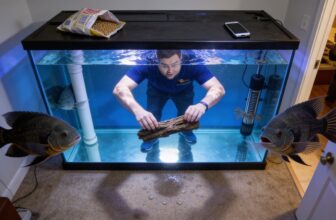
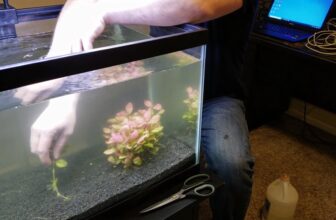
Your silver arowana starts small enough to cup in your hands, but within twelve months it’ll stretch two feet long, demanding a 250-gallon tank—eight feet of reinforced glass costing over a thousand dollars. You’ll need a filter pumping a thousand gallons each hour, a lid weighted like a treasure chest since this fish launches itself three meters when frightened, and water kept between 75 and 82 degrees. Feed live crickets, shrimp, or bloodworms daily when young, then space meals to every few days. Compatible companions include catfish and silver dollars, though you’ll watch carefully for bullies. Diseases like fin rot strike when water quality drops, so test twice weekly and change a quarter of the tank each week. These fish live ten to fifteen years, growing whether their home fits or not, which means stress and sickness if you delay upgrades. Breeding rarely succeeds at home; males mouthbrood eggs for fifty days, needing flood-season conditions you probably cannot replicate. The commitment runs deep, measured in years and gallons, but the rewards for those who prepare properly wait just ahead.
At A Glance
- Adult silver arowanas require 250-gallon tanks minimum, as they reach three feet and grow rapidly regardless of space.
- Water temperature must stay 75–82 °F with stable pH 5.0–7.5 and weekly 25% changes for health.
- Feed live or frozen protein daily as juveniles, every 2–3 days as adults, avoiding fatty mammal meats.
- Suitable tank mates include catfish, green terrors, silver dollars, and black ghost knife fish with hiding spots.
- Breeding rarely succeeds in home aquariums and demands flood-season conditions plus 250+ gallons for pair bonding.
Silver Arowana Cost: Tank, Equipment, and Food Expenses
You’ll need a good chunk of money ready before you bring one of these fish home.
Your smallest tank starts at 60 gallons for a baby, but you’ll replace it within months.
Start with 60 gallons for a baby, but plan to upgrade fast.
A proper adult tank holds 250 gallons minimum—that’s a glass box roughly 8 feet long, 2 feet wide, and 2 feet tall.
You’ll spend $1,000 to $3,000 on the aquarium alone, plus another $300 to $800 for a filter powerful enough to clean a small pond.
Heat, lights, and a locked lid add hundreds more.
Food costs sting too.
You’ll buy frozen shrimp, crickets, and specialized pellets weekly, budgeting $30 to $50 monthly.
This fish teaches patience through your wallet.
For a tank this size, you’ll need minimum 80 GPH flow rate per 20 gallons to maintain water quality, meaning your 250-gallon setup requires at least 1,000 GPH of filtration.
Silver Arowana Size: How Big They Get and How Fast They Grow
Although you might picture a modest aquarium fish, the silver arowana grows into something resembling a living silver spear.
You’ll watch it stretch to three feet in your home, sometimes four feet in the wild—nearly the length of a baseball bat.
That first year brings startling speed: two inches of growth every month, like a child outgrowing shoes before summer ends.
Their bodies stay flat from the side, thick from the front, all sleek muscle and pearlescent scales catching light.
You’ll feel respect, maybe slight awe, realizing this creature needs space you hadn’t imagined.
Growth doesn’t pause for your plans.
Unlike betta fish that thrive in compact glass enclosures as small as 1-3 gallons, silver arowanas demand aquariums measured in hundreds of gallons to support their explosive growth.
Silver Arowana Tank Size: Why You’ll Need 250 Gallons Minimum
Since a silver arowana grows fast and moves constantly, you need a tank that matches its pace from the start.
A 60-gallon tank works for a juvenile, but you’ll upgrade within months.
These fish add two inches monthly in their first year, reaching three feet as adults.
A 250-gallon aquarium—at least eight feet long—gives them room to turn without bending their bodies.
Cramped space causes stress, and stress invites disease like fin rot.
You’re making a ten-to-fifteen-year commitment, so plan for the adult fish from day one.
Your arowana’s health depends on swimming freely, not surviving in tight quarters.
For those housing smaller fish temporarily, a 55 gallon aquarium stand with at least 800 lb capacity ensures your setup remains stable and secure.
Silver Arowana Tank Setup: Filtration, Plants, and Secure Lids
Once your 250-gallon tank sits in place, the real work begins with choosing what goes inside and on top.
Setting up a 250-gallon tank is just the beginning—what you put inside and on top matters even more.
You’ll install a powerful canister filter, something like a Fluval FX4, since these big swimmers create lots of waste and need sparkling clean water.
Plant the back corners with strong-rooted plants like Amazon swords, but leave the middle open for swimming. Use fine gravel, and add driftwood plus rocks for hiding spots.
Now, the lid: it must be heavy, secure, and weighted down. Silver Arowanas jump three meters when startled, and they’ll cling to the waterline, testing every crack. You don’t want your dragon fish on the floor.
Silver Arowana Water Parameters: Temperature, pH, and Hardness Needs
A digital thermometer clipped to the glass becomes your quiet companion, since keeping the water between 75 and 82 degrees Fahrenheit, that’s 24 to 28 Celsius, lets your Silver Arowana‘s body work the way it should.
Your pH test strip tells a story. Aim for 5.0 to 7.5, like tea, not lemonade.
- Check hardness at 1–8 dKH, soft enough for comfort, not so soft it stresses the scales
- Test every two to three days, as sudden swings feel like sudden weather changes to a fish
- Stability matters more than perfection, like keeping bedtime the same
For more precise readings than strips can provide, consider a digital pH meter with 0.01 precision and automatic temperature compensation to catch subtle shifts before they stress your fish.
Silver Arowana Diet: Live Foods, Pellets, and Feeding Schedules
Since you’ve given your Silver Arowana that warm, stable home we talked about, now it’s time to think about what goes in its mouth.
You’ve got a high-protein hunter, not a plant-nibbler. Live or frozen crickets, shrimp, and small fish keep that silver body growing, two inches per month when young. Pellets work in a pinch, but you’ll want carnivore-specific formulas, not generic flakes. You feed juveniles daily, adults every other day, watching that belly—slightly rounded means satisfied, sunken means hungry, bulging means you’ve overdone it. Skip mammal meat; it’s got fats their liver can’t handle. You’re building trust each meal, routine calming those nervous instincts.
While Arowanas focus on protein rather than plant matter, heavily planted tanks benefit from copper-free fertilizers to keep aquatic vegetation healthy without risking invertebrate tank mates that occasionally share their environment.
| Life Stage | Primary Foods | Feeding Pattern |
|---|---|---|
| Juvenile (under 12″) | Crickets, bloodworms, small shrimp, krill | Daily, small portions |
| Subadult (12″-24″) | Larger shrimp, silversides, earthworms, pellets | Daily to every other day |
| Adult (24″+) | Whole fish, crabs, large insects, quality pellets | Every 2-3 days |
Silver Arowana Behavior: Predatory but Shy-What to Expect
That hungry mouth you just fed holds a quiet secret.
Your silver arowana is a hunter, yes, but also a nervous creature. When you’re not watching, it patrols with confidence, snapping prey from the surface. Yet sudden shadows make it dart for cover, heart racing like yours might when startled awake. This fish feels fear deeply, though it shows it only in quicksilver flashes.
A hunter’s confidence hides a skittish heart—quicksilver fear flashing when shadows fall.
Over weeks, it’ll learn your footsteps, your face, growing calmer when you approach. Patience builds trust between you, slowly, like friendship does.
- They’ll eat anything small enough to swallow, so choose tank mates larger than their jaws
- Sudden movements send them crashing into tank walls, causing injury
- Low-traffic rooms help them settle, reducing stress that invites disease
While their surface-hunting behavior differs from slow-sinking granules designed for bottom-feeders, silver arowanas share the same nervous temperament that demands careful feeding routines and minimal disturbance.
Silver Arowana Tank Mates: Fish That Survive With Them
Three fish swim in your living room, and one of them is a silver missile with teeth. You need tank mates that won’t become snacks.
Pick fish too large for your Arowana’s mouth, with boldness to stand their ground. Large catfish, green terror cichlids, silver dollars, and black ghost knife fish work well. These companions defend themselves without starting wars.
You’ll need that 250-gallon tank, minimum. Crowding breeds disaster.
Watch carefully. Each fish carries its own temperament, like people in a playground. Separate bullies before blood clouds the water.
Peace demands space, size, and your patient eye. A 220‑gallon sponge filter system could provide the gentle bubble flow and biological filtration needed for such demanding tank inhabitants.
Silver Arowana Health: Common Diseases and How to Prevent Them
Your tank mates are settled, fins spread wide, and you might feel the hard part is behind you.
The hard part is behind you—until the water turns sour.
But illness strikes fast when water turns sour.
Watch for these three threats:
- Fin rot – bacteria chew ragged edges, spreading like a tear in fabric left unmended
- Dropsy – fluid builds beneath scales, puffing your fish like an overfilled water balloon, especially in young ones
- Broken barbels and scrapes – sharp gravel or decor slice sensitive whiskers, opening doors to infection
Stress invites sickness.
You prevent it through clean water, steady 75-82°F temperatures, and weekly 25% changes. Test every few days. Your attention acts as medicine before pills become necessary. For persistent cloudiness that stresses your fish and harbors harmful bacteria, dose a freshwater clarifier to bind particles and restore water clarity within 24 hours.
Silver Arowana Lifespan: 10–15 Years of Dedicated Care
When you bring home a shimmering, finger-sized arowana, you’re holding the first chapter of a story that can stretch across more than a decade.
Your fish will live 10 to 15 years if you give it clean water, good food, and space to grow.
Poor conditions cut that time short.
You must test the water every two or three days, change 25 percent weekly, and keep the temperature steady between 75 and 82 degrees.
This is a promise you make, like caring for a dog or cat.
The reward is watching your silver dragon glide through the tank, year after year.
Should you add live plants to arowana tanks, chelated iron keeps essential micronutrients available even in hard water conditions that would otherwise lock them away.
Silver Arowana Breeding: Why Home Success Is So Rare
Though you might daydream about tiny silver arowanas darting behind their father’s mouth, the reality of breeding these fish at home remains stubbornly out of reach.
Home aquariums rarely offer the space and conditions these devoted fathers need to successfully raise their young.
You’ll rarely succeed since these fish need enormous space, typically 250 gallons or more, just to form a bonded pair. The male mouthbroods eggs for nearly 50 days, then shelters fry another 5 weeks—an energy drain you can’t easily support. Most aquarists lack the flood-season conditions, roughly July, that trigger spawning. Disappointment feels heavy, but understanding helps you respect their wild needs.
Even if you somehow achieved a successful spawn, you’d face the challenge of protecting developing fry, something standard breeding boxes can’t solve given the massive size of arowana offspring and their father’s protective mouthbrooding behavior.
- 250+ gallon tanks, minimum, for pair bonding
- 50 days of mouthbrooding, then 5 more weeks of fry care
- July flood-season triggers you’ve got to replicate
Frequently Asked Questions
Are Silver Arowanas Legal to Own in My State?
You must check your state’s specific regulations, as silver arowana legality varies widely; they’re prohibited in several states because of invasive potential, so you’ll need to contact your local fish and wildlife agency directly.
Can Silver Arowanas Recognize Their Owners?
Yes, you’ll find your silver arowana can recognize you. They’re highly observant predators that learn your routine and movements, often becoming less skittish and more responsive with regular, calm interaction over time.
How Can I Tell if My Arowana Is Male or Female?
You’ll notice males sport a longer anal fin, whereas females appear slightly plumper overall. These subtle differences become clearer as your fish matures, though distinguishing sexes remains tricky until they’re nearly fully grown adults.
Do Silver Arowanas Need Tank Lighting at Night?
You don’t need tank lighting at night; silver arowanas require a consistent day-night cycle with 8-12 hours of light daily. Complete darkness supports their natural rhythms and reduces stress, so you’ll turn lights off overnight.
Why Does My Arowana Swim Upside Down Sometimes?
Your arowana swims upside down because of swim bladder disorders, stress, or poor water quality. You’ll need to test parameters immediately, maintain stable conditions, and consider fasting or consulting a vet if it persists.
Rounding Up
The heavy lid on your tank, the weekly water tests, the frozen shrimp in your freezer—these small acts add up to something rare. You’ve learned what Silver Arowanas need: space, security, patience. Maybe you’ll keep one fish for fifteen years, maybe you’ll accept that breeding belongs to professionals with ponds, not living rooms. Either way, you’re ready. The dragon waits.