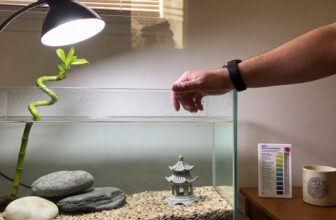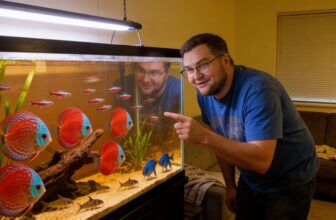
Your betta fish watches you from behind a plastic plant that never sways.
You feel a small pang, knowing he needs something alive.
Live plants aren’t just decoration—they’re his shelter, his filter, his way of being a fish.
You don’t need a green thumb, or fancy lights, or bottles of chemicals that cost more than the tank itself.
Some plants practically raise themselves, and you’ll uncover which ones turn a glass box into a home he’s eager to investigate.
At A Glance
- Java moss, Anubias, and Java fern thrive under standard aquarium lighting with minimal maintenance.
- Anchor Anubias and Java fern rhizomes to driftwood or rocks instead of burying roots.
- Hornwort and Anacharis grow rapidly to absorb ammonia and provide instant hiding places.
- Floating plants like Frogbit and Duckweed create shade and resting spots near the surface.
- Live plants filter waste naturally, improving water quality beyond what fake plants offer.
8 Low-Light Betta Plants Perfect for Beginners

Why do so many new fish keepers worry about lighting? You’re afraid you’ll fry your plants or leave them starving in the dark.
Relax. Low-light plants want what you can give, a standard aquarium hood, nothing fancy. Java fern, anubias, they’ll thrive with gentle glow, no sunbeam required. Anchor rhizomes to driftwood, don’t bury them. Substrate matters less, but if you want rooted growth, pick a low-light substrate, something simple, gravel-sized, easy to vacuum.
Skip aggressive nutrient dosing. Your fish waste feeds them mostly, like scraps feeding a garden. Water changes, light trimming, that’s your routine.
Java Moss: The Carpet That Hides Everything
When you peer into a tank full of Java moss, you’re looking at a living blanket, soft as felt, that swallows up anything you tuck inside it.
Your betta disappears into it, shrimp graze through it, and tiny bubbles catch in its tangles like morning dew.
You don’t need fancy gravel. Substrate alternatives—driftwood, smooth rocks, even mesh—hold it just fine.
| Method | Time to Spread | Best For |
|---|---|---|
| Splitting clumps | 2–3 weeks | Quick cover |
| Blending with water | 1–2 weeks | Moss propagation |
| Tying to decor | 3–4 weeks | Anchored look |
| Floating freely | 2 weeks | Instant shade |
| Sheet on mesh | 4 weeks | Neater carpet |
You trim when it gets thick, you watch it bounce back, and you belong to the quiet club of people who’ve learned that beautiful things grow when you let them tangle.
Anubias & Java Fern: Plants That Attach to Decor
Some plants ask for nothing but a rough surface to hold on to, and you’ll find two of them on almost every list of betta favorites.
Anubias and Java Fern make decor attachment feel like second nature.
You don’t bury their roots.
You tie them to driftwood, rocks, or any hardscape with cotton thread or fishing line.
In two weeks, they’ll grip tight all on their own.
These plants become your substrate alternatives, freeing you from gravel decisions entirely.
Their broad, green leaves create caves where your betta rests, and you belong to a community that keeps things simple, beautiful, and alive.
Hornwort & Anacharis: Fast Growth, Zero Fuss
Two plants stand out when you want thick green growth without waiting weeks.
Hornwort, sometimes called nutwort, showers your tank with feathery stems you can root or let drift. The nutwort benefits include pulling extra ammonia from the water, protecting your Betta from invisible toxins that build up between water changes. You’ll watch it double in volume every two weeks under normal room light.
Anacharis works just as hard. Snip a six‑inch cutting, drop it in, and you’ve mastered Anacharis propagation; roots appear within days. Both plants ask only occasional trimming in return for transforming your aquarium into a thriving underwater meadow you and your Betta share.
- You create safety faster, as rapid growth means hiding places appear before your Betta feels exposed.
- You join a lineage of caretakers who’ve used these plants for over a century.
- You trade patience for participation, watching daily change instead of waiting months.
- You learn propagation, passing cuttings to fellow keepers and strengthening your circle.
- You witness resilience, seeing life persist even when conditions slip.
Amazon Sword: Bold Background for Larger Tanks
If you’re ready to stop squinting at an almost-empty tank, the Amazon Sword offers a living wall you can build around. You’ll feel pride watching your Betta dart through those glossy, dinner-plate leaves.
Sword lighting matters—moderate to high keeps that emerald glow alive, so aim for eight to ten hours daily. For substrate anchoring, bury those white roots two inches deep in gravel or nutrient-rich soil; they’ll grip tight and spread wide.
| Care Task | How Often |
|---|---|
| Trim dead leaves | Weekly |
| Fertilize root tabs | Monthly |
| Check light timing | Daily |
You’re creating sanctuary, not just scenery.
Cryptocoryne Wendtii: Foreground Texture Without High Light
Not every tank sits near a sunny window or holds a fancy light. You don’t need one to grow Cryptocoryne Wendtii, a small plant that thrives in gentle shadows.
Cryptocoryne lighting demands little—just the soft glow most rooms already hold. This plant gifts you lowlight texture, its crinkled leaves like tiny green quilts spread across your tank floor. Substrate anchoring keeps it rooted in gravel or sand, where it quietly spreads. Leaf variegation paints each blade in bronze, green, or red swirls, transforming bare corners into living art your Betta weaves through.
- You belong among aquarists who succeed without expensive gear
- Your tank becomes a shared space where plant and fish both feel safe
- Small efforts, like pressing roots into gravel, build lasting growth
- Imperfect leaves still hold beauty—variegation means every plant looks unique
- Quiet patience rewards you with a community others notice and ask about
Floating Plants: Surface Resting Spots Bettas Love
Where do Bettas rest when their fins grow heavy? You create Betta breathing zones right at the top of your tank, where they belong.
Floating plants are your answer. You drop them in, and they work immediately. Surface surface roots dangle down like soft curtains, giving your fish a place to investigate, hide, and rest.
You feel calm watching them lounge near the leaves, taking gulps of air. It’s peaceful, and your Betta feels safe.
You belong here, in this quiet moment between you and your fish.
| Plant | Light Needed | Roots |
|---|---|---|
| Frogbit | Low | Long, flowing |
| Water Sprite | Moderate | Fine, branching |
| Duckweed | Low | Short, hair-like |
| Water Wisteria | Moderate | Trailing stems |
| Pennywort | Low to moderate | Delicate, stringy |
Vallisneria: Tall Structure Without the Clutter
Floating plants give your Betta a place to rest at the top, but sometimes you want something that reaches upward without crowding the surface.
Vallisneria sends long, ribbon-like leaves toward the light, creating vertical structure your fish can weave through. You’re building a living column, not a wall.
This plant asks little of you. It pulls extra nutrients from the water, which helps control algae naturally. Pruning means simply trimming leaves that brown at the tips, keeping water maintenance gentle and rare.
One or two plants transform your tank’s feel entirely. You belong here, among aquarists who choose simplicity with purpose.
- Vertical growth creates open swimming lanes while still offering cover
- Nutrient absorption starves algae before it can cloud your water
- Pruning takes seconds when leaves yellow, keeping care approachable
- Water maintenance stays light because Vallisneria does the filtering work
- You join a community that values structure without complication
Carpet Plants That Stay Low and Slow-Growing
Why crane your neck at towering stems when the real magic happens down at your feet?
You’ll love slowold carpet, like Cryptocoryne Wendtii, which stays small, spreading gently across your tank bottom. It doesn’t rush, you see, and neither should you.
A slow sprout gives you time to learn, to breathe, to belong in this quiet world you’re building together. Marsilea hirsuta forms tiny clover leaves, maybe two inches tall, perfect for nano tanks where your Betta weaves through green tunnels.
These plants ask little, giving soft ground for exploration. You’re not racing here. You’re growing something steady, together.
Rotala & Colorful Stems: Red Plants Made Simple
How often do you catch yourself wanting just a spark of fire in all that green?
Rotala indica brings that warmth, shifting from green to crimson under moderate light. You’re not chasing perfection; you’re building a home where your Betta feels seen.
- Trimmed stems root easily, so you share cuttings with fellow keepers
- Color signals health, not the Red algae that harms tanks
- Stem propagation lets you multiply beauty without spending more
- Your Betta weaves through red thickets, feeling safe
- A lively tank welcomes you back after hard days
You belong here, among growers who understand.
Small Tank Plants for Betta: Big Impact, Small Space
Seven small leaves can fill a five-gallon corner with life you’re proud to show a friend.
You don’t need gallons of space to build a home your betta loves. Small tanks reward smart choices.
| Plant | Max Height | Special Trait |
|---|---|---|
| Anubias Nana | 3 inches | Slow, steady, forever green |
| Java Fern | 4 inches | Feeds from water, not roots |
| Cryptocoryne Wendtii | 6 inches | Betta breeding hideaway |
| Java Moss | 2 inches | Starves algae, controls algae control |
| Dwarf Pennywort | 3 inches | Floats or roots, your call |
These plants ask little, give much, and welcome you into a club that knows small spaces hold big hearts.
How to Plant, Attach, or Float Each Type
Every plant in your tank needs a home, and you’ve got three ways to give it one.
You can plant roots into nutrient-rich gravel. You can tie rhizome plants to driftwood with cotton thread. You can let stems drift freely, dancing with your Betta’s current.
Substrate choice matters for rooting plants. Shallow gravel, about two inches deep, feeds Amazon swords without trapping waste. For floating hornwort, you skip substrate entirely.
Betta compatibility shapes every decision. Dense roots create territories where fish feel secure. Your tank becomes shared space, you and your Betta building something together.
- Anchor roots in gravel two inches deep for hungry feeders
- Tie moss to wood with thread that dissolves in weeks
- Float stems when you want flexibility, moving them like furniture
- Match each plant’s hunger to your substrate choice, rich or spare
- Watch where your Betta rests, let that guide your placement
Nano Tank Planting: Space-Saving Techniques
Three small plants can turn a cramped corner into a whole world. In your nano tank, you claim vertical space the way city dwellers build upward when ground runs short. Taller plants like Vallisneria stretch toward the surface, whereas java moss wraps driftwood like a sweater on cold shoulders. You skip traditional gravel for substrate alternatives: small lava rocks, root tabs, or thin sand layers—enough to anchor roots without stealing swimming room. Your aquascape breathes even when measurements feel tight. You’re building belonging, plant by plant, in water measured by cups not gallons.
Trimming Schedules That Keep Growth Controlled
How often have you watched a plant grow so fast it overtakes the glass like a green wall closing in?
You don’t need to fear that dense jungle.
Grab your scissors weekly for hornwort and pennywort, snipping stems two inches above the substrate, and you’ll keep pathways open for your betta’s graceful swimming.
- Snip floating roots when they reach the water’s surface, maintaining that precious air your betta needs for gulping breaths
- Trim vallisneria monthly, removing outer leaves that brown and curl
- Thin cryptocoryne crowns every six to eight weeks, letting light reach neighboring leaves
- Prune java moss quarterly, separating clumps the size of a golf ball for friend tanks
- Schedule seasonal nutrient control, dosing less fertilizer after heavy trimming to starve algae before it spreads—this is algae prevention through patience, not panic
You’re tending a shared home, not commanding nature, and that restraint builds trust between you, your fish, and every leaf that breathes beside them.
Live vs. Fake Plants: The Health Difference Real Plants Make
Since you’ve stood in the pet store aisle, plastic stem in one hand and a wilted green bundle in the other, wondering which one your betta would actually notice, you already sense the answer. Live plants pull in waste, a natural soil filtration that plastic can’t mimic. You’ll see cleaner water, steadier growth, and a betta who darts through real leaves instead of dodging stiff strands. The benefit vs. risk tips sharply toward living greens—control is simple, trim when they stretch, and watch your fish settle in. Fake plants scratch; real ones breathe. Your betta knows the difference. So do you.
Frequently Asked Questions
Will Snails Hitchhike on New Plants?
Yes, snails often hitchhike on new plants, a process called plant hitchhiking. Tiny snail eggs, or even small adults, hide on leaves, stems, or roots. When you bring plants home, you’re additionally inviting possible snail transport into your tank. You might feel surprised or worried, but this is normal. Inspect plants carefully, rinse them well, and you’ll spot any stowaways before they settle in.
Can Plants Carry Diseases to My Betta?
Yes, plants can carry diseases to your betta. Disease transmission happens when pathogens hitch a ride on leaves or roots. You reduce pathogen risk by quarantining new plants for two weeks in a separate container. Rinse them gently under dechlorinated water before adding them to your tank. This simple step protects your fish, and you’ll feel calmer knowing you’ve guarded their home.
Do Bettas Nibble on Leaves?
Yes, bettas nibble leaves sometimes. You’ll notice tiny bite marks on soft foliage, especially when they’re bored or hungry. Leaf texture matters—delicate plants like duckweed tempt them more than tough, waxy anubias leaves. This fin nibble habit rarely harms sturdy plants, though it might frustrate you. You can distract your fish with regular feeding and enrichment. Don’t worry, this behavior shows curiosity, not illness, and you’re handling it well.
How Long Before Plants Start Dying?
You’ll spot trouble within one to two weeks if plant acclimation fails, meaning the plant can’t adjust to your tank’s water. Watch for yellow leaves, melting stems, or a sour smell signaling root rot—that’s when roots turn brown and mushy from sitting in decay. With proper light and gentle water flow, healthy plants thrive for years. Check roots monthly, trim dead parts, and you’ll feel proud keeping your Betta’s home green and safe.
Can I Grow Plants Without Substrate?
Yes, you can grow plants without substrate.
Java moss, hornwort, and anacharis thrive with substrate free growth, attaching to driftwood or rocks instead. Floating plant options like pennywort, duckweed, and amazon frogbit need no planting at all—they simply drift on the surface, roots dangling down. Your betta will love exploring these spaces, and you’ll feel proud watching your tank come alive with so little effort.
Rounding Up
You’ve walked through eight plants that ask little but give much. Java moss carpets the bottom like a soft green blanket. Anubias and Java fern grip driftwood with tiny feet called rhizomes. Hornwort and Anacharis reach upward fast, cleaning water as they grow. Each choice brings you closer to a living tank where your betta breathes easier. Start with one plant. Watch what happens.