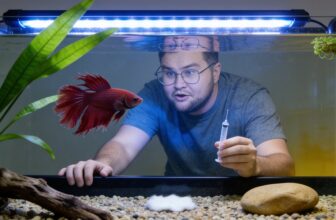
Betta ich is more common than you’d think, and the good news? It’s beatable. This parasite targets stressed fish—poor water, temperature swings, or tankmate bullying can all leave your betta vulnerable.
Watch for tiny white spots dotting fins and gills, or your betta flashing against decor. The life cycle moves fast: about six days total, with infectious tomites lasting just eight hours at 86°F.
Treatment works best when you move quick. Quarantine your betta for a week, or push your main tank to 86°F with one teaspoon of aquarium salt per gallon. Keep up 25% water changes every two days. Most cases resolve by day ten. Stick with the plan below—it’s simpler than it sounds.
At A Glance
- Ich is caused by the parasite *Ichthyophthirius multifiliis*, targeting stressed fish.
- Raise temperature to 86°F and add one teaspoon aquarium salt per gallon for treatment.
- Perform 25% water changes every other day, siphoning gravel to disrupt the life cycle.
- Quarantine new fish for one week to prevent introducing ich to your tank.
- Full recovery typically takes one to two weeks with consistent treatment.
What Is Betta Ich and What Causes It?
What is betta ich, exactly? It’s *Ichthyophthirius multifiliis*, a parasite that targets stressed fish. Poor water quality is a major stressor, which can be effectively monitored for example through high‑volume test kits that detect copper, iron, and ammonia. The Ich lifecycle has four stages: trophonts feed on the fish, drop off, reproduce, then release tomites to find new hosts. Ich transmission happens through water or infected additions, but Ich host range is broad—any fish can carry it. Still, most healthy fish, including bettas, have natural Ich immunity. This immunity only fails under stress from poor water, temperature swings, or bullying. Regular testing with ammonia‑only test strips can help detect dangerous ammonia levels before they weaken a fish’s defenses.
How to Spot Betta Ich (Early Signs You Can’t Miss)
Once a betta’s immune system takes a hit from stress, ich is often the first to show up uninvited.
Watch Betta behavior closely—they start rubbing against decor like a poorly choreographed shuffle, a move called flashing.
You’ll spot tiny white specks, like salt sprinkled on velvet, especially on fins and gills.
Tiny white specks, like salt sprinkled on velvet, especially on fins and gills.
Clamped fins and hiding are dead giveaways.
Water temperature fluctuations above 86°F speed up the parasite’s cycle, but don’t jump there yet.
Lethargy kicks in, appetite vanishes.
Catch these signs before you’re hosting a full-blown ich party.
To maintain stable temperatures and prevent stress, consider using a heater with automatic shut‑off for reliable safety. A controller with dual‑outlet independence allows you to manage a backup heater for extra stability during cold spells.
Your betta’s counting on you—don’t let them down.
The Betta Ich Life Cycle: Why Timing Matters for Treatment
Ich transmission only happens when free-swimming tomites attack your betta. These tomites burst from cysts at the tank bottom, making parasite dormancy a hidden threat.
The cycle repeats roughly every six days, depending on temperature. If you miss that window, the parasite burrows into your betta’s skin where no treatment reaches. You’re only fighting ghosts.
Heat speeds up the process, forcing tomites to hatch faster and die quickly. That’s why timing your assault matters—catch them swimming, not hiding.
Proper light spectrum, including blue wavelengths, can also influence the microfauna and algae in your tank that support overall water quality and fish health. Using a light with violet/UV channels can help stimulate beneficial biological processes in the tank.
The Quickest Treatment: Remove Your Betta for One Week
If the six‑day life cycle sounds like a lot of waiting and watching, there’s a shortcut: just remove your betta from the tank for one week.
Ich needs a host to survive; without one, it starves. Move your fish to a quarantine tank at the same water temperature. Add aquarium salt—one teaspoon per gallon—to boost his slime coat. That’s it. No meds, no fuss.
The main tank clears up as your betta recovers stress-free. After seven days, all ich is dead and gone. A clean, simple fix. For best results, use a quarantine tank with crystal‑clear plastic walls for easy observation of your recovering betta. A 3.9-gallon Penn‑Plax Aqua Nursery also provides an automatic circulation pump to prevent stagnation during isolation.
Salt and Heat Treatment for Betta Ich (Step-by-Step Guide)
For anyone who missed the simplicity of the fish‑removal shortcut, the salt and heat method offers a different kind of elegance—you treat the whole tank at once.
Gradually raise temperature to 86°F, no more than one degree daily. Add one teaspoon of dissolved aquarium salt per gallon.
This heat speeds ich’s life cycle, whereas salt boosts betta immunity and improves slime coat, and sustained use of documented CFU counts in beneficial bacteria supplements can further stabilize water quality during treatment.
Do 25% water changes every two days, replacing lost salt. Stop adding salt after ten days.
This combo builds ich resistance in your fish without harsh chemicals. Simple, steady, and proven. For additional slime‑coat support, consider using API Stress Coat during water changes.
Best Medications for Betta Ich and How to Use Them Safely
Skip the guessing game—medication is the nuclear option for betta ich, but only when used correctly.
Look for products with malachite green or methylene blue—Rid Ich Plus ($12, 8oz) is a solid bet.
Medication safety means treating in a quarantine tank, never the main display. Dosage accuracy is everything; overmedicating nukes the biofilter and your fish.
Medication safety means treating in a quarantine tank, never the main display. Dosage accuracy is everything.
Follow bottle instructions like your betta’s life depends on it—because it does.
A 10-day course, paired with heat, usually does the trick.
API Liquid Super Ick Cure is a liquid ich treatment dosed daily for five days and fast kills within roughly one day.
Bottom line: pick one ich-specific med, measure twice, dose once, and watch those white spots vanish.
Water Change Protocol for Betta Ich Outbreaks
Medication can knock out the parasite in the water column, but it’s useless against the cysts stuck to your betta. That’s where your water change protocol comes in, stripping away free‑swimming tomites. Change 25% of the water every other day, siphoning the gravel thoroughly—substrate cleaning is non‑negotiable here. This disrupts the life cycle and stabilizes water chemistry, giving your betta’s immune system a fighting chance. A three‑stage filtration system in your gravel cleaner helps trap cysts and debris during each siphon. For optimal cyst removal, choose a cleaner with a detachable filter screen that protects fish and décor.
| Water Change Day | Volume to Change | Key Action |
|---|---|---|
| Day 1 | 25% | Siphon substrate, remove debris |
| Day 3 | 25% | Match new water temp, add salt |
| Day 5 | 25% | Clean filter gently, test chemistry |
You’re not just swapping water; you’re breaking the cycle, one bucket at a time.
How Long Does It Take to Cure Betta Ich?
So how long does it actually take to cure betta ich? With proper treatment—medication, heat, and water changes—the parasite’s life cycle runs about six days, but full resolution takes one to two weeks.
You’re not just killing spots; you’re breaking the cycle. Consistent aquarium lighting won’t help the cure, but it won’t hurt either. Keep up filter maintenance too, since clean water reduces stress, and using a gentle sponge filter can provide ideal low-flow filtration for bettas during recovery. Most cases clear by day ten if you stay on schedule. Always rinse the sponge in old tank water to preserve beneficial bacteria colonies during the healing process.
You’re not just killing spots; you’re breaking the cycle. Consistent lighting won’t help, but it won’t hurt either.
Bottom line: expect about two weeks, then relax. You’ve got this.
What to Do If White Spots Persist After Treatment
| Possible Cause | What to Check | Next Step |
|---|---|---|
| Incomplete water changes | Test ammonia, nitrite levels | Perform 50% water change, vacuum gravel thoroughly |
| Temp too low | Thermometer accuracy | Raise to 86°F, hold steady for 10 days |
| Wrong medication | Active ingredient (methylene blue?) | Switch to a malachite green product |
| Biofilter crash | Cloudy water, fish gasping | Add beneficial bacteria booster |
| Hidden carriers | Plants, decor, filter | Remove and bleach-dip, then rinse well |
Additionally, using a reliable nitrate test kit can help monitor water quality and prevent stress that prolongs ich outbreaks. For precise phosphate monitoring during treatment, an aquarium phosphate test kit like the API Reef Master Test Kit provides reef-specific calibration for accurate low-level readings.
Don’t panic—you’re in good company. Re-treat with fresh meds, crank the heat, and stay disciplined. Your betta’s counting on you.
How to Prevent Betta Ich From Coming Back
Preventing ich from staging a comeback is a lot like keeping a messy roommate from moving back in—you have to make the place unappealing.
After Ich recovery, reinfection risks are real if you skip the boring stuff.
Quarantine every new fish for three weeks—yes, every single one.
Never buy sickly fish from dirty tanks.
Feed a rotated menu of high-quality pellets and frozen treats; weak immune systems invite trouble.
Keep stressors low.
Avoid mismatched tankmates that bully or overstocking.
Stick to one inch of fish per gallon.
Monitor daily for flashing or spots.
No skips.
Consistent effort earns you a peaceful tank community.
That’s the best prevention.
Feeding a diet rich in immune‑boosting blend can help your fish resist future outbreaks.
Using a shrimp‑safe, copper‑free fertilizer supports plant health without harming sensitive tank inhabitants.
Why Clean Water and Stable Conditions Stop Betta Ich
Clean water isn’t just a nice thing—it’s the enemy of ich. Stable parameters, a consistent 78–80°F, and low ammonia directly fuel stress management, which is your betta’s first line of defense.
When water’s clean, the slime coat thickens, providing natural immune support that stops parasites from latching on. Fluctuations weaken that barrier, inviting trouble.
Think of it like this: perfect parameters are a security system, not just decor. A cheap test kit (under $20) is your best tool. For precise monitoring, consider a Wi‑Fi smart monitor that sends real-time alerts to your phone. A controller with over‑temperature alarms can also alert you to sudden heater failures before they stress your betta.
Bottom line: pristine water plus stability equals a betta that’s basically ich-proof.
How to Quarantine New Fish to Prevent Betta Ich
Think of a quarantine tank as a five-day background check for your new fish. Set up a simple 5-gallon tank—no gravel, just a heater and sponge filter from an established tank. This guarantees proper tank cycling, so ammonia stays zero. For tanks with gentle flow, consider the Vimvins 5 Gallon Glass Fish Tank, which is a frameless glass tank suitable for planted setups and small inhabitants.
Add your new fish, and watch for white spots, flashing, or clamped fins. A confirmed case? Treat with salt and heat. No symptoms? You’ve verified fish compatibility, preventing ich from crashing your main community.
It’s boring work, like checking expiration dates—but boring keeps your betta alive. A week of patience beats two weeks of meds, every time. While quarantining, remember that consistent dosing yields repeatable results if you eventually need to treat the main tank.
Why a Healthy Diet and Low Stress Prevent Betta Ich
Since a betta fish with a weakened immune system is basically a welcome mat for ich, a healthy diet and low stress are your two best defenses. You’re building a fortress, not just feeding a fish.
- Betta nutrition means high‑quality pellets, not cheap filler—think of it as premium armor for their slime coat, their first line of defense.
- Stable temperature, kept at 78–80°F, avoids shocking their system; a sudden drop is an open invitation for parasites.
- Clean water with consistent parameters keeps stress low; test kits are cheap, ich outbreaks are not.
- No incompatible tank mates—aggressive fish or constant flaring wears them down, making them vulnerable.
- Proper quarantine protocols for new plants or fish stop ich from ever entering your tank; skip this step at your own risk.
Feed well, keep calm, and your betta stays ich‑free. An automatic feeder with precise portion control ensures your betta gets consistent nutrition even when you are away.
Using a motion‑sensor backlight thermometer helps you quickly spot dangerous temperature swings that stress your betta.
Can Betta Ich Spread to Other Fish in the Tank?
Yes, absolutely—betta ich spreads like bad gossip in a crowded tank. The tomites, free-swimming baby parasites, latch onto any stressed fish within hours.
Betta resistance varies; a healthy betta shrugs off ich that devastates weaker tank mates.
Parasite dormancy is key: ich can linger in substrate for days, waiting.
- Tomites are infectious for up to 8 hours at 86°F
- They need a host to survive past that window
- Non-bettas with poor immunity suffer first
Bottom line: one sick fish risks every tank mate.
This isn’t blame—it’s biology. Your betta’s strength won’t shield neighbors forever.
Using biological treatments like live bacteria can help stabilize water quality after an ich outbreak reduces beneficial filtration.
Adding live nitrifying bacteria from products like MICROBE-LIFT Nite-Out II can restore the biological filter and prevent ammonia spikes during treatment.
Your Betta Ich Action Plan From Detection to Recovery
From the moment you spot those white speckles, your betta ich action plan kicks in.
This parasite feeds on weak immune systems, so boosting your fish’s defenses is step one.
Quarantine is your best friend here; it isolates the betta and targets parasite removal directly.
- Raise the tank temp gradually to 86°F, speeding the ich life cycle
- Add aquarium salt at 1 teaspoon per gallon to improve the slime coat
- Perform 25% water changes every other day, siphoning the substrate
- Dose a methylene blue medication in a separate quarantine tank
- Watch for the white spots to fade, which means your betta’s immune response worked
A dual‑stage regulator maintains steady CO₂ flow even as cylinder pressure declines.
For nano betta tanks, a rimless design with low‑iron glass minimizes distortion and supports a clear view of recovery progress.
Frequently Asked Questions
Can I Treat Ich While My Betta Is in the Main Tank?
Yes, ich can be treated in the main tank, but it’s risky. Betta sensitivity means medications (like those with malachite green) can harm them, and the Filter Media may absorb active ingredients, reducing effectiveness.
A better approach: quarantine the betta. If that’s not possible, remove carbon from the filter, dose carefully with a betta-safe product, and raise the temperature gradually to 86°F. Water changes every 1-3 days help. It’s a hassle, but it works. Just monitor closely—bettas don’t forgive sloppy treatment.
Does Aquarium Salt Harm Live Plants During Ich Treatment?
Aquarium salt can be a risky trade‑off for live plants. Think of it like a friendly fire—it helps the fish but can scorch sensitive roots.
Salt toxicity varies by plant species; hardy types like Anubias tolerate it, but delicate ones like Java moss might melt. A safe dose of 1 teaspoon per gallon is usually fine for most, but monitor for browning.
Bottom line: skip salt if your plant collection is precious, or stick to low‑risk species to avoid an accidental plant funeral.
Will Ich Survive on Decorations or in the Gravel Without a Fish?
No, ich will not survive on decorations or gravel long-term without a fish. Its lifespan without a host is brief, typically under a week. The parasite requires a fish to feed and reproduce, so survival on surfaces is a dead-end.
Keep it simple. Remove the betta for seven days, and that starving ich dies off naturally in the tank. No fish, no host. A week of quarantine kills off every last trophont—problem solved without scrubbing every rock.
Can I Use Heat and Salt Treatment Together With Medication?
Combining heat and salt with medication is like adding extra fuel to a fire—it works, but carefully. Yes, you can use them together, but watch the heat duration and salt concentration. Raise temperature slowly to 86°F, keep it steady for 10 days, and add 1 teaspoon of salt per gallon.
Medication like Rid Ich Plus treats the water, not the fish. This trio speeds up the parasite’s life cycle, making treatment faster. Just don’t overdose; follow each product’s instructions precisely.
How Do I Know if My Betta’s Ich Is Completely Gone?
You’ll know the ich is gone when you’ve waited through an entire parasite lifecycle—about 6 days at 86°F—with no fresh white spots appearing.
A betta that eats normally, swims actively, and has no frayed fins is a great sign.
Keep checking daily; one last heat-and-salt session after symptoms clear seals the deal.
It’s like waiting for a pop quiz to end—boring but worth it for recovery.
Rounding Up
So, there you have it. Betta ich is basically a tiny, vengeful snow globe that your stressed fish asked for by accident. Treating it isn’t rocket science—it’s more like following a muffin recipe, but with salt and heat instead of sugar. Keep the water stable, quarantine everything that moves, and feed your betta like a tiny, grumpy king. Do that, and you’ll likely never deal with these white specks again. If you do, you now have a plan. Go save your fish.