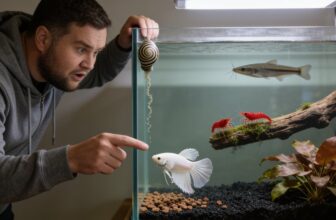
A bloated betta belly that stays swollen hours after feeding is every aquarist’s wake-up call.
Constipation from dry pellets is usually the culprit, hitting fish kept in suboptimal parameters.
Your betta may float sideways, sink to the bottom, or simply stop moving—classic signs swim bladder trouble is brewing.
Most cases clear with a hard reset: pull the food for 48-72 hours and let their system reboot.
Warm, clean water at 78-80°F supports recovery better than any medication.
Still swollen? An Epsom salt dip—one teaspoon per gallon for 10-15 minutes—draws out fluid without stressing their slime coat.
Watch for pineconing: raised scales mean dropsy, a bacterial infection needing vet-grade antibiotics fast.
No interest in food after five days suggests organ failure; humane euthanasia becomes the kinder path.
Prevention beats cure every time: rotate frozen foods, nail your water changes, and invest in a reliable heater.
At A Glance
- Distinguish bloat from after-meal fullness; true bloat persists with lethargy or buoyancy issues.
- Constipation from overfeeding or low-fiber dry pellets is the leading cause of bloat.
- Treat constipation with a 2-3 day fast, then feed daphnia; avoid food during the fast.
- For dropsy (pineconing scales), use Epsom salt baths or antibiotics, but prognosis is often poor.
- Prevent bloat with stable water temperature, varied diet, and avoiding overfeeding dry foods.
What Does a Bloated Betta Look Like?
A bloated betta looks like someone swapped its sleek torpedo shape for a round, overinflated balloon. This isn’t normal betta anatomy. Natural bloating, like from a big meal, should resolve within hours. Persistent swelling signals trouble.
Look for a distended belly, often paired with lethargy. The fish may hover near the surface or struggle to swim. Scales standing on end—pineconing—point to dropsy. A curved spine? That’s advanced bloat. Constipation or swim bladder issues cause a firm, stretched look.
You know your betta’s baseline. Sudden rounding isn’t cute; it’s a red flag. Diagnose fast, act faster.
Is Your Betta Bloated or Just Full?
You’ve seen that balloon-like belly and already ruled out the usual suspects—constipation, swim bladder disease, dropsy. Now comes the distended debate: is your betta truly bloated from illness, or did it just finish a feast? This two-word debate—”full versus sick”—is a common struggle for keepers. Using a water conditioner like Seachem Prime can help maintain water quality and reduce stress on your betta’s slime coat and delicate system. A genuinely full betta shows a slight, temporary belly roundness that fades within a few hours post-meal. True bloating, nonetheless, persists and often brings lethargy or buoyancy trouble.
Watch the clock after feeding: if the belly deflates naturally, you’re fine. If it lingers, you’ve got a problem. Trust the timeline. Feeding a high-quality diet such as TetraMin Tropical Flake can help prevent digestive issues in bettas.
Common Betta Bloat Symptoms You Shouldn’t Ignore
Since a bloated belly can mean anything from a heavy meal to organ failure, it’s worth learning the specific symptoms that separate minor issues from emergencies.
You’re part of a community that notices the details before things go south.
- Pineconing scales—scales sticking out like a pinecone, signaling dropsy, often fatal.
- Lethargy plus a curved back—your betta stays put, spine bent, showing severe distress.
- Swimming trouble—floating at the top or sinking, a classic swim bladder sign, but often fixable.
- No poop—combined with a big belly, it’s likely constipation, not a crisis.
Don’t confuse bloat with stress signs like tail biting or ammonia poisoning; those need different fixes. Using weekly testing habits can help you detect dangerous ammonia spikes early, before they contribute to bloating.
If you suspect an infection, API Bettafix offers targeted antifungal and antibacterial treatment for betta fungal issues.
Why Constipation Causes Betta Bloat
Constipation is the leading cause of bloat in bettas, and it’s almost always a diet problem. Too much dry food, or low‑quality pellets, swells in their short gut, blocking waste passage. A full belly pushes on the swim bladder, messing up buoyancy. Providing slow‑release nutrients through root tabs can indirectly support live plants that improve water quality, reducing stress on your betta’s digestion. Using root‑tab substrate fertilizer ensures rooted plants receive essential N-P-K and trace elements for robust growth, further stabilizing the aquarium environment.
| Cause of Blockage | Effect on Betta | Quick Fix |
|---|---|---|
| Overfeeding pellets | Swollen abdomen, no poop | Fast 2‑3 days, feed daphnia |
| Low‑fiber diet | Slow digestion, bloat | Add frozen brine shrimp |
| Lack of exercise | Compacted waste | Bigger tank (5+ gallons) |
| pH balance impact | Stressed gut, fin rot correlation | Stable water parameters |
A proper diet and clean water keep your buddy slim and swimming straight—no one wants a log‑tailed friend.
Swim Bladder Disease: A Common Cause of Betta Bloat
Swim bladder disease isn’t really a single illness—it’s more like a catch‑all label for several problems that mess with a betta’s buoyancy.
You’ll see your fish struggling to stay upright, floating sideways, or sinking like a tiny submarine.
A fasting response often works if overeating cramped the swim bladder, giving the gut room to decompress.
- Buoyancy issues—fish floats upside down or sinks awkwardly.
- Common triggers: constipation, shock from temperature swings, or injury.
- A 2‑day fast followed by daphnia can reset the system.
- Clean water and stable temps prevent most relapses, and using an aquarium heater with an electronic chip thermostat helps maintain the precise ±1.8 °F accuracy needed to avoid temperature-induced stress. Models like Hyger 500W offer digital temperature control with a readable external controller.
Bottom line: don’t panic; try fasting first.
Dropsy: A Deadly Betta Bloat That Requires Quick Action
Treatment chances are slim here. Epsom salt baths (1 teaspoon per gallon) might reduce swelling temporarily. Antibiotics like kanamycin could help early cases. But honestly, this is the one bloat where euthanasia is often the kindest act. Prevention is your best friend—maintain pristine water quality and feed a varied diet. Daphnia benefits are real here; it keeps digestion regular. Don’t wait on this one. Every hour matters. Products like FritzZyme 7 help maintain biological filtration and stable water conditions to prevent such crises. For consistent prevention, choose a tank with a built‑in temperature display to monitor subtle environmental changes that could stress your fish.
Less Common Betta Bloat Causes: Tumors, Eggs, and Malawi Bloat
Identifying a bloated betta that isn’t constipated or suffering from dropsy can feel like playing aquatic detective.
A rare tumor causes slow, asymmetrical swelling, and Tumor prognosis is poor—euthanasia is often the kindest path.
Female bettas may bloat from eggs, showing white stripes and a breeding tube.
Malawi Bloat treatment requires a vet, as this parasite-like disease is fatal without professional care.
- Tumors: Rare, asymmetrical, hard lumps; usually untreatable.
- Egg binding: Female bettas swell naturally, resolving with spawning or reabsorption.
- Malawi Bloat: Caused by protozoan parasites, requiring immediate vet intervention.
- Always rule out common causes first—save the detective work for the unusual suspects.
Why Betta Anatomy Makes Bloating More Likely
Feed them wrong, and that system backs up, quick. No room for error.
You’re basically managing a tiny, high‑performance engine with a fuel line that clogs easily. The takeaway? Their gut is built for efficiency, not indulgence. Systems like the Aquatic Life RO Buddie offer 50 GPD output suitable for planted tanks and humidifiers.
Understand that, and you stop blaming yourself for their bloating. It’s just physics, honestly.
For quieter operation, Ultum silencer disks can reduce overflow turbulence and micro‑bubbles in the aquarium system.
How to Diagnose Betta Bloat at Home
Diagnosis starts with a careful look, not a panic.
Diagnosis starts with a careful look, not a panic.
Your betta’s story is written in its belly and behavior.
Check these four signs at home:
- Belly shape – A swollen, rounded gut points to constipation or worse.
- Stool check – No poop after 24 hours suggests a blockage from poor food quality.
- Scales – If they stick out like a pinecone, that’s dropsy, a serious infection.
- Swimming trouble – Floating oddly or sinking? That’s swim bladder distress, often tied to tank environment stress.
A calm watch beats a frantic fix every time.
If ammonia levels are high in the water, using a chemical conditioner like Seachem Prime can help detoxify it while you address the underlying issue. Testing water at least twice weekly with a reliable ammonia test kit helps catch dangerous spikes before they harm your fish.
Fasting: The First Step for Betta Bloat Treatment
So you’ve spotted the belly bulge and ruled out pinecone scales or swim bladder chaos.
Fasting is your first, best move. For two to three days, offer nothing. This clears the digestive tract, especially if constipation stems from high fat foods or overfeeding.
No daphnia yet, just clean water. Check your water pH too—stable, neutral levels reduce stress and aid recovery. Adjustable flow knobs allow tailoring current strength to species needs, but gentle flow is critical for a bloated betta’s recovery.
A bloated betta often just needs a break. You’re not starving him; you’re giving his short gut a reset. It’s the kindest, cheapest fix in the fishkeeper’s toolkit. A collapsible 5‑Gallon Bucket provides a compact and portable solution for holding clean water during partial water changes.
How to Treat Swim Bladder Disease in Bettas
- Fast for 2-3 days to clear any constipation causing the swim bladder to press against other organs.
- Improve water quality with a partial change, aiming for 78-80°F stable temp. Use a reliable digital thermometer like the Petbank LCD, which offers ±0.1 °C precision for monitoring critical temperature shifts during recovery. Floating thermometers like the DaToo digital model provide a one‑button Fahrenheit/Celsius switch for convenient monitoring.
- Check for injury from tank mates or sharp decor that might have damaged the swim bladder.
- Monitor closely for improvement, noting that most cases resolve with these preventative measures and patience.
It’s usually a quick fix, not a death sentence.
Epsom Salt Baths for Betta Bloating Relief
Epsom salt baths are a solid, low‑cost tool for reducing swelling in a bloated betta, but they’re not a cure‑all or a first step.
Epsom salt baths are a solid, low‑cost tool for reducing swelling in a bloated betta, but they’re not a cure‑all or a first step.
Those Epsom salts—magnesium sulfate, basically—work by drawing excess fluid out of the fish’s body via osmosis.
For salt bath preparation, dissolve one teaspoon of Epsom salts per gallon of dechlorinated water in a separate container, never the main tank.
Use this only after fasting fails.
Bathe your betta for 10–15 minutes, then return him to clean water.
Repeat once daily for up to three days.
Watch for distress; if he flops or gasps, end early.
It’s gentle relief, not magic.
Antibiotics for Dropsy in Bettas
Dropsy in bettas—that telltale pineconing of scales—isn’t just bloating; it’s a sign of severe internal infection, usually bacterial. Antibiotics, then, are your best shot, but timing is everything. Here’s what you need to know:
- Look for medications with kanamycin or nitrofurazone; these target gram-negative bacteria, the typical culprit.
- Follow the antibiotic dosage on the packaging—it’s measured per gallon, and guessing wrong stresses your fish.
- Plan for a treatment duration of 7–10 days, though symptoms improve early; stopping early risks relapse.
- Isolate your betta in a hospital tank to avoid harming your filter’s good bacteria.
You’re giving them a fighting chance—that’s the kind of care we all appreciate. For accurate monitoring during treatment, use lab-accurate test strips to check water parameters like ammonia and nitrite. Consistent testing with ±5 % lab‑grade precision helps ensure tank stability and early detection of any issues.
When to Consider Euthanasia for a Bloated Betta
Sometimes, in spite of your best efforts—fasting, Epsom salt baths, antibiotics—your betta’s bloating doesn’t improve, or it gets worse. When pinecone scales persist after treatment, euthanasia ethics demand a hard look. Use a Quality of life scale to decide. For those researching gentle methods, clove oil euthanasia is also an affordable and accessible option recommended in aquarium communities. Using a fine-mesh net prevents further fin damage during handling.
| Sign | Action |
|---|---|
| No appetite for 5+ days | Consider humane options |
| Floating, unable to swim down | Quality of life likely poor |
| Severe pineconing or curved spine | Euthanasia often most ethical |
You belong to a community that prioritizes mercy over suffering. Clove oil euthanasia, about $10 online, ends it gently. There is no shame in choosing that path for your fish.
Long-Term Betta Bloat Prevention Tips
Often, the best cure for a bloated betta is never needing one at all—long-term prevention is about building habits that keep that little belly flat and happy.
You’re joining a community that prioritizes stability, not guesswork.
- Tank size matters: A five‑gallon minimum gives your betta room to swim, exercise, and avoid constipation from a sedentary life. Cramped quarters? That’s a recipe for bloat.
- Water temperature consistency: Keep it 78–80°F with a reliable heater; sudden drops shock the swim bladder, causing buoyancy trouble and swelling. A controller with dual‑outlet design allows backup heater support for fail‑safe temperature stability.
- Feed smartly: Offer high‑quality pellets, plus daphnia or brine shrimp once weekly. Avoid goldfish food—it’s like feeding a cat dog chow.
- Test often: Weekly water changes keep ammonia low, preventing dropsy’s fluid buildup.
Bottom line: stable tank, stable fish. No guesswork needed. Pair your heater with a real‑time temperature sensor for consistent 78–80°F stability.
Frequently Asked Questions
Can Betta Bloat Spread to Other Fish in the Tank?
No, betta bloat does not spread like a contagion. Bloat itself is a symptom, not a disease.
Still, the underlying cause—like dropsy, a bacterial infection signaled by the pinecone sign—can be contagious. If that infectious agent is in the water, other fish risk exposure.
How Long Does It Take for a Bloated Betta to Recover?
Recovery timeline? That hinges on the bloat’s cause, but typically, a bloated betta can bounce back in 3 to 7 days.
For constipation, the betting line is 2 to 3 days of fasting duration, then feeding frozen daphnia, not peas.
Swim bladder issues may take a week—or never, if it’s dropsy.
You want that fast? Keep water clean, don’t overfeed, and skip the goldfish flakes.
Simple as that.
Can a Betta Recover From Dropsy if Treated Early?
Yes, early treatment gives dropsy a chance, but success isn’t guaranteed. Dropsy causes internal organ swelling and pinecone scales from bacterial infection or poor water quality. Early treatment success hinges on catching it before organ damage gets severe; fast, frequent water changes and antibiotics like kanamycin might work, but you’re fighting an uphill battle. Honestly? Most don’t make it.
- Key specifics: Use Epsom salt baths (1 teaspoon per gallon) to reduce fluid buildup.
- Bottom line: Act fast, but prepare for the worst; dropsy is tough.
Is It Safe to Feed a Bloated Betta Peas or Daphnia?
Feeding a bloated betta peas is a risky gamble; daphnia is the safer bet.
Pea safety is questionable as bettas struggle to digest plant matter, potentially worsening the blockage.
Daphnia effectiveness shines as a natural laxative, gently clearing the digestive tract.
For constipation, fast the fish for two to three days, then offer daphnia.
Peas are a last resort, but daphnia is the go-to for a happy, unbloated buddy.
Does a Bloated Betta Still Need a Heater in Its Tank?
Yes, a bloated betta still needs a heater.
Maintaining a consistent temperature, between 78-80°F, is non-negotiable for recovery.
A stable environment reduces stress, which worsens bloat causes like constipation or infection.
Heater placement matters—put it near the filter for even heat distribution.
A stressed betta in cold water heals slower, if at all.
It’s like trying to nap in a noisy room.
Keep the tank warm.
It’s the least dramatic, most effective support you can give.
Rounding Up
So, a bloated betta can be a simple overeating hiccup or a full-blown organ failure crisis—a real “full” vs. “gravely ill” showdown. That’s the frustrating juxtaposition of fishkeeping; one day it’s a pea-fast cure, the next it’s the dreaded pinecone scales of dropsy. You’re the detective here, armed with a $5 bag of Epsom salt and a sharp eye. Rule out constipation first—it’s the easiest fix. If that fails, tough calls are kindest. Bottom line: feed sparingly, watch closely, and don’t panic before you know the facts.