A small glass tank sits on a windowsill, its water catching morning light. Inside, a female guppy drifts near the surface, her belly rounded like a marble, a shadow blooming dark behind her fin. Someone watches, curious, patient, wondering what comes next. The fish holds secrets in her body—timing, signals, small lives waiting. Understanding her means learning to read these quiet changes, to prepare, to protect what will arrive unannounced. The answers wait in the details.
At A Glance
- A darkening gravid spot behind the anal fin confirms pregnancy, not just belly swelling.
- Gestation spans 21–35 days, with visible fry eyes appearing inside the spot near delivery.
- Boxy belly shape and hiding behavior signal birth is imminent within days.
- Separate the mother into a breeder box with moss before she delivers to protect fry.
- Remove the mother within six hours post-birth to prevent her from eating the newborns.
Is Your Guppy About to Give Birth? Emergency Warning Signs
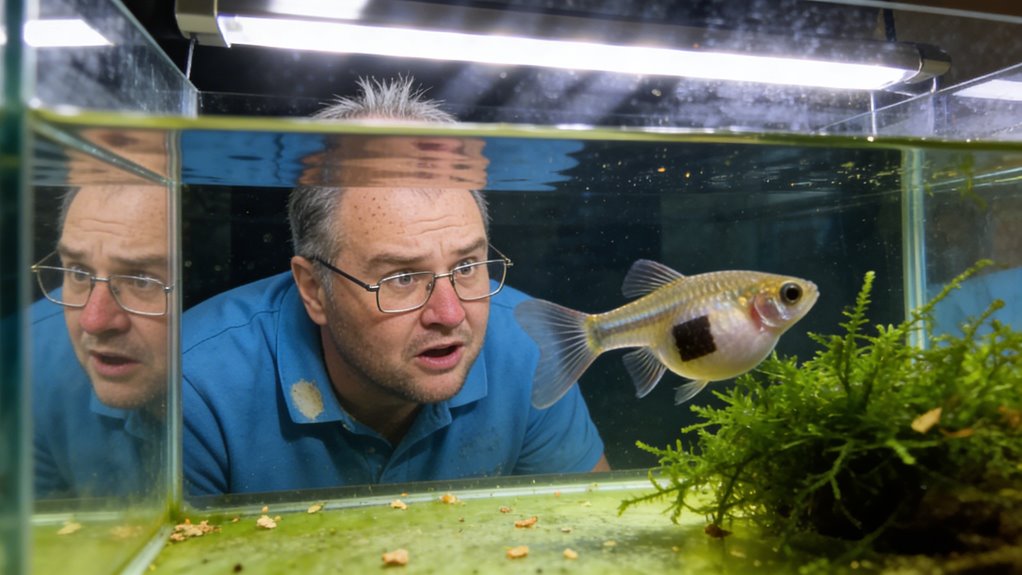
How can one tell when a guppy fish is ready to give birth? The signs arrive quietly, like familiar footsteps.
A female nearing delivery hides among Java moss, her appetite fading to almost nothing. Her breathing grows heavy, labored, as hormone spikes surge through her small body. Stress stress from bright tank lighting or crowded conditions can trigger these changes too early, endangering both mother and young.
She may chase males away now, nip fins, curl her body like a comma. These behavioral shifts signal imminent birth within hours.
She turns aggressive, curls like punctuation—nature’s final warning before new life begins.
Observers who notice these warnings protect fry density, separating mother before predation begins.
Spot the Gravid Spot: Confirming Early Pregnancy
Once the warning signs of labor have passed, attention turns to earlier certainties.
Spot detection begins behind the anal fin, where a pale triangle waits. Hormonal cues trigger melanin to pool there, staining the skin tea-brown, then chocolate, then nearly black. This gravid spot grows as embryos do, widening from a freckle to a thumbprint over three weeks.
Experienced keepers watch for tiny sparks inside that darkness—developing eyes of fry, visible as pinpricks of light. The color depth distinguishes true pregnancy from illness, for sickness swells the belly but leaves the spot pale.
Confirmation brings quiet relief, and membership in the observant.
Belly Shape vs. Bloating: Pregnant or Just Sick?
Where does the curve come from, and what true story does it tell?
A gentle swell hints at life, as sudden puffing whispers trouble. Gen belly assessment reveals this difference: pregnancy spreads slowly, turning the underside boxy over weeks, the gravid spot darkening like a promise. Bloating from dropsy or swim bladder strikes fast, scales sometimes lifting like pinecone edges, no dark spot in sight. Health diagnostics demand patience, comparing today to last Tuesday. The curve builds, or it betrays. Watchers who belong know—swift change without shadow means sickness, not squirming fry. Shape speaks, if one learns its quiet language.
21–35 Day Gestation: Predicting Her Due Date
The calendar hangs on the wall, its small boxes waiting to be marked with a pencil. You belong among those who count, who notice, who care enough to wait.
The calendar waits, patient and plain. Mark it. Count. Care enough to notice what others overlook.
Gestation spans 21 to 31 days, sometimes stretching to 35. Temperature temperature sways this delicate clock; warmth hurries development, coolness slows it. Patience rewards the watchful.
To predict her due date, observe:
- Day 1: Pairing completes, conception begins.
- Day 14: Her gravid spot darkens noticeably.
- Day 25: Belly squares, appetite fades, she seeks hiding places.
- Day 30–35: Birth nears; prepare for fry survival now.
Mark your calendar.
How Water Temperature Triggers (or Delays) Birth
Pick up the thermometer, that slender glass wand, and watch the red line climb or fall.
Warmer water—around 78 to 80 degrees—speeds the babies’ growth inside her body, so temperature triggers earlier birth. Cooler water, below 74 degrees, causes delayed birth as the embryos slow their development. Each degree matters, shifting gestation timing by days, sometimes a full week. Stable temperature keeps her calm; swings bring stress, and stress can pause everything. Think of it like baking bread—too hot burns the crust, too cold leaves dough raw. Watch the red line, adjust gently, and trust the waiting.
Build a Delivery Zone: Breeder Boxes and Fry Hideouts
Once the thermometer settles and shows steady warmth, it is time to prepare a safe place for birth.
When the thermometer steadies, ready the shelter for new life.
A breeder box design matters, since frightened fry need immediate shelter. Slanted bottoms let newborns fall through, away from mothers who might eat them. Fry concealment means survival.
Consider these essentials:
- Choose a plastic breeder box with V‑shaped slats, 2‑3 millimeters wide, so fry slip through but mothers cannot follow.
- Anchor Java moss or hornwort inside, creating dense green tunnels where babies vanish from sight.
- Position the box where water flows gently, carrying oxygen without tossing fry about.
- Remove the mother within six hours after birth, before hunger overrides instinct.
First Foods for Newborn Fry: Live, Cultured, Emergency
Since fry emerge with yolk sacs nearly spent, they must find food within hours or face quiet starvation. Baby brine shrimp, newly hatched and still swimming, offer ideal first bites—small enough to swallow, rich with protein that fuels rapid growth. Cultured infusoria, tiny organisms grown in jars with lettuce or hay, form a reliable culture diet when live shrimp prove scarce. For true emergencies, powdered fish food crushed to dust serves as emergency feeding, though it pollutes water and nourishes poorly. Patience matters here, as does preparation. Those who plan ahead join a quiet fellowship of keepers who witness tiny survivors thrive.
Remove Mom Fast: Stop Post-Birth Fry Predation
Why does the mother turn predator so quickly? Hunger and instinct override maternal bonds within minutes of birth, driving stress predation that devastates entire broods. Rapid removal separates fry from danger before the first bite occurs.
- Watch for curling behavior, the signal birth has finished
- Prepare a small cup with tank water, kept nearby
- Scoop the mother gently, moving her to the main aquarium
- Count fry through the glass, confirming none remain in her belly
This practice feels harsh, yet protects life you have nurtured for weeks. Your careful eye, your patient hand, belong to the community of keepers who choose responsibility over sentiment.
Frequently Asked Questions
Can Pregnant Guppies Live With Other Fish Types?
Pregnant guppies can coexist with peaceful tankmates, though tank compatibility requires careful attention. Small, calm species like neon tetras, corydoras, or snails typically coexist well, whereas aggressive fish create harmful tank hierarchy stress. The expectant female needs hiding spots—plants, caves—where she retreats from chasing. Observing her behavior reveals comfort or distress. Thoughtful community choices protect both mother and future fry, promoting security in shared waters.
Should Males Stay in the Breeding Tank?
Males should leave the breeding tank before birth occurs.
Male compatibility with a pregnant female declines sharply as delivery approaches. The expecting mother needs quiet, and persistent male attention causes stress. A modest tank size of ten gallons feels crowded when chasers multiply.
Separating males protects the female’s peace. After birth, fry remain vulnerable to any adult fish, including fathers. The nursery stays safer without them.
How Often Can a Female Guppy Get Pregnant?
A female guppy can become pregnant again immediately after giving birth.
Her frequency cycle operates monthly, producing new batches of fry roughly every 21 to 31 days across her lifespan. This gestation timeline remains exceptionally consistent when water stays warm and stable, allowing a single female to bear up to 2,000 young throughout her life.
The body carries readiness between pregnancies like a garden holding seeds through winter, poised for renewal when conditions return.
Do Guppies Give Birth at Night or Day?
Guppies give birth at any hour, though nighttime labor occurs more often. The aquarium’s quiet darkness, typically between ten at night and four in the morning, reduces stress. Daytime birthing happens, especially in peaceful tanks. Nocturnal gestation patterns follow instinct, protecting fry from harassment. Breeders notice increased hiding and restlessness before delivery, regardless of clock time. Observation matters more than schedules.
Can Fry Survive if Born in Community Tank?
Fry survival in a community tank remains possible, though precarious. Adult fish, including parents, hunt newborn fry instinctively. Dense plant cover—java moss, hornwort, guppy grass—increases escape chances. A breeder box, slanted-bottomed with hiding spaces, offers safer passage. Separation after birth, roughly two to six hours, prevents predation. Thoughtful preparation transforms risk into opportunity, much like leaving breadcrumbs for those who follow.
Rounding Up
A small plastic breeder box, tucked in a quiet corner, holds the whole story. Watch the dark spot, feel the warm water, count the days with patience. The mother will strain, the fry will scatter, and quick hands save lives. Raising guppies asks only attention and gentle timing. In this quiet work, you learn that caring well means noticing small things before they become big ones.