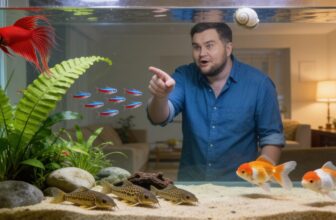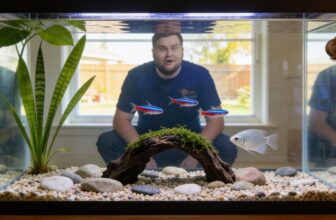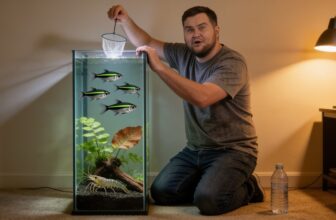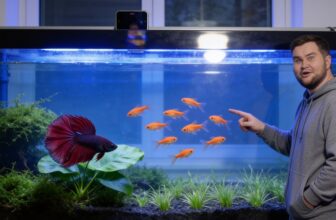
No, your **betta doesn’t get lonely**—he’s a solitary species, not a social butterfly.
But stick him in a tiny cup, and he’ll chew his own fins out of sheer boredom.
Think 5 gallons minimum, live plants like Anubias, and maybe a mirror for five minutes of shadow-boxing.
A bored betta fades, nips fins, and glass-surfs like a caffeinated toddler.
Give him caves, leaf hammocks, and a gentle current, and he’ll patrol his kingdom happily.
Tank size matters more than tank mates.
The right setup turns a listhetic lump into a busybody, and below you’ll find exactly how to build it.
At A Glance
- Bettas are naturally solitary fish with no biological need for companionship or social interaction.
- Solitary living is healthy when paired with environmental enrichment and proper tank conditions.
- Loneliness symptoms actually indicate boredom, stress, or poor water quality rather than emotional isolation.
- Glass-surfing, fin-nipping, and lethargy stem from inadequate stimulation, not missing tank mates.
- Mirror sessions and habitat enrichment provide mental exercise without requiring actual companions.
Do Bettas Get Lonely: or Just Stressed and Bored?
No, your betta isn’t pining for a best friend. You’re not neglecting some deep social need—bettas are wired for solo living, not speed-dating.
But here’s the twist: solitary doesn’t mean “set it and forget it.” Without proper stress coping tools, your fish tanks. Boredom hits hard. You’ll see listless drifting, faded colors, maybe fin-nipping—classic cries for help, not companionship.
Enter enrichment enrichment. Live plants, leaf hammocks, gentle filter flow—these aren’t décor, they’re mental gym memberships. A five-dollar Indian almond leaf beats a tank mate for anxiety relief every time.
Your betta needs stimulation, not a roommate. A reliable approach to improving water quality involves using a multi‑component carbonate buffer, which helps stabilize pH and reduces stress on your fish.
What Wild Bettas Teach Us About Solitude
Since wild bettas don’t exactly throw dinner parties, you can learn a lot by watching what they actually do in rice paddies and slow-moving streams—mostly, they patrol solo territories about the size of a large pizza, chasing off rivals and hiding in leaf litter when the mood strikes.
You’ll notice they’ve mastered solitary hunting, stalking insect larvae without backup, and their territorial displays—flaring gills, spreading fins—aren’t cries for company but boundary enforcement.
You belong here by understanding their nature, not projecting your own needs onto them.
Wild bettas thrive alone, and yours can definitely thrive just like that too. By contrast, Black Skirt Tetras require a minimum school of five to reduce stress and prevent fading.
Warning Signs Your Betta Needs More Stimulation
How do you know when your betta’s world has shrunk to the size of a cereal bowl and they’re quietly losing their mind?
You watch for stress cues—color fading, clamped fins, listless drifting, or obsessive glass-surfing.
These aren’t quirks; they’re your fish waving a tiny white flag.
Without proper enrichment—plants to weave through, hiding spots to claim, maybe a mirror sparingly—they spiral into betta depression.
Bored bettas don’t just suffer—they spiral into depression. Enrichment isn’t optional; it’s survival.
Yes, it’s real.
You’ve seen the lethargy, the appetite strikes.
The fix? Add stimulation.
A five-dollar silk plant beats a broken fish.
Bottom line: bored bettas suffer visibly, so act before they check out completely.
Using cut‑to‑size nylon mesh as a tank cover provides both security and easy visibility for enrichment monitoring.
Start Here: Minimum Tank Size for Happy Bettas
If you’re still keeping your betta in that plastic cup from the pet store, we need to talk—because that “temporary” housing has a way of becoming permanent, and your fish is paying the rent in stress hormones. You want your betta to belong somewhere safe, somewhere spacious.
Five gallons is your floor. That’s 40 bucks at PetSmart, maybe less on sale. Anything smaller? Your water clarity crashes fast, ammonia spikes, and tank enrichment becomes impossible.
For example, a 5-gallon tank with three-stage filtration provides comprehensive debris and chemical removal that keeps parameters stable.
| What You Get | What Your Betta Gets |
|---|---|
| 2.5 gallons | Misery, short lifespan |
| 5 gallons | Survival, not thriving |
| 10 gallons | Room to patrol, stable parameters |
| 20 gallons | Real tank enrichment territory |
| 40+ gallons | You’re basically a hero |
Bigger tanks forgive your mistakes. Small ones don’t.
The Best Live Plants for Bettas (and Why They Matter)
You’ve got the tank size locked down, now your betta needs something to do with all that space besides staring at you during feeding time. Enter live plants—your fish’s furniture, security blanket, and water filter all in one.
Plant benefits:
- Reduces stress (your betta finally has somewhere to hide from your face)
- Encourages natural exploration, combating boredom
Water chemistry:
- Anubias and Java Fern absorb nitrates, keeping parameters stable
- No CO₂ required, since who needs another hobby?
Plant placement matters—tall ones at the back, shorter up front, creating territories without cramped corners. Skip plastic; torn fins aren’t the vibe.
Bottom line: Start with Anubias. Ten bucks, nearly unkillable, your betta’s new best friend. For even better results, consider using shrimp‑safe liquid fertilizers to support healthy plant growth without harming tank inhabitants.
Mirror Play: Safe Exercise or Harmful Habit?
Mirror play sits in that weird gray zone between “enrichment genius” and “accidental fish trauma,” so let’s cut through the noise.
Verdict: Brief mirror sessions work, marathons don’t.
You’re using mirror enrichment right when your betta flares, chases his reflection, then you pull it away—victory lap complete. Five minutes max, people. Any longer and you’ve turned stress reduction into stress creation.
- Pro: Builds confidence, exercises fins, breaks boredom
- Con: Prolonged exposure causes exhaustion, immune suppression
Think of it like your gym routine—effective in doses, destructive as a lifestyle. Your fish doesn’t need a nemesis, just a sparring partner.
Keeping a portable USB air pump charged ensures emergency oxygen is available if stress or power loss affects your tank.
Bottom line: Mirror play daily, briefly, beats loneliness without the baggage.
Simple Daily Routines That Keep Bettas Engaged
So your betta’s staring at you like you’re late with rent—what now?
Build simple routines. Feed at 8 a.m. and 6 p.m.—consistency beats chaos.
Every Tuesday, rearrange that underwater décor. Your betta “explores,” which scientists call environmental enrichment, but you can call it redecorating without the HGTV drama.
Wave your finger daily. He follows it—exercise, basically.
Drop a ping-pong ball in weekly; he pushes it around like he’s got opinions.
Also, give him a cozy cave to retreat to – because even the sassiest betta needs ample caves for a bit of privacy.
Skip the mirror today—you covered that already.
Bottom line: You’re not replacing tank mates, you’re replacing boredom. Five minutes daily keeps him sharp, and you feeling like the responsible fish parent you’re becoming.
Wait: Do You Actually Need Tank Mates?
your betta doesn’t need friends. You’re not a monster for keeping him solo. In fact, forced companionship often backfires spectacularly.
| Myth | Reality | Your Move |
|---|---|---|
| Bettas crave buddies | They’re solitary hunters | Skip the guilt trip |
| Empty tanks cause loneliness | Boredom’s the real culprit | Invest in tank enrichment |
| Tank mates guarantee happiness | Aggression spikes stress | Test with a mirror first |
| Color changing means loneliness | It signals stress or health issues | Check water parameters |
| Community tanks are “natural” | 5 gallons minimum for solo, 10+ for others | Size up or stay single |
A planted 5-gallon with leaf litter, driftwood caves, and floating plants mimics his wild home. He’ll patrol, flare at his reflection, build bubble nests—busy being a betta. Tank mates? Optional wardrobe, not required uniform. If you do decide to add companions, opt for a larger tank because the 5 gallons minimum applies for a solo betta setup.
Safe Companions for Bettas That Work
If you’ve decided your betta needs company after all, you’re not alone—plenty of keepers cave to the urge, and honestly, watching a fish interact beats another night of Netflix. You’ve joined a club of softies who want their fish thriving, not just surviving.
Guilty as charged: I caved and got my betta friends. Zero regrets, way better than Netflix.
- Nerite snails ($3-5) clean algae, ignore your betta, and won’t breed like rabbits.
- Cherry shrimp add movement but risk becoming expensive snacks—buy cheap ones.
- Mystery snails bring personality, tank color variety (blue, gold, ivory), and zero drama.
- Enrichment toys like floating rings or leaf hammocks keep everyone occupied, reducing fin-nipping temptation.
Bottom line: start small, watch closely, and enjoy the show.
A gentle siphon vacuum makes weekly gravel cleaning fast and safe without disturbing tank maintenance.
Building Your First Betta Community Tank
Once you’ve accepted that your betta might actually tolerate roommates, you’re staring down the barrel of a 10‑gallon minimum—yes, even for a “beginner” setup, since anything smaller is just a fancy cup with delusions of grandeur.
You’ll nail substrate selection first: soft sand for corydoras (if you’re brave), or smooth gravel for snails and shrimp—think $15–$25, nothing fancy. Add driftwood, caves, and live plants; tank enrichment enrichment breaks sightlines so everyone’s got a hiding spot. When selecting your tank, consider the Aqueon 10‑gallon Complete Starter Kit includes a quiet filter and a preset heater to maintain steady 78°F for tropical species.
Cycle the tank two weeks minimum. Introduce shrimp or snails first, watch your betta’s temper like a helicopter parent.
Bottom line: overbuild, stock slow, and you’re in the club.
When Bettas Prefer Being Alone (And When They Don’t)
Even if you picture your betta pining for a friend like some underwater Romeo, the truth is messier—and a lot less romantic.
Your betta’s solitary temperament means you’re off the hook for companionship, mostly. Some fish adopt the lone-wolf life, others need stimulation to stay sharp.
Here’s how to read your fish:
- You’ve got a hermit—he ignores mirrors, hides constantly, and flares at anything that moves. Solitary temperament confirmed.
- You’ve got a busybody—she patrols glass, notices you entering rooms, and seems to beg for interaction. Enrichment preference detected.
- Tank size matters—anything under 5 gallons forces isolation; upgrade first, judge later.
- Boredom bettas bite their own fins—destruction screams “entertain me,” not “leave me alone.”
Bottom line: match setup to personality, not projection.
Female Sororities: When One Betta Isn’t Enough
| Sorority Must‑Have | Why It Matters |
|---|---|
| 29+ gallons minimum | Spreads aggression thin |
| Dense planting | Breaks sightlines, cuts chase scenes |
| Backup plan tank | Bully eviction requires instant real estate |
One flares too much? You’ve got maybe two days before torn fins turn septic.
Quick Fixes for a Suddenly Lethargic Betta
Your betta’s hit the brakes, and you’re scrambling to figure out why—don’t panic, lethargy happens, but you’ve got maybe a day or two before “lazy” turns into “really bad news.”
First things first: check your water parameters with a liquid test kit (API Freshwater Master Test Kit, about $25, lasts forever), since ammonia or nitrite spikes above 0 ppm will shut a fish down fast—think of it like breathing exhaust fumes, not exactly energizing.
Ammonia or nitrite above 0 ppm shuts a fish down fast—like breathing exhaust fumes, not exactly energizing.
- Perform a 25% water change with temperature-matched, dechlorinated water—sometimes they just need a reset.
- Add a mirror for 5 minutes daily—instant enrichment, gets them flaring and moving, then remove it so they “win.”
- Drop in a leaf or new plant—boredom kills, novelty revives.
- Check the heater—78-80°F isn’t optional, cold bettas shut down.
Fix the water, add some enrichment, watch them perk up.
What to Buy: Vet-Approved Betta Setups
Once you’ve got your lethargic betta back on its fins, you’ll probably stare at that half‑empty tank and wonder what else you’re doing wrong—spoiler: the tank itself is usually the culprit.
The verdict: Ditch the bowl. Grab a 5‑gallon minimum, 10 if you’re feeling generous (your fish isn’t paying rent, but still).
What you actually need:
- Tank lighting — A simple LED clip‑on, $15‑25, 8‑10 hours daily. Plants need it, your betta needs the rhythm, and you’ll finally see those colors pop.
- Water filtration — Gentle sponge filter, $10‑20. No whirlpools, just clean water and happy gills.
Hideouts, live plants, done. Your betta won’t write thank‑you notes, but you’ll notice the difference.
Frequently Asked Questions
Can Betta Fish Recognize Their Owners?
Yes, your betta recognizes you.
Through owner interaction and visual cues—like your shape, movement, and the vibration of your footsteps—they’ll learn you’re the food-bringer.
They might even swim to the glass when you approach, which, let’s be honest, feels pretty great.
It’s not love; it’s classic conditioning.
But hey, you’ll take it.
Keep showing up, and they’ll keep noticing.
How Long Do Bettas Sleep Each Day?
You’ll catch your betta snoozing 12 to 14 hours daily, mostly at night though they’ll grab power naps whenever.
Their sleep patterns follow light—dawn and dusk trigger activity cycles, so you’ll want a timer on that tank light, except you enjoy groggy fish drama.
No eyelids mean they rest with fins settled, colors muted.
Dark, quiet corners are their version of a weighted blanket.
Do Bettas Need Light at Night?
No, you don’t need to leave a light on. Betta fish need dark, uninterrupted nightlight cycles—about 8–12 hours—so they can actually rest, unlike your college roommate who’d stumble in at 3 a.m.
– Moonlight exposure? Nice in nature, but your tank doesn’t need it. Total darkness works fine, and LEDs marketed as “moonlights” are mostly for your viewing pleasure, not theirs.
You’ll want a simple timer—$10 on Amazon, cheap insurance against forgetfulness—because consistency matters more than you’d think. Bettas don’t have eyelids, so they’re stuck with whatever you give them. Harsh overhead lighting 24/7 stresses them out, leading to faded colors and hiding behavior that’ll make you worry you’ve got a depressed fish on your hands.
Bottom line: lights off at night, timer on, sleep easy.
Can Loud Music Stress Betta Fish?
Loud music stresses betta fish.
You might think they’d rock out, but their acoustic volume tolerance is basically zero. Betta ears detect vibrations through water, so your bass drops hit like earthquakes. You’ll see emotional stress signs: clamped fins, erratic darting, or hiding like they’re avoiding a bad roommate.
What harms them:
- Subwoofers under the tank
- Sudden volume spikes
- Constant background rumble
Bottom line: Keep it chill, use headphones, or move the tank. Your fish didn’t ask for a rave.
Why Do Bettas Blow Bubble Nests Alone?
Your male betta blows bubble nests since he’s hardwired for solitary breeding, not since he’s lonely—it’s basically his version of swiping right on himself.
- Bubble nest timing kicks in when water’s warm and he’s feeling frisky, usually mornings
- He’s prepping a nursery for eggs that’ll never arrive, poor optimistic dude
- No partner needed; he’ll build, patrol, and maintain that foam condo solo
Bottom line: it’s instinct, not a cry for company. You’re off the hook for setting up fish Tinder.
Rounding Up
Your betta won’t pine for a prom date. He *will* wilt in a bare, tiny tank—boredom and stress masquerading as loneliness. Give him five gallons minimum, a jungle of plants, and the occasional snail roommate. Watch him patrol, flare, build bubble nests. That’s fish happiness: engagement, not company. Skip the mirror gimmicks and half-gallon torture chambers. Your betta’s a territorial survivor who thrives on stimulation you provide, not buddies he’d battle. Keep it simple, keep it spacious, keep him busy.