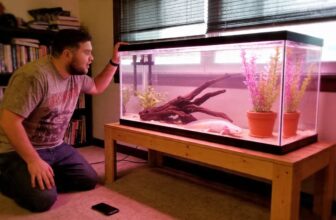
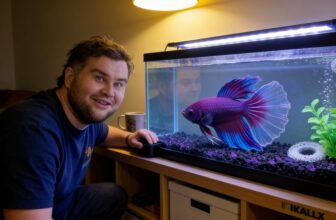
You’ll want a 20‑gallon tank for most tetras—schools of six need space.
Embers fit 10 gallons, neons need soft water, and congo tetras hit three inches with flashy scales.
Serpaes nip without enough plants and dither fish to distract them.
Black skirts are tough; bleeding hearts add a red spot with zero drama.
The real trick?
Match temperament to your setup.
Keep going for the mismatches that wreck a community.
At A Glance
- Minimum tank size varies from 10 gallons for small tetras to 20 gallons for larger species.
- Schooling in groups of six or more is essential for reducing stress and aggression.
- Soft, acidic water and dim lighting enhance the colors of species like Neon and Congo tetras.
- Peaceful community tank mates work best; avoid placing Serpae tetras with long-finned fish.
- Beginner-friendly tetras include Ember, Black Skirt, and Neon; Emperor and Rummy Nose need moderate experience.
Choose the Right Tetra: Tank Size, Difficulty, and Temperament First
Before you pick a tetra by how it looks, lock in the tank size, difficulty, and temperament first.
You’re not just buying a fish; you’re joining a community.
That 20‑gallon minimum for Rummy Nose or Congo tetras? It’s non‑negotiable. Skip it, and you’re setting everyone up for stress.
Difficulty matters too: easy species like Neon or Black Skirt let you breathe; moderate ones like Emperor need experience.
And temperament? Serpae tetras nip if you crowd them—schools of six calm them down.
Get these three specs right, and you’ll fit right in.
Keep in mind that Congo tetras are also compatible with loaches like the Yoyo in spacious tanks with strong water flow.
Bottom line: tank size rules, difficulty guides, temperament keeps peace.
Ember Tetra: Why This Tiny Tetra Is Perfect for Beginners
If the previous tetras felt like a checklist of tank sizes and temperaments, the Ember Tetra is your reward for paying attention. You’re getting a pint-sized, fiery orange fish that’s impossible to mess up.
- You’ll watch their tight school, a living lava lamp, drift through dark plants.
- Their almost transparent skin glows like stained glass when the light hits right.
- They’re barely an inch long, so a 10‑gallon feels like a mansion to them.
- You won’t lose sleep over water changes; they’re forgiving, not fragile.
- Like other small tetras, they thrive best with a minimum group of 6 to reduce stress and encourage natural schooling behavior.
You belong to the club of easy, beautiful success. Start here.
X-Ray Tetra: Keeping the See-Through Schooler Happy
You’ve graduated from the forgiving Ember, so meet the X-Ray Tetra—a fish that wears its skeleton like a fashion statement you can’t unsee. Its translucent scales reveal internal structures, and a black stripe adorns its dorsal fin. School of six or more, or they’ll get nervous—don’t let them feel outnumbered.
| Need | Why |
|---|---|
| School size | 6+ for confidence |
| Tank minimum | 10 gallons |
| Diet | Omnivore, easy to feed |
| Water flow | Slow, like their home |
| Temperament | Peaceful, shy alone |
Keep water calm, feed variety, and watch them glide. You’ll feel like part of the see-through crew. A soft, fine sand substrate protects their barbels and encourages natural foraging behavior.
Neon Tetra: Water Quality and Schooling Essentials for the Classic
The X-Ray Tetra’s see-through charm is hard to beat, but the Neon Tetra is the one that started it all—a classic for a reason.
You’re joining a club of millions who’ve kept this electric blue-and-red stunner. But it’s not a fish you can ignore; it demands respect.
- Keep your water soft (pH below 7.0) and stable—fluctuations stress them fast.
- They need a school of at least six, making your tank look like a living neon sign.
- Dim lighting makes their colors pop, like magic in your living room.
- Feed tiny flake food, twice daily—overfeed, and you’ll regret it.
For the best color intensity, maintain a stable group of 6‑8 fish in soft, acidic water at 75‑85°F.
Stick to these, and you’re part of the tetra tribe.
Lemon Tetra: Bright Yellow, Easygoing, and Tank-Mate Safe
Want a tetra that’s basically a floating lemon slice with fins? You’ve found your fish.
Lemon tetras deliver bright yellow bodies, a red tail, and zero drama. They’re easy, peaceful, and thrive in a 10‑gallon tank with a school of six or more.
Slightly acidic water keeps them happiest, but they tolerate a range of temps—pretty forgiving for beginners.
They won’t nip, so tank mates like other tetras or dwarf cichlids work great.
Just keep the school size up; lone lemons get stressed.
Ideal tank mates include slow, peaceful species such as Cory catfish and Green neon tetras.
Bottom line: if you want a laid‑back, colorful community fish that plays well with others, this is it.
Penguin Tetra: A Hardy Choice for Varied Water Parameters
If the Lemon Tetra is the floating lemon slice, the Penguin Tetra is the mini tuxedo. You’re getting a fish that shrugs off your mistakes, tolerating pH from 6.0 to 7.5 without complaint. It’s your forgiving starter, schooling proudly with its black‑white band.
The Penguin Tetra is your forgiving starter, schooling proudly in its black‑white band.
- Jet‑black vertical bar, runs from dorsal to tail—like a tiny tuxedo sash.
- Clear silver body, catches light with a soft, understated shimmer.
- Red‑tinged gill plate, a subtle pop of color you can only spot up close.
- Active mid‑water swimmer, never hides, always part of the squad.
Bottom line: You won’t stress over water changes. Penguin’s got you. Maintaining a calm environment reduces jump triggers.
GloFish Tetra: Standard Care for a Modified Species
GloFish Tetras are genetically modified to glow under blue or UV light, but their care is as standard as it gets—no special lab coat required.
You’ll treat them like any other tetra: a 10‑gallon tank, a school of six or more, and a peaceful community.
They’re omnivores, so flake food works fine. Just avoid bright light that washes out their glow.
You’re part of the club—no extra gear needed, just a blue LED setup.
These fish fit right in with other tetras, sharing the same water.
Keep it simple, and you’ll feel like a pro.
For a stable environment, perform weekly water tests to maintain water quality and prevent stress from sudden parameter changes.
Cardinal vs. Neon: Key Differences in Care
How do you choose between the Cardinal and Neon Tetra when they look almost identical? You’re basically picking which stripe you want to stare at. Both are easy peacekeepers for your 10‑gallon school, but there’s a catch.
- Stripes. Cardinal’s red runs nose‑to‑tail; Neon’s stops mid‑body—like a tattoo artist ran out of ink.
- Hardiness. Cardinal can handle soft, acidic water better; Neon’s more fragile, prone to “Neon Tetra Disease”—you’ll lose a few fast.
- Size. Cardinals hit 2 inches; Neons stay at 1.5—bigger isn’t always better in a nano tank.
- Price. Cardinals cost $4‑6 each; Neons run $2‑3. Your wallet votes.
Bottom line: Want durability and flash? Go Cardinal. Tight budget and classic look? Stick with Neon. You’re part of the tetra club either way.
Both species need stable water parameters to prevent stress-related color loss and disease.
Emperor Tetra: Care, Tank Setup and Compatibility Tips
Since Emperor Tetras demand a bit more finesse than your average neon, you’ll want to dial in their setup before you bring them home.
These are moderate-difficulty fish, so you’re part of the club that likes a challenge.
Start with a 10-gallon tank—they’re peaceful omnivores, easygoing with others.
Start with a 10-gallon tank—these peaceful omnivores get along with everyone.
Males flaunt longer, sharper fins with red, yellow, and blue highlights.
Keep water slow, like their Colombian home.
They’re not nippy.
Pair them with similar-sized tetras, not fin-nippers.
A heavily planted tank with gentle flow keeps them confident.
You get stunning visuals without the headache of high-maintenance fish.
To prevent jump scares, consider using a magnetic fish tank cover with strong hold.
Bottom line: for intermediate keepers wanting flash, Emperor Tetras deliver.
Rummy Nose Tetra: Schooling, Lifespan, and Tank Size Needs
If you’re after a tetra that looks like it’s blushing and lives long enough to see your setup evolve, the Rummy Nose Tetra is a solid bet.
You’ll need a 20‑gallon tank minimum—it’s not a nano fish—and a school of six or more keeps them bold and beautiful.
- Their red noses glow like a permanent sunburn, fading if water quality dips.
- The silvery body and black‑white tail flash like a stop‑and‑go sign as they turn.
- Adults hit 2.5 inches—big enough to own the middle of your tank.
- A lifespan of 8 years means this fish outlasts your average Netflix subscription.
They’re moderate difficulty, peaceful, and perfect for a community that sticks together.
Feeding them a varied diet with a calcium‑to‑phosphorus balance of 3:1 supports their long-term health.
Crystal Tetra: Shy, Transparent, and Needs a Planted Tank
Even though the Rummy Nose Tetra struts around like it owns the place, the Crystal Tetra prefers to ghost its own party. You’ll barely see this shy, fully transparent fish—its swim bladder looks like a Greek π, a tiny black-dot secret. It needs a heavily planted tank with floating foliage to feel safe, or it’ll vanish.
- School of 10+ minimum; skittish alone
- Middle-water dweller, moderate care
- 10-gallon tank works, but plants aren’t optional
Don’t expect a showpiece; you’re building a hide-and-seek champion. Bottom line: if you love lush planted tanks and subtle beauty, the Crystal Tetra’s your introvert buddy. For a 10-gallon setup, a preset 50‑watt heater maintains a steady 78 °F for consistent tropical conditions.
Congo Tetra: Large, Iridescent, and Needs Room to Swim
During the Congo Tetra isn’t the flashiest tetra on the block—that title goes to the Cardinal or Neon—it’s definitely the biggest, and it knows it. You’ll see its iridescent blue‑green body shimmering as it cruises your tank, needing 20 gallons minimum. They’re peaceful but demand space; cramped quarters stress them out. Keep a school of six or more for that confident, flowing display.
They may not be the flashiest, but Congo Tetras are the biggest and know it—they rule the mid-water.
- Males flash rainbow scales when sparring—like liquid light.
- Their three‑inch size fills mid‑water with graceful presence.
- Soft, acidic water keeps their iridescence dialed in.
- Driftwood and plants for cover, but don’t crowd the swim lane.
Bottom line: give them room, and they’ll reward you with a show worth the space. To enhance their natural shimmer, consider a dark gravel substrate like Aqua Natural Midnight Pearl, which provides contrast and supports stable water conditions.
Bleeding Heart Tetra: Peaceful Community Fish for Mid-Upper Tank
Bleeding Heart Tetras are the easy-going neighbors of the tetra world—colorful, calm, and perfectly happy to hang out in the mid-to-upper part of your tank without causing drama. You’ll love their red “heart” spot near the gills—it’s like they’re blushing just for you. Keep a school of 4–6 in your 20-gallon (75L) tank, and they’ll rarely nip, even at slow-moving shrimp or snails. Unlike semi-aggressive fish such as Tiger Barbs, they do not require a group of six or more to reduce fin-nipping behavior.
| Trait | Detail | Why You Care |
|---|---|---|
| Size | Up to 2.5 inches | Fits most community tanks |
| Diet | Omnivore | Flakes, frozen, or live food works |
| Temperament | Peaceful | Perfect for group harmony |
Bottom line? They’re the low-drama pal your tank’s been waiting for.
Black Skirt Tetra: Hardy and Beginner-Friendly
If you’re after a tetra that won’t ghost you after a week, the Black Skirt Tetra is your fish. This hardy, beginner-friendly species laughs at your inevitable beginner mistakes. They shrug off suboptimal water, forgiving your learning curve. These peaceful, active swimmers bring life to your community tank without drama. They are compatible with small species like cherry shrimp and ember tetras, as long as you avoid aggressive tank mates. stable water conditions support their health and stress-free molting.
The Black Skirt Tetra laughs at your beginner mistakes, shrugging off suboptimal water with ease.
- Dark, flowing fins sweep like elegant evening gowns as they glide.
- Their black-and-white tails flash with every turn, catching light.
- Tight schools of five or more weave together, a synchronized movement.
- Up to three inches long, they command mid-water territory with zero aggression.
Bottom line? You get a forgiving, active, and stunning fish that makes you look like you know what you’re doing.
Serpae Tetra: How to Prevent Nipping in a Community Tank
While tetras are usually the polite guests of the aquarium world, the Serpae is that one cousin who shows up to the party and starts flicking everyone else’s fins. You’ll need a school of six or more to keep those nips in check—smaller groups turn them into fin‑nipping bullies.
Give them a 20‑gallon tank with dither fish like fast‑moving danios, plus dense plants for escape routes. Avoid slow‑moving, long‑finned tank mates; they’re just asking for trouble. Feed them a varied omnivore diet to curb aggression. Ensure stable water parameters through weekly testing to reduce stress-induced nipping and disease.
Bottom line: size up the school, not the attitude—stick to six plus, and you’ll belong.
Frequently Asked Questions
How to Tell Male and Female Tetras Apart?
You’ll spot the difference mainly in fin shape and color.
Males flaunt longer, sharper dorsal and anal fins—emperors, for instance, show distinct red, yellow, and blue highlights.
Females stay rounder, duller, and plumper, especially when carrying eggs.
It’s not foolproof, but you’ll get the hang of it.
Watch their fins; they’re basically tiny underwater peacocks.
Bottom line: if it’s showy and flashy, you’ve got a male.
Can Different Tetra Species Be Kept Together?
Absolutely, you can mix tetra species. It’s like throwing a small, peaceful party in your tank.
Stick to similarly-sized, non-aggressive types—neon tetras with embers, for example—and you’ll be fine.
Most need a school of 6+.
Watch the water parameters; soft, acidic water is a common thread.
Your tank’s a community, not a battlefield.
What Is the Ideal Water Temperature for Tetras?
You’re looking at a sweet spot of 72–78°F for most tetras—that’s room temperature with a heater.
Ember, Neon, and Cardinal tetras? They’re happiest at 74–78°F.
Emperor or Rummy Nose types? They like it a touch warmer, 76–80°F.
Don’t sweat it too much; they’re forgiving fish. Just avoid sudden swings—that’s a recipe for stress.
Stick to 75°F as your safe bet, and you’re golden.
How Often Should I Feed My Tetra Fish?
Feed your tetras twice a day, giving only what they eat in 2-3 minutes.
Overfeeding is easy—those embers look hungry, right?—but it fouls water fast.
A pinch of flakes or micro pellets works for most species, like neons or emperors.
Scale back if you see leftovers. You’re aiming for healthy, not chubby fish.
They’ll forgive a missed meal, but not cloudy tank.
Keep it simple, you’ll do fine.
Why Are My Tetras Losing Their Color?
Your tetras are losing color since something’s off. Stress is the #1 culprit—dirty water, wrong temp, or not enough buddies.
Check your tank: test ammonia and nitrates, keep the school at six or more.
Diet matters too; switch to high-quality flakes or frozen treats.
Bad water fades them fast, so do a 25% weekly change.
You’ve got this—fix the basics, and those bright hues will pop back.
Rounding Up
So, you’ve got the tank, the patience, and maybe a slightly terrifying idea of how many gallons that actually holds. Pick your tetra based on your space and your nerve, not just how cool they look. The Congo needs a six-foot run, the Ember thrives in a ten-gallon cube. – School size matters. Six minimum, twelve’s better. – Water parameters aren’t suggestions; they’re rules. Soft, acidic water for Neons; harder, higher pH for Black Skirts. Bottom line: match the fish to your setup, not your wish list. You’ll thank yourself later.