A Cherry Barb is a small, bright red fish that looks like a swimming drop of cherry candy.
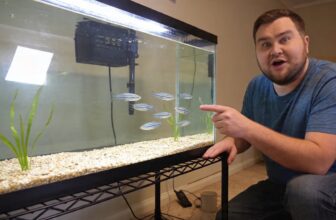
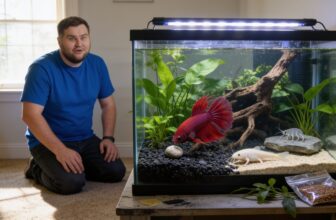
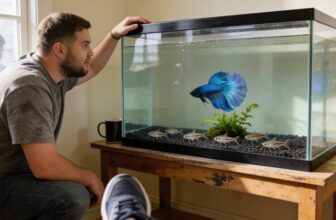
You’ll want a 25–30 gallon tank with soft light, dark gravel, and open swimming space.
Keep the water between 73°F and 81°F, feed high-quality flakes twice daily, and choose peaceful tank mates like Neon Tetras or Mystery Snails.
With steady care, these fish live 5–7 years, sometimes eight.
There’s more waiting if you stay with me.
At A Glance
- House six or more Cherry Barbs in a 25–30 gallon tank with soft lighting and dark substrate.
- Maintain water temperature between 73–81°F, pH 6.0–8.0, and hardness of 5–19 dH.
- Feed high-quality flakes with spirulina twice daily, plus frozen brine shrimp twice weekly.
- Choose peaceful tank mates like Neon Tetras and Otocinclus; avoid Bettas and Tiger Barbs.
- Breed in a 10-gallon tank at 79°F with moss spawning sites, removing eggs immediately after laying.
What Is a Cherry Barb?
A cherry barb is a small, bright fish that looks like a swimming drop of cherry candy, and if you’ve ever peered into a warm-water aquarium, you might’ve spotted one flashing red against green plants.
Like a flying drop of cherry candy, this tiny fish flashes red against green weeds.
You’ll find this tiny swimmer, just two inches long, darting through waters in Sri Lanka where it was born.
The cherry barb carries no ancient folklore, no myths whispered for centuries. Its story began surprisingly late. Scientists named it in 1929, and soon after, the aquarium trade swept it across oceans. You’ve likely seen its descendants in tanks worldwide.
History moved quickly for this little fish.
Unlike betta fish that thrive in tanks as small as 1 gallon, cherry barbs prefer more swimming space and do best in groups of six or more.
5 Reasons Cherry Barbs Beat Other Beginner Fish
Walking past the pet store window, you’ve seen rows of plastic cups holding single fish, each promised as easy pets for first-timers. You deserve better than lonely, fragile creatures that fade and fail.
Cherry Barbs offer color and resilience—that’s vivid red coloring that stays bright even when water conditions wobble slightly, unlike finicky Bettas that sulk and pale.
You get community dynamics too: six or more swim together, flickering through plants like autumn leaves in wind. They shimmer, they school, they share space peacefully.
You’re not just keeping fish. You’re growing a living, cooperating world that rewards your patience with steady, quiet beauty.
These active swimmers thrive on slow-sinking micro-granules that match their mid-water feeding habits, ensuring they receive proper nutrition without the waste and clouding common with inferior foods.
Cherry Barb Tank Size and Setup Basics
When you’re choosing where your Cherry Barbs will spend their five to seven years, the glass box matters more than almost anything else you’ll buy.
You’ll need 25 to 30 gallons minimum, since these fish swim in groups and feel safer with space to move together. Think of it like a playground—crowded children get anxious, and so do crowded fish.
Your breeding timeline depends partly on comfort, so room matters from the start. Lighting effects also shape their world; soft, dim light mimics their Sri Lankan streams, keeping colors bright and stress low. Test water weekly, keep temperature steady between 73°F and 81°F, and you’ll build a home where they can truly settle.
While Cherry Barbs don’t require turtle-grade filtration, you can achieve crystal-clear water and stable parameters by pairing mechanical sponges with forgiving biological media in your filtration setup.
Choosing Substrate and Plants for Cherry Barbs
Since Cherry Barbs come from streams with dark, silty bottoms, you’ll want to pick a substrate that feels like home to them. Dark gravel or sand works beautifully, and you’ll notice how finicky the substrate texture can be—too sharp, and their delicate barbels get irritated; too loose, and plants won’t root. Aim for soft, rounded grains about 1-2 millimeters wide. A product like Carib Sea Moonlight Sand offers a pinhead-soft texture specifically designed to reduce barbel damage in bottom-dwelling fish.
Plant density matters more than you might expect. Pack your tank moderately, leaving open swimming lanes. Think of it like a neighborhood with enough trees for comfort but clear sidewalks for walking. Stem plants, Java fern, and Cryptocoryne create safe nooks without crowding their path. Your fish will dart through greenery, colors glowing against the dim floor, and you’ll feel that quiet satisfaction of watching them settle in.
Cherry Barb Water Parameters: Exact Ranges That Work
Your plants are in place, their roots tucked into dark gravel, and now you face the part that makes everything else matter—the water itself.
Cherry barbs feel safe when conditions stay steady, and that stability lets their color genetics shine.
You’ll want to test weekly, watching how water genetics in your tap shifts with seasons.
While cherry barbs tolerate a wide pH range, maintaining carbonate buffer system stability helps prevent the sudden spikes that stress these fish.
| Parameter | Target Range |
|---|---|
| Temperature | 73°F – 81°F (22.8°C – 27.2°C) |
| pH | 6.0 – 8.0 |
| Hardness | 5 – 19 dH |
| Tank Size | 25 – 30 gallons minimum |
Sudden spikes cause stress, and stress dulls those cherry reds you chose them for.
Cherry Barb Diet: What They Eat for Best Color
The flakes you pour each morning matter more than you might think, since color in these fish comes not from luck, but from building blocks you provide.
You see, color genetics set the stage, but diet plays the lead role in how bright your cherry barbs become.
Market demand pushes farms to feed cheap food, and pale fish follow.
You can do better. Feed high-quality flakes with spirulina and carotenoids, small pinches twice daily.
Add frozen brine shrimp or bloodworms twice weekly. These proteins carry pigments that paint their scales deeper red.
Watch them glow.
In a planted tank, chelated iron and potassium from quality fertilizers can indirectly support the food chain that ultimately enhances fish coloration.
How Overfeeding Kills Cherry Barbs (And Your Filter)
Spirulina flakes and frozen shrimp sit untouched in your tank, clouding the water you worked hard to keep clear.
You see particles drifting like snow in a globe, and that sight makes you feel worried, since you know something has gone wrong.
Uneaten food rots, producing ammonia, which burns your Cherry Barbs’ gills quietly, then kills them.
Your filter clogs with slime, straining its motor until it fails completely; this is why filter maintenance matters weekly.
A particle binding clarifier can help clear the debris from overfeeding, but it won’t stop the ammonia surge.
Excess nutrients spark green algae explosions, so algae control becomes your daily battle.
Feed small pinches, twice daily, watching them finish in two minutes.
Stop before they stop.
Cherry Barb Behavior and School Size Minimums
Since Cherry Barbs shimmer like scattered rubies when they move, you’ll want to see at least six swimming together, though eight to ten creates a proper school.
A ruby shimmer demands company: six Cherry Barbs minimum, eight to ten for a school in full glory.
Schooling behavior means these fish feel safest when surrounded by their own kind.
Drop below the minimum group size of six, and you’ll notice them hiding, fading in color, and acting nervous.
The lateral line along their body—a special sensing organ—picks up movement from neighbors, telling each fish “you’re not alone.”
Watch them spread fins, flash deeper red, and survey open water when numbers feel right.
Peace follows proper company.
Proper water flow distribution keeps Cherry Barbs calm without turbulence, just as adjustable chambers and spray bars maintain steady conditions in well-designed aquarium systems.
Cherry Barb Tank Mates: Safe Picks and Bad Matches
A small glass tank sits on your counter, water clear and still, waiting to house something alive.
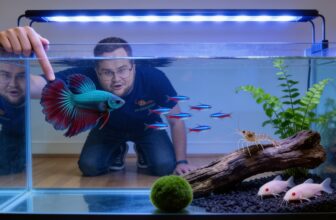
You’ll want neighbors that won’t bully these gentle fish. Otocinclus, Kuhli Loaches, Neon Tetras, Pearl Gourami, and Mystery Snails make safe companions—they share peaceful temperaments and similar needs. Cherry Shrimp add color variety without conflict.
Bettas spell trouble. Their aggression turns your barbs into targets, no matter how roomy the tank. Large cichlids or fin-nippers like Tiger Barbs cause harm too.
Habitat compatibility matters as much as temperament. Match water preferences, temperature, and swimming levels. You’re building a community, not a boxing ring.
Stable water conditions support peaceful community behavior, so consider using a Wi‑Fi temperature controller to maintain consistent thermal parameters and receive alerts before fluctuations stress your fish.
Is That Ich? Catching White Spot Disease Early
Three tiny white specks appear on your cherry barb’s tail, almost like grains of salt stuck to the scales. You’ve spotted ich, a common parasite that spreads fast if you don’t act quickly. During treatment, daily water testing helps you monitor ammonia spikes caused by dying parasites and medication stress.
| Stage | What You’ll See | What You Should Do |
|---|---|---|
| Day 1-2 | 1-5 white dots, fish rubs on plants | Quarantine the fish, raise temperature to 82°F |
| Day 3-5 | More spots, clamped fins, hiding more | Begin medication, test water daily |
| Day 6-8 | Heavy coating, labored breathing | Full disease treatment with copper or formalin |
| Day 9+ | Recovery begins, spots fall off | Continue treatment, watch for return |
Early detection saves lives. Check your fish each evening, and you’ll catch trouble before it grows.
Extending Cherry Barb Lifespan: 5+ to 8+ Years
Even though most cherry barbs live five to seven years, you can push that to eight with steady, attentive care. You’ll want to start with healthy stock from a reputable hobbyist community, since good genetics, or the inherited traits passed from parent fish, give your barbs a head start.
Keep your water temperature steady between 73°F and 81°F, and test weekly so ammonia never spikes. Feed varied meals—flakes, brine shrimp, bloodworms—just enough that they finish in two minutes. Remove uneaten food promptly. Check your fish daily for early signs of stress. Patience, consistency, and gentle observation bring quiet satisfaction.
Cherry Barb Breeding Tank Setup
Setting Up a Breeding Tank
Once your cherry barbs are thriving and you’ve watched them grow from quick flashes of red into confident, schooling fish, you might feel a quiet pull to see something new unfold—tiny lives beginning in water you’ve prepared with your own hands.
There’s a quiet magic in witnessing something new unfold—tiny lives beginning in water you’ve prepared with your own hands.
You set up a **ten-gallon tank**, smaller than their home, with soft sand and thick moss where eggs can hide.
You keep the water warm, near 79 degrees, and dim the lights so parents feel safe enough to spawn.
Breeding genetics matter, so you pick healthy, colorful pairs.
Quick egg removal protects fry survival from hungry mouths.
Raising Cherry Barb Fry: First Weeks to Juvenile
First Weeks to Juvenile Care
How do you keep something so small alive when you can barely see it?
You start with infusoria, tiny living food they can swallow, then switch to baby brine shrimp after day five.
They’re fragile, so you feel worried, you feel careful, and that’s exactly right.
Keep water clean, feed small amounts twice daily, and watch them grow.
In six weeks, they’ll look like tiny adults, and you feel proud.
You’re not just raising fish.
You’re protecting genetic diversity by keeping bloodlines varied, avoiding inbred stock that weakens over generations.
Skip colorarium trends that prioritize flashy colors over health.
Raise them strong, raise them right.
Should You Get Cherry Barbs? A Final Checklist
You’ve learned how to raise the tiny fry into strong young fish, and that matters, it really does.
Before you decide, weigh the expenses the of cherry barbs against your readiness. These small, red fish need space, stability, and time.
Factor | Cherry Barbs vs. Cost Alternatives
——–|———————————–
Initial price comparison | $3-5 per fish; cheaper than discus, pricier than guppies
Tank size needs | 25-30 gallons minimum; more than bettas need
Long-term care | 5-7 year commitment; food, plants, testing supplies
You can find cost alternatives like neon tetras or danios, but cherry barbs reward patience with color and calm. Check your budget, your schedule, and your heart.
Frequently Asked Questions
Do Cherry Barbs Jump Out of Open Tanks?
Yes, you’ll find cherry barbs can jump from open tanks, especially when startled by sudden water flow changes or overcrowded conditions. You should secure a proper tank size with a tight-fitting lid to prevent escapes.
Can Cherry Barbs Change Color When Stressed?
Yes, you’ll notice their stress response dims their bright cherry-red hues. You can trace color changes to water quality dips, temperature fluctuations, sudden diet changes, disrupted social hierarchy, harsh lighting intensity, spawning stress, or predator presence nearby.
How Many Cherry Barbs Should I Start With?
You’ll want to start with at least six cherry barbs to establish proper group dynamics and reduce stress. Stock your tank with this minimum number in a 25-30 gallon setup, ensuring they’ve got companions for their natural schooling behavior.
Do Cherry Barbs Need a Lid on Their Aquarium?
You should install a lid placement on your aquarium since Cherry Barbs are active jumpers. A secure tank cover prevents escapes, protects them from external hazards, and maintains stable water conditions by reducing evaporation.
Why Are My Cherry Barbs Losing Their Red Color?
You’re likely overlooking water quality or tank stress, as both directly dull their red pigmentation. Check your parameters immediately, improve nut quality through varied feeding, reduce crowding, and guarantee stable temperatures—they’ll brighten once conditions improve.
Rounding Up
You’ve got the tools now.
A ten-gallon tank, six friends swimming together, water at 75 degrees Fahrenheit—that’s your foundation.
Watch their colors brighten when they’re happy. That’s your reward.
Cherry barbs ask for simple care, and they give you lively life in return.
Trust the process.
Start small, stay consistent, and enjoy the red flash of fins greeting you each morning.