You hold a small, silvery fish in your palms, its spine glowing through translucent skin like a living X-ray image. That ghostly stripe isn’t just pretty—it’s a window into how these creatures survive in murky South American waters where seeing bones beats seeing nothing at all. Most people buy them for that trick, then lose half their school within months since they missed something simple about water flow or hiding spots. You’ll need to know what “soft water” actually means in degrees, and why your six tetras might suddenly turn shy or pale. There’s more beneath their see-through skin than meets the eye.
At A Glance
- Keep schools of at least six in soft, acidic water with temperatures near 75 °F.
- House in planted 10–20 gallon tanks with driftwood and gentle filtration.
- Feed crushed flakes or micro-pellets 2–3 times daily with occasional live foods.
- Maintain stable parameters through weekly testing and bi-weekly 25 % water changes.
- Breed by spawning in dense plants, then immediately removing adults to protect eggs.
Why Are They Called X-Ray Tetras?
Pick up a flashlight, shine it through your hand, and you’ll notice something strange—your fingers glow red, almost see-through.
Your hand against the light: a lantern of living tissue, bones shadowed in red.
You see what early scientists saw, the naming myth made real.
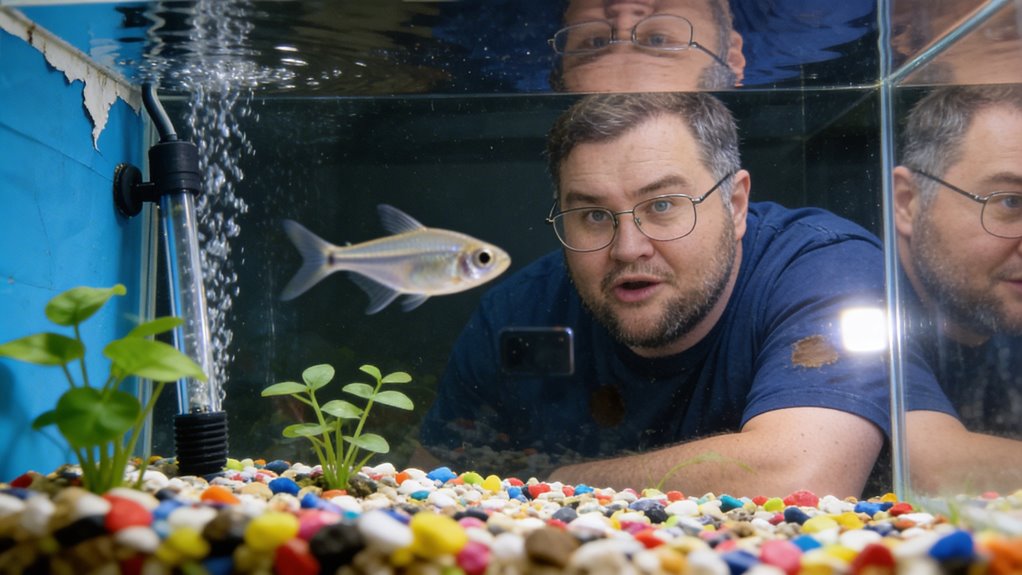
Hold a glass jar with an X-ray tetra inside, turn it toward a lamp, and you’ll spot its beating heart, its tiny spine, its ribbon of intestine. That’s the historical origin of the name: *Pristella maxillaris*, called “X-ray” not by doctors but by aquarists who noticed.
You belong among people who pay such attention. You’re not alone in finding wonder here.
Where Do X-Ray Tetras Come From?
The glow you saw through that jar doesn’t happen everywhere.
You’re holding a fish born from coastal rivers threading through Brazil, Guyana, and Venezuela, where flooded savannahs pulse with seasonal rhythm. These waters, thick with tannins, taught your tetra patience.
- Origin migration patterns sweep them through swollen tributaries, chasing nutrients.
- Historical aquarium trade records trace their first voyage to Europe in 1909.
- Their Characidae family lineage makes them cousins to piranhas, though gentler.
Most tetras in your tank today descend from generations of commercial breeders, not wild waters. That’s why they adapt so readily to your care, forgiving small mistakes.
How Big Do X-Ray Tetras Get and How Long Do They Live?
Smallness carries its own quiet courage.
You’ll grow attached to these fragile gems, and you want them beside you a good long while.
Your x-ray tetras reach about two inches, though most stay nearer one and three-quarters. Picture a paperclip laid flat: that’s your comparison for their full grown length.
Full-grown x-ray tetras match a paperclip laid flat—small enough to surprise, delicate enough to cherish.
Their lifespan stretches four to five years, sometimes more, when you keep conditions steady. Temperature matters greatly here—keep their water between 64 and 82 degrees, with 75 as your safety mark.
You’re building a promise with each careful adjustment, and they reward your patience with translucent, darting life.
Build Your X-Ray Tetra Aquarium From Scratch
Now that you know what these fish become, you’re ready to give them a home. Your aquarium design shapes their whole world, so choose thoughtfully.
- planters: Anchor driftwood, rocks, and live plants like Java fern for security
- lighting options: Select dim LEDs mimicking dappled forest floors; bright lights stress them
- cover: Add floating plants, caves, and dark corners for retreat
You belong here, building something alive. These translucent swimmers need you steady, patient, watching them glow in shadows you’ve made. Their comfort mirrors your care.
Choose Tank Size and Water Parameters
Since these fish stay small, you can start with a tank that fits on most desks or countertops.
A 10-gallon aquarium holds a cozy group, though 15–20 gallons gives them more room to wander. You’ll want a gentle filter, filtration lighting that mimics dappled river sunlight, and patience for filtration cycling—that’s the four-to-six-week wait as helpful bacteria grow. Think of it like baking bread; you can’t rush the rise. Keep water between 64°F and 82°F, pH 6.0–7.5, and hardness at 4–8 KH. Test weekly with a reliable kit. Steady conditions make these little fish feel safe, and calm fish make a peaceful home you’ll enjoy.
Do X-Ray Tetras Need a School?
How often do you watch a single bird flying alone, and how different does it look when a whole flock moves together as one living thing?
You need at least six x-ray tetras, though ten or more lets you belong to something beautiful.
- School stress fades when they see mirror bodies beside them, fins pulsing yellow-black-white stripes in unison
- Tank decoration matters more than you’d think, driftwood and plants let shy fish duck away, then rejoin the group
- Their transparent bodies show you calm hearts beating slower when no one swims alone
Watch them. You’ll understand.
Best Tank Mates for X-Ray Tetras
A small glass tank holds water, light, and living things that must agree to share the same space. You want neighbors who whisper, not shout.
Choose gentle spirits near their size: ember tetras, pencil fish, small rasboras, or peaceful dwarf cichlids like apistogramma. You must avoid fin-nippers and giants who see transparency as snack, not companion.
Select small, peaceful companions—ember tetras, pencil fish, or apistogramma. Ban fin-nippers and giants who mistake glass for prey.
Your tank design shapes these relationships. Plant thickly, leaving open swimming lanes where your school can shimmer together under lighting aesthetics that cast soft beams through leaves, making their invisible hearts glow.
You are building a quiet village.
What Should You Feed X-Ray Tetras?
Look down at your open palm, and you’ll see how small their mouths truly are. You’ll need tiny food pieces, crushed flakes or micro-pellets, fitting their delicate anatomy.
Your feeding frequency shapes their health and color. Offer meals two or three times daily, small amounts they finish in two minutes. This rhythm keeps their energy steady without polluting your tank.
Nutrition variety matters deeply for these living glass jewels. Build their menu with:
- High-quality flakes or pellets as daily foundation
- Frozen or live brine shrimp for protein
- Bloodworms as weekly treats
You’re nurturing something fragile, visible, trusting.
Spot and Treat Common Diseases
Glass bodies hide nothing, including trouble. You’ll notice white spots, frayed fins, or cloudy eyes before disease spreads through your shoal.
Disease prevention starts with steady hands. Test your water weekly, keep temperature at 75°F, and change 25% every two weeks. Quarantine newcomers for two weeks, since one sick stranger costs you the whole family you’ve built.
When illness strikes, act fast but stay calm. Treatment options depend on symptoms: raise heat slowly to 80°F for ich, use aquarium salt at one tablespoon per five gallons, or choose antibacterial drops for infections. Isolate the sick fish in a hospital tank.
Your tetras trust you to notice.
Why Your X-Ray Tetras Hide or Lose Color
When your tetras dart behind the filter or fade from silver to dull gray, they’re speaking a language you can learn.
Your fish feel unsafe, and you’re the one who can fix it. Stress stress triggers—like sudden light changes, noisy filters, or lonely isolation—send them into hiding. Diet deficiencies steal their shine too; without proper protein and vitamins, their bodies can’t make bright colors.
Check these common causes:
- Water parameters swinging outside 64–82°F or pH 5.8–8.5
- Groups smaller than six fish, leaving them exposed
- Flake-only meals lacking frozen brine shrimp or bloodworms
You’re their guardian. Watch closely, adjust gently, and they’ll trust you again.
How to Breed X-Ray Tetras at Home
Once your tetras feel safe and bright again, you might notice something new: a plump female with tiny round eggs showing through her see-through sides.
Set up a separate breeding tank, ten gallons or larger, with water at 78 degrees Fahrenheit and pH near neutral. Choose soft, dark substrate types—fine gravel or peat—to protect fragile eggs and make them easier to spot. Dim the bre lighting with floating plants; bright light stresses breeding pairs.
Prepare a quiet nursery: warm, neutral water, soft dark substrate, and gentle light through floating leaves.
Feed your chosen pair protein-rich foods like bloodworms for three days. When ready, she’ll lay 300 to 400 eggs among the plants. Remove both parents immediately, or they’ll eat every egg.
Eggs hatch in 24 to 36 hours. Fry swim freely after three or four days. Feed them powdered food first, then baby brine shrimp. You’ve joined a quiet tradition, keeping life going.
Frequently Asked Questions
Are X-Ray Tetras Jumpers?
Yes, you’ll find they jump occasionally, especially when startled, so you need a secure lid.
Their color behavior shows stress through faded fins, while calm groups display bright stripes. Tank mates like small rasboras keep them peaceful. For breeding tips, use 78°F water with fine plants. Check water parameters weekly—pH 6.0–7.5 keeps them healthy. Disease prevention means quarantining newcomers. A feeding schedule of twice daily works well. Simple lighting needs and planted habitat setup complete their home, making you feel part of something steady and alive.
Do X-Ray Tetras Eat Live Plants?
You won’t see your x-ray tetras munching live plants, as they’re omnivores focused on flakes and protein like bloodworms, not vegetation. Your plant preferences guide your aquascape freely. Check aquarium chemistry weekly, keep water parameters stable at 75°F and pH 6.0-7.5, and you’ll feel secure watching them thrive among greenery, their striped fins flickering like little flags of belonging in your underwater neighborhood.
Can X-Ray Tetras Live With Shrimp?
Yes, you can keep them together, but you’ll need caution. Small shrimp like cherry shrimp may become snacks for adult tetras. Your shrimp compatibility improves with larger amano shrimp or dense hiding spots like moss piles. For tankmate selection, you’re balancing everyone’s safety. A 20-gallon tank with plants helps. You’ll feel satisfied watching them coexist peacefully when you’ve planned carefully. It’s doable, friend.
How Can You Tell Male From Female?
You’ll notice sexual dimorphism most clearly in the body shape—females grow stockier with rounder midsections, reaching about 2 inches, whereas males stay slimmer. When she’s ready to spawn, you can actually see her eggs through that famous transparent body. Color pattern differences exist too—males sometimes show slightly bolder fin stripes, though this varies. The most reliable method compares bellies side by side, especially near spawning periods.
Do X-Ray Tetras Need a Filter?
You’ll need a filter for your x-ray tetras. A sponge filter works well, gentle enough for their small size, around two inches long. Filter maintenance matters—clean it monthly so water flows properly, keeping your fish healthy. Water hardness stays between four and eight KH, which most filters handle fine. Change twenty-five percent of the water every two weeks, and you’ll feel proud watching your fish thrive together.
Rounding Up
A fifteen‑gallon glass box, filled with six shimmering friends, teaches quiet patience.
You have learned the numbers now: 75 degrees, 6.0 to 7.5, two hundred fifty milliliters changed twice each month. These measurements are promises, not rules, like feeding a neighbor’s cat whereas they’re away.
Your tetras will reward steadiness with scattered eggs, with silver flanks you can almost see through, with calm movement at the water’s middle.
Trust builds slowly, in fish as in people.