A pond begins with water, clear or murky, still or moving, and the fish one places inside must match that water as a key matches its lock.
Some fish swim near the surface, catching light, whilst others hug the bottom, cleaning what falls, and choosing wrongly means watching animals suffer in conditions that do not fit their bodies.
The right fish brings calm, the wrong fish brings work, and telling them apart requires knowing four simple questions before any purchase.
At A Glance
- Choose fish by adult size, allocating ten gallons per inch and planning for decades-long lifespans.
- Goldfish varieties suit beginners, with single-tails needing 24-inch depths and fancies preferring calm shallows.
- Add bottom-dwellers like dojo loaches or Siamese algae eaters to naturally clean substrate and control algae growth.
- Large species such as koi, golden orfe, and sturgeon demand four-foot depths, strong filtration, and legal permits.
- Match compatible temperaments and speeds, avoiding mixes like slow fancy goldfish with swift single-tail varieties.
Start Here: 4 Questions to Ask Before Choosing Any Pond Fish
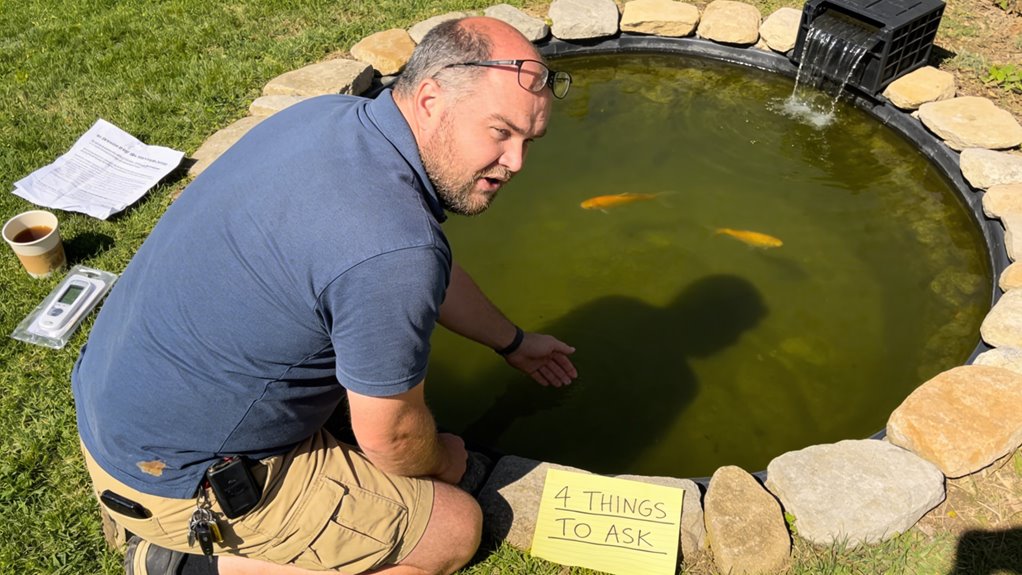
A net dips into still water, and the keeper pauses.
The net breaks the surface, and for a moment, the keeper simply holds the silence.
Before adding any fish, four questions deserve honest answers.
First, what is the pond’s size in gallons? Each fish needs measured space to swim without crowding, which brings stress and illness.
Second, does water compatibility match the species? Some fish need cold water, others warmth. Test kits reveal pH and hardness numbers that must align with living requirements.
Third, who will handle seasonal feeding? Appetites shrink in autumn cold, then surge in spring warmth. Missing these rhythms harms health.
Fourth, what years can you commit? Many pond fish live decades.
Goldfish: The Classic Starter (And When to Upgrade)
Where does the mind travel when watching flat gold shapes glide beneath lily pads? To quiet mornings, to patience learned slowly, to the first yes of belonging somewhere.
The common goldfish, a starter pond companion, tolerates cool water where tropical kin falter. They root in gravel, flash copper among green stems, ask little beyond clean depths.
Yet growth reveals limits. A ten-inch common in thirty gallons exhausts space, hunger, oxygen. Goldfish upgrades become necessary when bodies outpace borders, when murk replaces clarity.
Recognition arrives gently: the same fish that welcomed beginners now signals readiness for deeper commitment, larger waters, longer swimming paths.
Single-Tail or Fancy Goldfish: Which Fits Your Pond?
How does a body built for racing differ from one dressed for display? Single-tail goldfish—commons, comets, shubunkins—slice through water like arrows, needing pond depth of at least two feet to stretch their long frames. Their sleek muscles handle varied water chemistry with quiet resilience. Fancy goldfish, with ballooning bodies and draping fins, drift like living ornaments. They struggle in currents, preferring shallower havens and stable conditions. Choosing between them means weighing movement against stillness, endurance against beauty. Both ask for clean water and care. The pond shapes what thrives.
| Feature | Single-Tail | Fancy |
|---|---|---|
| Body Shape | Streamlined, torpedo-like | Rounded, double fins |
| Swimming | Strong, fast | Slow, delicate |
| Pond Depth Needed | 24+ inches | 18+ inches |
| Water Chemistry | Tolerates fluctuation | Requires stability |
Mosquitofish and Guppies: Tiny, Tough, and Prolific
Two small fish, each no longer than a thumb, carry surprising weight in a water garden.
Mosquitofish arrive plain, gray-brown like wet stones, and disappear into shadow. They work without applause, eating mosquito larvae until the surface stays still. Mosquitofish breeding happens quietly, constantly; a small colony becomes many, then sustains itself. They ask little, survive much, and keep their own numbers in check through natural limits.
Guppies arrive different. Males flash guppy coloration—tails like stained glass, cobra patterns, dumbo ears spreading wide. They too breed with abandon, livebearers dropping fry weekly. Together, these two fish fill a pond’s corners with quiet purpose and sudden beauty, welcoming keepers into a fellowship of patient observation.
Fathead Minnows: Colorful, Cheap, and Nearly Indestructible
Some of the hardiest fish in any pond cost less than a cup of coffee.
Enter the fathead minnow, a two-inch torpedo of quiet resilience. Budgethead minnows, as frugal keepers lovingly call them, display a rosy pink or vivid color that catches morning light like scattered pennies.
Two inches of quiet resilience—rosy pink torpedoes catching morning light like scattered pennies.
These budget friendly companions tolerate murky water, temperature swings, and the occasional forgotten feeding. Hardy survivors by design, they establish presence without demanding center stage. A school of twenty costs pocket change, yet transforms murky edges into living腮红.
They belong exactly where placed—uncomplaining, present, enough.
Mollies and Guppies: Live-Bearers for Small Ponds
A small glass jar holds more wonder than its size suggests.
Mollies and guppies carry this same quiet magic into modest ponds, their small bodies brimming with life.
- Mollies breeding happens readily; one female produces twenty to forty live young every month.
- Guppy coloration dazzles observers—male tails flash cobra patterns, tuxedo stripes, and dumbo ear shapes in orange, blue, and violet.
- Both species prefer temperatures between seventy-five and eighty-two degrees, feeling safe in groups of six or more.
These fish welcome newcomers to pond keeping with patience, not demands. Their presence offers belonging, a gentle invitation to witness small wonders multiplying.
Pond Loaches: The Substrate Cleaners You Actually Need
Where does the debris go when leaves settle and fish feed? It sinks, quietly, into the spaces between stones, where it waits. The pond loach knows this place.
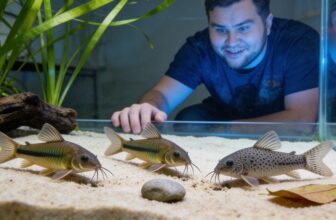
This bottom-dweller, sometimes called the dojo loach, grows six inches in aquariums, larger still in spacious ponds. Its slender body, pointed snout, and under-turned mouth root through gravel with purpose. Sensory barbels guide each movement, like fingers reading braille.
The loach provides substrate aeration, turning over the bottom layer as it forages. This cleaning efficiency prevents the slow suffocation that trapped debris brings. Olive green, spotted, deliberate: the loach belongs here, and so does the keeper who chose it.
Siamese Algae Eaters: Natural Green Water Control
The loach turns the bottom, but the water above holds its own quiet trouble.
Green film spreads where sunlight lingers, clouding what should be clear.
Enter the Siamese Algae Eater, a slender fish from Southeast Asian streams, its mouth turned downward like a small vacuum. It patrols walls and plants, grazing steadily.
- Algae suppression through constant, gentle feeding
- Water clarity restored without chemicals
- Quiet companionship in shared purpose
At six inches, it asks little. Its stripe runs snout to tail, a simple flag of belonging.
The pond keeper sees through water again. That is enough.
Golden Orfe: Social Swimmers That Demand Friends and Covers
Three slim shapes, flashing orange-gold beneath the surface, draw the eye like coins dropped in clear water.
Golden Orfe belong in groups of three or more. Alone, they grow listless and prone to sickness. Together, they school with visible joy.
These fish reach three feet given time and space, living twenty years or more. They tolerate cold winters if ponds run deep enough for safety.
Jump prevention matters daily. Netting or solid covers protect them, for Orfe leap when startled or chasing food. A steady jumpFeeding schedule conditions calmer surface behavior, reducing escapes through predictable routine.
Their shimmer rewards careful keepers.
Koi: Beautiful Giants and 20-Year Commitments
A painted disk, eighteen inches across, breaks the surface with whiskered patience.
Koi carry *koi heritage*—Japanese breeding traditions spanning centuries, each pattern named like poetry: kohaku, asagi, showa. Their colors deepen with age, rewarding watchers who stay.
The *longevity commitment* matters. These carp live twenty years or more, sometimes fifty. They grow to three feet. They remember faces.
- Build depth—four feet minimum for healthy growth and winter survival.
- Install quality filtration—koi produce substantial waste demanding clean water.
- Feed consistently, with patience, through seasons of dull and brilliance alike.
Those who choose koi join a quiet lineage of caretakers.
Pond Sturgeon: Should You Take On This 50-Year Prehistoric Pet?
Armor plates, drifting slow along the bottom, mark a sturgeon’s passage—each scute a fossil record still alive, still swimming.
These creatures carry prehistoric longevity in every bone, living fifty to one hundred years when cared for properly.
Their care demands patience and preparation. Cold, oxygen-rich water must flow constantly through deep ponds, and legal permits often apply, since many regions protect these ancient fish or restrict their keeping.
Those who accept this bond join a small, committed circle of stewards. The reward is quiet—watching something older than memory glide through your garden, belonging to time itself.
Which Pond Fish Can Actually Live Together?
Seven small fish, each no longer than a finger, glide through the same shallow water without conflict, their scales brushing like leaves sharing a branch in summer.
Peaceful cohabitation depends on matching needs, like neighbors sharing a fence line.
- Goldfish and Mosquitofish share compatible compatibility in calm, unheated ponds.
- Koi and Golden Orfe form schools when temperature tolerance aligns between 65-75°F.
- Pond Loach and Molly Fish occupy different levels, reducing competition for space.
Avoid mixing fancy goldfish with swift single-tails; the slow ones starve. Test water weekly. Community thrives when every member finds its place.
Cold-Climate Pond Fish: What Survives Your Winter?
Ice forms at the pond’s edge as fish drift beneath, their bodies slowed but unharmed by water just above freezing. Winter hardy species endure since they belong here, matched to the cold that would kill tender fish. Goldfish and koi settle into torpor, their metabolisms barely ticking. Sturgeon cruise slow through frigid depths, ancient and unfazed. These fish do not merely survive; they belong to winter’s rhythm, their presence steadying the keeper through long months. Some, like koi, graze dormant algae, offering modest algae control even in chill. Choosing them means joining a quiet community, patient and prepared.
| Species | Winter Trait |
|---|---|
| Goldfish | Tolerates near-freezing water |
| Koi | Enters torpor, survives under ice |
| Sturgeon | Thrives in cold, oxygen-rich depths |
| Golden Orfe | Tolerates fluctuation with depth |
| Mosquitofish | Hardy in varying temperatures |
Size Your Fish to Your Pond (And Your Patience)
A small tray of wiggling fish, each in its own plastic bag of water, can lead to trouble if the buyer forgets the simple math of growing bodies.
Size matching begins with gallons, not inches.
A sturgeon needs hundreds of gallons, room to turn its armored frame, decades of care.
Patience limits matter too.
Three rules guide the wise:
- Measure adult length, not the finger-sized fish in your palm
- Calculate ten gallons per inch of mature fish
- Ask yourself: will I still tend this pond in twenty years?
The pond welcomes those who plan.
Where to Buy Pond Fish: Reputable Sources vs. Pet Store Risks
Since a pond keeper’s first choice of where to buy fish shapes every year that follows, the decision carries quiet weight. A healthy fish brings calm; a sick one brings worry.
| Source | What You Gain | What to Watch For |
|---|---|---|
| Specialist breeder | Strong stock, known history, personal guidance | Distance, shipping dates in spring |
| Online sourcing | Wide selection, breeder reviews from fellow keepers | Water temperature on delivery day must suit the fish |
| General pet store | Convenience, immediate holding | Crowded tanks, stressed fish, unknown origins |
Breeder reviews build trust like neighborly word-of-mouth. Online sourcing works when assignment comes first. Pet store shortcuts often cost more in loss than they save in dollars. Choose carefully.
Frequently Asked Questions
Do Pond Fish Recognize Their Owners?
Yes, pond fish recognize their owners through visual cues and memory tied to feeding patterns. Fish brains form associations between a person’s shape, footsteps, and food rewards. Koi and goldfish demonstrate this most clearly, gathering when their owner approaches the pond edge. This recognition builds slowly, over weeks of consistent interaction, creating a quiet bond between human and fish that feels like belonging to something alive and responsive.
Can Pond Fish Hear You Talking?
Pond fish possess sound perception through a lateral line system running their flanks, detecting vibrations in water, not airborne voices. Acoustic signaling travels well underwater, though human speech loses clarity across the air-water barrier. Fish respond to footsteps, taps, and consistent vibrations, learning patterns rather than recognizing words. Gentle care, predictable presence, and calm movement build trust more than conversation ever could.
Why Do Some Pond Fish Change Color?
Fish change color when stressed, sick, or adapting to new homes. Water quality, temperature shifts, and diet act as coloration triggers, fading bright scales to dull greys or washed golds. Poor habitat adaptation includes hiding, lost appetite, and clamped fins alongside paler hues. Goldfish may darken in sunlight, then pale in shade. Stable ponds, quality food, and clean water restore their natural vibrancy within days.
Do Pond Fish Sleep at Night?
Pond fish do sleep, though their night patterns differ from human rest. Most species enter a dormant state, floating motionless near the bottom, eyes open—fish lack eyelids. Nocturnal behavior varies: koi and goldfish slow dramatically after dusk, as loaches and catfish grow active, foraging in darkness. This rhythm, called circadian rhythm, matches light cycles. Stillness brings calm, a shared need across all living things.
How Do You Transport Pond Fish Safely?
Transport pond fish using sturdy transport containers filled with original pond water, ensuring secure packaging to prevent spills. Maintain temperature control through insulation and gradual temperature handling, avoiding sudden shifts. Oxygen supplementation, via battery-powered aerators or pure oxygen, sustains breathing during travel. Apply acclimation techniques upon arrival, slowly matching new pond conditions. Disease prevention requires clean handling equipment and water filtration checks. Stress reduction comes from darkness, minimal movement, and patience throughout.
Rounding Up
A hand lifts a flat net from gallon buckets, and the water garden settles into quiet balance. The right fish—measured by inches, gallons, and winter degrees—becomes contentment you can watch. Start small, learn patience, and let the pond teach its slow lessons. The fish will grow when you do.