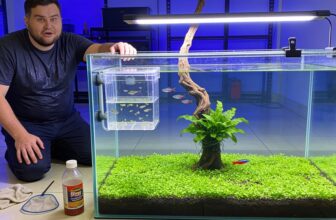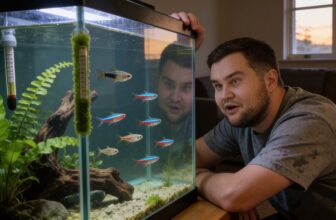
A small bag of sand sits in your cart, four dollars and thirty‑seven cents, plus tax. You wonder if twenty gallons of water is enough space for six tiny fish with whiskers. It is, barely, and those whiskers—called barbels—need that soft sand to root around without getting hurt. You feel cautious hope, maybe a little doubt. That’s normal. Fish live up to twenty years when you get these small things right, and most people miss the water changes, the precise temperature, the exact group size. You’re not most people, or you won’t be after you learn what triggers their rainy‑season shuffle, the one that makes eggs appear on glass like tiny pearls. But first, you need to know if your tap water cooperates, and whether you can commit to checking it weekly, same day, same time, for two decades. That’s where everything starts, or stops.
At A Glance
- Keep groups of 4-6 fish to reduce stress and encourage natural schooling behavior.
- Use smooth sand substrate to protect delicate barbels from injury and infection.
- Maintain soft, acidic water (pH 6.0-6.5) at 75-78°F for optimal health and breeding.
- Feed sinking pellets at dusk and supplement with vegetables 2-3 times weekly.
- Stimulate spawning by simulating rainy season with dim light, increased flow, and cooler water.
Are Sterbai Corys Right for Your First Aquarium?
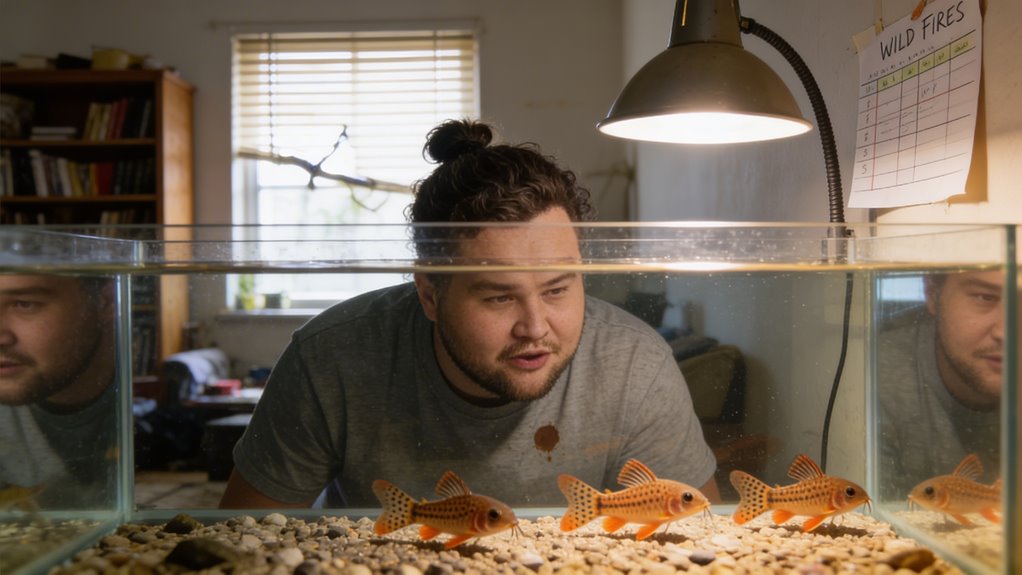
A small brown fish with white spots glides across the sandy bottom of your tank, its whisker-like barbels twitching as it searches for food. You’re considering if this Sterbai Cory fits your beginner’s journey into aquarium keeping, and honestly, it probably does.

Soft, rounded grains protect delicate barbels and let corys forage naturally.

High-protein pellets sink fast, giving your nocturnal corys a satisfying dusk meal.

Weekly testing for ammonia, nitrite, and pH keeps your water safe for decades.
See today's best deals onAquarium Supplies
These gentle bottom-dwellers ask for simple things: smooth sand to protect their sensitive barbels, which are like taste-buds on whiskers, and a group of four to six so they feel safe together. They’re shy without friends, just like you might feel at a new school.
These shy bottom-dwellers need smooth sand and four to six friends to truly thrive—don’t leave them schooling alone.
Your aquarium aesthetics matter to them too. They need hiding spots among driftwood or plants, places to retreat when the world feels bright. Speaking of brightness, your lighting design shapes their whole day. Too harsh, and they’ll hide; too dim, and you won’t see their spotted beauty. Aim for moderate, gentle light, maybe eight to ten hours, like a soft afternoon at home.
They eat sinking pellets, clean up leftovers, and rarely cause trouble. For someone wanting to belong to the fishkeeping community without drowning in complexity, Sterbai Corys welcome you in.
Water Conditions for 20-Year Sterbai Cory Lifespan
Your test kit sits in the cabinet like a thermometer on a sick day, waiting to tell you what your Sterbai Corys cannot say out loud.
You aim for 75‑79 degrees Fahrenheit, that sweet middle, since temperature fluctuations stress their armor and shorten lives.
You keep pH between 6.0 and 7.6, hardness soft at 0‑15 dKH.
You test weekly, watching for ammonia and nitrite at zero.
You maintain putrient balance through regular water changes, removing waste before it fouls their world.
You check parameters with your own hands, joining a community that values patience, precision, and fish who live two decades.
Tank Size, Substrate, and Flow for Active Bottom-Dwellers
Though you might hope a small tank will suffice, your Sterbai Corys need room to roam like any creature that scours riverbeds for a living.
You give them a twenty-gallon footprint minimum, though more water means more forgiveness when parameters drift.
Choose smooth, rounded substrate grain, sand soft enough to bury whiskery barbels without scraping. Flow rate matters too: these fish evolved in streams, so you position filter outflows to create gentle currents across the bottom, not turbulent whitewater above.
- A soft bed protects the tools they use to find food.
- Moving water carries oxygen to their gills.
- Space lets them weave through decor together.
- Clean sand means less trapped waste.
- Proper flow mimics home rivers.
You build this, and they settle in, finally safe.
Why Sterbai Corys Need Groups of 4–6
When you watch a single Sterbai Cory pressed against the glass, its fins flicking in short, nervous bursts, you see a fish that cannot rest.
You need four to six of them, no fewer, since these fish find safety in numbers, just like you might hold a friend’s hand in a crowded room.
Group cohesion lets them relax, each individual taking cues from the others’ calm presence.
Visual signaling spreads through the group like whispers, one flicker of a fin saying *all clear* to everyone nearby.
You’ll notice them rest on the sand together, barbels touching, finally breathing slow.
When you give them this company, you give them peace.
When and What to Feed These Nocturnal Scavengers
Since Sterbai Corys only wake up when your lights go down, you have to think like a night-shift cook preparing a meal for someone still in bed. You’ll drop sinking pellets right at dusk, when their whisker-like barbels start stirring the sand.
- Timing builds trust, like showing up when a friend actually needs you.
- Nocturnal feeding honors their nature, not your convenience.
- A protein rich diet grows strong barbels, their hands for touching the world.
- Small portions prevent rot, showing respect for their space.
- Watching them eat in dim light makes you part of their quiet world.
Tank Mates That Won’t Stress Your Bottom-Chasers
Once your night-shift meal routine feels settled, it’s time to look at who’s sharing the room.
Your Sterbai Corys need companions who respect their space, not bullies who crowd the floor.
Think of tetras drifting above like leaves on a calm stream, or small gouramis patrolling the middle waters. These neighbors won’t compete for the bottom zone you’ve prepared with smooth sand and gentle substrate flow.
You’ll want compatible algae eaters too, working different shifts so no one goes hungry.
Avoid pushy catfish or nippy barbs; they’ll fray your Corys’ confidence and barbels alike.
Peace builds belonging, one quiet tankmate at a time.
Barbel Rot and Disease Warning Signs
Your Sterbai Cory’s barbels are like two tiny fingers that feel along the sand for food, and when they start to look short, frayed, or pinkish at the tips, you’re seeing the first warning that something’s hurting your fish.
Barbel rot sneaks up quietly, but you can catch it early.
- Watch for earlybel discoloration—any whitening, reddening, or dark spots near the base means trouble’s starting
- Feel concern when barbels shrink from two inches down to stubs; that’s your fish losing its way to find dinner
- Spot fungal growth as cottony tufts, usually white or gray, clinging to the whiskers like wet mold on old bread
- Test your water weekly; ammonia above 0 parts per million burns those sensitive fingers
- Switch to smooth sand, as rough gravel scrapes barbels raw, opening doors for infection you don’t want
Breeding Tank Setup That Triggers Natural Spawning
What’s the simplest way to convince your Sterbai Corys that rainy season has arrived, right there in your spare bedroom?
You dim the aquarium lighting until it mimics clouded skies, then you crank up the coverflow circulation so water moves swift and cool across their fins. This feels like home to them, like the rivers they remember. You drop the temperature a few degrees, maybe to 75°F, and you wait. They sense the change in their bodies, the ancient signal that says now is safe for new life. You belong here too, watching them decide.
How Sterbai Corys Spawn: The Complete Mating Ritual
A single female rests on the glass, her belly soft and round with eggs, and you watch the water hold its breath.
The water holds its breath while she waits, belly round with ancient promise.
You’ve prepared this moment together. Now the males circle her, their fins fluttering like hands asking to move. This is the mating choreography, a pattern older than your tank. She pauses, selects a spot with gentle current, and presses her body against the glass. Each egg receives egg adhesion, sticky threads anchoring new life where oxygen flows strongest. He fertilizes as she works, a pas de deux repeated dozens of times. You are keeper of something ancient.
- The glass becomes nursery when you choose transparency over hiding
- Her barbels tremble, reading surfaces you cannot feel
- Each placement is deliberate, not random—trust her instincts
- You witness what wild streams have hidden for millennia
- This belonging binds aquarist to fish, observer to eternal rhythm
Raising Fry: Egg to Free-Swimming in 3–5 Days
Once you move the adults to their home tank, you’re left with a glass wall full of promise, each tiny bead holding what looks like a droplet of moonlight.
Keep the lighting intensity low, like a cloudy afternoon, so these fragile orbs don’t cook in their own shells. You’ll notice the eggs darken, and soon tiny tails wriggle free. The fry coloration starts pale, almost see-through, like little ghosts learning to be fish. They’ll cling, then drift, then dart. In three to five days, you’ll spot them cruising the glass, brave and hungry, ready for their first real meal.
Water Change Schedules That Extend Lifespan
Since your Sterbai Corys can live nearly two decades, the water you change each week becomes their true medicine.
You build trust through repetition, and so do your fish.
- Replace 25–30% weekly to dilute waste, not monthly marathons that shock their systems
- Match new water temperature within 2°F to prevent temperature fluctuations that stress their armor
- Test for ammonia weekly; zero means your putrient cycling bacteria keep working
- Siphon gently into the sand, stirring uneaten food and debris without clouding their home
- Mark your calendar—routine is the kindness they feel
Clean water whispers safety, and they will stay with you longer.
Frequently Asked Questions
Do Sterbai Corys Need Aquarium Salt?
You don’t need aquarium salt for healthy Sterbai Corys.
Your fish feel safest in soft water, 0-15 dKH, matching their wild streams. Adding salt raises water hardness, which stresses their gentle bodies and delicate barbels.
Salt dosage isn’t necessary except when treating specific illnesses, and even then you’d use it briefly, not permanently.
Keep their home simple: clean, soft water, smooth sand, and friends to swim with. They’ll thrive without extras.
Can Sterbai Corys Breathe Air in Still Water?
Yes, Sterbai corys can breathe air in still water.
They possess a modified intestine that allows atmospheric uptake when dissolved oxygen runs low. You’ll observe them shooting to the surface for air exchange, especially during water stagnation. This intestinal lung performs gas exchange, supplementing their gills. Nonetheless, they cannot survive indefinitely this way. You should maintain proper oxygen diffusion and surface respiration access, but don’t rely on still water breathing as a permanent solution.
Are Sterbai Cory Hybrids Sterile?
No, Sterbai Cory hybrids aren’t automatically sterile. Many Corydoras hybrids, like those crossed with other Cory species, can produce viable offspring. You’ll find breeding viability varies by pairing, with some hybrid combinations yielding fertile young. Habitat suitability matters too—stable water between 75-79°F and soft substrate supports successful spawning, whether you’re working with purebreds or hybrids. Just watch your fish closely, and you’ll learn what works.
Do Sterbai Corys Uproot Aquarium Plants?
Smooth sand, your substrate choice, protects their barbels—those whisker-like sensors for finding food—and this shapes how they interact with roots. Plant growth compatibility stays strong since Sterbai Corys, being diet-specific bottom-feeders, sift through sand without digging deep. Their habitat-normal behavior means they’ll nudge around foliage, but they won’t yank stems. You’ll see gentle nosing, not gardening trouble. Roots remain safe, stems stay anchored, and your aquascape thrives alongside these peaceful scavengers.
Why Do Sterbai Corys Flash Against Decor?
Your Sterbai Corys flash against decor when they’re irritated, often by poor water quality or external parasites like Ich. You’ll notice them rubbing their bodies on rocks, plants, or glass—this scratching relieves itching. Check your ammonia and nitrite levels immediately, they’re sensitive fish. Flashing can likewise signal fl color signaling to tank mates, or a mild territorial display during feeding. Test your water today, you’ll feel relieved when you find the cause.
Rounding Up
A soft net, your gentle hand, and patience—these tools reward you with twenty years of quiet friendship. You’ve learned the numbers, 75 degrees, 6.2 pH, four friends minimum, now trust your eyes. Watch the barbels, clean velvet, not stubs. Feel the calm when six Corys school, silver stars in tea-colored water. Breed them if you wish, or simply witness their contentment. Either way, you’ve built something kind. The fish know.

Smooth biological filtration creates gentle flow without endangering delicate fry.

Set exact temperatures for tropical stability or cool rainy-season triggers.

Mimic rainy-season light with adjustable dimming to cue spawning behavior.
Check discounted items inBreeding Equipment